TL;DR
Listen free for 30 days with Audible
Thousands of audiobooks and originals — cancel anytime.
Start your free trialAs an affiliate, we earn on qualifying purchases.
Serrated knives should be sharpened at least once a year using ceramic or diamond rods that match their tooth size. Maintaining the original angle and technique restores cutting efficiency and extends knife life. Professional sharpening is an option for heavily dulled blades.
Use a ceramic or diamond rod that matches your knife’s tooth size for safe, effective sharpening.
Maintain the original sharpening angle—usually 20-30 degrees—to avoid damaging the teeth.
Sharpen only the beveled side; leave the flat side untouched to preserve the blade’s shape.
Regular honing between full sharpenings keeps your serrated knives slicing smoothly.
For heavily damaged blades, professional sharpening is the safest option to restore performance.
What Makes Serrated Knives Different and Why That Matters
Serrated knives feature a scalloped or saw-like edge, with individual teeth that cut differently than straight-edged blades. Each tooth acts like a tiny saw, grabbing and tearing through crusts or fragile items. Because of this unique design, sharpening them isn’t about grinding a flat edge but about maintaining the shape and sharpness of each tooth.
If you try to sharpen a serrated knife with a standard flat stone, you risk damaging the teeth or removing too much material. Instead, preserving the original bevel angle—usually between 20 and 30 degrees—is key to keeping the blade effective. Knowing this difference is the first step toward proper maintenance. The tradeoff here is between ease of sharpening and maintaining the integrity of the teeth; using inappropriate tools can flatten or distort the scallops, reducing cutting efficiency and lifespan. Proper understanding ensures you don’t weaken the blade over time or create uneven edges that cause slices to tear or slip.
ceramic serrated knife sharpening rod
As an affiliate, we earn on qualifying purchases.
As an affiliate, we earn on qualifying purchases.
Choosing the Right Tools for Sharpening Your Serrated Knife
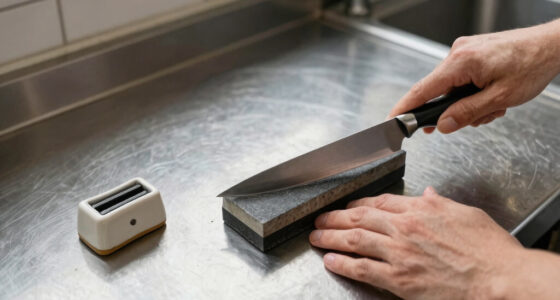
Not all sharpening tools are created equal when it comes to serrated blades. Your best bets are ceramic rods, specially designed for the tooth size, or small, tapered sharpening stones. Diamond-coated rods also work well, especially on heavily dulled or damaged teeth. The choice of tool impacts not just the effectiveness but also the safety of the process. Using a tool that fits the tooth profile minimizes the risk of removing too much material or damaging the scallops, which would compromise the blade’s ability to cut cleanly. Conversely, using the wrong tool—like a flat stone designed for straight edges—can flatten or distort the scallops, leading to uneven cuts and increased wear. For off-grid use, a set of ceramic rods that match your knife’s tooth size offers a balance of control, safety, and simplicity. They allow precise, incremental sharpening that preserves the original tooth shape. Avoid electric sharpeners or flat stones unless they explicitly support serrated blades, as these can cause irreversible damage and reduce the knife’s lifespan.
diamond coated serrated knife sharpener
As an affiliate, we earn on qualifying purchases.
As an affiliate, we earn on qualifying purchases.
Step-by-Step: How to Sharpen Your Serrated Knife Correctly
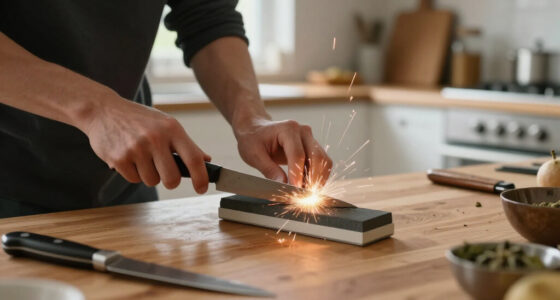
Sharpening a serrated knife isn’t about grinding the entire blade but about carefully restoring each tooth. Here’s a straightforward process:
- Identify the beveled side: Usually the side with the teeth. The flat side remains mostly unchanged, serving as a reference for maintaining the original angle and shape.
- Select the right tool: Use a ceramic rod that fits into the tooth’s groove. The correct size ensures you don’t over-sharpen or damage the scallop shape.
- Set your angle: Most blades are at 20-30 degrees. Maintaining a consistent angle throughout the process preserves the tooth’s integrity and ensures even cutting.
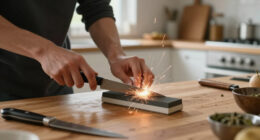
- Run the rod along each tooth: Insert the rod into the groove and gently push from heel to tip, maintaining the angle. Do this for every visible tooth—around 10-20 passes per tooth. This controlled motion helps restore the sharpness without removing excessive material.
- Check your progress: The teeth should feel sharper, and the edge should look even. Avoid over-sharpening, which can cause unevenness or weaken the blade, leading to faster dulling or breakage.
- Finish with honing: Lightly run a ceramic rod along the teeth to smooth any rough spots and refine the edge, promoting longevity and a cleaner cut.
Imagine carefully tracing each scallop, like tuning a delicate instrument. Patience and a steady hand are your best tools here. For a heavily dulled or nicked blade, repeat the process — but don’t force it. Over-sharpening can create uneven scallops or weaken the tooth structure, diminishing cutting performance and potentially causing the blade to break under stress.
small tapered sharpening stone for serrated knives
As an affiliate, we earn on qualifying purchases.
As an affiliate, we earn on qualifying purchases.
How Often Should You Sharpen? Keep Your Edge Sharp Without Overdoing It
Your serrated knife doesn’t need sharpening every week. Instead, gauge it by how well it cuts. A dull blade tears rather than slices, and that’s your clue to sharpen. For average home use—say, cutting bread, tomatoes, or cooked meats—every 6 to 12 months is enough. This interval balances maintaining optimal cutting performance with minimizing unnecessary wear.
If you notice your slices are less clean, or you’re applying more pressure than usual, it’s time to give it some attention. Regular honing with a ceramic rod, done monthly, can help maintain the edge between full sharpenings. Honing realigns the microscopic teeth and smooths rough spots, preventing premature dulling. Think of honing as a quick tune-up that keeps your blade performing well and extends the time before a full sharpening is needed. Neglecting this step can lead to increased effort during cutting, uneven wear, and shorter overall blade life. In high-traffic kitchens or off-grid setups, keeping a schedule prevents blades from becoming unusable, ensuring consistent performance and safety. Remember: a well-maintained serrated knife slices smoother, saves effort, and lasts longer, making it a worthwhile investment of your time and resources.
professional serrated knife sharpening service
As an affiliate, we earn on qualifying purchases.
As an affiliate, we earn on qualifying purchases.
Can You Fix a Damaged or Heavily Nicked Serrated Knife?
Yes, but it depends on the extent of the damage. Small nicks or dull teeth can often be restored with careful sharpening, especially if you use a fine ceramic rod and take your time. The key is precision; aggressively trying to fix a heavily damaged scallop can remove too much material or further distort the shape, making the blade less effective. Large chips or broken teeth, on the other hand, often require professional help or even replacement. Attempting to sharpen severely damaged teeth at home risks worsening the problem or causing the scallops to become uneven, which affects cutting performance and safety. Imagine a bread knife with a small nick—meticulous, targeted sharpening can smooth out the damage and restore the original shape, but if the damage is extensive, the cost and effort may outweigh the benefit. In off-grid settings, consider whether repairing is practical or if investing in a new blade might be more efficient. Sometimes, a professional sharpening service can reprofile the scallops and restore functionality, but for severe damage, replacement might be the best choice to ensure safety and performance.
Why Only One Side Needs Sharpening (And How to Do It Right)
Most serrated knives are designed with a beveled side—the side with the teeth—that needs sharpening. The flat side usually stays flat and untouched, serving as a stable reference. Sharpening only the beveled side preserves the original geometry, ensuring the scallops retain their shape and cutting efficiency. Attempting to sharpen both sides can distort the scallops, flattening or narrowing them, which diminishes their ability to grip and cut effectively. Think of the scalloped edge as a series of tiny, curved blades; maintaining their shape is crucial for slicing through bread or other soft materials cleanly. Running the ceramic rod along only the beveled side concentrates sharpening where it matters most, preventing unnecessary material removal and preserving the blade’s lifespan. This focused approach ensures your knife maintains its designed cutting action, and reduces the risk of creating uneven scallops or weakening the blade structure over time, which could lead to breakage or reduced performance during use.
Frequently Asked Questions
Can I sharpen my serrated knife at home, or should I go to a professional?
Many serrated knives can be sharpened successfully at home with the right tools and technique. However, if the blade is heavily dulled or has significant damage, a professional sharpening service ensures precision and avoids accidental damage.What tools are best for sharpening serrated knives?
Ceramic rods or small tapered sharpening stones designed for serrated edges work best. Avoid flat stones or electric sharpeners unless they are specifically made for serrated blades, as improper tools can damage the teeth.How often should I sharpen my serrated knives?
Typically every 6 to 12 months for regular home use. Regular honing with a ceramic rod can extend the interval by maintaining the edge between full sharpenings.Is it possible to sharpen a damaged or heavily nicked serrated knife?
Yes, but it depends on the extent of the damage. Light nicks can often be smoothed out with careful sharpening, while extensive damage may require professional repair or replacement.Can I sharpen both sides of a serrated knife?
Usually, only the beveled side with the teeth needs sharpening. The flat side should remain untouched to preserve the blade’s original shape.Conclusion
A serrated knife isn’t meant to be a throwaway. With a little care—using the right tools, maintaining the correct angle, and practicing patience—you can keep it slicing through crusts and soft bread alike for years. Think of sharpening as tuning your favorite instrument; the more you do it right, the sweeter it cuts.Flea & tick season Picks
flea and tick prevention
As an affiliate, we earn on qualifying purchases.