
TL;DR
Listen free for 30 days with Audible
Thousands of audiobooks and originals — cancel anytime.
Start your free trialAs an affiliate, we earn on qualifying purchases.
Sharpening scissors and shears improves cutting performance and extends their life. Use the right tools, follow proper techniques, and regularly maintain your blades for best results. Professional sharpening can also restore high-precision tools more effectively.
Imagine trying to cut through a thick piece of fabric or a stubborn branch—only to find your scissors struggle, snag, or tear. It’s a common frustration that comes from dull blades. But sharpening isn’t just for professionals; you can keep your scissors and shears razor-sharp with a few simple tools and techniques.
This guide breaks down exactly how to sharpen different types of scissors and shears, whether they’re for fabric, gardening, or hair. You’ll learn the best methods, the tools you need, and how to tell when it’s time to sharpen again—so your tools stay reliable and ready whenever you need them.
Identify the type of scissors or shears before sharpening to use the correct technique.
Use the appropriate tools—like stones, ceramic rods, or specialized sharpeners—for your blade material.
Maintain a consistent bevel angle and gentle strokes to preserve the blade’s original edge.
Regular cleaning, oiling, and proper storage extend the sharpness and lifespan of your blades.
Test sharpness with simple cuts; if performance doesn’t improve, consider professional sharpening or replacement.
Know Your Blades: Different Scissors, Different Needs
Before sharpening, identify what kind of scissors or shears you have. Are they fabric scissors, hair shears, garden shears, or craft scissors? Each type has a unique blade material, bevel angle, and design that affects how you sharpen them.
For example, fabric scissors often have a beveled edge designed for clean, precise cuts in cloth. Garden shears might be made of tougher steel with a thicker edge. Hair shears, especially professional-grade, have very delicate, finely honed blades that require gentle, precise sharpening.
If you use the wrong method, you risk damaging the blade or dulling it faster. Check the manufacturer’s instructions or look for markings on the blades to determine the material and type.
As an affiliate, we earn on qualifying purchases.
Gather Your Tools: What You Need to Sharpen Like a Pro
Sharpening scissors and shears doesn’t require a full workshop—just a handful of reliable tools. The most common are:
- Sharpening stones or whetstones: Coarse for dull blades, fine for finishing.
- Ceramic rods: Gentle but precise, ideal for hair shears and fine blades.
- Specialized scissors sharpeners: Small manual guides or electric sharpeners designed specifically for scissors.
- Lubricant or honing oil: Keeps blades slick and prevents metal buildup.
- Cloth or brush: For cleaning blades before and after sharpening.
Choosing the right tools is crucial because different blades have different properties. For example, coarse stones are effective for heavily dulled, thick blades but can remove too much metal from delicate hair shears if used improperly. Ceramic rods are gentler and help maintain micro-sharp edges, especially important for fine blades. Using the wrong tool can lead to uneven edges, micro-damage, or a shortened blade lifespan. Always match your tools to your blades’ material and intended use to ensure effective and safe sharpening.
Remember: always keep your tools clean and dry. Rust or debris will hinder sharpening and damage blades over time.
As an affiliate, we earn on qualifying purchases.
Step-by-Step: How to Sharpen Your Scissors or Shears
- Clean the blades thoroughly. Use a cloth or brush to remove dirt, adhesive, or rust. Dull blades often have debris that dull the edge faster. Proper cleaning ensures the sharpening process is effective and prevents debris from causing micro-damage during sharpening.
- Secure the scissors or shears. Clamp the blades in a stable position or hold them firmly. Use a clamp or a towel to stabilize if needed. Stability during sharpening is vital because even slight movements can produce uneven edges, reducing cutting efficiency and potentially damaging the blade’s micro-structure.
- Identify the bevel angle. Most scissors have an angle of 20-30 degrees. Maintaining this angle during sharpening is crucial because it preserves the blade’s original cutting geometry. Altering this angle can make the scissors either too aggressive or too dull, affecting performance and safety.
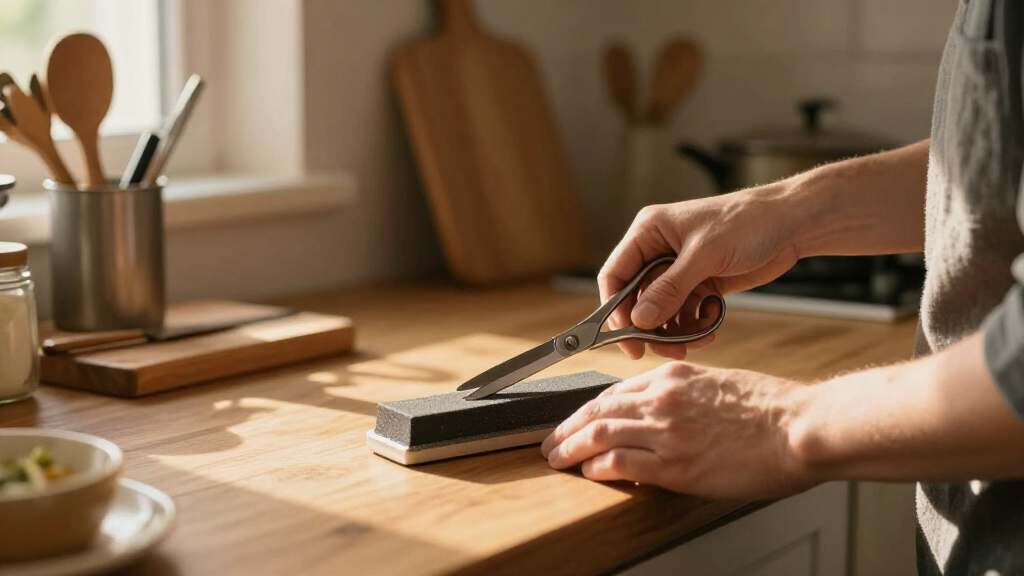
- Sharpen the blades. For stones: Drag the beveled edge along the stone in smooth, even strokes, following the original bevel. For ceramic rods: Run the rod along the edge, maintaining the angle, with 10-15 strokes per side. Consistency in stroke direction and pressure ensures a uniform edge and reduces the risk of micro-damage or uneven sharpening.
- Repeat for both blades. Ensure both blades are evenly sharpened to prevent misalignment, which can cause the scissors to bind or cut unevenly. Balancing the sharpening on both sides maintains the integrity of the cutting action.
- Test the sharpness. Cut through a piece of paper or fabric. If it’s clean and effortless, you’re done. If not, repeat the process. This step helps you gauge whether further sharpening is needed without overdoing it, which could weaken the blade or alter its shape.
- Clean and oil. Wipe the blades again, apply a small amount of oil, and wipe off any excess. Proper lubrication prevents rust, reduces friction during use, and prolongs blade life. Regular oiling also helps maintain the micro-sharpness of delicate blades like hair shears.
A key tip: never saw back and forth aggressively. Gentle, consistent strokes preserve the blade’s integrity and prevent micro-damage that can diminish cutting quality over time.
For example, a gardener might use a coarse stone to restore a pair of heavy-duty pruning shears, then finish with a ceramic rod for a fine edge. Hairdressers often use ceramic rods because they produce micro-sharp edges without micro-damage, which is essential for clean, precise cuts.
As an affiliate, we earn on qualifying purchases.
How to Know When It’s Time to Sharpen Again
It’s easy to tell when scissors and shears are dull, but understanding why they dull helps you prevent excessive wear and prolong their usability. Dull blades fail to cut efficiently because the edge has lost its micro-sharpness, often due to micro-damage, corrosion, or material fatigue. When blades become less responsive, they tend to snag, tear, or require more force, which increases the risk of accidents and further damage.
For example, fabric scissors might produce ragged edges or require multiple passes to cut a straight line, indicating the blade’s edge has lost its micro-precision. Gardening shears might leave jagged cuts or struggle to close smoothly. Recognizing these signs early allows you to sharpen before the blades become damaged or unusable, saving money and time.
Most tools need sharpening every 2-6 months depending on usage. Frequent users, like tailors or landscapers, should sharpen more often to maintain optimal performance. Less frequent users might only need it once a year, but regular inspection is key. If performance continues to decline despite sharpening, or if blades are chipped, bent, or cracked, it’s time to replace them to ensure safety and efficiency.
Note: Over-sharpening can also be detrimental, leading to micro-damage or thinning of the blades, which can compromise their strength. Therefore, learning to identify the right timing is essential for maintaining a balance between sharpness and blade longevity.
As an affiliate, we earn on qualifying purchases.
Maintenance Tips to Keep Blades Sharp Longer
Sharpening isn’t a one-and-done deal. Proper maintenance extends the life of your blades and keeps them performing at their best. Here are practical tips:
- Clean after every use. Wipe blades with a damp cloth to remove debris and prevent rust. Residual dirt and moisture accelerate corrosion and dulling, so regular cleaning preserves the micro-sharpness of the edge.
- Oil regularly. Apply a drop of light oil or honing oil to the pivot point and blades, then wipe clean. This reduces friction during use, prevents rust, and maintains smooth operation—especially critical for blades with moving parts like scissors with adjustable screws.
- Store properly. Keep scissors in a dry, closed container or sheath. Avoid tossing them into clutter where blades can dull or chip. Proper storage prevents accidental damage and environmental corrosion, which can quickly degrade the cutting edge.
- Avoid cutting improper materials. Don’t use fabric scissors on paper or kitchen shears on metal wire. Using blades on unsuitable materials causes micro-damage and dulling, reducing their lifespan and effectiveness.
- Check blades periodically. Look for rust, nicks, or misalignment. Address issues early by sharpening or realigning before they worsen, which can prevent costly repairs or replacements and ensure optimal cutting performance.
For example, a gardener might keep her pruning shears in a waterproof toolbox, oil them every few weeks, and avoid cutting wire or metal that can chip the blades. Regular maintenance not only prolongs blade life but also ensures safe and efficient operation every time you pick up your tools.
Frequently Asked Questions
Can I sharpen scissors at home, or should I take them to a professional?
Many scissors can be sharpened at home with the right tools and techniques. However, for high-end or delicate blades like hair shears, professional sharpening often yields better results and prevents accidental damage.What tools do I need to sharpen scissors?
Basic tools include sharpening stones or whetstones, ceramic rods, and specialized scissors sharpeners. Always choose tools suited to your blades’ material and design for best results.How often should I sharpen my scissors?
It depends on use. Regular cutters, like fabric or kitchen scissors, typically need sharpening every 2-6 months. Less frequent use might only require annual maintenance.Is it safe to sharpen scissors at home?
Yes, if you follow safety practices—wear gloves, work on a stable surface, and keep blades away from your fingers. Proper technique minimizes risk of injury.How do I tell if my scissors are too dull to sharpen?
If they can’t cut cleanly through paper or fabric, or if sharpening doesn’t improve their performance, they might be too worn or damaged for effective sharpening and need replacing.Conclusion
Keeping your scissors and shears sharp isn’t magic—it’s skill and routine. With a few simple tools and a little practice, you can restore dull blades to peak performance. That means cleaner cuts, easier work, and less frustration in your off-grid kitchen or garden.
Remember: sharp tools are safer and more effective. Every time you pick up your scissors, think of it as a chance to give them a quick tune-up. Your blades—and your projects—will thank you for it.
Labor Day sales Picks
labor day deals
As an affiliate, we earn on qualifying purchases.