
TL;DR
Open a free Amazon Business account
Business pricing, bulk buying and tax-exempt orders.
Create a free accountAs an affiliate, we earn on qualifying purchases.
Single bevel knives are sharpened mainly on one side, offering exceptional precision for specialized tasks like sushi. Double bevel knives are sharpened on both sides, making them more versatile and easier to maintain for everyday use. Knowing which suits your needs helps you cut better and care for your knives more effectively.
Imagine slicing through a piece of sashimi so smooth it glides, revealing a perfect, clean cut. That finesse is often thanks to a single-bevel knife—sharp, precise, a tool for connoisseurs. But in a busy kitchen, versatility often wins. That’s where double-bevel knives shine, offering predictability and ease.
Whether you’re sharpening your skills or just want a reliable all-rounder, understanding the core differences between these two designs will change the way you approach your kitchen tools. This guide unpacks what makes each unique, how they perform, and which one matches your cooking style best.
Single-bevel knives excel at precision tasks like sashimi, thanks to their asymmetrical geometry and specialized sharpening.
Double-bevel knives are more versatile, easier to sharpen, and suitable for most kitchen tasks and skill levels.
Proper sharpening is crucial for both types—single bevels require careful maintenance of the bevel and back, while double bevels are more forgiving.
Handedness matters: traditional single-bevel knives are designed for specific hands, but double bevels are ambidextrous and more practical for most cooks.
Invest in the right tool for your needs—precision for Japanese cuisine or convenience for everyday prep.
Single vs Double Bevel Knives
One edge is a precision instrument built for specialized cuts. The other is a predictable all-rounder made for daily prep. Understanding the geometry helps you choose, use, and sharpen each knife correctly.
Two grinds, two distinct personalities
“Single bevel” describes blade geometry—not merely an uneven sharpening ratio. A knife sharpened on both faces at 70/30 is still generally an asymmetrical double-bevel knife.
Single bevel
A chisel-like edge sharpened primarily on one face. The opposite face is commonly concave, creating a highly controlled cutting system.
- Typical knives: yanagiba, deba, usuba
- Best work: sashimi, fish fabrication, precise vegetables
- Behavior: exceptional finesse with noticeable steering
Double bevel
A symmetrical or mildly asymmetrical edge sharpened on both faces. Its familiar V profile tracks predictably through varied ingredients.
- Typical knives: chef’s knife, gyuto, santoku
- Best work: chopping, slicing, dicing, mincing
- Behavior: neutral, versatile, and forgiving
Chisel-like geometry
Main bevel + concave backV-shaped geometry
Two sharpened facesWhat changes at the cutting board
The decisive differences are not simply sharp versus less sharp. They involve tracking, maintenance, handedness, durability, and suitability for the task.
| Aspect | Single bevel | Double bevel |
|---|---|---|
| Edge geometry | One primary bevel, often with a concave back | Two sharpened faces forming a V-shaped edge |
| Best use | Sushi, sashimi, fish fabrication, specialized vegetable work | General preparation, chopping, slicing, dicing, and mincing |
| Cutting behavior | Highly precise, but naturally prone to sideways steering | Predictable, neutral tracking across varied ingredients |
| Learning curve | Higher; rewards deliberate technique and blade control | Lower; familiar and forgiving for most cooks |
| Sharpening | Specialized work on the main bevel, uraoshi, and back | Alternating sides while preserving the intended symmetry |
| Handedness | Usually made specifically for right- or left-handed use | Normally ambidextrous and practical in shared kitchens |
| Durability | Fine geometry can be delicate and sensitive to twisting | Often more tolerant of everyday use and varied technique |
| Ideal owner | Specialist, enthusiast, or Japanese-cuisine professional | Most home cooks and general-purpose professionals |
Important: steel, heat treatment, grind quality, edge angle, and maintenance also determine real-world sharpness.
Precision is not the same as universal sharpness
A single bevel’s advantage is its specialized geometry. A carefully maintained double bevel can also be extremely sharp, but it distributes performance across a wider range of kitchen tasks.
Surface quality matters
A single-bevel blade reduces contact on one side of the food, helping it produce clean, controlled slices with minimal tearing. That makes it especially valuable when appearance and texture are part of the finished dish.
Why a blade may veer—or glide free
Single-bevel construction changes the forces acting on food. The result can be elegant control in trained hands and frustrating drift when the knife, grip, or handedness is mismatched.
The blade moves sideways
A single-bevel knife tends to move away from its beveled face. Technique, pressure, and correct handedness help the user control this deliberate asymmetry.
The concave back
The shallow hollow on many traditional single-bevel knives reduces friction and helps sliced food release from the blade more easily.
The supporting rim
A narrow flattened area surrounding the urasuki supports the edge. It must be maintained carefully rather than ground away aggressively.
Preserve the geometry, not just the edge
Both knife types need consistent angles and controlled steel removal. Single-bevel sharpening adds another responsibility: maintaining the relationship between the primary bevel, the uraoshi, and the concave back.
Single-bevel care
Sharpening one side and ignoring the other is incorrect. The complete geometry must remain balanced and functional.
- Keep the main bevel flat and even
- Maintain the back with controlled, minimal passes
- Preserve the narrow uraoshi around the concavity
- Avoid twisting, prying, and hard lateral pressure
Double-bevel care
The familiar approach alternates between both sides while preserving either symmetry or the maker’s specified asymmetry.
- Hold a consistent angle on both faces
- Raise and remove the burr methodically
- Monitor even wear along the full edge
- Use whetstones or an appropriate guided system
Choose for the cooking you actually do
The best knife is the one whose geometry matches your ingredients, technique, maintenance habits, and dominant hand—not the one with the most specialized reputation.
When finesse is the assignment
A strong match for cooks who value specialized performance and are prepared to learn the handling and sharpening system.
- You prepare: sashimi, sushi, whole fish, refined garnishes
- You prioritize: clean surfaces and ultra-controlled slicing
- You accept: handedness, steering, and careful maintenance
When one knife must do more
The practical default for varied preparation, shared kitchens, newer sharpeners, and cooks who want predictable daily performance.
- You prepare: vegetables, meat, herbs, fruit, and mixed meals
- You prioritize: versatility, straight tracking, and convenience
- You prefer: ambidextrous use and familiar sharpening
Bottom line: choose single bevel for deliberate, specialized precision. Choose double bevel for adaptable, low-friction everyday work. Neither geometry is universally superior—the task decides.
What Exactly Is a Single Bevel Knife—and Why Does It Matter?
A single-bevel knife is sharpened mainly on one side, creating a very specific cutting edge. It’s like a chisel—deliberately designed for precision and control. The opposite side usually has a slight hollow or concave shape—called the urasuki—which helps reduce friction and makes slicing delicate ingredients like raw fish effortless.
This design is a staple in traditional Japanese cutlery, used for tasks like filleting sashimi, trimming vegetables, and performing intricate work. The key benefit? Exceptional control over the cut, leading to cleaner surfaces and more precise presentation. But it comes with a learning curve, especially for those unfamiliar with the technique.
For example, a yanagiba—long and slender—relies on this geometry to produce ultra-thin slices of raw fish, almost melting on the tongue. It’s a specialized tool, not a general-purpose kitchen knife, but for its task, it can’t be beat.
Understanding why this geometry matters is crucial: the asymmetrical grind allows for razor-sharp edges that can achieve extremely thin slices, essential for presentation and texture in dishes like sushi. However, this precision comes at a tradeoff—single-bevel knives are more fragile and sensitive to misuse, especially twisting or applying uneven pressure. Additionally, their design requires more skill to maintain and sharpen, making them less forgiving for casual cooks. The geometry also influences how the blade interacts with ingredients—favoring delicate, controlled cuts over brute force. This understanding helps users appreciate that these knives are not just sharp tools but finely tuned instruments tailored for specific culinary tasks, emphasizing the importance of technique and maintenance to preserve their performance and longevity.
As an affiliate, we earn on qualifying purchases.
Double Bevel Knives: The All-Rounder of the Kitchen
Double-bevel knives are sharpened evenly on both sides, forming a symmetrical V-shaped edge. Think of a typical Western chef’s knife or a Japanese gyuto—these are designed for versatility. They excel at chopping, dicing, mincing, and slicing a wide variety of ingredients.
Unlike single-bevel blades, double bevels track straight and are easier for most people to control, especially when learning. They’re ambidextrous, making them suitable for shared kitchens or those who don’t want to worry about handedness.
For instance, a 8-inch gyuto can handle everything from slicing tomatoes to chopping carrots, making it the go-to tool for most home cooks. Its balanced geometry and forgiving behavior mean you can focus on your technique rather than fighting the knife.
Beyond versatility, double-bevel knives also influence workflow efficiency. Their symmetrical grind means less time spent on maintenance and sharpening, reducing the learning curve for new users. Moreover, this design minimizes the risk of uneven wear or chipping, making them more durable for everyday use. The tradeoff? They may lack the ultra-fine precision of single-bevel blades, but for most kitchen tasks, this compromise is negligible. Knowing this helps you choose a knife that balances ease of use with performance, supporting consistent results and reducing frustration for home cooks and professionals alike.
As an affiliate, we earn on qualifying purchases.
How Cutting Performance Differs: Precision vs. Versatility
Single-bevel blades produce extremely clean, controlled slices—perfect for presentation and delicate work. Their geometry reduces contact on one side, allowing for thin, even slices without tearing the food apart. This sharp control is indispensable in tasks where appearance and texture matter, such as sashimi or intricate vegetable garnishes. The asymmetrical grind means the blade can be honed to a finer edge on one side, enabling slices that are almost translucent, which enhances the dining experience.
But don’t assume they’re automatically sharper. Sharpness depends on steel, angle, grind, and maintenance. A well-maintained double bevel knife can be just as sharp, but it’s designed for a wider range of tasks, providing more forgiving performance for general prep work. The key tradeoff is that double-bevel blades tend to be thicker and less capable of the ultra-thin slices that a single-bevel can achieve, but they excel in speed and ease of use across diverse ingredients.
Meanwhile, double-bevel knives excel at general prep, guiding smoothly through vegetables, meats, and herbs. Their predictable behavior makes them more forgiving, especially for those still mastering their cutting technique. This predictability reduces fatigue and errors, making them ideal for everyday cooks who need reliable performance without specialized skills. Recognizing these performance differences allows cooks to select the right tool for each task, understanding that precision and finesse come with skill and care, while versatility is about adaptability and ease.
Imagine trying to dice a ripe tomato with a single-bevel yanagiba—fine for sashimi, but awkward for dicing. Conversely, a chef’s knife handles everything from slicing bread to chopping onions, making it a more flexible choice for most kitchens. This distinction underscores that the choice of blade impacts not just the quality of cuts but also the efficiency and enjoyment of cooking.
As an affiliate, we earn on qualifying purchases.
Steering and Food Release: Why It Matters
Ever notice how a single-bevel knife tends to veer off course during a cut? That’s because it naturally steers away from the beveled side—a behavior called steering. This is a deliberate feature that enhances control for precise, thin slices but requires a skilled hand to master. It’s akin to steering a finely tuned instrument—when done right, it produces elegant, consistent results. Misuse or lack of technique can cause uneven cuts or tearing, especially with delicate ingredients.
Many traditional Japanese single-bevel knives have a slightly concave back, called urasuki. This shape isn’t just aesthetic; it plays a functional role by helping food release more easily and reducing friction during slicing. This is especially vital when working with sticky or delicate ingredients like raw fish, where sticking can ruin presentation or cause uneven slices. The design also influences how the blade interacts with the ingredient—favoring controlled, deliberate cuts over rapid, forceful slicing.
In contrast, double-bevel knives track straight, making their control more intuitive for most users. They don’t steer as much, which reduces the learning curve and makes them more predictable. For home cooks, this means less frustration and more consistent results, especially when preparing large quantities or unfamiliar ingredients. Recognizing how steering and food release influence technique helps cooks appreciate the importance of blade design and develop better skills—whether aiming for artistry or efficiency in the kitchen.
versatile all-purpose kitchen knife
As an affiliate, we earn on qualifying purchases.
As an affiliate, we earn on qualifying purchases.
Handedness and Its Impact on Your Knife Choice
Most traditional single-bevel knives are designed for a specific hand—right or left. A right-handed yanagiba has its main bevel on the right side, making it easier to control when slicing with your dominant hand. This asymmetry enhances control and precision, especially for delicate cuts, but it also means that using the knife with the opposite hand can lead to uneven cuts or reduced effectiveness.
If you’re left-handed and use a right-handed knife, steering may become a problem, and cuts won’t be as precise. Left-handed versions are less common and sometimes pricier due to smaller production runs, but they’re worth the investment for optimal control. Using the wrong orientation can lead to uneven edges, increased fatigue, and even safety risks because the geometry isn’t suited for your dominant hand.
For most home cooks, a double-bevel knife sidesteps this issue entirely. Its symmetrical grind means it’s equally effective in either hand, making it more practical for shared kitchens or those who are ambidextrous. This versatility reduces the need for specialized equipment and simplifies maintenance, allowing cooks to focus on technique rather than tool orientation. Understanding the implications of handedness ensures that you select a knife that performs reliably and safely, maximizing your skill development and culinary results.
Sharpening & Maintenance: The Real Art
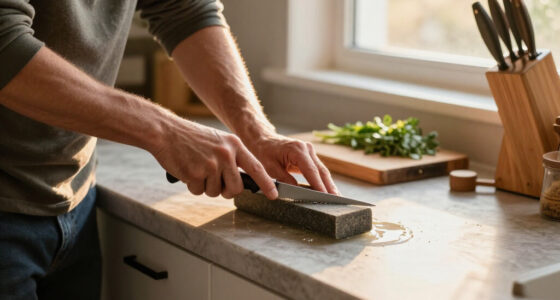
Sharpening a single-bevel knife isn’t just about hitting one side. It requires maintaining a precise flat bevel on the main side while carefully preserving the uraoshi—the slight hollow on the back side. This hollow isn’t just aesthetic; it’s integral to the blade’s performance, reducing friction and aiding food release. Proper sharpening involves using a flat stone and technique that allows for controlled removal of material, ensuring the bevel remains flat and the hollow shape stays consistent.
If done poorly, sharpening can round the bevel, distort the geometry, or produce uneven steering, which diminishes control and can cause chips or edge damage. It’s a skill that demands patience, attention to detail, and an understanding of the blade’s geometry—often requiring specialized tools or guided systems for best results. Mastering this process means developing a keen eye for angles and a steady hand, turning sharpening into an art form that preserves the knife’s delicate balance.
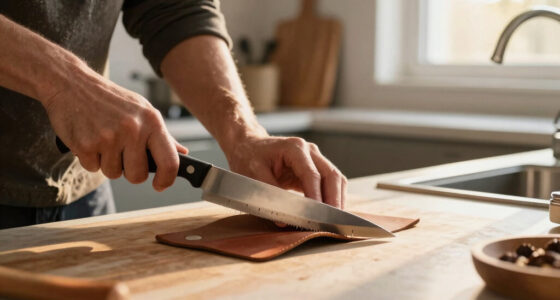
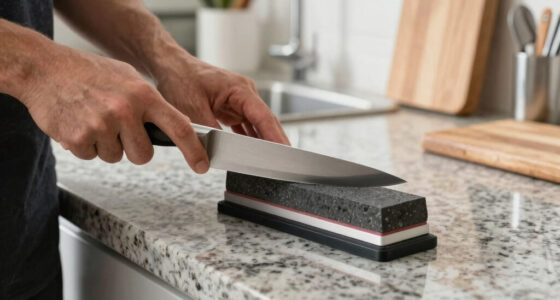
Double-bevel knives are generally easier to sharpen because they have symmetrical angles on both sides. You can alternate sides, maintain consistent angles, and use familiar techniques like guided stones or standard whetstones. This simplicity encourages regular maintenance, which is vital for keeping edges sharp and performance optimal. Recognizing the difference in sharpening needs helps users appreciate the craftsmanship behind single-bevel blades and the effort required to keep them at peak condition, reinforcing the importance of proper technique and routine care.
Edge Angles and Steel: What You Should Know
Single-bevel knives often use a very low angle—sometimes as little as 10–15 degrees per side—supporting an extremely sharp and fine edge ideal for delicate slicing. This low angle maximizes sharpness but sacrifices some durability, making the edge more prone to chipping or dulling if misused. Double-bevel knives typically have angles around 15–20 degrees per side, or roughly 30–40 degrees overall, balancing sharpness with strength. This slightly broader angle enhances durability, especially when cutting tougher ingredients or working in less controlled environments.
These angles aren’t strict rules but guidelines. The right choice depends on steel type, intended use, and how durable you need the edge to be. Harder steels can hold a sharper, thinner edge longer but are more brittle, requiring careful sharpening to avoid chipping. Softer steels are more forgiving but may require more frequent honing to maintain their edge. For example, a yanagiba might be sharpened at 10 degrees per side for maximum finesse, but this makes it more vulnerable to damage if used improperly. Conversely, a robust gyuto might be sharpened at 15–20 degrees for a good balance of sharpness and durability, suitable for everyday kitchen tasks.
Understanding these tradeoffs helps cooks select the right angle and steel combination for their specific needs, ensuring longevity and optimal performance of their knives. Proper knowledge of edge angles and steel properties allows for tailored maintenance routines, prolonging the life of the blade while maintaining cutting efficiency.
Durability & Use: When Not to Push Your Knife
Neither single nor double bevel knives are designed for prying, twisting, or cutting through bones. Each has its specific limitations—pushing beyond them risks damaging the blade or compromising safety. A delicate yanagiba, designed for slicing fish, can chip or crack if subjected to twisting or excessive force. Similarly, a thin gyuto may warp, bend, or dull quickly if used to cut frozen foods, bones, or hard substances. These limitations highlight that these knives are precision tools, optimized for specific tasks rather than general-purpose workhorses.
Traditional single-bevel knives like deba are thicker and more robust than other single-bevels, but they’re still not intended for heavy-duty tasks. Using a deba as a cleaver or for splitting bones can cause chips or structural damage. Conversely, a Western-style chef’s knife, with a more robust construction, is better suited for heavier tasks but lacks the finesse of Japanese single-bevels.
Understanding these boundaries is essential: overstepping them leads to damage and shortened lifespan, which can be costly and frustrating. Think of these knives as specialized instruments—if you push them beyond their design parameters, you risk ruining their geometry and sharpness. For heavy-duty tasks, invest in appropriate tools like cleavers or boning knives designed for those purposes. Recognizing their limits ensures you get the best performance and longevity out of your investment, maintaining the integrity of your blades and ensuring safety in your kitchen.
Steel, Rust, and Care: Keeping Your Edges Sharp
Steel type doesn’t depend on bevel shape, but traditional single-bevel knives often use high-carbon steels that sharpen to a fine edge but are more prone to rust and discoloration if not properly cared for. This means that owners of such knives must pay close attention to cleaning and storage routines—drying immediately after use, avoiding dishwasher cleaning, and occasionally applying oil or a patina to prevent corrosion. The patina isn’t just aesthetic; it forms a protective layer that slows rust formation, especially important for carbon steels.
If you own a carbon-steel single-bevel, you’ll want to wash, dry, and store it carefully. A patina—an orange-brown oxide layer—is normal and protective, but active rust isn’t. Rust can weaken the blade’s integrity and ruin its appearance, so regular inspection and maintenance are critical. Stainless steels, more common in modern single-bevel knives, offer greater resistance to rust but still benefit from routine honing and cleaning to maintain their sharpness and appearance. Proper storage—like hanging or in a knife block—also helps prevent accidental damage and corrosion.
Think of your knife as a garden tool—careful cleaning, timely sharpening, and correct storage keep it performing at its best. Regular maintenance not only prolongs the life of your blade but also ensures safety and consistent cutting performance, especially for delicate or high-precision tasks. Investing in proper care routines is essential for preserving the unique qualities of your knives, regardless of their bevel type or steel composition.
Cost, Ownership & When to Invest in Traditional Tools
High-quality single-bevel knives often come with a higher price tag—sometimes hundreds of dollars—due to their craftsmanship, materials, and traditional finishing. They’re often handcrafted, with attention to detail that reflects their cultural and functional significance. Maintaining these knives may require specialized sharpening stones, professional honing, and careful handling to preserve their geometry. The investment isn’t just monetary but also in time and skill, as mastering their maintenance can be a rewarding challenge for dedicated enthusiasts.
Double-bevel knives, especially those made with modern steels, range from affordable to premium but are generally easier to buy, sharpen, and maintain. They are designed for durability and versatility, making them suitable for a wide range of users—from home cooks to professional chefs—without requiring extensive specialized care.
If you’re serious about Japanese-style precision work and willing to dedicate time to sharpening and maintenance, a single-bevel knife can be a lifelong, treasured tool. However, for most home cooks, a well-made double-bevel offers excellent value, combining performance with practicality. Understanding your needs, budget, and willingness to learn will guide you toward the right investment, ensuring you enjoy your knives for years to come.
Trends & New Developments in Knife Design
The market now features a blend of tradition and innovation. More asymmetrical double-bevel knives mimic single-bevel behavior without the complexity of true single-bevel geometry. These are appealing for those wanting a bit of precision with less fuss, offering easier maintenance and use while still providing some of the benefits of traditional single-bevels. Manufacturers are also expanding their offerings to include more left-handed models, tougher steels, and guided sharpening systems—making traditional Japanese knives more accessible to everyday cooks who may not have specialized sharpening tools or training.
Recent innovations focus on blade geometry, steel quality, and edge thinning, which enhance performance and durability. These advancements mean you can find tools that combine the artistry of traditional craftsmanship with the practicality of modern convenience, broadening access and usability for a wider range of users. Such trends reflect a growing recognition that performance depends on the entire blade profile—not just the edge angle—and that user-friendly features can help more cooks achieve professional results with less effort. This evolution in design supports a more inclusive, versatile approach to Japanese-style cutlery, encouraging both tradition and innovation in your kitchen.
Common Myths About Single & Double Bevel Knives
Myth 1: Single bevel means sharper. Not necessarily. While single-bevel knives can be honed to an extremely fine, precise edge, sharpness also depends heavily on the steel quality, sharpening angle, and maintenance routine. A well-maintained double bevel can achieve comparable sharpness, but the single-bevel’s geometry allows for finer, thinner slices that are crucial in specialized tasks. The misconception lies in equating sharpness solely with edge angle, ignoring the importance of blade profile and material. Recognizing this helps users understand that both types can be razor-sharp when cared for properly, but each has unique strengths aligned with specific culinary needs.
Myth 2: You only sharpen one side of a single-bevel. The back also needs maintenance—careful honing keeps the geometry intact. Neglecting the back can lead to uneven edges, increased steering, and compromised performance. Proper sharpening involves maintaining the flat bevel on the main side while carefully honing or lightly sharpening the back to preserve the blade’s profile. This balanced approach ensures the knife performs as intended, offering both precision and longevity. It’s a skill that, once mastered, enhances your appreciation of the craftsmanship involved and ensures consistent, optimal results.
Myth 3: A 70/30 grind is single bevel. Usually, it remains a double-bevel with asymmetrical sharpening, not true single-bevel. True single-bevel blades are ground only on one side, with the other side flat or slightly convex, not asymmetrical. The 70/30 or 80/20 ratios often refer to the grind’s asymmetry but still involve sharpening on both sides, making them hybrid or specialized tools rather than pure single-bevels. Understanding this distinction clarifies their use and maintenance requirements, helping cooks select the right tool for their tasks and avoid misconceptions about their design and capabilities.
Myth 4: All Japanese knives are single bevel. Actually, most common Japanese kitchen knives, like gyutos and santokus, are double bevel. While traditional Japanese cutlery includes many single-bevel tools, the majority of modern Japanese knives used in home and professional kitchens are double bevel, designed for versatility and ease of use. This misconception can lead to unnecessary complexity or misapplication of these knives. Recognizing the distinction helps users choose the right knife for their skill level and culinary style, emphasizing that Japanese craftsmanship encompasses both highly specialized single-bevels and more accessible double-bevels.
Myth 5: Single bevel knives are fragile. They can be more vulnerable to chips if misused or subjected to undue stress, such as twisting or hitting bones. However, with proper care and correct technique, they are just as durable as double bevels for their intended tasks. Their perceived fragility often stems from a misunderstanding of their specialized geometry and material properties. Proper handling, routine maintenance, and correct usage—avoiding prying or twisting—are key to ensuring longevity. Appreciating their strengths and limitations helps users maintain their performance and safety, turning perceived fragility into an understanding of their delicate craftsmanship.
Which Should You Pick? Making the Right Choice for Your Kitchen
If you want a versatile, easy-to-maintain knife for daily prep, a double-bevel is the way to go. It’s forgiving, ambidextrous, and suited for most ingredients, offering a straightforward approach that minimizes technical barriers. Its balanced edge profile allows for consistent results across a wide range of foods, making it ideal for beginners and busy kitchens.
But if you’re passionate about Japanese cuisine, slicing raw fish, or performing intricate vegetable cuts, a single-bevel knife will give you unmatched control—provided you’re ready to learn proper technique and maintenance. The tradeoff involves a steeper learning curve and more meticulous upkeep, but the rewards include cleaner cuts and a deeper connection to traditional craftsmanship.
Think about your needs, your willingness to learn, and your budget. The right choice can elevate your cooking and sharpen your skills—literally and figuratively. Investing in the correct bevel type tailored to your culinary goals ensures a more satisfying and effective experience, turning your kitchen into a space of precision and artistry.
Frequently Asked Questions
Is a single-bevel knife sharper than a double-bevel knife?
Not automatically. Single-bevel knives can be honed to an extremely fine, precise edge, supporting a razor-sharp profile for specific tasks. However, sharpness depends on steel quality, edge angle, and maintenance routines. Both types can be razor-sharp when properly cared for, but the single-bevel’s geometry allows for finer, thinner slices ideal for delicate work. The tradeoff is that maintaining this edge requires more skill and attention, as improper sharpening can damage the blade or reduce its effectiveness. Ultimately, sharpness is a combination of design, material, and care—each can achieve excellent results when properly managed.
Which is better for beginners?
A double-bevel knife is generally better for those starting out. Its symmetrical grind, ease of sharpening, and ambidextrous design make it more forgiving and accessible. Beginners benefit from the predictable behavior, less technical skill needed, and ability to handle a variety of ingredients confidently, making it a practical choice for learning fundamental techniques and building confidence in the kitchen.
Can I use a single-bevel knife for everyday cooking?
Yes, but with considerations. Single-bevel knives are excellent for specialized tasks like slicing sashimi or performing intricate cuts, but they can veer during cuts and require specific technique to avoid uneven or unsafe results. For general everyday use—chopping, dicing, and slicing—double-bevel knives tend to be more practical because they are easier to control, maintain, and share among users. Using a single-bevel daily may lead to frustration or accidental damage if the user isn’t familiar with its handling characteristics.
Are single-bevel knives only for sushi?
Most are used for sushi, sashimi, or fish filleting, but their precision also makes them suitable for fine vegetable work and delicate garnishes. Their main advantage is achieving very thin, controlled slices that enhance presentation and texture. However, their specialized design means they’re less suited for heavy-duty tasks or general prep, making them ideal for specific culinary applications rather than all-purpose use.
Why are left-handed single-bevel knives more expensive?
Because they are produced in smaller quantities and require custom grinding to match the opposite hand’s geometry, left-handed knives involve additional manufacturing steps. Properly crafted left-handed single-bevels ensure optimal control, safety, and performance for left-handed users, which justifies the higher cost. Investing in a left-handed version ensures that the knife’s geometry aligns perfectly with your hand, providing better control and reducing fatigue or accidental slips during precise cuts.
Conclusion
Choosing between single and double bevel knives boils down to your specific culinary needs and willingness to master a skill. While single-bevel blades offer unmatched precision, double-bevel knives provide versatility and ease of use for most cooks.
Remember: a sharp knife is a safe knife. Investing time in proper sharpening and maintenance extends the life of your tools—and elevates your cooking. What’s your next step? Pick the tool that matches your style, sharpen it well, and enjoy every cut.
College move-in / dorm season Picks
dorm essentials
As an affiliate, we earn on qualifying purchases.