TL;DR
A manual food chopper is a hand-powered tool that cuts food with a pull cord, press, or crank. It works well for modest amounts of onions, herbs, garlic, nuts, and some vegetables, but capacity, food firmness, and blade design affect the result. Choose one that fits your usual jobs, follow its care instructions, and reach for a knife or processor when you need more control or volume.
An onion can take longer to peel than to chop, and a countertop food processor can feel like overkill for one bowl of salsa. A manual food chopper sits between those jobs: it cuts food with your hand, without a cord plugged into the wall or a motor rattling across the counter.

Get kitchen gear delivered free with Prime
- Fast, free delivery on millions of items
- Prime Video, Amazon Music and more included
- Member-only deals all year
This guide explains what they are, which everyday foods they handle, and how to get a useful texture without turning tomatoes to paste. You’ll also get practical buying and cleaning advice, plus a clear sense of when a knife or electric processor is the better fit. The goal is simple: choose the tool that makes sense for the food you actually prepare.
Use a manual food chopper for modest quantities of compatible foods such as onion, garlic, herbs, and some nuts or vegetables.
Cut food into manageable pieces and stay within the stated bowl capacity to reduce uneven results and strain on the mechanism.
Use short pulls or presses and check texture often; extra actions can make soft ingredients mushy.
Choose a knife for precision and an electric processor for larger quantities or jobs beyond the chopper’s instructions.
Follow the model’s cleaning and safety instructions, and keep fingers clear of sharp blade assemblies.
What a manual food chopper does—and what it can’t replace
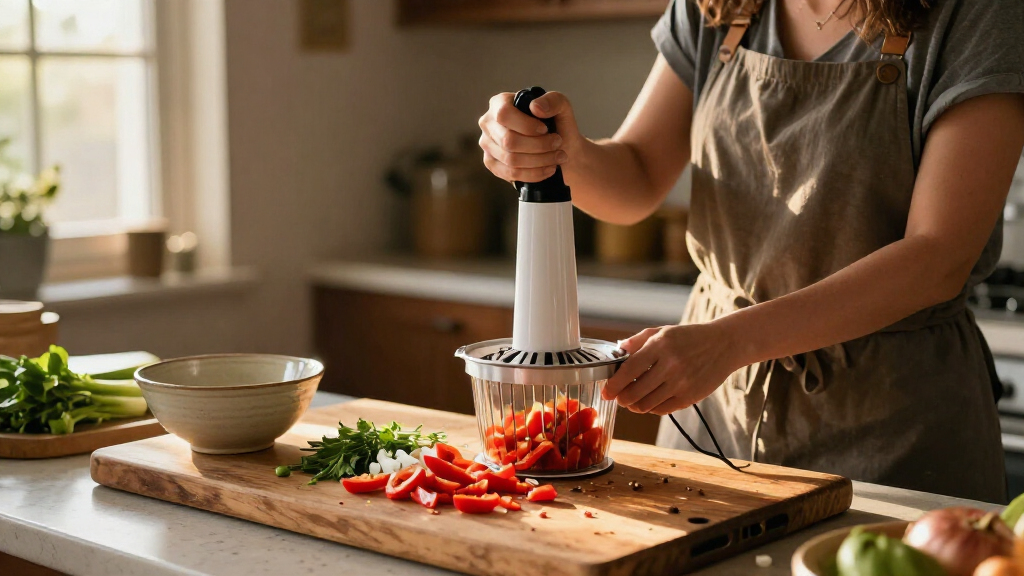
A manual food chopper is a hand-powered kitchen tool that cuts ingredients into smaller pieces using blades driven by a pull cord, a press-down plunger, or a crank. You load food into its container, close or operate the mechanism as directed, and stop when the texture suits your recipe. It can speed up a small chopping job, though it does not give you the knife’s direct control or a processor’s capacity.
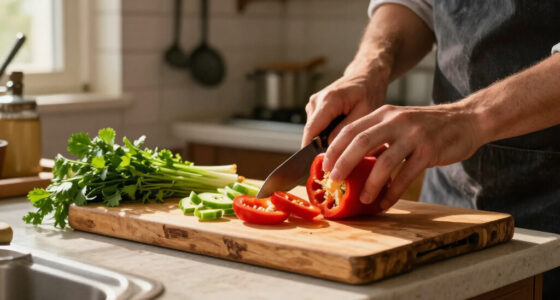
Think of it as a small hand-powered tool for repeat cuts, not a magical shortcut for every ingredient. If you need one onion diced for soup, enclosing it in a chopper can feel tidy and convenient. If you need carefully even slices of a firm potato, a knife or a suitable slicer gives you more control over each cut.
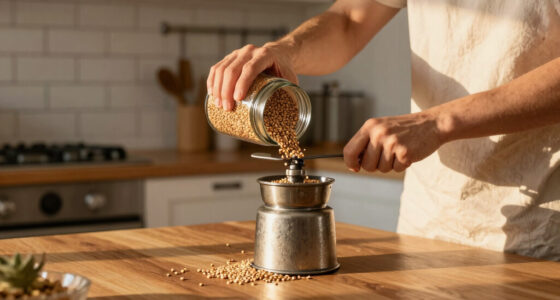
Most designs use a bowl and blade assembly, but the action varies. Pull-cord models spin blades with each pull, press models drive blades downward, and crank models turn blades with a handle. A small change in design can affect the effort you feel and how easily you can pause to check the food.
A manual food chopper is a powered kitchen tool only in the human sense: your hand supplies the energy. That makes it quiet and useful in a cabin without convenient electricity, but it also means you do the work. For a handful of parsley, that trade can be worthwhile; for several pounds of vegetables, it can grow tiring.
Products Worth Considering

Cuisinart Chef's Classic 17-Piece Stainless Steel Cookware Set

De'Longhi Classic Signature Espresso Machine with Adjustable Milk Frother

De'Longhi Magnifica Evo Automatic Espresso Machine with Milk Frother, Silver
As an affiliate, we earn on qualifying purchases.
Which foods chop well in a manual chopper
Manual food choppers usually work best on small quantities of onions, garlic, herbs, nuts, and tender vegetables, provided you prepare the food to suit the model. Their limited capacity and blade layout matter as much as the ingredient itself. Check the maker’s instructions before adding hard, fibrous, oversized, or very soft food; not every chopper handles those ingredients safely or evenly.
Imagine prepping a small bowl of salsa: you cut an onion and a few peppers into manageable pieces, then chop in short bursts so you can watch the texture. A few pulls may leave distinct pieces; several more may make them finer. Tomatoes, however, can quickly lose their shape, so you might chop firm ingredients in the chopper and fold in diced tomatoes by hand.
Fresh herbs can work well if the leaves are not packed into a dense wad. Nuts may also chop in some models, but the manufacturer’s guidance matters, since a small blade assembly is not automatically built for every hard food. Frozen food and ice belong on the “check first” list: use them only when the instructions say the specific model can handle them.
For baby food, a chopper may cut ingredients but may not create the smooth texture a recipe needs. If you are preparing food for an infant, follow food-safety guidance and your clinician’s advice, and check whether your appliance is suitable for that use. A chopped texture and a smooth purée are different results.
Get the texture you want with three simple habits
For a more even chop, prepare similarly sized pieces, keep within the bowl’s fill limit, and use short, controlled actions so you can check progress. The blades cannot compensate for a crowded bowl or ingredients ranging from tiny scraps to big chunks. You are aiming for a steady rhythm: chop, check, and stop before soft food turns mushy.
- Cut ingredients into manageable pieces. If a whole onion barely fits through the opening, halve or quarter it first, as the maker directs. Smaller starting pieces put less strain on the mechanism.
- Fill the bowl to its stated limit. A bowl packed to the brim can block blade movement or produce uneven pieces. For one large onion, you may get a better result by working in two batches.
- Use a few pulls or presses, then inspect. Lift or open the lid only as the instructions allow. If you’re making a rough relish, stop while the pieces still have shape; for a finer mixture, add actions gradually.
This approach is especially useful for herbs. A fast string of pulls might turn a few leaves into a wet, bruised clump, while a couple of short actions can leave visible flecks for dressing or soup. The sound and resistance can also tell you something: if a pull feels unusually hard, stop and check whether the bowl is crowded or food has caught around the blades.
Consistency depends on the blade layout, food size, and number of actions, so there is no universal pull count. Treat the first batch as a small calibration. When it looks right, repeat the same prep and action pattern for the next batch.
Choose between a manual chopper, knife, and food processor
A manual food chopper suits modest, repetitive jobs when you value a compact tool and do not mind using your hands. A knife offers more direct control over shape and cut size, while an electric processor handles larger amounts and a wider range of tasks. The right choice depends on quantity, texture, and your tolerance for hand effort, not on which tool sounds most modern.
| Tool | Good fit | Trade-off |
|---|---|---|
| Manual chopper | A small batch of onion, garlic, herbs, or suitable nuts | Hand effort, limited capacity, and less precise cuts |
| Chef’s knife | Even dice, slices, delicate herbs, and flexible portion sizes | Needs a stable cutting board and practiced knife handling |
| Electric processor | Large batches and jobs its attachments are designed to handle | Needs electricity, counter or storage space, and more parts to clean |
For example, if you’re making a single pot of beans at a cabin, a hand-powered chopper may handle one onion and a few cloves of garlic without an outlet or much setup. For a weekend batch of salsa jars, a larger processor or careful knife work may save time and give you better control across many ingredients.
Choppers can be quiet, compact, and easy to store, but those benefits do not make every model durable or easy to clean. Compare stated capacity, grip, nonslip base, blade configuration, replacement parts, warranty, and care instructions. A dishwasher-safe bowl does not mean the lid, cord, seals, or blade assembly can go in the dishwasher too.
Keep the blades safe and the mechanism working
Manual chopper blades are sharp even when the tool is not running, so treat the blade assembly like a knife whenever you take it out or clean around it. Follow the maker’s directions for locking the lid, removing parts, and washing the mechanism. A stable base and a secure lid matter, especially when you pull a cord with some force.
Suppose you have chopped garlic and onion for dinner. Rinse the bowl promptly so bits do not dry into the corners or around the blade hub. If the blade assembly comes out, remove it only as instructed and use a brush or sponge that keeps your fingers clear of the cutting edges.
Do not assume every component is dishwasher-safe. Some bowls may tolerate a dishwasher while a lid, cord, seal, or blade hub needs hand washing. Check the care instructions, then let all parts dry fully before storage; trapped moisture and food residue can make a compact tool unpleasant to use next time.
Keep your fingers away from the blade assembly, including while rinsing or clearing caught food. If a pull becomes unusually hard, stop; check for overfilling or trapped pieces according to the instructions before trying again.
Basic care also helps with durability. Use the tool for foods it was designed to chop, avoid forcing a jammed mechanism, and store the lid and blade safely. A missing replacement blade or a cord that cannot be serviced may matter more over time than an extra attachment you rarely use.
Find the right size and design for your kitchen
Choose a chopper by matching its capacity, mechanism, cleaning needs, and parts to the foods you regularly prepare. A larger bowl may hold more, but it still needs to fit your storage space and follow its fill limit. A compact bowl may be easy to tuck in a drawer, yet require several batches when you cook for a crowd.
Start with your usual meal, not the product’s longest feature list. If your weeknight routine involves one onion and a handful of herbs, a small pull-cord model may be enough. If you want to prep vegetables for a family stew, look closely at stated capacity and whether you can handle the action comfortably when the bowl contains food.
Try each mechanism in your mind against your own kitchen routine. A pull cord may be quick for repeated short actions, but someone with limited grip strength may prefer a press or crank model. Check whether the base grips a wet or smooth counter, whether the lid is easy to secure, and whether the parts stack neatly in your cupboard.
Product listings may highlight interchangeable blades, fewer parts, comfortable grips, or dishwasher-safe components. Those are design features, not proof that a newer chopper works better. Read the model’s instructions, warranty, replacement-part details, and independent user feedback before buying. If the instructions do not explain which foods the tool can handle, treat that gap as a reason to keep shopping.
Frequently Asked Questions
Can a manual food chopper cut onions without making your eyes water?
Keeping onion pieces inside a chopper may reduce how much you handle them, but it cannot guarantee tear-free chopping. Chilling the onion and using a sharp, clean blade may help. Prepare it into manageable pieces first and follow the model’s instructions.
How fine can a manual chopper make food?
Fineness depends on the food, blade design, starting piece size, and number of pulls or presses. Work in short actions and check often. Soft ingredients can become mushy if you keep going after they reach the texture you want.
Can I use a manual chopper for salsa, pesto, or baby food?
It can chop some salsa or pesto ingredients, though capacity and texture vary by model. It may not produce a smooth purée, and not every model is suitable for infant food. Check the instructions and follow applicable food-safety guidance for the recipe.
Why is the pull cord hard to use or the food uneven?
The bowl may be overfilled, the pieces may be too large, or food may have caught around the blades. Stop and check the tool according to its instructions. Try a smaller batch or smaller pieces rather than forcing the cord.
Can a manual food chopper handle ice or frozen food?
Use it for ice or frozen food only if the manufacturer says that specific model is designed for the job. Otherwise, the food may damage the blades or mechanism. A chopper’s ability to cut vegetables does not mean it can handle frozen ingredients.
Are manual food choppers dishwasher-safe?
It depends on the model and component. Check the care instructions rather than assuming the bowl, lid, cord, seals, and blade assembly all share the same cleaning rules. Remove food promptly and dry parts fully before storing.
Conclusion
A manual food chopper makes sense when you want to handle a small, straightforward chopping job without powering up a large appliance. Match the tool to the ingredients, work in manageable batches, and stop as soon as the texture suits the dish. Keep the blades clear of your fingers and follow the care instructions.
Think of it as a quiet helper for the one onion on your board, not a replacement for every knife or machine in your kitchen. The best tool is the one that leaves you with chopped food—and enough patience to enjoy the meal.