
TL;DR

Get kitchen gear delivered free with Prime
- Fast, free delivery on millions of items
- Prime Video, Amazon Music and more included
- Member-only deals all year
Heirloom cookware can last for generations when its care matches its material: clean it promptly, dry it fully, avoid sudden temperature changes, and store it where surfaces stay protected. Cast iron, carbon steel, stainless steel, enamel, and lined copper need different care, so identify the piece and check its condition before cleaning or restoring it.
A cast-iron skillet can outlive its first owner, but a careless rinse can leave it orange with rust by breakfast. The difference often comes down to a handful of small habits: knowing what the pan is made of, cleaning it after use, and putting it away completely dry.
“Heirloom” describes a piece’s history or intended longevity, not a universal cleaning method. The advice that suits bare cast iron can harm an enamel surface or a copper pan with a tin lining. You’ll learn how to identify those differences, care for common materials, and spot damage before an old favorite becomes unsafe to use.
Think of cookware care like tending a woodstove: steady heat and routine attention do more than a dramatic rescue after something goes wrong. Whether you cook over a modern burner or a wood-fired range, these habits help maintaining heirloom cookware feel manageable and grounded in the piece you actually own.
Identify the body, lining, coating, handles, and maker’s care instructions before choosing a cleaning method.
Let hot cookware cool gradually, clean it promptly, and dry it completely before storage.
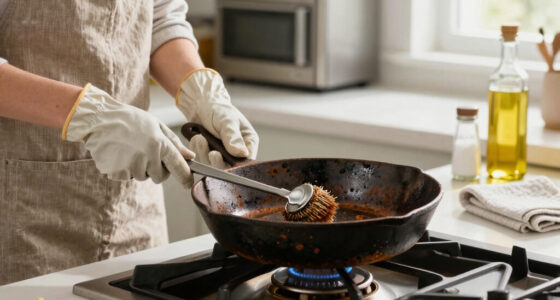
Wash cast iron with warm water and a brush or sponge; mild dish soap is generally fine, and a thin film of oil can protect a dry surface.
Use gentle tools on enamel, avoid chlorine bleach on stainless steel, and keep abrasive polish away from copper linings.
Stop using cookware with chipped food-contact enamel or uncertain damage until the maker or a qualified specialist assesses it.
FIELD GUIDE · KITCHEN HERITAGE
Maintaining Heirloom Cookware for Decades
Long life comes from matching the care to the material. Identify the cooking surface, clean it promptly, dry it fully, and let hot cookware cool at its own pace.
Three small habits prevent many avoidable problems.
Body, lining, coating, handles, and repairs all shape the right routine.
Questionable damage deserves a maker’s or specialist’s assessment.
Identify, clean, dry, protect
Each needs its own care
Let the pan cool gradually
A maintained surface, not a cure
Good care starts with a few habits
“Heirloom” describes a piece’s history or intended longevity. It does not prescribe one universal cleaning method.
Identify the body, food-contact surface, handles, lining, and maker’s instructions before cleaning.
Let cookware cool gradually, clean it after use, and dry it completely before storage.
Use warm water and a brush or sponge on cast iron; mild dish soap is generally fine.
Use gentle tools on enamel, avoid chlorine bleach on stainless steel, and protect copper linings from abrasive polish.
Stop using cookware with chipped food-contact enamel or uncertain damage until it is assessed.
Store pieces dry and use a cloth or pan protector between stacked surfaces.
Five surfaces, five care cues
Match the tool and cleaning method to what touches the food—not to the pan’s shine, color, or age.
Cast iron
Wash with warm water and a brush or sponge. Mild soap is generally acceptable. Dry immediately; add a very thin film of oil if the surface looks dry.
Carbon steel
Follow a cast-iron-like routine: prompt drying and light seasoning care. Acidic foods can wear newer seasoning; check factory-treatment instructions.
Stainless steel
Use dish soap and a nonabrasive sponge. Soak or simmer water to loosen stuck food. Avoid chlorine bleach.
Enameled cast iron
Use gentle utensils and nonabrasive tools. Avoid thermal shock and prolonged empty heating. Stop using it if food-contact enamel chips.
Copper
Care depends on whether the interior is tin, stainless steel, or another material. Polish the exterior as directed; avoid abrasives on the lining.
Older pieces
Look for loose handles, cracks, deep pitting, flaking, damaged linings, and unsafe repairs. Ask a qualified specialist before stripping or sanding.
Do this · Avoid this
A practical reference for common cleanup decisions. Follow the maker’s guidance when it is available.
| Cookware | Good starting point | Avoid / watch for | Condition cue |
|---|---|---|---|
| Cast iron | ✓ Warm water, brush, quick dry | ~ Long soaking or storing food | Small rust spot: scrub, dry, refresh seasoning |
| Carbon steel | ✓ Dry promptly; maintain light oil layer | ~ Acidic cooking can wear new seasoning | Follow instructions for factory treatment |
| Stainless steel | ✓ Soap, sponge, or simmer to loosen food | ✗ Chlorine bleach | Rainbow heat tint is often cosmetic |
| Enamel | ✓ Gentle utensils and nonabrasive tools | ✗ Thermal shock; prolonged empty heating | Food-contact chip: stop and seek advice |
| Copper | ✓ Identify lining; follow maker guidance | ✗ Abrasive polish on food-contact lining | Worn tin may need professional retinning |
Five steps to a ready pan
A consistent routine protects surfaces without turning ordinary wear into a restoration project.
Cool gradually
Let the pan cool until it is no longer piping hot.
Clear leftovers
Remove food instead of storing it in the cookware.
Wash gently
Choose a tool and method suited to the surface.
Dry completely
For bare iron, brief low heat can evaporate leftover moisture.
Protect and store
Oil bare iron lightly if needed; keep every piece dry.
Know when a pan needs an expert
Some marks tell a useful history. Structural damage or a compromised cooking surface needs careful judgment.
Photograph first. Ask before stripping.
For valuable or questionable pieces, consult the maker, a cookware specialist, or a conservator before sanding, stripping, or attempting a repair.
Keep useful surfaces ready
Routine care beats chasing a perfect finish. Cook regularly, clean thoughtfully, and respond to what the surface needs.
Seasoning is maintained
On cast iron and carbon steel, seasoning forms as oil is heated onto the metal. It is a working surface, not a permanent nonstick coating. Uneven color can be normal; use a very thin layer of oil when the pan looks dry or food sticks more than usual.
Storage protects the finish
Put cookware away fully dry. Avoid stacking bare surfaces directly; place a cloth or pan protector between pieces. Prompt cleanup also keeps salty, acidic, or wet food from sitting against a surface for hours.
Identify the material before you reach for a scrubber
Start heirloom cookware care by identifying the body, cooking surface, handles, and any lining or coating. Those details decide what kind of heat and cleaning the piece can take. A pan that looks like bare iron may have enamel inside; a copper pot may have a tin lining that needs different treatment from stainless steel.
Check the maker’s marks, old labels, and care instructions if you have them. Look closely at worn areas and seams. A dark surface alone does not prove that a pan is seasoned iron, and a decorative exterior does not tell you what touches the food. When instructions are missing, treat uncertain coatings and linings gently until you identify them.
For example, imagine finding a copper saucepan in a relative’s kitchen. Its bright exterior might invite a vigorous polish, but the interior could be tin, which can wear away under abrasive cleaning. Match the cleaning tool to the food-contact surface, not to the pan’s shine or age.
Older cookware also deserves a condition check before it returns to the stove. Look for loose handles, cracks, deep pitting, flaking coatings, damaged linings, and signs of an unsafe repair. If a valuable piece needs restoration, photograph its condition and ask a cookware specialist or conservator before stripping or sanding it. Some wear tells a useful history; some damage needs an expert’s judgment.
Products Worth Considering

Le Creuset Enameled Cast Iron Round Bread Oven, 9.5-Inch, Cerise

Le Creuset Signature 6.5-Quart Deep Round Dutch Oven with Light Gold Crucible Knob, Enameled Cast Iron, Bleu Riviera

Le Creuset Signature Enameled Cast Iron Round Dutch Oven, 5.5 qt, Deep Teal
As an affiliate, we earn on qualifying purchases.
Clean and dry each pan before the next meal
Clean heirloom cookware after use, then dry it fully before storage. Prompt cleaning keeps salty, acidic, or wet food from sitting against a surface for hours, and thorough drying helps limit rust, spots, and tarnish. Let hot cookware cool gradually first; cold water against a very hot pan can warp metal or crack enamel.
Use warm water and a nonabrasive sponge as a starting point, then adjust for the material. For a stuck-on patch in a stainless-steel pot, add water and simmer it briefly to loosen the food before washing. That is easier on the surface than attacking it with a sharp tool. Mild dish soap is generally fine on cast iron too; long soaking and leaving it wet are the bigger problems.
Here is a practical after-supper routine when you have a cast-iron skillet and an enameled Dutch oven on the counter:
- Let each pan cool until it is no longer piping hot.
- Remove leftover food rather than storing it in the cookware.
- Wash according to the surface, using gentle tools on enamel and mild soap where suitable.
- Rinse and dry completely. For bare iron, a brief low-heat step can help evaporate remaining moisture.
- Protect bare iron lightly with a very thin layer of cooking oil if the surface looks dry.
If you are washing off-grid with a limited basin of warm water, a brush and quick rinse may be enough for an iron pan. Keep the routine simple, but do not skip the dry step. Clean it promptly and store it dry; a pan left damp in a cold cupboard is far more likely to develop rust than one washed with mild soap.
Keep cast iron and carbon steel ready for everyday cooking
Cast iron and carbon steel both benefit from a dry surface and a thin, maintained seasoning layer. Seasoning forms when oil is heated onto the metal; it is a working surface built through care and cooking, not a permanent nonstick coating. A patch of uneven color does not automatically mean the pan needs a full restoration.
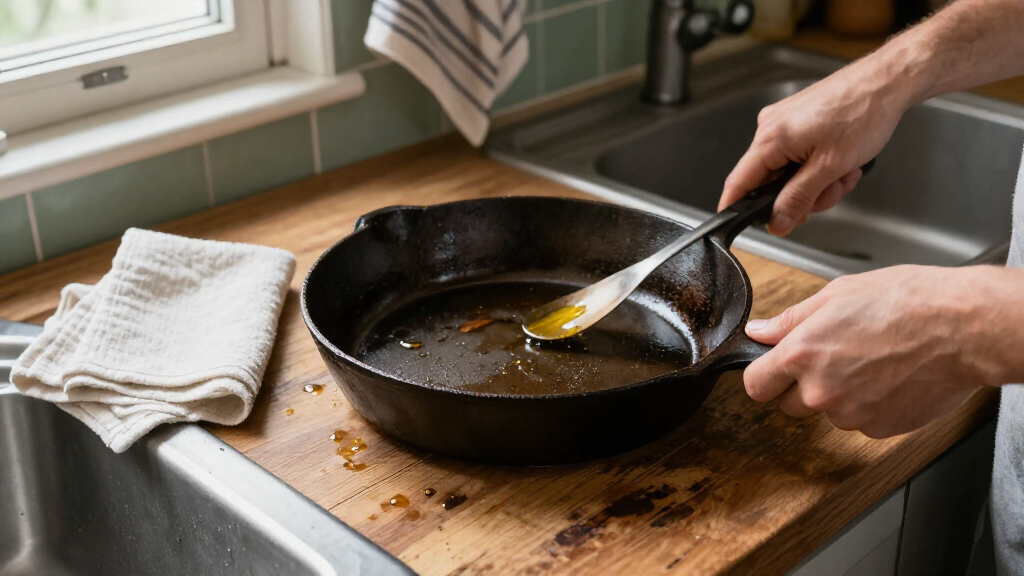
After cooking eggs in a cast-iron skillet, wash away residue with warm water and a brush or sponge. Mild soap is generally acceptable. Dry the pan right away, and if it looks dull or dry, wipe on a little oil and heat it briefly. Use only a thin film; excess oil can turn sticky, like a tacky varnish on a tool handle.
Carbon steel follows much the same routine, though the maker’s instructions matter if the pan came with a factory treatment. Acidic food, such as a long tomato sauce, can wear newer seasoning. A well-seasoned pan may tolerate occasional acidic cooking, but if you simmer tomatoes in a new carbon-steel pan, expect to refresh the surface afterward.
There is no fixed calendar for seasoning either material. Cook regularly, then add a light layer of oil when the surface looks dry, food starts sticking more than usual, or rust appears. For a small rust spot on bare iron, scrub it away, rinse, dry thoroughly, and restore a thin seasoning layer. If the rust is extensive, or the pan is coated, lined, or historically valuable, pause and get advice specific to that piece.
Routine use maintains seasoning better than chasing a perfectly uniform black finish. A skillet that fries potatoes each Sunday may show a few color changes, yet cook beautifully because its owner washes, dries, and oils it consistently.
Choose a gentler routine for stainless steel, enamel, and copper
Stainless steel, enamel, and copper need distinct care because their cooking surfaces behave differently. Stainless steel generally handles dish soap and a nonabrasive sponge well; enamel needs protection from chips and thermal shock; copper’s care depends on its lining. One broad “grandma’s pan” rule will not suit all three.
For stainless steel, soak stuck food or simmer water in the pan before cleaning. Avoid chlorine bleach, which can damage the metal. Rainbow-like heat tint or mineral spots are often cosmetic; use a cleaner intended for stainless steel and follow its directions. If a pot has a rainbow sheen after boiling water, that alone does not mean the pan is ruined.
Enameled cast iron asks for gentle utensils and nonabrasive cleaning tools. Avoid heating it empty for a long time, and let it cool before washing. If enamel chips on the food-contact surface, stop cooking with that piece and ask the maker or a qualified repair specialist about its specific condition. A small exterior chip is different, but keep an eye on it.
Copper requires a closer look at the inside. A stainless-lined copper pan and a tin-lined one do not share the same polishing routine: avoid abrasive polish on any food-contact lining, and know that worn tin may need professional retinning. Use the maker’s care guidance for the exterior. For instance, polishing only the outside of a tin-lined saucepan protects the cooking surface while bringing back the warm gleam of the copper.
Care that matches the material protects both performance and safety. If you cannot identify a lining, coating, or repair, set the piece aside until you can get a reliable assessment.
Store pans so moisture and scratches do not undo your work
Store heirloom cookware fully dry, in a place where moisture cannot linger and bare surfaces cannot scrape against each other. Even a well-cleaned pan can rust or pick up scratches if you stack it wet or slide rough metal rims across a delicate finish. A cloth between pans is a small barrier with a useful job.
If cupboard space is tight, stack pans with a clean towel or pan protector between them. Put bare iron away dry, and avoid sealing it damp in an airtight container. In a cabin kitchen where temperature swings leave condensation on cold metal, check the shelf and cookware periodically rather than assuming the cupboard stays dry.
Handles and lids need a little attention too. Keep wooden handles away from prolonged moisture, and make sure lids are dry before nesting them on cookware. If a lid traps a damp pocket inside a pot, even a sound metal surface can develop spots over time.
Dishwashers are not a universal shortcut. Use one only when the manufacturer says the piece is dishwasher-safe; harsh detergents, heat, and lingering moisture can damage iron, copper, wooden handles, and some enamel. Picture a family putting a seasoned skillet through a dishwasher after a holiday dinner: the machine saves a few minutes, but the wet cycle can strip protection and leave rust behind.
Dry storage and soft separators help cookware last for generations because they prevent slow, ordinary damage. Give each pan a stable spot, and the next cook can reach for it without first dealing with rust, scuffs, or a damp smell.
Inspect old cookware before you trust it with dinner
Inspect older cookware before you cook in it, especially when you do not know its maker, coating, or repair history. Age alone does not prove a piece is safe. Check that handles feel secure, the cooking surface is intact, and no lining or coating is flaking where food touches it.
Consider a vintage pot found in a barn: it may have been stored with a lid on and moisture inside, leaving deep pitting or a damaged lining. A common, uncoated iron pan with light surface rust may be manageable to clean and season. A rare lined pan or an item with an unknown coating calls for more caution before you remove material or put it over heat.
Restoration can change a piece. Sanding, stripping, polishing, or aggressive chemical cleaners may remove historic finishes, maker’s marks, or value along with grime. If the pan matters as an antique, document its condition with photos and consult a conservator or specialist before making irreversible changes.
For cookware with uncertain repairs, a cracked body, loose handle, or damaged food-contact lining, stop using it until a qualified professional assesses it. The right next step depends on the material and the fault. A loose screw on an otherwise sound pot is not the same issue as a crack through a heated vessel.
Use condition and provenance as part of the safety check. If you cannot identify what touches the food or whether a repair can withstand heat, do not assume the piece is ready for dinner just because someone used it years ago.
Frequently Asked Questions
Can you use soap on cast iron?
Yes. Mild dish soap is generally fine for cast iron. Rinse it, dry the pan promptly, and apply a little oil if the surface looks dry.
How often should you season cast iron or carbon steel?
There is no fixed schedule. Cook regularly, then add a thin layer of oil when the surface looks dry, food sticks more than usual, or rust appears. Follow the maker’s instructions if your carbon-steel pan has a factory treatment.
What should you do if an iron pan develops rust?
For light surface rust on bare iron, scrub it away, rinse, dry completely, and restore a thin seasoning layer. If rust is extensive or the pan is coated, lined, or valuable as an antique, ask for material-specific guidance first.
Is a rainbow-colored stainless-steel pan damaged?
Often, no. Rainbow heat tint and mineral spots are usually cosmetic; use a cleaner made for stainless steel and follow its directions. Do not use chlorine bleach, which can damage the surface.
Can you cook with enamel cookware that has a chip?
If the chip is on the food-contact surface, stop using the piece for cooking and contact the maker or a qualified repair specialist. An exterior chip is a different case, but monitor it for further damage.
How can you tell whether vintage cookware is safe to use?
Identify the material, coating, and lining, then inspect the cooking surface, handles, and repairs. If the food-contact surface is damaged or the coating is unknown, have the piece assessed before use.
Conclusion
Remember the sequence: identify, clean, dry, and store. A few minutes after dinner can protect a skillet’s seasoning, keep moisture from copper and steel, and prevent an enamel chip from becoming a bigger problem. If an old piece has an unknown coating, damaged lining, crack, or questionable repair, get material-specific advice before cooking with it.
Care does not need to be elaborate to last. Wash the pan in front of you, dry it well, and give it a safe place on the shelf; the next cook may be your grandchild.