
TL;DR
Listen free for 30 days with Audible
Thousands of audiobooks and originals — cancel anytime.
Start your free trialAs an affiliate, we earn on qualifying purchases.
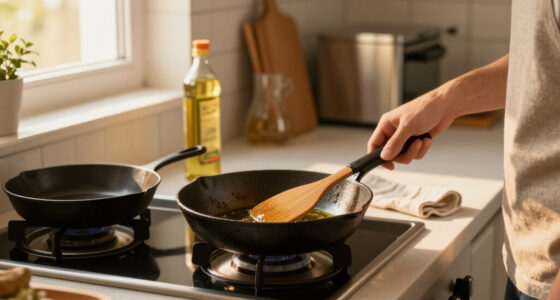
Cooking acidic foods can loosen some seasoning but rarely ruins it. A quick clean, a few thin oil coats, and oven baking restore your pan’s non-stick surface—usually in just a few steps.
Most acidic-food damage is minor and can be fixed with a few thin oil layers and oven baking.
Avoid applying thick coats of oil—thin layers bond better and prevent sticky spots.
Use gentle scrubbing with steel wool or salt to remove rust or flaking before re-seasoning.
Build up your seasoning with 2–3 oven-baked layers for a strong, durable surface.
Regular cooking with fats and quick removal of acidic dishes help maintain your pan’s seasoning over time.
How to Re-Season Cast Iron After Cooking Acidic Food
TL;DR: Acidic food can loosen seasoning, but it rarely ruins a pan. Clean away compromised residue, dry completely, apply whisper-thin oil, and bake at high heat. Two or three coats usually restore a durable, non-stick surface.
Does the pan actually need re-seasoning?
Many cooks overestimate acid damage. Inspect the surface after cleaning: intact black areas can stay. New seasoning bonds over sound old seasoning, so stripping to bare metal is reserved for heavy rust, persistent gumminess, or widespread flaking.
Dull gray patches
The glossy black patina has lifted and exposed lighter iron beneath.
Food starts sticking
A formerly slick cooking surface suddenly grabs eggs, fish, or starches.
Metallic taste
Long acid contact can expose iron and give food a noticeable mineral note.
Rust or flaking
Light rust scrubs away easily; loose flakes should be removed before oiling.
Refresh the surface—or reset it?
Patchy, dull, or slightly sticky
Clean thoroughly, remove only loose material, then add one to three thin coats. Intact seasoning provides a useful foundation.
Heavy rust, gummy buildup, or broad flaking
A bare-metal reset may be warranted. Extensive restoration methods are for genuinely failed surfaces—not routine tomato-sauce wear.
Build the new finish one thin layer at a time
Good seasoning is not a visible coat of grease. It is oil heated beyond its smoke point until it bonds into a hard, dry film. Thinness, heat, and complete drying determine the result.
Wash with mild soap
Use warm water and a tiny dab of modern dish soap. The no-soap rule is outdated: today’s mild formulas do not contain the harsh lye once blamed for stripping seasoning.
Remove weak material
Use steel wool, chainmail, or coarse kosher salt on rust, stuck food, and flaking residue. Leave sound black seasoning in place.
Drive off all moisture
Towel-dry, then warm the pan briefly on the stovetop. Complete dryness prevents new rust and helps oil contact the iron evenly.
Apply, then wipe away
Coat the entire pan with canola, grapeseed oil, or shortening. Wipe repeatedly until it looks almost dry. Excess oil is the top cause of sticky blotches.
Polymerize at high heat
Place the pan upside down at 450–500°F for one hour. Put a foil-lined tray below to catch any oil that escaped the wipe-down.
Layer the armor
Let the pan cool in the oven. Repeat oiling and baking two or three times when you need a solid new base.
Heat is not optional
Seasoning forms when oil passes its smoke point and polymerizes. A low 350°F cycle may leave oil soft or sticky instead of producing a hard protective film.
Time changes the risk more than the ingredient
Tomatoes, citrus, vinegar, and wine can loosen polymerized oil, but a mature finish handles brief exposure surprisingly well. Remove acidic food promptly rather than storing it in bare cast iron.
| Cooking scenario | Typical exposure | Seasoning risk | Best response |
|---|---|---|---|
| Quick wine deglaze | 1–5 minutes | ✓ Low | Wash, dry, and wipe with a trace of oil. |
| Citrus-marinated chicken | Short sear | ✓ Low | Transfer promptly; clean after serving. |
| Fast tomato sauce | Under 30 minutes | ~ Moderate | Use a well-seasoned pan and inspect afterward. |
| Tomato stew or vinegar braise | 30–60+ minutes | ✗ Higher | Prefer enameled cookware; refresh bare iron if dull. |
| Acidic leftovers stored in pan | Several hours | ✗ Avoid | Move food to a non-reactive container immediately. |
Acid weakens the film; it does not destroy the pan
What seasoning really is
Oil heated beyond its smoke point undergoes polymerization, linking fat molecules into a hard, plastic-like coating bonded to iron. Acid can chemically loosen that coating. Heat accelerates the reaction, and time allows it to progress—so a long simmer is more disruptive than a quick splash.
What metallic flavor means
Acid can draw some iron into food after the protective layer thins. This is generally harmless and may contribute dietary iron. People with hemochromatosis or another iron-overload condition should seek medical guidance and avoid acidic foods cooked in bare cast iron.
The complete surface-repair chain
Acid + time
Prolonged hot contact weakens the finish.
Dull iron appears
Gray patches, sticking, or metallic flavor emerge.
Clean + scrub
Loose residue and light rust are removed.
Thin coat
Oil is wiped back until nearly invisible.
Heat + bond
High heat creates a hard new polymer layer.
Three common mistakes—and the fast correction
Too much oil
Fix: Wipe more aggressively before the next cycle and bake hot enough. The pan should look almost dry before it enters the oven.
Too little heat
Fix: Use 450–500°F so the selected oil can pass its smoke point and fully polymerize.
Weak material underneath
Fix: Scrub away loose layers first. Consider avoiding flaxseed oil, which can form a hard but flake-prone finish.
Keep the finish strong between oven sessions
Everyday cooking with fat often maintains cast iron better than frequent full seasoning cycles. Treat acidic recipes as short visits, not long-term tenants.
- Build a mature base before cooking tomatoes, citrus, vinegar, or wine.
- Transfer acidic food promptly and never refrigerate leftovers in bare cast iron.
- Cook regularly with fats such as canola oil, shortening, or naturally fatty foods.
- Clean and dry soon after use to prevent moisture from turning exposed iron rusty.
- Choose enameled cast iron for long tomato sauces and acidic braises.
- Use chainmail selectively to remove residue without stripping sound seasoning.
Frequently asked questions
Is tomato sauce safe in cast iron?
Yes, briefly. A well-seasoned pan can handle short cooking. Avoid long, slow simmers and transfer the sauce once finished.
Can mild dish soap really be used?
Yes. A small amount of modern mild soap removes food and oil without automatically stripping a properly bonded finish.
Which oil works best?
Canola, grapeseed oil, and vegetable shortening are dependable. Flaxseed oil forms a hard layer but has developed a reputation for flaking.
How many coats are enough?
Two or three thin oven-baked coats create a durable base. Minor dulling may need only one fresh layer.
Is light surface rust dangerous?
Light rust is not a reason to discard the pan. Scrub it off completely, dry with heat, and re-season the exposed area.
Must the pan be stripped bare?
Rarely. Full stripping is mainly for heavy rust, gummy buildup, or widespread flaking. New coats bond over intact seasoning.
A little acid will not ruin cast iron. Remove the food, clean the pan, erase moisture, and rebuild with thin—not thick—layers. With routine care, the same pan can remain rust-resistant and ready for decades of cooking.
How to Spot if Your Cast Iron Needs Re-Seasoning After Acidic Food
Most damage from acidic foods shows up as dull, gray patches where the shiny black patina lifts. You might notice sticking or a metallic taste, especially after long simmering. Light contact, like quick deglazing, rarely causes harm. If you see rust or flaking, that’s a sign it’s time to refresh the seasoning.
For example, after cooking a tomato stew that simmered for 45 minutes, you might find patches where the surface looks dull or slightly rough. That’s your cue to re-season, but often, a simple cleaning and a few new oil layers will suffice.
As an affiliate, we earn on qualifying purchases.
Step-by-Step Guide to Re-Season Cast Iron After Acidic Food
- Wash the pan with warm water and a tiny dab of mild dish soap. Yes, soap is safe here—modern formulas won’t strip your seasoning. Proper cleaning ensures any loosened seasoning or residual food is removed, which is crucial because leftover debris can hinder the bonding of new seasoning layers.
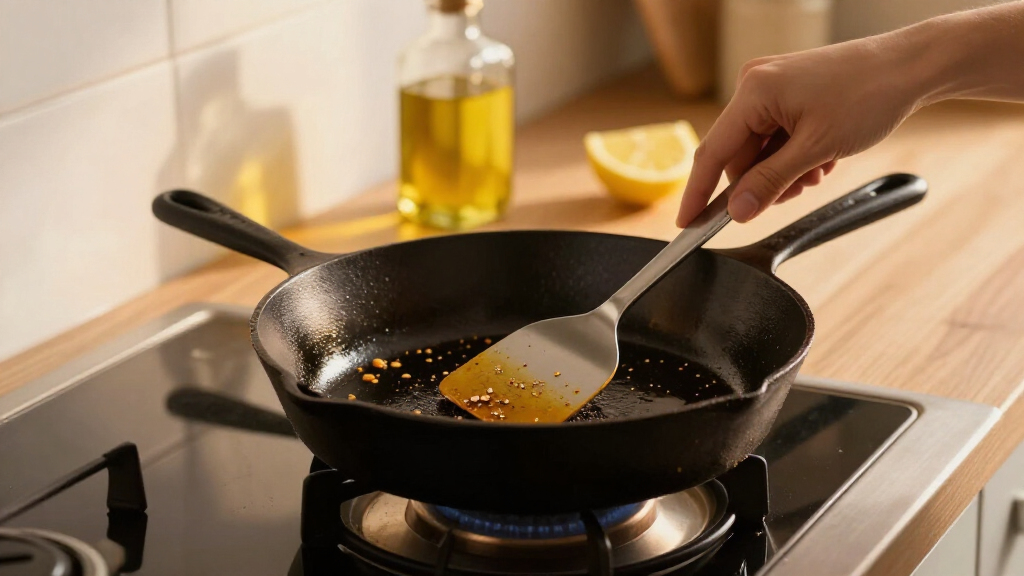
- Use steel wool, a chainmail scrubber, or coarse kosher salt to scrub off rust, flaking old seasoning, or stubborn residue. This step is essential because it resets the surface, removing compromised layers that could cause sticking or uneven seasoning in the future.
- Dry the pan thoroughly—heat it on the stovetop until no moisture remains. Complete dryness prevents rust and ensures the new seasoning bonds properly during baking.
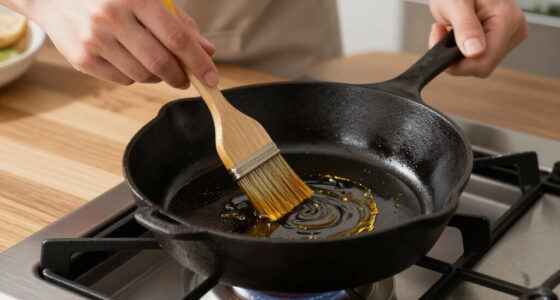
- Apply a *very* thin layer of oil all over the surface. Wipe off excess until the pan looks almost dry—this prevents sticky spots. Thin layers allow the oil to polymerize evenly, creating a smooth, durable coating that resists sticking and damage.
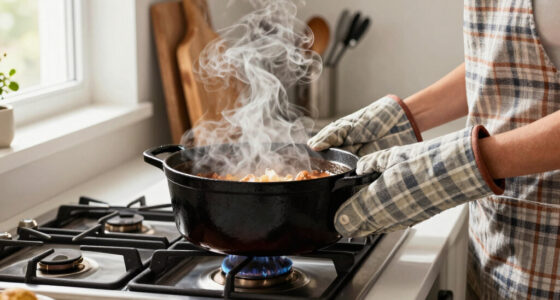
- Place it upside down in a preheated oven at 450–500°F (230–260°C). Bake for one hour, with aluminum foil underneath to catch drips. Baking at high heat facilitates the chemical transformation of oil into a hard, protective layer, which is the foundation of your pan’s seasoning.
- Let it cool in the oven. Repeat steps 4–6 two or three times for a solid, durable base layer. Multiple thin coats baked in sequence reinforce the seasoning, making it more resilient against future acidic contact and wear.
Think of it like giving your pan a fresh coat of armor—thin, even layers that bond tightly during baking are key to a long-lasting patina. Skipping the proper application or baking process can result in flaky or uneven seasoning, which diminishes the pan’s non-stick qualities and longevity.
cast iron skillet cleaning scrubber
As an affiliate, we earn on qualifying purchases.
As an affiliate, we earn on qualifying purchases.
Why Acidic Food Loosens Your Seasoning and How to Fix It
Acidic foods, like tomatoes or vinegar-based sauces, can chemically loosen the polymerized oil layer on your cast iron, especially after prolonged contact. This occurs because acids can break down the bonds formed during seasoning, exposing the underlying metal and making the surface more prone to sticking and rust. The heat accelerates this process by increasing chemical reactions, which is why long simmering—say, over 30 minutes—poses a greater risk. Shorter exposures, like quick deglazing or stir-frying, typically don’t cause significant damage.
Research indicates that most seasoning layers are surprisingly resilient. Damage from acid contact usually manifests as dull patches, sticking, or metallic taste, signaling that the protective layer has been compromised. However, this damage is often superficial, meaning it can be remedied with simple re-seasoning steps—cleaning, oiling, and baking—without stripping the pan entirely. Understanding this process helps you balance cooking techniques to preserve your pan’s lifespan and non-stick qualities.
In essence, acids don’t necessarily ruin your cast iron; they temporarily weaken the seasoning. Proper maintenance and timely re-seasoning restore the protective layer, ensuring your pan remains in prime condition for future use.
cast iron oven-safe seasoning spray
As an affiliate, we earn on qualifying purchases.
As an affiliate, we earn on qualifying purchases.
Prevention: Keep Your Cast Iron Strong Against Acidic Foods
Build a solid seasoning layer before cooking acidic dishes. That way, brief contact won’t cause damage. Also, transfer acidic foods out of the pan quickly—don’t leave them sitting in the pan for hours. This minimizes prolonged exposure, which is the main factor in seasoning breakdown.
For example, after searing some citrus-marinated chicken, clean and lightly oil the pan to reinforce the seasoning. Regular use of fats like bacon or vegetable oil helps maintain and strengthen the coating over time, creating a resilient protective barrier against acids. Additionally, avoid applying thick, heavy coats of oil or flaxseed oil if you frequently cook with vinegar or tomatoes. Thin layers baked at high temperatures promote a durable, even seasoning that resists acid damage better.
Remember, maintaining your seasoning is an ongoing process. Consistently cooking with fats and promptly cleaning after acidic dishes will extend your pan’s lifespan and performance, reducing the need for extensive re-seasoning later on.
As an affiliate, we earn on qualifying purchases.
Frequently Asked Questions
Is it safe to cook tomato sauce in cast iron?
Yes, in a well-seasoned pan, short-term cooking of tomato sauce is safe and won’t damage the seasoning. Just avoid long, slow simmering—prolonged acid contact can loosen the layer.
How do I know if my seasoning is actually damaged?
Look for dull, gray patches, food sticking, or a metallic taste. These signs indicate the seasoning has loosened and needs a refresh.
Can I really use dish soap to clean my cast iron?
Yes, mild dish soap is safe for cleaning after cooking acidic foods. Modern soaps lack the harsh lye of old, so they won’t strip your seasoning if used in small amounts.
What’s the best oil for re-seasoning?
Grapeseed, canola, or vegetable shortening are excellent choices. Flaxseed oil can create a very hard layer but requires careful application and high heat.
How many rounds of seasoning do I need for a good base?
Typically, 2–3 thin oven-baked coats build a solid, durable surface. Regular use with fats maintains the seasoning over time.
Conclusion
A little acid won’t ruin your cast iron—just treat it gently. Regular maintenance and quick fixes keep your pan in prime shape for decades of off-grid cooking. Think of your cast iron as a living thing—nurture it with care, and it’ll serve you well for many seasons to come.NFL season / tailgating Picks
team gear
As an affiliate, we earn on qualifying purchases.