
TL;DR
Get ready for Prime Big Deal Days — try Prime free
Exclusive member deals on October 6–7, plus fast free delivery. Cancel anytime.
Start your free trialAs an affiliate, we earn on qualifying purchases.
Copper cookware naturally tarnishes but can be kept shiny with gentle polishing. Its lining, whether tin or stainless steel, requires specific upkeep. Regular care prevents damage and prolongs lifespan.
Imagine pulling out a shiny copper pot, ready to cook, its bright surface glowing in the sunlight. Or, picture a dull, tarnished pan that no longer sparks joy or trust. Your copper cookware can stay stunning and functional if you master the art of care. It’s not just about looks—regular polishing and proper lining maintenance keep your investment safe, effective, and beautiful for decades.
In this guide, you’ll learn straightforward ways to keep your copper shining like new, how to handle its delicate lining, and the latest developments that make caring for copper easier than ever. Whether you’ve inherited a heirloom or invested in quality cookware, these tips will help you get the most out of every piece.
Polish copper regularly with gentle, natural methods like lemon-salt paste to keep its warm glow.
Choose the lining material based on your maintenance preference—tin for authenticity, stainless steel for durability.
Avoid abrasive cleaners and dishwashers; hand wash and dry immediately to prevent tarnishing and damage.
Re-tinning copper cookware should be handled by professionals to avoid costly mistakes.
Eco-friendly cleaning options and protective coatings are making copper maintenance easier and more sustainable.
Copper care field guide
Caring for Copper Cookware: Polishing & Lining
Copper rewards careful ownership. Gentle polishing preserves its warm glow, while lining-specific care keeps the cooking surface safe, responsive, and ready to serve for decades.
01 / Surface care
Patina or polish?
Tarnish is a natural surface change, not an automatic sign of damage. Keep the patina for antique character, or remove it with mild acids and soft materials when you want copper’s bright, warm finish.
Let the patina develop
A darkened exterior can be left in place if you enjoy its aged character. Continue washing gently and drying promptly to prevent moisture-related staining.
Bring back the glow
Use lemon with salt, vinegar with salt, or a copper-specific polish. Soft pressure removes tarnish while limiting the micro-scratches caused by aggressive scrubbing.
The five-step shine cycle
02 / Interior protection
Choose your lining
The lining separates reactive copper from food. Tin delivers traditional responsiveness but needs a light touch; stainless steel is tougher and easier to maintain for frequent use.
| Care factor | Tin lining | Stainless-steel lining |
|---|---|---|
| Best known for | Traditional feel and excellent heat response | Durability and practical everyday care |
| Scratch resistance | Low — use wood or silicone tools | Higher — still benefits from gentle utensils |
| Heat approach | Avoid empty preheating and excessive heat | More heat-tolerant, but moderate heat protects the pan |
| Cleaning | Mild soap, warm water, soft sponge | Mild soap and non-abrasive cleaning |
| Long-term repair | Professional re-tinning every few years as wear requires | Generally no re-tinning; inspect for damage or separation |
| Best match | Cook who values authenticity and precise response | Cook who prioritizes resilience and lower maintenance |
Care profile is qualitative; actual wear depends on cooking frequency, heat, utensils, and cleaning habits.
Tin: responsive, delicate
Steel: durable, practical
03 / Damage prevention
Small habits, long life
Most copper damage is preventable. Control heat, moisture, friction, and storage conditions, then inspect the lining before exposed copper becomes a food-safety concern.
Wash by hand
Use mild soap and warm water. Dishwasher chemistry and sustained heat can tarnish copper and shorten lining life.
Moderate the heat
Copper responds quickly, so high heat is rarely necessary. Avoid overheating, warping, discoloration, and tin damage.
Choose soft tools
Wooden and silicone utensils reduce scratches, especially on soft tin interiors.
Dry immediately
A soft, lint-free towel prevents water spots and reduces the moisture that accelerates tarnish.
Store it dry
Keep pans away from prolonged moisture and add soft dividers when stacking to protect both surfaces.
Inspect the lining
Watch for thinning, deep scratches, worn patches, or visible copper. Retire the pan from cooking until professionally assessed.
Do this
- Polish when tarnish appears or every few months for shine.
- Test a cleaner on a small area before treating the whole pan.
- Rinse polishing compounds away completely.
- Use professional re-tinning when the tin layer wears thin.
Avoid this
- Steel wool, harsh scouring powders, and aggressive pressure.
- Leaving acidic polishing paste on the surface.
- Heating an empty tin-lined pan over high heat.
- Cooking directly on exposed, unlined copper.
04 / Evolving care
A cleaner future for copper
Natural cleaners, stronger lining materials, protective finishes, and accessible restoration services are making long-term copper ownership more practical and sustainable.
Natural polishing
Lemon, vinegar, salt, and baking soda offer readily available alternatives to harsher chemical cleaners.
Enhanced linings
Durable stainless-steel composites aim to extend service life while reducing routine maintenance.
Re-tinning access
More professional services make restoration safer and more economical than replacing a quality pan.
Clear coatings
Some finishes slow tarnish, although they may require special cleaning or slightly change traditional performance.
The longevity chain
05 / Quick answers
Before you polish or re-line
Use the condition of the pan—not a rigid calendar—as your guide. The right intervention depends on appearance, frequency of use, lining material, and visible wear.
How often should copper be polished?
When tarnish appears, or approximately every few months if you want a consistently bright finish. A stable patina may be left alone.
Can lemon or vinegar remove tarnish?
Yes. Pair a natural acid with a small amount of salt or baking soda, rub gently, rinse thoroughly, and dry immediately.
When does tin need replacing?
When the lining becomes thin, deeply scratched, patchy, or exposes copper. Depending on use, professional re-tinning may be needed every few years.
Can copper cookware go in a dishwasher?
No. Hand washing better preserves both the exterior finish and the interior lining.
How to Keep Your Copper Shining Like New
Polishing your copper is the best way to restore its bright, warm glow. Over time, copper develops a rich, dark patina—a look many cherish for its antique charm. However, the decision to polish or preserve the patina depends on your aesthetic preference and how you use your cookware. Regular polishing isn’t just about appearances; it also helps remove surface contaminants that can cause corrosion or staining, ultimately extending the life of your cookware. When you choose to polish, you’re actively maintaining the material’s integrity, preventing the buildup of tarnish that can trap moisture or acids, which might lead to pitting or discoloration. Using gentle, non-abrasive cleaners like a lemon-salt paste not only preserves the copper’s surface but also minimizes micro-scratches that degrade its appearance over time. Commercial copper polishes contain mild abrasives designed to clean without damaging the metal’s delicate surface, ensuring your cookware remains both beautiful and durable. Regular polishing routines, tailored to your usage, provide a protective layer against environmental factors, maintaining the warmth and luster that make copper cookware a favorite among chefs and home cooks alike.
As an affiliate, we earn on qualifying purchases.
Choosing the Right Lining and Maintaining It
The lining of your copper cookware is more than just a barrier; it’s a critical component that affects safety, performance, and longevity. Tin-lined copper pans are prized for their historical authenticity and excellent heat responsiveness, but their delicate nature means they require careful handling. Tin is a soft metal that can easily be scratched or worn down if cleaned aggressively or exposed to high heat, which can lead to uneven lining or even exposure of the copper core. Re-tinning is a specialized process involving melting a thin layer of tin onto the copper surface, restoring the pan’s non-reactive barrier. This process requires professional equipment and expertise because improper re-tinning can compromise the cookware’s safety and performance. On the other hand, stainless steel-lined copper pans offer durability and ease of maintenance. Stainless steel resists tarnish and corrosion, making it suitable for daily use and dishwasher cleaning, though it doesn’t conduct heat as efficiently as copper or respond as quickly to temperature changes. Understanding these differences helps you select the right cookware based on your cooking style and maintenance willingness. For example, a chef who values precise heat control might prefer a tin-lined pan and accept the re-tinning upkeep, whereas a busy home cook might opt for stainless steel lining for its resilience. Proper care—gentle cleaning, avoiding abrasive scrubbing, and regular inspections—extends the lifespan of each lining type and ensures food safety and optimal performance over years of use.
As an affiliate, we earn on qualifying purchases.
Step-by-Step: Cleaning and Polishing Your Copper
- Begin by rinsing your copper cookware with warm water to remove loose dirt, grease, or food residues—this prevents scratching during cleaning.
- Apply a gentle cleaning paste—combine lemon juice with a pinch of salt or baking soda, or opt for a commercial copper cleaner formulated for delicate surfaces. The acids in lemon or vinegar break down tarnish, while salt or baking soda act as mild abrasives to lift grime without scratching. This step is crucial because aggressive scrubbing can damage the thin surface layers or the lining, reducing lifespan.
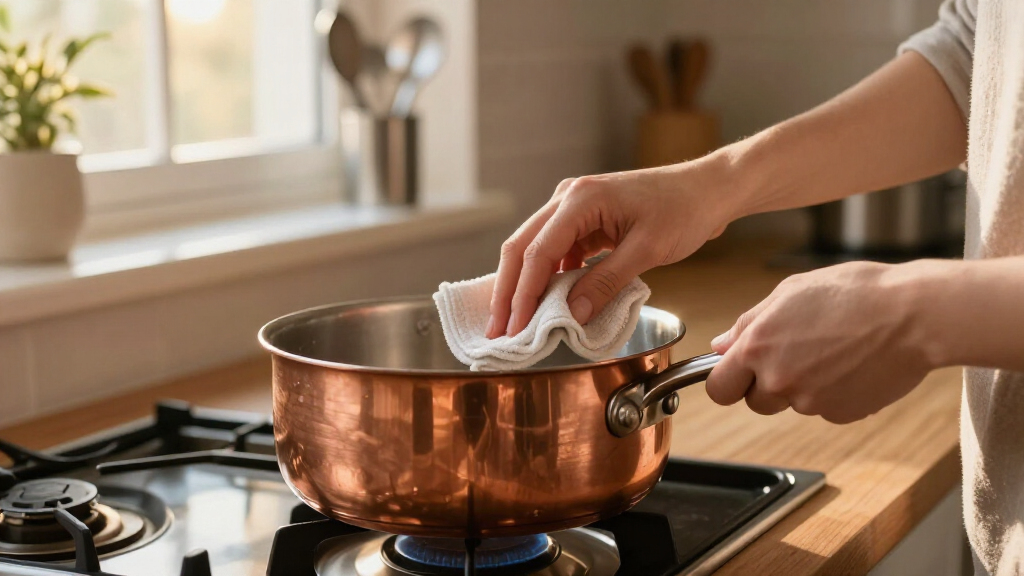
- Gently rub the paste onto tarnished areas with a soft cloth or sponge, using circular motions. Focus on areas with visible discoloration, but avoid excessive pressure to prevent micro-scratches that dull the shine over time.
- Rinse thoroughly with warm water to remove all residues, which could otherwise cause staining or corrosion if left on the surface.
- Immediately dry with a soft, lint-free towel—water spots can cause additional tarnishing or corrosion if left to air dry.
- Finish by buffing lightly with a clean, dry cloth to restore the shine and remove any remaining haze or streaks. Regularly doing this after each use keeps your copper looking its best and prevents buildup that would require more intensive cleaning later.
For example, after a weekend of cooking, your copper skillet might look dull and streaky. Following these steps restores its warm glow and makes it a joy to use and display. Consistent, gentle care not only maintains its appearance but also preserves its structural integrity over time, preventing costly repairs or replacements.
As an affiliate, we earn on qualifying purchases.
Latest Trends: Eco-Friendly and Durable Copper Care
Recent advances focus on making copper care easier and more sustainable. Natural cleaning options like lemon and baking soda are gaining popularity because they are biodegradable, non-toxic, and readily available, reducing reliance on harsh chemicals that can harm both the environment and your cookware’s finish. These methods also help preserve the delicate lining, especially tin, by avoiding abrasive or corrosive substances that could accelerate wear. Manufacturers are developing protective coatings that provide a thin, transparent barrier to tarnish, which can significantly reduce the frequency of polishing and re-tinning. While these coatings can extend the aesthetic life of your cookware, it’s important to understand they may slightly alter heat responsiveness or require specific cleaning instructions. Additionally, professional re-tinning services are becoming more accessible and affordable, making it easier for consumers to restore vital linings without risking damage from DIY attempts. This combination of eco-friendly products and improved lining technologies aligns with a growing awareness of sustainable and responsible kitchen practices. By adopting these innovations, home cooks and professionals alike can enjoy beautiful, functional copper cookware with less effort and environmental impact, ensuring longevity and safety for generations to come.
As an affiliate, we earn on qualifying purchases.
What You Need to Know Before You Polish or Re-line
Polishing and re-tinning aren’t one-size-fits-all processes; understanding their implications is key to maintaining your cookware’s safety and longevity. When polishing, using abrasives or aggressive scrubbing can scratch or micro-damage the copper’s surface, potentially exposing the underlying metal or damaging the lining. This can lead to increased tarnish or even corrosion, especially if the surface becomes compromised. Re-tinning, on the other hand, involves high heat and chemical processes that must be handled with care. Attempting DIY re-tinning at home can result in uneven lining, chemical hazards, or damage to the cookware’s structure, which could compromise food safety and performance. Always consult with a professional re-tinner who has the proper equipment and safety measures in place. Before any maintenance, inspect your cookware thoroughly: heavily tarnished surfaces or worn linings signal the need for professional intervention. Recognizing signs of deterioration early prevents costly repairs or replacements and ensures your cookware remains safe and effective for years to come. Remember, cutting corners with DIY repairs can jeopardize your health and the longevity of your investment, so always prioritize professional services for lining restoration or significant polishing.
Frequently Asked Questions
How often should I polish my copper cookware?
Typically, every few months if you want it shiny. If you prefer the natural patina, polish only when it looks dull or tarnished. Regular light polishing keeps the surface bright without stripping the charm.Can I clean my copper pots with vinegar or lemon juice?
Yes, natural acids like lemon juice or vinegar are effective for removing tarnish. Combine them with salt or baking soda to create a gentle scrub that restores shine without scratching.Is unlined copper cookware safe for cooking?
No, unlined copper can leach into food and cause health issues. Always use lined copper cookware—tin or stainless steel—for safe cooking.How do I re-tin my copper cookware?
Re-tinning requires professional equipment and expertise. It’s best to find a reputable re-tinning service to handle this safely and effectively.What’s the best way to prevent tarnish on my copper?
Keep copper dry, clean it regularly, and store in a dry place. Using natural polish or protective coatings can also help slow tarnishing over time.Conclusion
Keeping your copper cookware shining and functional isn’t magic—it’s routine maintenance. A little regular polishing, gentle cleaning, and knowing when to call in pros keeps your heirloom or investment in prime shape.
Imagine lifting a bright, gleaming pan from your stove, knowing it’s been cared for with skill and patience. That’s the beauty of good copper care—lasting, beautiful, and ready for whatever you cook next.
Fall Picks
fall essentials
As an affiliate, we earn on qualifying purchases.