
TL;DR

Get kitchen gear delivered free — and shop member deals
- Fast, free delivery on millions of items
- Access to Prime Big Deal Days deals on October 6–7
- Prime Video, Amazon Music and more included
Rusty cast iron can be restored effectively using mechanical, chemical, or electrolytic methods. Proper cleaning and seasoning are essential for a durable, non-stick surface that lasts for generations.
Nothing beats the charm of a well-seasoned cast iron skillet — but rust can turn that shiny black surface into a flaky, flaky mess. The good news? Rust isn’t a death sentence for your cookware. With a few simple techniques, you can breathe new life into even heavily rusted pieces.
Whether you’ve inherited a vintage pan or left one out too long in a humid shed, understanding how to assess and remove rust is your first step. Let’s walk through proven methods, real-world tips, and what to do after the rust is gone to keep your cast iron in top shape for decades.
Light surface rust can be removed safely with gentle scrubbing and natural acids like vinegar or baking soda.
Electrolytic rust removal is a powerful option for heavily rusted or vintage pieces, preserving intricate details.
Immediate, thorough drying and proper seasoning after rust removal create a durable, rust-resistant surface.
Regular maintenance—drying, oiling, and proper storage—prevents rust from returning.
Restoring vintage cast iron can significantly increase its value and lifespan when done carefully.
How to Quickly Check If Your Cast Iron Is Still Strong
Before you start scrubbing, ask yourself: is this piece still solid? Light surface rust is common and easy to fix, but deep rust or warping means you might need more patience or professional help. To assess, look for cracks, warping, or pitting — these indicate compromised integrity. A simple test: gently tap the pan’s wall; a dull thud means good structure, a hollow sound suggests weakness.
Imagine a pan with light rust spots on the surface—these are often just superficial, and you can remove them without risking your cookware’s life. But if rust has eaten into the metal, you’ll notice rough patches or even flaky spots. Trust your eyes—and your touch. When in doubt, consult a pro or set aside heavily compromised pieces for restoration.
Understanding the damage is crucial because it influences your restoration approach. Minor surface rust can be safely cleaned and re-seasoned, but if the rust has penetrated deeply, it can weaken the metal, leading to potential breakage during cooking. Overlooking this can cause safety hazards or render the pan unusable. Recognizing early signs of structural compromise helps you decide whether to proceed with restoration or to replace the piece, saving time and ensuring safety.
As an affiliate, we earn on qualifying purchases.
5 Easy Steps to Remove Rust Without Damaging Your Cast Iron
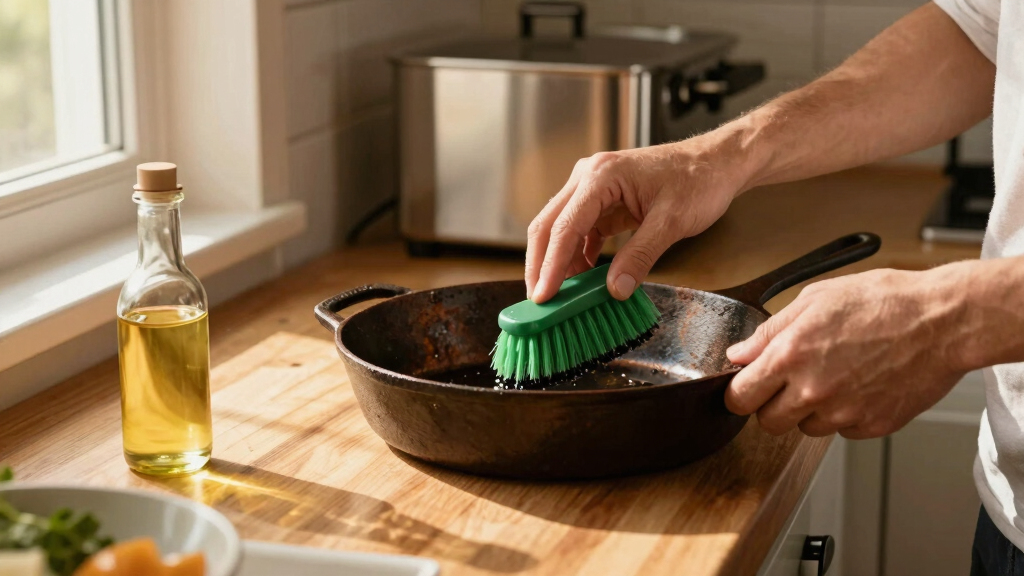
- Scrape and scrub: Use steel wool or a wire brush to gently remove loose rust. Focus on the rusted areas, not the entire pan—light pressure is key. This step helps prevent further corrosion and prepares the surface for deeper cleaning. Over-scrubbing can damage the seasoning layer or create scratches that trap moisture, so moderation is vital.
- Apply a natural acid bath: Soak the pan in vinegar for 1-6 hours, depending on rust severity. Check frequently; you want to soften rust without corroding the metal. Vinegar’s acidity dissolves rust but can also eat into the metal if left too long, so timing is essential. This method is effective but requires careful monitoring to avoid thinning the pan’s walls or creating pitting, which can weaken its structure.
- Use baking soda paste: Mix baking soda with water to form a thick paste. Scrub with a sponge or brush to lift remaining rust, especially in tight corners. Baking soda acts as a gentle abrasive and neutralizes acidity, helping to lift rust residues without aggressive scraping. This step is particularly useful for delicate or intricately patterned pans, as it preserves fine details while cleaning.
- Electrolytic rust removal: For heavily rusted pieces, set up a simple electrolytic bath with a battery charger, washing soda, and water. It’s safe and preserves intricate details. Electrolysis works by reversing the rust oxidation process, effectively lifting rust from the surface while leaving the underlying metal intact. This method is especially advantageous for vintage or ornate pans, where preserving fine markings and patterns is important but can be complex to set up, requiring some electrical knowledge and safety precautions.
- Thorough rinse and dry: Rinse all residues, then dry immediately with a towel or heat to prevent new rust from forming. Proper drying is critical because residual moisture is the primary cause of rust reformation. Using heat after drying ensures that any trapped water evaporates completely, creating a clean slate for seasoning. Skipping this step can lead to rapid rusting, undoing your hard work and shortening the lifespan of your pan.
For example, a 60-year-old skillet with stubborn rust patches responded well to a vinegar soak followed by scrubbing. The surface was rough but intact, ready for seasoning, illustrating how patience and proper technique can revive even heavily corroded cookware.
As an affiliate, we earn on qualifying purchases.
Compare Common Rust Removal Methods — Which Is Best for You?
| Method | Effectiveness | Ease of Use | Potential Risks |
|---|---|---|---|
| Mechanical (scraping, steel wool) | High for surface rust | Easy, quick | Scratches surface if too aggressive |
| Vinegar bath | Moderate; good for light to moderate rust | Moderate; needs monitoring | Can pit metal if left too long |
| Baking soda paste | Light to moderate rust removal | Easy | Minimal risk |
| Electrolysis | Excellent for heavy rust & intricate details | Complex setup | Requires safety precautions, electrical knowledge |
Choosing the right method depends on your specific situation. Mechanical methods are quick but risk surface scratches that can trap moisture or damage delicate details. Vinegar offers a chemical approach that’s gentle yet effective, but overexposure can weaken the metal. Baking soda provides a mild, safe option for light rust, especially for pans with decorative patterns. Electrolysis stands out for heavy rust and preserving intricate markings, making it ideal for vintage collectors willing to invest in setup and safety precautions. The tradeoff is complexity versus effectiveness—understanding your pan’s condition and your comfort with these techniques will guide your best choice.
electrolytic rust removal kit for cast iron
As an affiliate, we earn on qualifying purchases.
As an affiliate, we earn on qualifying purchases.
Frequently Asked Questions
Can I use lemon juice instead of vinegar for rust removal?
Yes, lemon juice’s natural acidity can help break down rust. Soaking lightly rusted parts for a few hours can work, but vinegar is generally more effective for heavier rust. Lemon is gentler and best for minor spots or quick touch-ups.
How long does it take to fully restore a heavily rusted cast iron skillet?
It varies. Light rust may only need a couple of hours, but heavy rust or pitting can take days or even weeks of repeated treatments, especially with electrolysis or multiple vinegar baths. Patience is key.
Is electrolysis safe to do at home?
Yes, if you follow safety guidelines: use gloves, eye protection, and work in a well-ventilated area. Avoid direct contact with electrical components, and ensure your setup is stable. This method preserves details and handles heavy rust efficiently.
Should I strip all old seasoning before restoring?
Not necessarily. If the seasoning is thick and glossy, a light cleaning may suffice. But if there’s flaking or rust beneath, stripping and starting fresh helps the seasoning bond better and prevents future rust issues.
As an affiliate, we earn on qualifying purchases.
Conclusion
Rust isn’t the end of your cast iron’s story — it’s a chance for a fresh start. With patience and the right tools, you can turn a flaky, rusty pan into a shining, reliable piece in your kitchen arsenal. Remember, every scratch and stain carries the history of countless meals; your job is to preserve that legacy.
Next time rust creeps in, think of it as a sign to slow down, assess, and restore. Your cast iron will thank you with generations of faithful service and that unbeatable, seasoned flavor in every meal.
Fall Picks
fall essentials
As an affiliate, we earn on qualifying purchases.