
TL;DR

Get kitchen gear delivered free — and shop member deals
- Fast, free delivery on millions of items
- Access to Prime Big Deal Days deals on October 6–7
- Prime Video, Amazon Music and more included
A solar oven converts sunlight into heat, allowing you to cook meals outdoors without fuel or electricity. Proper setup, patience, and understanding your oven type make it a practical, sustainable tool.
Imagine turning a bright sunbeam into a hot oven—no electricity, no gas, just sunlight. It sounds almost magical, but solar cooking is a real, practical skill that taps into one of our most abundant resources. Whether you’re off-grid, preparing for emergencies, or just want to cook more sustainably, mastering a solar oven opens up new possibilities.
In this guide, you’ll learn exactly how to set up, optimize, and troubleshoot a solar oven. Plus, you’ll see why this ancient concept is making a modern comeback—cost-effective, eco-friendly, and surprisingly easy once you get the hang of it.
Choose the right solar oven type based on your cooking style and skill level.
Proper setup, including positioning and reflectors, can boost your oven’s temperature by 50% or more.
Patience is key—most solar cooking takes 1-4 hours, so plan meals around the sun’s schedule.
Dark, matte cookware absorbs heat better, speeding up cooking times.
Regularly clean reflectors and check alignment to keep your solar oven performing at its best.
What types of solar ovens are there? Pick the right one for your needs
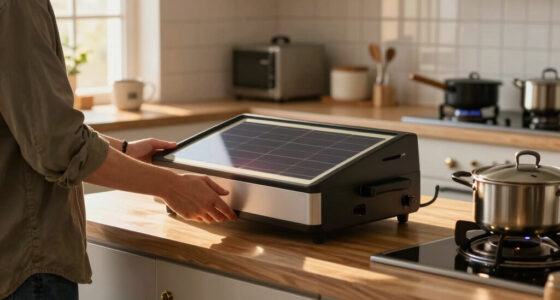
Solar ovens come in three main types: box, panel, and parabolic. Each has its quirks, but all turn sunlight into heat.
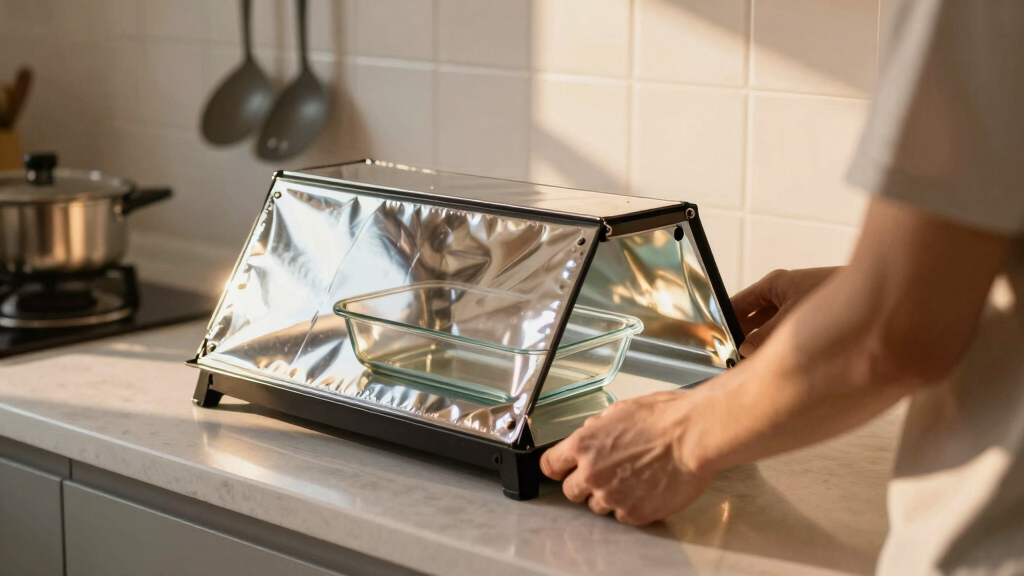
Box cookers are simple, insulated boxes with a transparent lid. They trap heat like a cozy greenhouse. Think of a sturdy cardboard box lined with reflective foil and a glass or plastic cover—perfect for stews or baked goods.
Panel cookers use reflective panels to direct sunlight onto a pot. They’re lightweight and portable, great for quick snacks or boiling water.
Parabolic cookers concentrate sunlight into a small focal point, reaching higher temperatures—up to 400°F (204°C). They’re excellent for frying or baking, but require more precise setup.
Choosing the right oven depends on your goals: simplicity, portability, or high heat. For beginners, a box cooker offers the easiest start, while seasoned outdoor cooks might prefer a parabolic for speed and versatility.
As an affiliate, we earn on qualifying purchases.
How to set up your solar oven for maximum heat and efficiency
- Position your oven: Place it in a spot with unobstructed, direct sunlight—preferably facing south if you’re in the Northern Hemisphere. Proper positioning ensures maximum solar gain, which is crucial because even slight misalignments can significantly reduce temperature. Understanding the sun’s path and adjusting your oven accordingly means better energy absorption and shorter cooking times.
- Adjust the reflectors: Use reflective surfaces like aluminum foil or Mylar to bounce extra sunlight into the oven. Tilt and angle them for peak focus. This step is vital because it amplifies the available solar energy, especially during times when the sun isn’t directly overhead. Proper reflector positioning can increase your oven’s temperature by 50% or more, reducing cooking time and improving efficiency.
- Preheat the oven: Turn it on 15-30 minutes before cooking. This warms the interior and gets the food ready for slow, steady heat. Preheating not only reduces cooking time but also ensures even heat distribution, which is critical for food safety and quality. Skipping this step can result in uneven cooking or longer wait times.
- Use dark cookware: Matte black pots absorb heat better than shiny ones. Insulated, heavy-duty pots trap heat and cook evenly. The choice of cookware directly impacts how quickly and thoroughly your food cooks. Dark, matte surfaces maximize heat absorption, while lighter or shiny pots reflect heat away, prolonging cooking times.
- Seal everything tight: Close the lid firmly to trap heat. Use oven mitts when opening—hot surfaces are common. A well-sealed oven maintains internal temperature, which is essential for efficient cooking. Any gaps let heat escape, making the process slower and less reliable. Ensuring a tight seal is a tradeoff between convenience and maintaining optimal temperature.
In practice, imagine setting up a box cooker on a sunny porch, angling reflective aluminum foil to catch the afternoon rays. Within half an hour, the interior warms to a cozy 200°F (93°C), ready for your stew or bread dough. Proper setup is the difference between a lukewarm effort and a hot, productive solar cook.
As an affiliate, we earn on qualifying purchases.
Cooking tips: How to get delicious meals from your solar oven
- Check the weather: Clear, sunny days are best. Cloud cover can drop temperatures by 50% or more. Weather conditions directly influence your oven’s performance; understanding this helps you plan better and avoid disappointment.
- Be patient: Cooking in a solar oven takes longer—usually 1 to 4 hours—so plan accordingly. Think of it as a slow-cooker powered by the sun. Patience is essential because rushing can lead to undercooked food or inconsistent results. Accepting the longer cooking times allows you to enjoy fresh, sustainable meals without fuel.
- Stir and rotate: Every 30 minutes, gently stir stews or rotate the reflector to keep the heat even. This practice prevents hot spots and ensures uniform cooking, especially important for thick or sensitive dishes. It also allows you to monitor progress and adjust for optimal results.
- Use a thermometer: Keep track of internal temps—most dishes need 180°F (82°C) for safe cooking. Monitoring internal temperature helps prevent undercooked or unsafe food, providing peace of mind and better meal quality.
- Cover your food: Use lids or foil to speed cooking and retain moisture. Covering traps heat and moisture, which accelerates cooking times and improves texture. It also prevents food from drying out, especially for baked goods or stews.
For example, a friend baked bread in her box cooker on a bright afternoon. She preheated it for half an hour, then set her dough inside. Four hours later, she pulled out crusty, golden loaves—no gas, no electricity. This demonstrates how patience and proper technique can yield delicious results using only the power of the sun.
As an affiliate, we earn on qualifying purchases.
Compare the main types of solar ovens side-by-side
| Feature | Box Cooker | Panel Cooker | Parabolic Cooker |
|---|---|---|---|
| Ease of use | Very simple, great for beginners | Moderate, portable | Requires setup skill |
| Heat capability | Up to 250°F (121°C) | Up to 300°F (149°C) | Up to 400°F (204°C) |
| Speed | Slow, 2-4 hours for most meals | Moderate, 1-2 hours | Fast, 30 min to 1 hour |
| Portability | High | High | Moderate, larger setup |
| Best for | Baking, stews | Boiling, quick snacks | Frying, baking, high-temp cooking |
As an affiliate, we earn on qualifying purchases.
Troubleshooting your solar oven: Why isn’t it heating up?
If your solar oven isn’t reaching the right temperature, start by checking its alignment. Is it facing straight at the sun? Tilt the reflectors for maximum focus. Clean off dust or smudges from reflective surfaces—they lose efficiency when dirty. Make sure the lid seals tightly, trapping heat inside.
Sometimes, weather is the culprit. Overcast skies or early morning clouds cut heat dramatically. If the temperature stays below 150°F (65°C), consider waiting for a clearer day or repositioning the oven for better sun exposure.
In a real-world scenario, I once set my box cooker on a cloudy afternoon. It only reached 120°F (49°C). After repositioning it to face the sun directly, I got up to 220°F (104°C) in just half an hour.
Frequently Asked Questions
How long does it take to cook a meal in a solar oven?
Most meals take between 1 to 4 hours, depending on the food type, weather conditions, and oven design. Patience is part of solar cooking’s charm—think of it as a slow, sun-powered feast.
Can I cook all types of food in a solar oven?
Most foods, including stews, baked goods, and vegetables, work well. However, high-temperature, quick-cook items like fried foods may be less suitable unless you have a parabolic cooker.
What are the main limitations of solar ovens?
Weather dependence is the biggest factor. Cloudy days or early mornings can cut heat significantly. Also, longer cooking times and limited capacity may not suit every meal or situation.
Is it safe to leave food unattended in a solar oven?
Yes, as long as the oven is stable, properly sealed, and placed on a flat surface. Always handle hot surfaces with care, and check internal temperatures to ensure food safety.
How do I troubleshoot if my solar oven isn’t heating properly?
Check if the oven faces the sun directly, adjust reflectors for maximum focus, clean reflective surfaces, and verify the insulation seals. Proper positioning ensures maximum heat absorption, and neglecting maintenance can lead to reduced efficiency. Sometimes, a simple repositioning or cleaning can significantly improve performance, making the difference between a lukewarm oven and a hot, functional one.
Conclusion
Mastering a solar oven turns sunlight into a reliable, zero-fuel way to cook. With patience, proper setup, and a little practice, you can bake bread, stew chili, or roast vegetables—all while shrinking your carbon footprint.
Next time the sun shines bright, think of it as an open invitation to cook outdoors. Grab your oven, find a sunny spot, and let the sun do the work—your sustainable kitchen awaits.
Fall Picks
fall essentials
As an affiliate, we earn on qualifying purchases.