
TL;DR

Get kitchen gear delivered free — and shop member deals
- Fast, free delivery on millions of items
- Access to Prime Big Deal Days deals on October 6–7
- Prime Video, Amazon Music and more included
Different fuels power camp stoves with unique strengths and challenges. White gas offers high heat but needs careful handling, while canister fuels are convenient but less cold-tolerant. Knowing their differences helps you choose the right fuel for your trip.
Choosing the right fuel for your camp stove isn’t just about convenience — it’s about safety, efficiency, and adapting to your environment. The array of options can feel overwhelming: from high-energy white gas to simple wood fires. Knowing what each fuel type offers helps you pack smarter and cook better in the wild.
In this guide, you’ll learn how different fuels perform in real-world conditions, their safety considerations, and how to pick the best one for your adventures. Whether you’re a backpacker, car camper, or bushcraft enthusiast, understanding these fuels makes every trip smoother.
White gas offers high energy and cold-weather reliability but demands careful handling and storage.
Canister fuels like propane and butane are convenient but lose efficiency in low temperatures—use blends or specialized stoves for winter trips.
Alcohol fuels are safest and easiest to store but burn slower and produce less heat—great for emergencies and light use.
Solid fuels and wood are free and simple but depend on available resources and produce more soot and fumes.
Stay updated on new eco-friendly fuels and safer canister designs to keep your outdoor cooking sustainable and safe.
What is White Gas and Why Is It Still a Favorite?
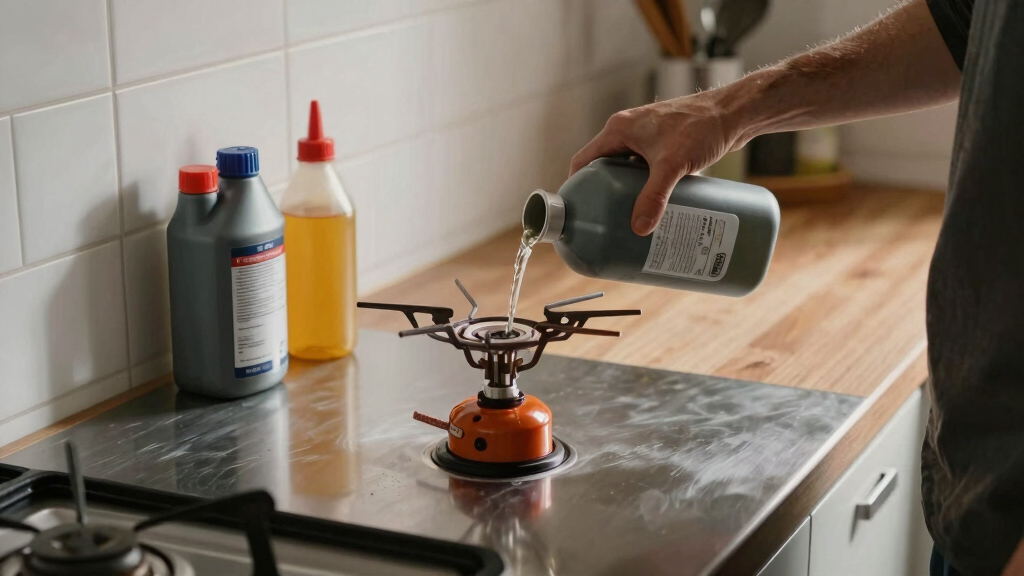
White gas, also called naphtha, is a clear, highly flammable liquid that burns with a bright, hot flame. It’s known for its high energy density—about 12,500 BTU per pound—and its reliability in cold weather. For example, mountaineers often favor white gas because it starts easily even in freezing temperatures, unlike some canister fuels.
White gas requires a bit of care: keep it stored in a sealed container, away from heat, and always handle with gloves. It’s a staple for backpackers and survivalists who need dependable performance in challenging conditions.
As an affiliate, we earn on qualifying purchases.
Propane and Canister Fuels: The Modern Campers’ Choice
Propane, delivered via pressurized canisters, is the most common fuel for car camping and portable stoves. It burns clean and ignites easily—just connect, turn the knob, and go. A typical 16-ounce canister packs enough fuel for several meals, making it convenient for quick trips.
However, propane can struggle in temperatures below freezing, unless your stove is designed to handle cold. For example, a friend’s propane stove failed to light during a winter hike, but switching to white gas solved the problem. Canister fuels are great for convenience but require awareness of their temperature limitations.
As an affiliate, we earn on qualifying purchases.
Butane and Isobutane: Compact but Cold-Weather Challengers
Butane and isobutane are common in small, lightweight canisters, ideal for backpacking. They’re easy to ignite and burn cleanly—perfect for a quick breakfast or evening meal. But their performance drops sharply in cold weather: at temperatures below 32°F (0°C), butane can liquefy, making it hard to ignite or burn evenly.
If you plan winter trips, look for stoves that use blends like isobutane-propane mixes, which maintain pressure and performance in colder air. For instance, a hiker in early spring found her butane stove sluggish until she switched to a blend, and suddenly it lit with ease.
As an affiliate, we earn on qualifying purchases.
Alcohol Fuels: Simple, Safe, But Slower
Alcohol fuels—ethanol, methanol, and isopropanol—are among the safest for handling and storing. They burn with a blue flame that’s easy to see and are common in small, lightweight stoves. For example, a minimalist hiker carries a tiny alcohol stove for boiling water on solo trips.
The tradeoff? Alcohol has a lower energy density—around 6,500 BTU per pound—and takes longer to boil water. It’s perfect for emergency kits or light-weight setups where simplicity outweighs speed.
As an affiliate, we earn on qualifying purchases.
Solid Fuels and Wood: No Fuel Canisters Needed
Solid fuels like hexamine tablets and natural wood are popular among bushcrafters and minimalist campers. They don’t require carrying fuel—just find sticks or tablets, and you’re set. On a recent trip, I watched a camper gather dry twigs, ignite a small fire, and boil water in minutes.
While simple and reliable, solid fuels are less efficient and produce more soot and fumes. They also depend heavily on what’s around you—no fuel, no fire. Still, they’re invaluable in wilderness survival scenarios where carrying fuel isn’t an option.
What’s New and What’s Changing in Camp Stove Fuels?
Recent trends focus on eco-friendly and sustainable fuels, such as bioethanol and renewable alcohols. Hybrid stoves now combine multiple fuel types, offering versatility and backup options. Additionally, advances in canister technology include safer, more recyclable options and better cold-weather performance.
For example, new bioethanol blends burn cleaner and are made from renewable sources, appealing to eco-conscious campers. Also, some stoves now feature insulation or special design elements to improve cold-starting performance.
Key Facts You Should Know About Fuel Efficiency and Safety
| Fuel Type | BTU per Pound | Best Conditions | Handling Tips |
|---|---|---|---|
| White Gas | 12,500 | Cold, high-altitude | Store in sealed containers, handle with gloves |
| Propane | 21,000 | Warm weather | Keep upright, avoid heat |
| Butane | 8,500 | Warm weather | Use in mild conditions, store upright |
Understanding these numbers helps you select the best fuel for your environment and safety needs. Always follow safety instructions from manufacturers to prevent accidents.
Your Most Common Questions About Camping Fuels
- Which fuel works best in winter? White gas and blended fuels like isobutane-propane perform reliably in cold weather.
- Can I fly with fuel canisters? Usually not in checked luggage; some can be carried on in small quantities with airline approval—check regulations.
- Is it safe to mix fuels? No, using incompatible fuels can cause dangerous flare-ups or damage to your stove.
- What’s the most eco-friendly fuel? Bioethanol and wood are more sustainable options, especially if sourced locally.
- How should I store fuel? Keep fuels in cool, ventilated areas away from heat or open flames, following safety guidelines.
Conclusion
Choosing the right fuel isn’t just about convenience — it’s about matching your environment and needs with a safe, reliable source of heat. From white gas’s raw power to the simplicity of wood fires, each option has its place.
Remember, safety first. Proper storage, handling, and awareness of your fuel’s limitations keep your trips enjoyable and accident-free. So, pack smart, fuel wisely, and keep the fire alive—literally and figuratively—on your next adventure.
Halloween Picks
halloween
As an affiliate, we earn on qualifying purchases.