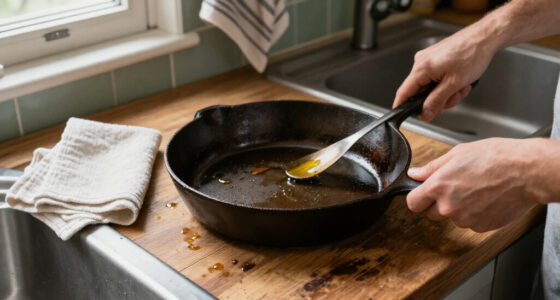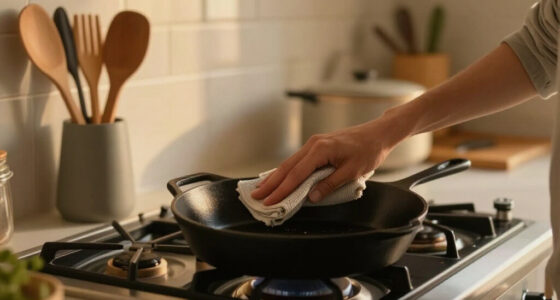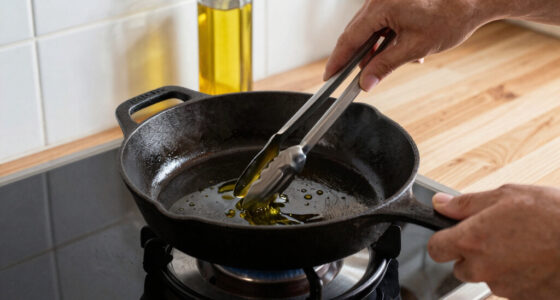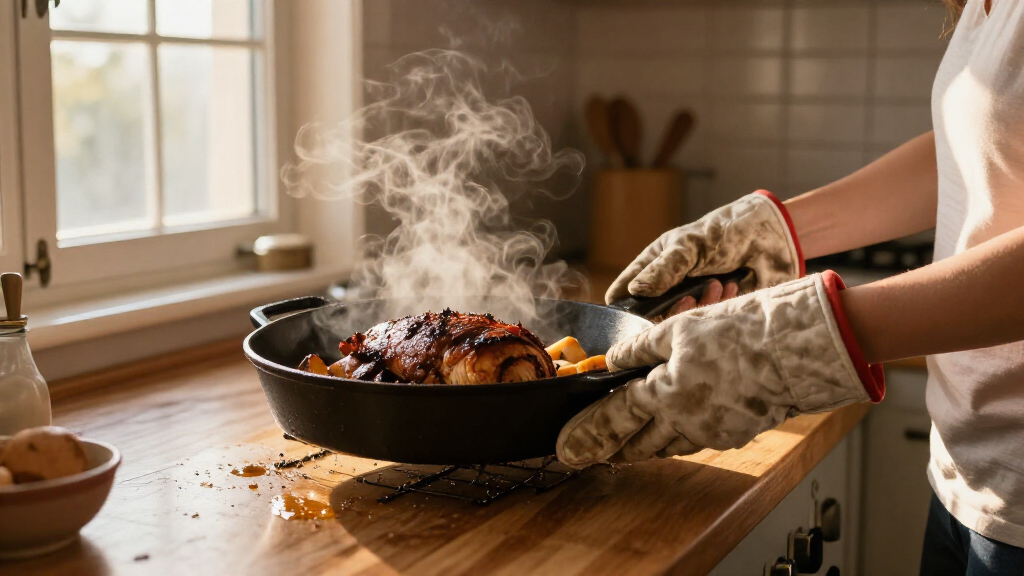

When comparing cast iron roasting pans, the key choice is usually bare cast iron versus enameled cast iron. Both offer substantial heat retention and can move from oven cooking to serving, but the surface changes how much care the pan needs and how it responds to acidic foods. Bare cast iron is the more hands-on, often less expensive choice; enamel is easier to clean and more forgiving for tomato, wine, or citrus-based roasting liquids. The difference matters most if you roast often, want to make pan sauces, or need a pan that can sit in the sink without immediate drying. Choose bare cast iron if you value a seasoning surface you can maintain and restore. Choose enamel if convenience and broader ingredient flexibility justify its higher purchase cost.

Get kitchen gear delivered free with Prime
- Fast, free delivery on millions of items
- Prime Video, Amazon Music and more included
- Member-only deals all year

Lodge Pre-Seasoned Cast Iron Casserole Pan, 9 x 13 Inches
- ✔ Material: Cast iron
- ✔ Dimensions: 9 x 13 inches
- ✔ Finish: Pre-seasoned with vegetable oil

Bayou Classic 12-Quart Cast Iron Oval Roaster with Domed Lid
- ✔ Capacity: 12 quarts
- ✔ Material: Cast iron
- ✔ Shape: Oval

Northriver Casting 2-in-1 Pre-Seasoned Cast Iron Dutch Oven with Skillet Lid, 6.2 qt, Rectangular
- ✔ Material: Cast iron
- ✔ Capacity: 6.2 quarts
- ✔ Shape: Rectangular
At a Glance
| Criteria | Bare cast iron roasting pans | Enameled cast iron roasting pans | Winner |
|---|---|---|---|
| Seasoning and care | Needs seasoning and thorough drying; the surface improves with care. | No seasoning; dry and store normally, while avoiding harsh handling. | B |
| Acidic ingredients | Long exposure to acidic foods may affect seasoning or bring a metallic taste. | Generally more suitable for acidic marinades, braises, and pan liquids. | B |
| Heat retention | Retains heat well for browning and steady oven roasting. | Retains heat well, much like bare cast iron of similar size and mass. | Tie |
| Durability and repair | Can last for decades; seasoning can be renewed and surface rust can often be removed. | The iron body is durable, but chipped or cracked enamel is difficult to repair at home. | Depends |
| Cleaning | Food can stick, especially before the seasoning is established. | Smooth enamel is often easier to release food from and clean. | B |
| Weight and handling | Heavy; bare interiors may be easier to maintain with a simple design. | Heavy; enamel finish adds a surface that needs protection from impacts. | Tie |
| Price and value | Usually the less expensive cast iron option. | Costs more; worthwhile when easier care and ingredient flexibility matter. | Depends |
Lodge Pre-Seasoned Cast Iron Casserole Pan, 9 x 13 Inches
The Lodge 9 x 13-inch pan is the most approachable match here for cooks who want one cast iron vessel for roasting and substantial oven dishes. Its high sides help contain drippings, bubbling sauces, and layered ingredients, so it can move from a roast with vegetables to lasagna or a baked dessert without relying on a separate lid. Compared with the Bayou Classic, Lodge gives up the moisture-returning dome and large oval capacity, but its rectangular format is easier to apply to everyday casserole-style cooking.Its pre-seasoned vegetable-oil finish offers a starting surface intended to support food release, while the heavy construction holds heat and promotes even cooking. That mass is useful when steady heat matters, but it also makes the pan cumbersome to lift, especially when loaded with food and juices. Unlike the Northriver set, Lodge is a single open pan rather than a deep vessel with a second pan as its lid; buyers who want covered roasting or a multi-use skillet should look there instead.We would choose Lodge for households that regularly make rectangular oven meals and want cast iron’s heat retention across roasting, baking, and outdoor cooking. The tradeoff is routine: hand wash, dry promptly, and lightly oil to help protect the surface. It also lacks a lid, so cooks who specifically want covered, moisture-conscious roasting will get a more fitting design from Bayou.
Pros:
- High sides help contain sauces, juices, and layered foods.
- The 9 x 13-inch rectangular shape suits casserole-style oven cooking.
- Pre-seasoned vegetable-oil finish provides a ready starting surface.
- Designed for oven, grill, and campfire use.
Cons:
- No lid is included for covered roasting or moisture retention.
- Heavy construction can be awkward to move when full.
- Hand washing, prompt drying, and oiling are required.
Best for: Cooks who want a rectangular cast iron pan for roasts, casseroles, lasagna, and occasional grill or campfire use.
Not ideal for: Anyone who needs a covered roaster, wants a lightweight pan, or prefers dishwasher-friendly cleanup.
Bottom line: Choose Lodge for the most straightforward rectangular cast iron roasting and baking setup, provided an open pan and careful upkeep fit your routine.
“Choose Lodge for the most straightforward rectangular cast iron roasting and baking setup, provided an open pan and careful upkeep fit your routine.”
Bayou Classic 12-Quart Cast Iron Oval Roaster with Domed Lid
When a roast benefits from a lid and there is room for a large vessel, the Bayou Classic 12-quart oval roaster makes the strongest case in this group. Its domed cast iron lid is designed to return moisture during cooking, giving it a clear purpose that the open Lodge pan cannot match. The 15.75-inch oval body is also oriented toward longer ingredients and generous portions, while its 12-quart capacity supports stews, gumbo, and chili as well as slow-roasted meats.This is the least like a simple sheet-style roasting pan: it is a heavy covered cooking vessel. That distinction is useful for cooks planning a substantial meal, but its size may be more than needed for smaller households or compact oven loads. Compared with the Northriver, Bayou centers on a single covered oval setup rather than a rectangular deep pan whose lid becomes a separate skillet. It offers the more explicitly moisture-focused design; Northriver offers more ways to use its second piece.The pre-seasoned cast iron supports a ready-to-cook surface, and the roaster is described for oven, broiler, and outdoor cooking. However, the supplied specs do not establish a specific capacity fit for any particular roast, so we would check dimensions against our oven and usual ingredients before choosing it. As with the other pans, weight and maintenance are real costs: moving it when full may be difficult, and it needs thorough drying and ongoing seasoning to help prevent rust.
Pros:
- Domed cast iron lid is designed to return moisture during cooking.
- 12-quart capacity suits large covered meals and stews.
- Oval form accommodates longer ingredients.
- Suitable for oven, broiler, and outdoor cooking.
Cons:
- Heavy construction can be difficult to handle when full.
- Large capacity may be excessive for routine small meals.
- Requires thorough drying and ongoing seasoning to help prevent rust.
Best for: Cooks preparing large roasts or covered stews who value a domed lid and have room to handle a substantial oval pot.
Not ideal for: People cooking small portions, seeking a lighter open roasting pan, or needing a rectangular pan for baking.
Bottom line: Bayou Classic is the best fit when covered, large-format roasting matters more than easy handling or compact storage.
“Bayou Classic is the best fit when covered, large-format roasting matters more than easy handling or compact storage.”
Northriver Casting 2-in-1 Pre-Seasoned Cast Iron Dutch Oven with Skillet Lid, 6.2 qt, Rectangular
The Northriver Casting set stands apart because its shallow lid is also a skillet or grill pan. The deep rectangular pan handles roasts and oven dishes, then the top piece can be used separately for another cooking task. That makes this the most configurable option in the lineup. Lodge is simpler if we want one open 9 x 13-inch pan; Northriver asks us to manage two pieces in exchange for another cooking surface.Its 6.2-quart capacity and rectangular footprint offer a middle path between Lodge’s casserole-style pan and Bayou’s larger 12-quart covered roaster. The description lists the deep pan as 13 x 9 x 3.6 inches and the set dimensions as 15.2 x 9.25 inches; buyers should check the listed measurements against their oven and storage space. The set weighs 15.6 pounds, so the added versatility does not make it an easy lift. Its pre-seasoned brushed cast iron is intended to provide a naturally non-stick surface, but care still calls for hand washing.Northriver is a good choice when we will actually use both pieces, especially for cooking across a stovetop, oven, grill, or campfire. Bayou is better suited to a large roast that benefits from a domed cover, while this model’s skillet lid offers a separate use after the covered cooking is done. The drawbacks matter in daily use: handles become hot, so we need appropriate protection, and the two-piece arrangement means extra handling and cleaning. Choose it for flexibility rather than for the easiest roasting routine.
Pros:
- Skillet lid doubles as a separate skillet or grill pan.
- Rectangular deep pan provides an alternative to an oval roaster.
- Pre-seasoned cast iron is suitable for multiple cooking environments.
- Use is described for stovetops, ovens, grills, and campfires.
Cons:
- Handles get hot during cooking and require careful handling.
- The 15.6-pound set is substantial to move.
- Hand washing is recommended.
Best for: Cooks who will use both a rectangular deep pan and a separate skillet or grill pan across indoor and outdoor cooking.
Not ideal for: Anyone seeking the simplest single-piece pan, a lightweight option, or a domed lid for large covered roasts.
Bottom line: Choose Northriver when the useful second skillet matters as much as the roasting pan, and you are comfortable handling a heavy two-piece set.
“Choose Northriver when the useful second skillet matters as much as the roasting pan, and you are comfortable handling a heavy two-piece set.”
As an Amazon Associate we earn from qualifying purchases.
Key Differences
The strongest practical difference is surface care. Bare cast iron relies on seasoning, a layer of polymerized oil that helps protect the iron and can improve food release. It needs prompt drying after washing, and acidic liquids may wear at the seasoning during long cooking. Enameled cast iron has a glass-like coating, so it does not need seasoning and is less sensitive to acidic ingredients. That makes it the more convenient pan for recipes that finish with wine, tomatoes, or citrus.
Both types are heavy and retain heat well, so the bare pan does not automatically roast better. Pan size, shape, oven temperature, and how crowded the food is can matter more. Bare cast iron usually costs less and gives owners more ways to renew its cooking surface. Enamel reduces routine upkeep, but a chip is a lasting flaw and can expose the iron beneath. Pay extra for enamel if its lower-maintenance routine will make you use the pan more often; otherwise, bare cast iron is often the stronger value.
Detailed Comparison
Seasoning and care (Enameled cast iron roasting pans wins — moderate)
Bare cast iron needs seasoning and should be dried promptly after washing; enamel requires no seasoning and tolerates a more ordinary wash-and-dry routine. That is a moderate advantage for enamel if cookware maintenance is a chore. Bare cast iron care is manageable once it becomes routine, but neglect can leave it damp or poorly protected. For a pan used occasionally, the simpler enamel routine may be worth the added cost.
Acidic ingredients (Enameled cast iron roasting pans wins — major)
Enameled cast iron is better suited to roasting with wine, tomato, citrus, or a long acidic marinade because its coating separates food from the iron. Bare cast iron can handle brief contact, but extended acidic cooking may weaken seasoning and affect flavor. This is a major difference for cooks who regularly deglaze the roasting pan or make a sauce in it. If the pan is mainly for dry-roasted meat and vegetables, the gap matters less.
Heat retention (minor difference)
Both versions are made from cast iron and retain heat effectively. For similarly sized pans, there is no dependable category-wide winner: thickness, dimensions, oven temperature, and food placement shape the result. The practical difference is minor, and enamel should not be purchased on the assumption that it necessarily browns food better. Preheating carefully and leaving room around ingredients matter with either pan.
Durability and repair (moderate difference)
A bare pan can develop rust or lose seasoning, but those problems can often be addressed with cleaning, drying, and renewed seasoning. Enameled cast iron does not rust through its intact coating during normal use, yet a hard impact can chip the enamel and the damage is difficult to repair at home. The winner depends on the kind of wear you expect: bare iron is more recoverable, while enamel avoids seasoning upkeep. For rough handling, neither pan is immune to damage.
Cleaning (Enameled cast iron roasting pans wins — moderate)
The smooth coated interior of an enameled pan often releases food more readily and needs less attention after cooking. Bare iron can also be cleaned with suitable methods, but stuck-on food may call for scrubbing followed by careful drying and oiling. Enamel has the moderate edge for everyday convenience. Use non-abrasive tools and follow the maker’s care directions, since the coating can be damaged by rough treatment.
Weight and handling (minor difference)
Both pans are heavy, and their weight can make them awkward to lift when loaded with a roast and hot juices. Their handling depends more on dimensions, handles, and total capacity than on whether the surface is bare or enameled. This is a tie at the category level. If lifting is a concern, compare the actual empty weight and handle shape before buying, and leave room to grip the pan with oven mitts.
Price and value (moderate difference)
Bare cast iron is typically the lower-cost route into this cookware category, while enamel usually carries a price premium for its coating and easier care. Bare iron is better value for cooks comfortable with seasoning and who mainly roast non-acidic foods. The premium is worthwhile for frequent cooks who want to use acidic liquids, clean up more easily, and avoid seasoning upkeep. Compare specific pan capacity and construction as well as finish; prices vary by maker and size.
Bare cast iron roasting pans: Pros and Cons
Pros:
- Usually costs less than an enameled equivalent.
- Seasoning can be renewed if the surface deteriorates.
- Retains heat well for oven roasting.
- A good fit for dry roasting and cooks willing to maintain cookware.
Cons:
- Needs seasoning and prompt drying.
- Long acidic cooking can affect seasoning or flavor.
- Food may stick more if the seasoning is weak.
- Rust can form if the pan is left damp.
Enameled cast iron roasting pans: Pros and Cons
Pros:
- Does not need seasoning.
- Better suited to acidic marinades and pan sauces.
- Smooth surface is often simpler to clean.
- Keeps the heat retention associated with cast iron.
Cons:
- Usually costs more.
- Enamel can chip from impacts or rough handling.
- Chipped coating is difficult to restore at home.
- Still heavy, and the coating needs reasonable care.
Who Should Choose What
Choose Bare cast iron roasting pans if:
- You want a lower-cost pan and do not mind seasoning and drying it.
- Your usual roasts do not involve long acidic cooking.
- You prefer a cooking surface you can renew if it rusts or loses seasoning.
Choose Enameled cast iron roasting pans if:
- You want to cook with wine, tomato, citrus, or acidic marinades in the pan.
- You value easier cleanup and do not want to maintain seasoning.
- You will use the pan often enough that the higher price buys meaningful convenience.
Skip both if: Skip both if a heavy pan would be difficult to lift, or if you need a lightweight roasting pan that is easy to maneuver when full.
Value for Money
Bare cast iron is generally the better value when low purchase cost matters and routine care feels acceptable. Its performance for roasting is strong, and the surface can be renewed. Enameled cast iron costs more, but that premium buys practical advantages rather than a guaranteed improvement in browning: no seasoning routine, easier cleanup, and more freedom with acidic cooking liquids. Pay more if those features solve regular frustrations or expand the recipes you will make. If your roasts are mostly dry and you already care for cast iron, enamel may add little value.
Final Verdict
For most cooks choosing between these two finishes, enameled cast iron is the easier all-purpose roasting pan: it handles acidic recipes with less fuss and skips seasoning. Choose bare cast iron if lower cost and a repairable, renewable surface matter more than easy cleanup. The biggest deciding factor is whether you plan to cook acidic liquids in the pan. If yes, pay more for enamel; if not, bare cast iron is the better-value choice. If weight makes either pan impractical, choose a lighter roasting pan instead.
Frequently Asked Questions
Can I roast tomatoes in a bare cast iron roasting pan?
Brief contact may be fine, but long cooking with acidic ingredients can wear at the seasoning and may affect flavor. An enameled pan is the safer fit for tomato-heavy recipes.
Does enameled cast iron roast food better?
Not by default. Both finishes retain heat well. Pan dimensions, heat, and spacing around the food have a large role in browning, so choose enamel for its care and ingredient advantages rather than a guaranteed roasting upgrade.
Is bare cast iron hard to maintain?
It needs a little routine: clean it after use, dry it thoroughly, and protect the surface with seasoning. That is more upkeep than enamel, though many cooks find the routine straightforward.
Is the higher price of enameled cast iron worth it?
It is worth paying more if you regularly cook acidic foods, want simpler cleanup, or would otherwise avoid using a pan that needs seasoning. For dry roasting and a cook comfortable with cast iron care, bare iron usually offers better value.