
TL;DR

Get kitchen gear delivered free — and shop member deals
- Fast, free delivery on millions of items
- Access to Prime Big Deal Days deals on October 6–7
- Prime Video, Amazon Music and more included
Manual can openers are simple, durable tools that make opening cans safer and easier. Modern designs focus on ergonomic comfort and safety features, making them a reliable choice for any kitchen or off-grid setup.
Invest in a high-quality manual can opener with safety features and ergonomic handles for lasting performance.
Modern designs with ratchet mechanisms and safety lips make opening cans easier and safer, especially for those with limited hand strength.
Regular cleaning and lubrication extend your can opener’s lifespan, saving money and reducing frustration.
Safety should never be overlooked—use gloves or safety features to prevent cuts from sharp edges.
Choose a can opener based on your specific needs, considering frequency of use, physical ability, and portability.
What Makes a Manual Can Opener a Good Investment?
Not all can openers are created equal. A good one should cut smoothly, last for years, and be safe to use. Think of it like choosing a dependable knife — you want a sturdy, sharp, and comfortable tool. High-quality models often feature stainless steel blades, ergonomic handles, and safety edges. These features directly impact your experience: a sharp, smooth-cutting blade reduces the effort needed and minimizes jagged edges that can cause injuries or contaminate food. Ergonomic handles reduce fatigue during repeated use, which is especially important for those with limited hand strength or arthritis. Safety edges, designed to minimize sharp metal shards, are crucial for protecting your fingers and preventing cuts. Investing in these features means fewer frustrations, less risk of injury, and cleaner, safer cans. The tradeoff is often a higher upfront cost, but the long-term benefits—durability, safety, and ease—make it a worthwhile investment that pays off over years of reliable use.
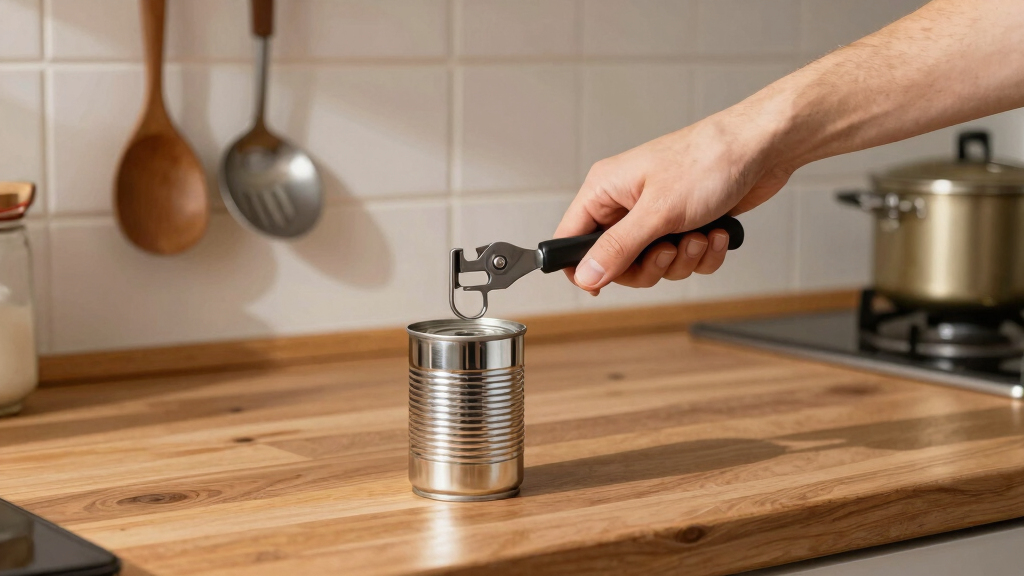
manual can opener with safety features
As an affiliate, we earn on qualifying purchases.
As an affiliate, we earn on qualifying purchases.
Top Features to Look for in Your Next Can Opener
- Rotating cutting wheel: Ensures smooth, continuous cutting around the can’s rim. This feature matters because it reduces the effort needed and decreases the likelihood of jagged edges, which can cause cuts or contamination. A well-designed wheel maintains sharpness longer, contributing to consistent performance over time.
- Ergonomic handles: Soft, non-slip grips reduce hand fatigue, especially for those with arthritis or limited strength. The ergonomic design distributes force evenly, making opening cans less tiring and more controlled, which enhances safety and comfort during frequent use.
- Safety edges: Minimize sharp metal shards after opening, protecting your fingers and food. Safety lips or rounded edges prevent cuts from the lid or can rim, reducing injury risk. These features are particularly important when handling multiple cans or preparing food for children or vulnerable individuals.
- Durable materials: Stainless steel blades and sturdy construction increase lifespan. High-quality materials resist rust and corrosion, maintaining sharpness and structural integrity over years of use, which is essential in a kitchen environment where moisture is constant.
- Easy cleaning: Removable parts or smooth surfaces prevent buildup and make maintenance simple. A can opener that’s easy to clean reduces bacterial growth and ensures safe operation, especially if used frequently or in off-grid environments where sanitation options are limited.
For instance, a popular model features a rotating wheel that stays sharp longer and handles cushioned with rubber for comfort. Choosing a model with these features ensures you’ll get a reliable, long-lasting tool that makes daily can opening safer and easier, reducing frustration and potential injuries.
ergonomic can opener for arthritis
As an affiliate, we earn on qualifying purchases.
As an affiliate, we earn on qualifying purchases.
How Recent Designs Make Opening Cans Easier Than Ever
Modern manual can openers are about more than just turning a handle. They focus on comfort, safety, and minimal effort. Many now include gear-driven ratchet mechanisms, which multiply your turning power, perfect for those with limited hand strength. For example, seniors or people with arthritis often struggle with traditional openers, but ergonomic models with soft grips and leverage help open cans with just a gentle twist.
Some newer designs incorporate safety lips to prevent sharp metal from slicing your fingers. Others have smooth-cut edges, reducing the risk of cuts after opening. These safety features are not just about convenience—they significantly reduce the risk of injury, especially when handling multiple cans or using cans with thicker steel. Lightweight models are perfect for camping trips or emergency kits where every ounce counts, but they often incorporate these safety and ergonomic features without sacrificing durability. The implication is that these innovations expand usability for a broader range of users and situations, making can opening safer and less physically demanding, which is crucial for off-grid or aged populations.
As an affiliate, we earn on qualifying purchases.
Comparison Table: Manual Can Opener Features at a Glance
| Model | Material | Ease of Use | Safety Features | Durability |
|---|---|---|---|---|
| Basic Swing-Away | Stainless Steel/Plastic | Moderate | Standard edges | Good |
| Ergonomic Ratchet | Stainless Steel/Rubber | Easy | Safety lip, smooth edges | Excellent |
| Compact P-38 | Aluminum | Very Easy | Minimal | Moderate |
As an affiliate, we earn on qualifying purchases.
Cleaning and Maintaining Your Can Opener for Longevity
Keeping your manual can opener in top shape is simple but important. Wash it with warm, soapy water after each use — avoid dishwasher damage unless specified. For stubborn residue, a scrub with a brush or an old toothbrush works wonders.
Lubricate the moving parts with a drop of food-safe oil every few months to keep the gears turning smoothly. Store it in a dry place to prevent rust. For example, a well-maintained opener can serve you reliably for over a decade, saving you money and hassle.
Remember: a clean, well-oiled can opener is safer and cuts more smoothly, making your prep quicker and safer.
Safety Tips for Using Your Manual Can Opener
Sharp edges are the main risk when opening cans. Always handle the can and opener carefully. Use a model with safety features like a safety lip or rounded edges if available.
When opening, keep your fingers away from the cutting wheel and the sharp metal rim. Once the can is open, dispose of the lid carefully — it can be razor-sharp. For instance, always wear cut-resistant gloves if you’re unsure, especially when opening cans for large batches or thick steel cans.
Making safety a priority not only protects you but also prolongs your tool’s lifespan.
Picking the Right Manual Can Opener for Your Needs
Choosing the perfect model depends on your specific use. Do you open cans daily, or just once in a while? Do you have hand strength issues? Do you need something lightweight for camping?
- Assess your needs and physical abilities.
- Decide if safety features or ergonomic design matter most.
- Compare features and reviews of popular models.
- Pick a durable, easy-to-clean option.
- Keep your budget in mind, but prioritize quality for longevity.
For example, a camper might opt for a compact, lightweight P-38, while a home cook might prefer a ratchet model with safety lips.
Frequently Asked Questions
What is the best manual can opener for seniors or people with arthritis?
Look for models with ergonomic, soft-grip handles and a ratchet or leverage mechanism. These features reduce effort and make opening cans less painful and more controlled.How do I clean and maintain my manual can opener?
Rinse it thoroughly after each use with warm, soapy water. Remove any food debris with a brush, and periodically apply a few drops of food-safe oil to the moving parts to keep it operating smoothly.Are there safety concerns with manual can openers?
Yes, sharp edges can cause cuts. Choose models with safety lips or rounded edges, and always handle cans and lids carefully to avoid injury.What features should I consider when buying a manual can opener?
Prioritize ease of use, durability, safety features, handle comfort, and whether the opener suits your specific needs or physical ability.Can manual can openers open all types of cans?
Most standard models work well with regular metal cans, but very thick or specialty cans might require a heavy-duty or specialized opener. Always check the product specifications.Conclusion
A reliable manual can opener isn’t just a kitchen tool — it’s your everyday ally in preparing food safely and efficiently. Investing in a well-made model means fewer fights with cans and more time enjoying your meal. Remember, a simple, sturdy opener can last decades, making it a smart choice for any kitchen, off-grid or not.Halloween Picks
halloween
As an affiliate, we earn on qualifying purchases.