TL;DR
Open a free Amazon Business account
Business pricing, bulk buying and tax-exempt orders.
Create a free accountAs an affiliate, we earn on qualifying purchases.
Water purification tablets are a compact, shelf-stable way to disinfect drinking water. Follow precise steps—choose the right source, pre-filter, dose accurately, and wait the full contact time—to ensure safety and avoid common mistakes.
Imagine you’re miles into a remote trail, water from a mountain stream bubbling clear but teeming with unseen dangers. You have a small packet of purification tablets in your kit, but do you know exactly how to turn that cloudy source into safe drinking water? It’s not just about dropping a tablet in and waiting—there’s a precise process that guarantees safety.
Understanding how to use water purification tablets correctly can mean the difference between a healthy, refreshing sip and a stomach illness. Whether you’re hiking, preparing for an emergency, or living off-grid, mastering this simple yet vital skill keeps you self-reliant and resilient in unpredictable situations.
Always select the clearest, safest water source available before treating.
Measure water volume precisely and follow tablet dosing instructions exactly.
Never rush the wait time—disinfection requires patience for full effectiveness.
Pre-filter turbid water to improve disinfectant performance and microbial kill rate.
Combine filtration with tablets for broader protection, especially against viruses and protozoa.
How to Use Water Purification Tablets
Purification tablets are compact, shelf-stable tools for disinfecting water during hikes, travel, emergencies, and off-grid living. Their protection depends on a precise sequence: select carefully, pre-filter, measure, dose, mix, and wait.
From source selection to protected storage.
Product formulations vary. Read the package.
Possible for specified microbes under correct conditions.
The manufacturer’s directions override general guidance.
From uncertain source to treated water
Each stage protects the next. Skipping source assessment or pre-filtration can undermine even an accurate dose, while drinking too early can leave viable organisms in the water.
Choose
Prefer clear, flowing water away from campsites, livestock, algal blooms, industry, and visible contamination.
Pre-filter
Let sediment settle, then pass cloudy water through clean cloth, a coffee filter, or a purpose-built filter.
Measure
Confirm the exact container volume. Never estimate when the bottle capacity is unknown.
Dose & mix
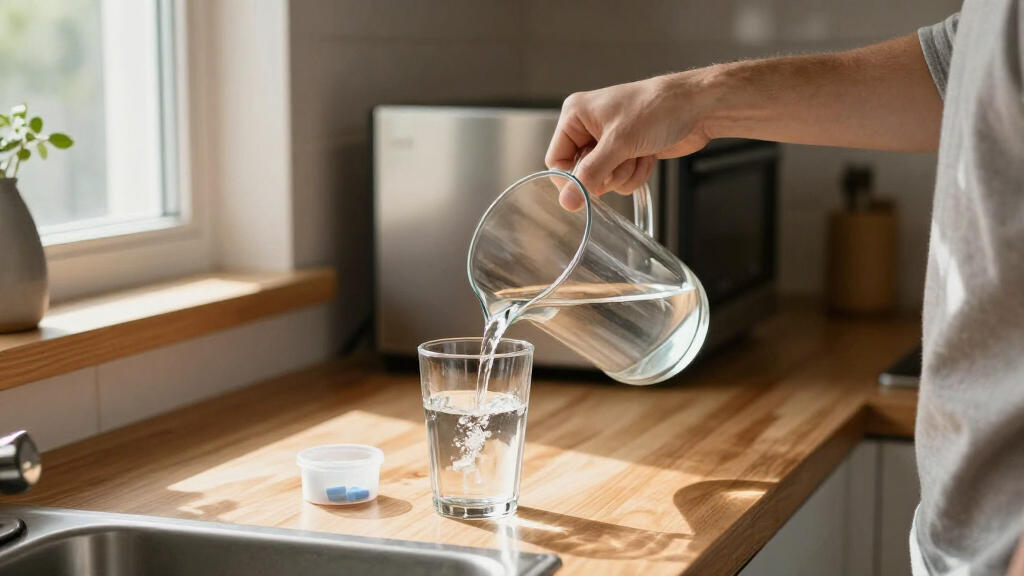
Add the label-specified dose, close the container, and shake thoroughly to distribute the disinfectant.
Wait & protect
Observe the full contact time, wet the cap threads, and keep treated water closed and clean.
Dose accurately. Mix completely. Wait patiently.
Tablet strength, water volume, temperature, turbidity, and target organisms all affect treatment. Never crush or divide a tablet unless the manufacturer explicitly permits it.
Start with the safest water available
Use the clearest source you can find. Avoid water near sewage, fuel, mines, farms, industrial discharge, dead animals, or toxic algal blooms.
Treat the cap contact surfaces
After shaking, slightly loosen the cap so treated water wets the bottle threads. Retighten it without touching the opening.
Prevent recontamination
Keep finished water in a clean, closed container. Do not dip untreated cups, hands, or utensils into the treated supply.
“One tablet per liter” is common, but it is not universal. Confirm the active ingredient, tablet strength, permitted volume, and temperature instructions on your specific package.
Know what is inside the tablet
Different active ingredients provide different coverage, treatment times, tastes, and limitations. A preservation product should not be assumed to offer rapid emergency disinfection.
| Active ingredient | Typical strengths | Important limitations | Best interpretation |
|---|---|---|---|
| Chlorine | Fast, inexpensive, and widely available for many bacteria and viruses. | Less dependable against protozoan cysts, especially Cryptosporidium; may leave a chlorine taste. | Useful general disinfection when the label matches the intended water and organisms. |
| Chlorine dioxide | Can cover a broader range of microorganisms than standard chlorine products. | May need several hours for Cryptosporidium protection and generally costs more. | Check the exact organism claim and complete the entire stated contact time. |
| Iodine | Compact and historically common in travel and emergency kits. | Generally unreliable against Cryptosporidium; taste and health restrictions affect suitability. | Use only when appropriate for the user and situation, exactly as labeled. |
| Silver ions | Useful mainly for preserving stored water in certain formulations. | Performance and treatment time vary; rapid broad-spectrum disinfection cannot be assumed. | Distinguish long-term preservation from emergency water treatment. |
Disinfection is not filtration or detoxification
Tablets target susceptible microorganisms. They do not physically remove particles or make chemically polluted water safe. When chemical contamination is suspected, find another source.
Tablets may inactivate
- Many disease-causing bacteria, including organisms associated with cholera and typhoid.
- Many viruses, depending on the active ingredient and correct use.
- Some parasites, including Giardia, with product-specific contact times.
- Cryptosporidium only when the product explicitly claims effectiveness against it.
Tablets generally cannot remove
- Dirt, suspended sediment, and microplastics.
- Salt from seawater or other dissolved mineral loads.
- Heavy metals, PFAS, pesticides, fuel, and industrial chemicals.
- Toxic algal compounds or radioactive contamination.
Neither tablets nor boiling remove most chemical pollutants. Boiling can concentrate some contaminants as water evaporates. Avoid suspicious sources rather than attempting to rescue them with extra tablets.
Four conditions control the outcome
The package directions assume particular operating conditions. Cold, cloudy, or heavily contaminated water usually requires more caution and may require longer treatment.
Temperature
Chemical reactions proceed more slowly in cold water. Use the label’s cold-water instructions.
Turbidity
Sediment can shelter microorganisms and consume disinfectant. Settle and pre-filter first.
Contact time
Drinking too soon interrupts treatment. Start a timer as soon as the dose is added.
Dose
Too little can fail; unnecessary excess can worsen taste and exceed product directions.
Conceptual comparison only. Bar lengths illustrate relative treatment confidence, not laboratory efficacy percentages.
Five mistakes that undermine safe water
Most failures come from process errors rather than equipment complexity. A small checklist and a timer can prevent the most common problems.
Guessing volume
An unknown bottle capacity makes accurate dosing impossible.
Drinking early
Contact time is part of the dose. Ten minutes is not thirty minutes.
Skipping filtration
Cloudiness can shield microbes and reduce disinfectant performance.
Using old tablets
Expired or poorly stored products may have reduced and unreliable potency.
Dirty cap threads
Untreated droplets can reintroduce contamination after treatment.
The dependable habit: clearest source, correct dose, full wait.
Carry a marked container, a simple pre-filter, an unexpired tablet supply, and a reliable timer. Pair tablets with an appropriate physical filter when broader protection is required.
Why Choosing the Right Water Source Matters More Than You Think
The first step is selecting the safest possible water source. Clear, flowing water away from campsites, livestock, and industrial areas is your best bet. Imagine a bubbling mountain stream—crystal-clear, cold, and fast-moving. That’s ideal.
If your water looks cloudy or has a strange smell, pre-filter it. Let sediment settle or pour it through a cloth or a dedicated filter. Disinfectants work less reliably in turbid water because particles shield microorganisms and consume disinfectant chemicals, reducing their effectiveness.
Why does this matter? Because microorganisms often cling to particles, making them harder to kill if the water isn’t pre-treated. Failing to do so can give a false sense of security—thinking water is safe when invisible pathogens remain. The tradeoff is time and effort—pre-filtering adds an extra step, but it greatly enhances safety and reduces the risk of illness.
For example, if you’re filtering water from a pond, scoop out the top layer, then pass it through a bandana or a small filter. This simple step can make a huge difference in how well the tablets work and how safe your water will be after treatment.
water purification tablets for hiking
As an affiliate, we earn on qualifying purchases.
As an affiliate, we earn on qualifying purchases.
How to Dose Water Purification Tablets Exactly Every Time
- Measure your water volume precisely. Use a clean measuring cup or the marked container you plan to drink from to determine the exact liters or milliliters. This ensures you use the right number of tablets—no guesswork.
- Add the correct number of tablets according to the manufacturer’s instructions. For most products, one tablet disinfects one liter. If your water volume is different, adjust accordingly—use half a tablet for 0.5 liters, or two for 2 liters.
- Close the container tightly, then shake vigorously to mix the chemicals thoroughly. Loosen the cap slightly so the treated water can contact the threads, then retighten. Ensuring thorough mixing promotes even distribution of disinfectant, which is crucial for all microorganisms to be exposed to the chemical.
**Practical Action Step:** Always carry a small, reusable measuring container and a pen to mark doses. For example, if you have 750 ml of water, use a fraction of a tablet if the instructions specify. Keep a dosing chart in your kit for common volumes. This prevents under- or overdosing, ensuring safety and good taste.
portable water purification tablets
As an affiliate, we earn on qualifying purchases.
As an affiliate, we earn on qualifying purchases.
The Critical Waiting Period — Why Patience Pays Off
Once the tablets are in, you must wait the full contact time. Many products recommend 30 minutes, but cold or heavily contaminated water can require longer. Chlorine-dioxide tablets, for instance, may need up to four hours to neutralize *Cryptosporidium*. This waiting period isn’t just about time—it’s about chemical reaction kinetics. Disinfectants need sufficient contact to penetrate cell walls and deactivate microorganisms effectively.
**Practical Action Step:** Set a timer immediately after adding the tablet. Use a watch or your phone. In cold conditions, plan to wait longer—up to 4 hours if you’re dealing with resistant parasites. In hot, sunny environments, shorter times might suffice, but always check the instructions. Use the wait time to set up your gear or filter other water sources—patience now saves you illness later.
Imagine rushing to drink after only 10 minutes—this can leave pathogens alive. Always follow the recommended contact time to ensure your water is truly safe.
emergency water purification tablets
As an affiliate, we earn on qualifying purchases.
As an affiliate, we earn on qualifying purchases.
Common Mistakes That Can Make Your Water Unsafe
- Using the wrong dose for the water volume—measure carefully and follow instructions exactly. For example, using one tablet for two liters when only one is needed can leave dangerous pathogens alive.
- Drinking the water before the full contact time has elapsed. Rushing this step risks ingesting live microorganisms. Always wait the full recommended time before drinking.
- Skipping pre-filtration on turbid water, which reduces disinfectant contact with microorganisms. Particulates can shield microbes from chemical attack, making disinfection incomplete and increasing health risks.
- Relying on expired or poorly stored tablets—chemical potency diminishes over time. Using ineffective tablets can give a false sense of security, especially in critical situations where safe water is essential.
- Not cleaning bottle threads and caps after treatment, risking recontamination. Residual contaminants on these surfaces can reintroduce bacteria or viruses into your clean water.
**Practical Takeaway:** Always store tablets in a cool, dry place, check expiration dates regularly, and clean your bottle’s threads after treatment. This simple habit prevents recontamination and ensures your water remains safe.
off-grid water disinfectant tablets
As an affiliate, we earn on qualifying purchases.
As an affiliate, we earn on qualifying purchases.
Frequently Asked Questions
How long should water sit after adding a tablet?
Most tablets require at least 30 minutes, but cold or turbid water may need longer—up to four hours for some products to inactivate *Cryptosporidium*. Always follow the label instructions for best results.Is one tablet enough for any bottle?
No. Tablets are designed for specific volumes—usually one liter. Using a larger container without adjusting the dose risks incomplete disinfection. Measure your water carefully.Should cloudy water receive extra tablets?
Not automatically. First, pre-filter or settle the water to reduce turbidity. Then follow the product’s instructions for turbid water—sometimes more tablets aren’t necessary if you’ve properly filtered.Do purification tablets remove parasites?
Some can inactivate parasites like *Giardia*, but effectiveness varies. Not all tablets reliably kill *Cryptosporidium*. Check if your product explicitly claims efficacy against it before relying solely on tablets.Can tablets be used after the expiration date?
Expired tablets may lose potency. They might still work but are less reliable. It’s best to replace them, especially in emergency situations where safety is critical.Conclusion
Mastering the correct use of water purification tablets turns uncertain water into a safe, drinkable resource. It’s a simple step that pays off in health, resilience, and self-reliance. When you know exactly how to dose, wait, and store, you create a reliable safeguard against unseen dangers—no matter where you are.
Keep your kit stocked, your process precise, and your patience steady. Your off-grid water source can become a dependable supply with just a few careful steps. That’s the real power of understanding how to use purification tablets properly.
Flea & tick season Picks
flea and tick prevention
As an affiliate, we earn on qualifying purchases.