TL;DR
Listen free for 30 days with Audible
Thousands of audiobooks and originals — cancel anytime.
Start your free trialAs an affiliate, we earn on qualifying purchases.
Proper grip, controlled technique, and regular maintenance make cleaver use safer. Focus on stability, cutting motion, and keeping your blade sharp to prevent injuries and work efficiently.
Always grip the cleaver firmly and stabilize your food with a claw grip.
Use vertical, controlled chopping motions rather than hacking or sawing.
Maintain a sharp blade to reduce force and prevent slips.
Work on a stable, non-slip surface for maximum safety.
Choose a cleaver size and weight suited to your tasks to avoid fatigue and accidents.
How to Grip and Handle Your Cleaver for Safety
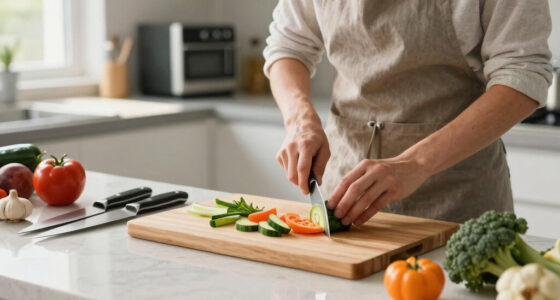
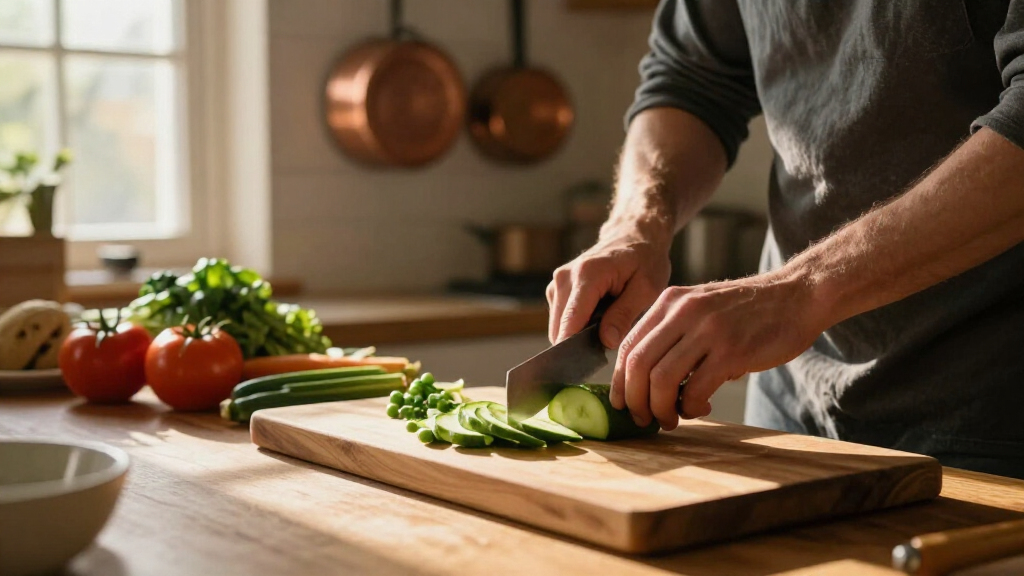
Holding your cleaver correctly is the first step toward safe chopping. Grip the handle firmly with your dominant hand, making sure your fingers wrap around it securely. Your grip should feel comfortable yet controlled — a death grip can tire your hand, but a loose grip invites slips. Use your other hand to stabilize the food, curling your fingers inward into a claw shape. This way, your knuckles act as a barrier, protecting your fingers from the blade. Imagine you’re guiding a toddler’s hand — firm, steady, and precise. This combination of grip and stabilization forms the foundation of safe cutting.
For example, when slicing a large pumpkin, grip the handle tightly while your non-dominant hand uses the claw grip to hold the vegetable steady. This prevents slipping and keeps your fingers out of the blade’s path.
As an affiliate, we earn on qualifying purchases.
Master the Controlled Cutting Motion to Avoid Accidents
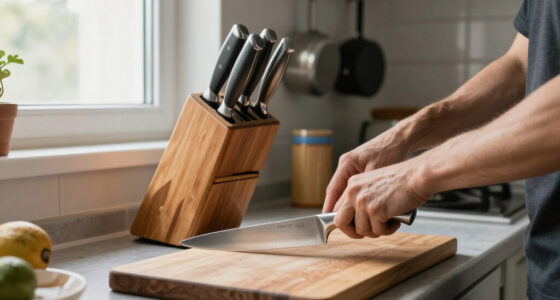
The key to safe cleaver use is controlling the motion. Use a steady, vertical chopping action rather than hacking or sawing. Think of your cleaver as a hammer, not a saw. Keep the blade perpendicular to the cutting surface, slicing straight down with each controlled strike. For instance, when chopping through a stack of ribs, a clean, vertical chop with firm force reduces the chance of slipping sideways. For delicate slicing, use the flat side of the blade or a gentle rocking motion. This precise control minimizes accidents and makes your cuts more uniform.
As an affiliate, we earn on qualifying purchases.
Choosing the Right Surface for Safety and Efficiency
A stable, non-slip cutting board is essential. A wobbly surface increases the risk of slips and cuts. For example, a thick wooden or heavy plastic board with rubber feet provides a firm base. Never cut on a slippery countertop or an unstable surface like a tilting cart. When working with bones or large pieces, secure your cutting board with damp towels underneath for extra grip. Remember, a safe surface is your first line of defense against accidents. It also helps you work more efficiently by preventing the board from shifting mid-cut.
As an affiliate, we earn on qualifying purchases.
Keep Your Cleaver Sharp — Here’s Why and How
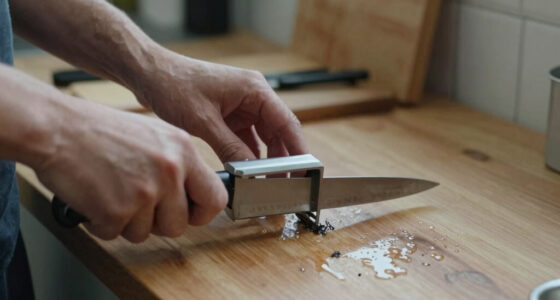
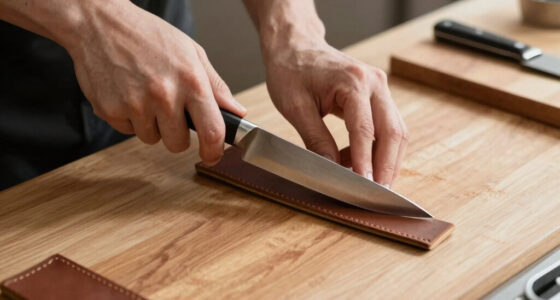
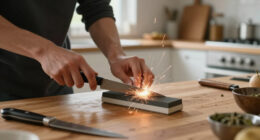
A dull cleaver is dangerous because it requires more force to cut through tough materials, which increases the likelihood of slips and loss of control. When the blade isn’t sharp, you tend to apply excessive pressure, which can cause the blade to slip sideways or your hand to jerk unexpectedly. A sharp blade, on the other hand, slices cleanly with less effort, allowing for more precise control and reducing fatigue. Regular honing with a leather strop or ceramic rod keeps the edge aligned and in optimal condition. When the edge dulls, use a whetstone or professional sharpener to restore its cutting power. Remember, a sharp blade not only makes your work easier but significantly enhances safety by minimizing the risk of slips caused by excessive force. Investing time in maintaining your blade pays off in safer, more efficient cuts.
kitchen safety gloves for chopping
As an affiliate, we earn on qualifying purchases.
As an affiliate, we earn on qualifying purchases.
Safety Gear and Precautions to Keep You Out of Trouble
Protect yourself with cut-resistant gloves if you’re new or working on tricky cuts. Keep your work area clear of clutter — a stray towel or utensil can cause slips. Always cut away from your body and never reach over the blade. Consider wearing a thick apron or long sleeves for extra protection. For example, when hacking through a tough beef shank, gloves can help you maintain grip if the meat slips. These simple precautions, combined with good technique, keep accidents to a minimum.
Recent Innovations Making Cleaver Use Safer
Modern cleavers now come with ergonomic handles, finger guards, and safety features. Some models have textured grips to prevent slipping even when wet. Material advances, like high-carbon stainless steel, hold their edge longer, reducing the need for frequent sharpening. There are also specialized cleavers for different tasks — heavy-duty for bones, Chinese-style for precision, and lightweight for vegetables. For example, a cleaver with a finger guard can prevent accidental slips during tough cuts. These innovations significantly improve handling safety and efficiency, especially when working in less-than-ideal setups or extended use. They help mitigate common risks, making your work safer without sacrificing performance.
What Size and Weight of Cleaver Works Best for You
Cleavers vary from 6 to 8 inches in blade length, weighing between 1 to 3 pounds. Heavier models provide more chopping power, which is especially useful for bones and dense meats. However, the tradeoff is increased fatigue during prolonged use, which can lead to sloppy technique or accidental slips. Lighter options, around 1 to 1.5 pounds, are easier to handle for delicate or repetitive tasks but may lack the necessary force for tougher cuts. For example, if you often process whole chickens or large cuts of beef, a 7-inch, 2-pound cleaver offers a good balance of weight and control, reducing strain and improving safety. Choosing the right size and weight is crucial because it directly impacts your ability to maintain proper technique over time, thus lowering the risk of accidents and fatigue-induced errors.
Step-by-Step: How to Use Your Cleaver Safely in Practice
- Pick a stable, non-slip surface and secure your cutting board.
- Grip the handle firmly with your dominant hand.
- Use your other hand to form a claw around the food, keeping fingers tucked.
- Align the blade perpendicular to your cutting surface.
- Use controlled, vertical chopping motions — no hacking or sawing.
- Apply even pressure, and avoid twisting or tilting the blade.
- Keep the blade sharp and clean after use.
Frequently Asked Questions
How do I choose the right cleaver for my needs?
Pick a cleaver with a size and weight suited to your tasks. Heavy-duty models (7-8 inches, 2-3 pounds) excel at bones and large cuts, while lighter ones (6 inches, 1-1.5 pounds) are better for vegetables and delicate slicing. Consider ergonomic features and safety guards as well.What’s the best way to sharpen my cleaver?
Use a whetstone or professional sharpener designed for high-carbon steel blades. Hone regularly with a leather strop or ceramic rod to maintain the edge. Proper sharpening keeps your cleaver safe, effective, and easy to control.What safety precautions should I follow when using a cleaver?
Always cut away from your body, stabilize your food with a claw grip, and keep your work area clutter-free. Consider wearing cut-resistant gloves if you’re new or working on tough cuts. Regularly inspect your blade for sharpness and cleanliness.Can I use a cleaver for vegetables and fruits?
Absolutely. A cleaver’s weight and broad blade make it excellent for crushing garlic, slicing large melons, or chopping through thick squash. Just switch to a lighter, more precise technique for delicate tasks.How do I store my cleaver safely?
Keep it in a knife guard, sheath, or on a magnetic strip out of reach of children. Always dry it thoroughly after washing to prevent rust and keep the edge in top shape.Conclusion
Handling a cleaver safely boils down to respect, control, and maintenance. Think of it as an extension of your hand — when you treat it with care, it becomes an incredibly reliable tool. Remember, safety isn’t complicated, but it’s essential. Keep your grip firm, your blade sharp, and your workspace stable. With practice, you’ll transform tough cuts into simple, safe actions, turning your kitchen into a place where skill beats fear every time.Flea & tick season Picks
flea and tick prevention
As an affiliate, we earn on qualifying purchases.