
TL;DR
Listen free for 30 days with Audible
Thousands of audiobooks and originals — cancel anytime.
Start your free trialAs an affiliate, we earn on qualifying purchases.
Knife performance hinges on steel composition, hardness, and heat treatment. Higher hardness boosts resistance to deformation but can reduce toughness. Steel choice and proper sharpening are key to lasting edges.
Ever wonder why some knives stay sharp through endless chopping, while others dull after a few slices? The secret lies in the steel. Steel isn’t just a metal—it’s a complex alloy, with properties that directly impact how long your knife keeps its edge and how easily you can sharpen it.
Understanding the basics of steel composition, hardness, and heat treatment can save you frustration and money. Whether you’re off-grid, using hand tools, or just tired of dull blades, this guide will give you practical, real-world insights into what makes a steel good or bad for your knife.
Hardness (HRC) influences edge stability but isn’t the sole performance factor; too high can cause brittleness.
Edge retention depends on wear resistance, chipping resistance, and corrosion—match steel to your tasks.
Carbide size and distribution greatly impact wear resistance and toughness; fine, uniform carbides are ideal.
Heat treatment customizes steel properties; a well-heat-treated knife outperforms one made from the same steel but poorly treated.
Geometry and finish often matter more than steel type for immediate cutting performance and durability.
Knife Steels Explained: Hardness & Edge Retention
Steel isn’t just a metal—it’s a complex alloy whose composition, hardness, and heat treatment determine how long your knife keeps its edge and how easily you can sharpen it. Higher hardness resists deformation but can sacrifice toughness; the right match of steel, geometry, and maintenance is what keeps blades cutting.
“A steel’s carbide size and distribution—not just its hardness—largely determine how well it resists abrasive wear and maintains an edge.”
What HRC Really Tells You
HRC (Rockwell C) measures resistance to permanent indentation—not toughness or edge retention. A knife at 60 HRC is harder than one at 55 HRC, but it won’t automatically stay sharper longer. Harder steels can hold a finer edge yet risk chipping; softer steels are forgiving but dull faster.
Soft and easy to sharpen, but prone to edge rolling and rapid dulling.
The common balance point for durable general-purpose knives.
High-performance kitchen, folding, and tool-steel knives.
Excellent stability and wear resistance—but demanding of steel, heat treatment, geometry, and user.
Carbides: Microscopic Teeth in the Steel
Carbon bonds with chromium, vanadium, tungsten, molybdenum, and niobium to form hard carbide particles embedded in the steel matrix. Their size and distribution are critical: fine, uniform carbides balance wear resistance with toughness—often achieved via powder metallurgy. Large or uneven carbides invite chipping.
Fine, Uniform Carbides
SUPERIOR WEAR + TOUGHNESS BALANCE
Powder metallurgy produces a finer, more uniform carbide distribution—improving toughness, consistency, and grindability while allowing high alloy content.
CPM series · powder-metallurgy steelsHigh Vanadium Carbide
MAXIMUM ABRASIVE WEAR RESISTANCE
Vanadium carbides are exceptionally hard. Steels like CPM 10V, K390, Maxamet, and CPM 15V achieve extreme cutting longevity—but are harder to sharpen and trade away toughness.
CPM 10V · K390 · Maxamet · CPM 15VLow-Carbide Simplicity
EASY SHARPENING, FASTER DULLING
Steels like 1095 and 440C have fewer carbides—they sharpen quickly and behave predictably, but dull faster under heavy abrasive use.
1095 · 440C · simple carbon steelsThe Hidden Player in Steel Performance
Heat treatment turns an alloy into a high-performing knife. Two knives from the same steel can behave completely differently if their heat treatments differ—controlling hardness, retained austenite, carbide development, and matrix structure.
Austenitizing
Heating dissolves carbon into the steel matrix, preparing the alloy for transformation.
Quenching
Rapid cooling locks in a hard microstructure—the foundation of edge stability.
Cryogenic Treatment
Sub-zero processing refines carbide size and distribution, reducing retained austenite.
Tempering
Reheating relieves stress and tunes the hardness–toughness balance for the intended task.
Edge Retention Is a Composite Trait
Wear resistance, chipping resistance, deformation resistance, and corrosion resistance all play roles. A steel that excels in abrasive cutting may fail against bone, staples, or ceramic plates. Match strengths to your use case.
| Steel Type | Wear Resistance | Toughness | Sharpening Ease | Corrosion Res. | Best For |
|---|---|---|---|---|---|
| 1095 | ✗ Low | ✓ High | ✓ Very easy | ✗ Low | Field & bushcraft knives |
| 440C | ~ Moderate | ~ Moderate | ✓ Easy | ✓ High | Everyday folding knives |
| CPM 10V | ✓ Exceptional | ✗ Low | ✗ Difficult | ~ Moderate | Abrasive cutting tasks |
| Maxamet | ✓ Extreme | ✗ Low | ✗ Very difficult | ✗ Low | Long-edge slicing work |
| Powder-met. stainless | ✓ High | ~ Balanced | ~ Moderate | ✓ High | Precision kitchen knives |
The Unsung Heroes of Cutting Power
Geometry and finish often matter more than steel type for immediate cutting performance. A polished micro-finish slices cleanly and resists sticking; a coarser, micro-serrated edge bites aggressively into fibrous materials but dulls faster.
Acute Edge
15°–20°Slices easily with less material to push through—but the thin apex is vulnerable to rolling or chipping if the steel lacks toughness.
Durable Edge
20°–25°A thicker angle trades slicing finesse for durability—better for hard or impact-prone cutting tasks and harder use.
A well-heat-treated, thinly ground knife made from a modest steel can outperform a poorly treated “super steel.” Steel choice matters—but treatment, geometry, and sharpening quality complete the equation.
Key Takeaways
- 1
Hardness (HRC) influences edge stability but isn’t the sole performance factor—too high can cause brittleness and chipping.
- 2
Edge retention depends on wear resistance, chipping resistance, and corrosion—match the steel to your tasks.
- 3
Carbide size and distribution greatly impact wear resistance and toughness; fine, uniform carbides are ideal.
- 4
Heat treatment customizes steel properties—a well-treated knife outperforms the same steel treated poorly.
- 5
Geometry and finish often matter more than steel type for immediate cutting performance and durability.
What Does ‘HRC’ Really Tell You About Your Knife?
HRC, or Rockwell hardness, measures how resistant a steel is to indentation. Think of it as the steel’s resistance to permanent deformation. Knives with 60 HRC are harder than those at 55 HRC, but that doesn’t automatically mean they stay sharper longer. Hardness influences edge stability but also affects toughness—too hard, and the blade may chip or crack.
For example, a typical kitchen knife might sit around 58 HRC, balancing sharpness and durability. A high-performance chef’s knife might push to 62 HRC, offering a finer edge but requiring more careful sharpening and handling. Remember, the advertised HRC often varies slightly depending on testing methods, so treat it as a useful guideline, not gospel.
Understanding this helps you grasp the tradeoff: a harder steel can hold an edge longer but risks becoming brittle. Conversely, a softer steel is more forgiving but will need more frequent sharpening. This balance is crucial because it directly affects how well your knife performs in real-world tasks and how much maintenance it requires over time.
As an affiliate, we earn on qualifying purchases.
Edge Retention: More Than Just a Number
Edge retention isn’t one-size-fits-all. It’s a nuanced trait that depends on multiple factors—resistance to abrasive wear, chipping, deformation, and corrosion. For instance, a steak knife might excel at slicing soft meats but struggle with cutting through bone or frozen foods. Each task demands specific steel properties, meaning that a steel optimized for one purpose might underperform in another.
Some steels resist abrasive wear very well, maintaining a keen edge during heavy-duty use, which is essential for chopping hard ingredients or impact-heavy tasks. Others are formulated to resist chips and fractures, crucial when cutting hard or impact-prone materials. The key implication is that selecting steel isn’t just about the highest numbers; it’s about matching the steel’s strengths to your specific needs.
Edge retention is therefore a composite trait—resistance to wear, impact, chipping, and corrosion all play roles. For example, a steel with excellent corrosion resistance might sacrifice some wear resistance, but in humid or outdoor environments, this tradeoff means your knife stays sharper longer without rusting. Recognizing these nuances ensures you choose the right steel for your intended use, prolonging the life and performance of your knife.
As an affiliate, we earn on qualifying purchases.
How Hardness, Carbides, and Alloy Content Shape Edge Longevity
Hardness, carbides, and alloy content form the triad that determines a steel’s wear resistance and toughness. Harder steels are more resistant to deformation and edge rolling, making them ideal for maintaining a fine, sharp edge during use. However, pushing hardness too high can lead to brittleness, increasing the risk of chipping or cracking under impact or misuse. Carbides are tiny, hard particles embedded within the steel matrix that act like microscopic teeth, cutting and resisting abrasion. Their size and distribution are critical—large or uneven carbides can cause chipping, while fine, evenly distributed carbides offer a superior balance of wear resistance and toughness.
For example, steels like CPM 10V and Maxamet contain large vanadium carbides, making them excellent for abrasive cutting tasks. But these steels are more challenging to sharpen and less forgiving if mishandled. Conversely, steels like 1095 or 440C have fewer carbides, are easier to sharpen, but may dull faster under heavy abrasive use. The implication is that selecting steel involves understanding these tradeoffs: if you prioritize long-lasting edges in abrasive environments, steels with carbides are advantageous, but you must accept the sharpening difficulty and potential brittleness.
Finer carbide distribution, often achieved through powder metallurgy, enhances toughness and provides consistent performance. Conversely, coarse or uneven carbides can lead to edge chipping and reduced ability to produce a thin, sharp edge. Recognizing how carbide size and distribution influence performance helps you choose steels aligned with your specific needs, whether for precision slicing or heavy-duty work.
knife edge retention sharpening kit
As an affiliate, we earn on qualifying purchases.
As an affiliate, we earn on qualifying purchases.
Heat Treatment: The Hidden Player in Steel Performance
Heat treatment is what turns a steel alloy into a high-performing knife. It involves controlled heating and cooling processes—annealing, quenching, and tempering—that tailor the microstructure to achieve desired properties. Proper heat treatment optimizes hardness, toughness, and carbide structure, but even small variations can significantly impact performance. For instance, two knives made from the same steel might behave very differently if one is heat-treated for higher hardness and the other for toughness, affecting how they resist chipping or dulling.
For example, a chef’s knife might be heat-treated to reach around 60 HRC with a microstructure that balances hardness and toughness, resisting chipping during slicing. In contrast, a tool steel might be tempered to maximize toughness at 58 HRC, making it more impact-resistant. Advanced processes like cryogenic treatment can further refine carbide size and distribution, enhancing wear resistance. The critical insight is that heat treatment isn’t just a manufacturing step; it’s the key to unlocking a steel’s potential and tailoring it for specific tasks. A well-heat-treated knife will outperform a poorly treated one, even if they’re made from the same alloy, making this an essential consideration for quality and longevity.
As an affiliate, we earn on qualifying purchases.
Edge Geometry & Finish: The Unsung Heroes of Cutting Power
The shape and finish of your knife’s edge matter more than you might think. An edge with a lower, more acute angle (around 15°–20° per side) slices more easily because it has less material to cut through. However, this thin edge is more vulnerable to rolling or chipping if the steel isn’t sufficiently tough. Conversely, a thicker angle (around 20°–25°) offers increased durability at the expense of slicing finesse. The finish of the edge, whether polished or micro-serrated, also influences cutting performance. A polished micro-finish creates a smooth, refined edge that slices cleanly and resists sticking, ideal for delicate work. A micro-serrated or coarser edge provides a more aggressive bite, better for fibrous or coarse materials but dulls faster.
Choosing the right geometry and finish involves balancing your typical tasks with the steel’s properties. For fine slicing in a controlled environment, a sharper, thinner edge is preferable. For rugged outdoor use or impact-heavy tasks, a more durable, slightly thicker edge reduces the risk of damage. The key is understanding that edge angle and finish directly influence cutting efficiency, ease of sharpening, and lifespan, making them as critical as steel choice itself.
Toughness, Hardness, & Wear Resistance: The Balancing Act
Hardness, toughness, and wear resistance live in a constant tug-of-war. Increasing one property often results in sacrificing another. For example, a super-hard steel might resist deformation and maintain a fine edge longer, but it can also become brittle and prone to chipping or cracking if subjected to impact or twisting. On the other hand, softer steels are easier to sharpen and more forgiving when dropped or used roughly, but they dull faster and require more frequent maintenance.
For instance, steels like CPM 15V, with high carbide content, offer exceptional wear resistance but tend to be more brittle. Conversely, softer steels like 1095 are more impact-resistant but wear out quicker. The practical implication is that your choice should be guided by your typical use: outdoor survival knives or impact-prone tools benefit from toughness, while precision slicing blades prioritize wear resistance and fine edges. Balancing these properties ensures your knife can handle the demands placed on it without sacrificing performance or durability.
Steel Categories & What They Mean for You
Steel types are broad, but knowing their general traits helps. Here’s a quick comparison:
| Category | Examples | Traits |
|---|---|---|
| Simple carbon steels | 1095, 52100 | Easy to sharpen, decent toughness, limited corrosion resistance |
| High-end stainless steels | CPM S35VN, VG-10 | Good balance of wear resistance, corrosion, and edge stability; moderate toughness |
| High-wear steels | CPM 10V, Maxamet | Exceptional abrasive resistance; harder to sharpen and less tough |
| Tool steels | CPM 3V, 80CrV2 | Very tough, resistant to chipping, moderate corrosion resistance |
The best choice depends on your use case. Do you need easy sharpening? Look at softer, easier steels. Need maximum wear resistance? Consider high-carbide steels, but accept the sharpening challenge.
New Steel Trends & What They Mean for Your Kitchen
Modern steels like CPM MagnaCut and ApexUltra are shifting the game. MagnaCut, introduced in 2021, combines corrosion resistance, toughness, and fine-edge stability in a way that was hard to achieve before.
Manufacturers now focus heavily on heat treatment and microstructure. More steels are designed for a balanced performance—no longer just chasing one property like hardness or corrosion resistance.
Steels such as K390, Maxamet, and CPM 10V push the upper limits of abrasion resistance, but require dedicated sharpening tools and careful handling. The trend is toward purpose-built alloys that better serve specific tasks, rather than one-size-fits-all super steels.
Common Myths & Why They Mislead You
Many misconceptions surround steel performance. For example, higher HRC doesn’t always mean better. An overly hard blade can chip or crack. More carbon doesn’t automatically mean longer-lasting edges—other alloying elements and heat treatment matter.
Another myth: stainless steel can’t hold an edge like carbon steel. Modern stainless steels like S35VN or MagnaCut prove otherwise, offering good edge retention with corrosion resistance.
Don’t assume powder metallurgy guarantees better performance. It helps refine the carbide structure, but it’s not a magic bullet. The overall design, heat treatment, and geometry are what really count.
Sharpening steels with lots of carbides requires special care. Diamond or CBN abrasives cut these steels more effectively. Conventional stones might struggle, especially with steels like CPM 15V or Maxamet.
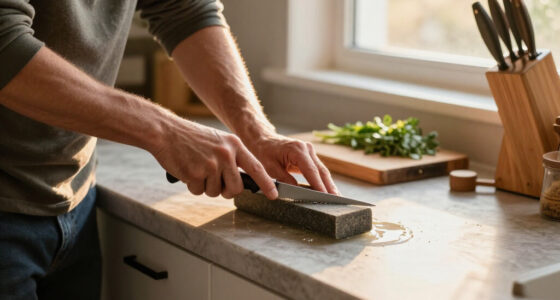
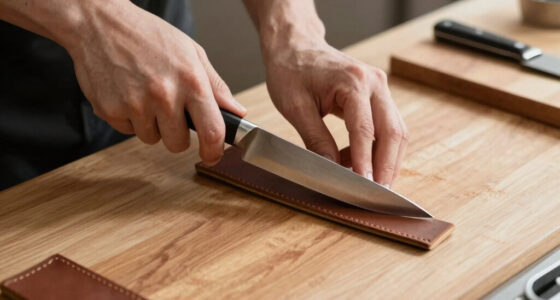
For best results, keep a consistent sharpening angle, remove the burr thoroughly, and use a coarse diamond plate for re-profiling. Patience and proper technique make a huge difference.
For example, a user with a Maxamet blade reports that sharpening takes twice as long but produces a razor-sharp edge if they stick with diamond abrasives and careful finishing.
Picking the Right Steel for Your Off-Grid Kitchen
Think about your typical tasks. Do you chop bones, slice vegetables, or prepare delicate garnishes? The right steel balances edge retention, toughness, and ease of sharpening.
If impact and rough use are common, opt for a tougher steel like CPM 3V or AEB-L. For slicing and fine work, a balanced stainless like CPM S35VN or MagnaCut offers a good mix.
Remember, geometry and heat treatment matter more than steel name alone. A well-treated, thinly ground knife will outperform a poorly treated super steel.
In the wild, simplicity and durability often beat fancy steels. Focus on a steel that matches your skills and environment, then sharpen and maintain it properly.
Frequently Asked Questions
What HRC is best for a kitchen knife?
Most kitchen knives perform well around 58–62 HRC. This range balances edge stability, ease of sharpening, and toughness. For delicate slicing, go higher; for heavy chopping or impact, slightly lower may be better.
Does a harder steel stay sharp longer?
Often, yes. Harder steels resist deformation and rolling, helping edges stay keen longer under abrasive use. But if the steel is too hard or brittle, it may chip or crack. Balance is key.
What steel holds an edge the best in abrasive cutting?
Steels like CPM 15V, CPM 10V, Maxamet, and K390 are known for their exceptional abrasive wear resistance. They excel in demanding cutting tasks but can be harder to sharpen and less tough.
Can stainless steel hold an edge like carbon steel?
Yes, many modern stainless steels like S35VN or MagnaCut offer excellent edge retention, sometimes surpassing traditional carbon steels, while resisting corrosion. It’s a myth that stainless steel can’t stay sharp.
Why does my expensive steel dull quickly?
Possible causes include a thick or damaged edge, improper heat treatment, low hardness, corrosion, or use with hard objects. Proper sharpening and maintenance are essential to maximize steel performance.
Conclusion
Choosing the right steel isn’t just about chasing the highest HRC or the most carbides. It’s about understanding how all these factors work together to match your specific needs. A balanced, well-treated knife with the correct geometry will serve you better in the long run than a flashy steel that’s poorly handled or mismatched to your tasks.
Remember, a sharp, durable edge depends on the combined art of alloy design, heat treatment, and proper maintenance. Focus on learning how to keep your blades in shape, and your knives will reward you with years of reliable service—off-grid or not.
Labor Day sales Picks
labor day deals
As an affiliate, we earn on qualifying purchases.