
TL;DR

Get kitchen gear delivered free with Prime
- Fast, free delivery on millions of items
- Prime Video, Amazon Music and more included
- Member-only deals all year
Learning a handful of minimalist kitchen skills—like basic knife techniques, meal prep, and organization—can make off-grid cooking faster, easier, and more satisfying. These skills reduce clutter, save time, and improve food quality with fewer tools and ingredients.
Imagine slicing through a carrot like a hot knife through butter—no fuss, no wasted motion. That’s the power of a handful of minimalist kitchen skills. They’re not about fancy gadgets or complicated recipes; they’re about doing more with less, especially when your kitchen isn’t hooked up to power or running on limited resources.
If you want to cook confidently off-grid or keep your kitchen simple and durable, focusing on a few key skills can transform your experience. You’ll waste less food, save time, and enjoy meals that nourish both body and spirit—without drowning in clutter or complexity.
Master a sharp, versatile chef’s knife to speed up prep and improve safety.
Implement batch cooking to save time and ensure nourishing meals with minimal effort.
Organize your kitchen with vertical storage and dedicated zones to boost durability and efficiency.
Choose multi-purpose tools like cast iron skillets and immersion blenders to reduce clutter.
Focus on simple, fresh ingredients seasoned well for tasty, healthy meals without complexity.
Minimalist Kitchen Skills Worth Learning
A small set of reliable techniques can make cooking faster, safer, and more satisfying—even when power, space, water, and supplies are limited. The goal is simple: fewer tools, less waste, and better food.
Foundational systems: confident knife work, batch cooking, and deliberate storage.
Potential reduction in meal-prep time when core techniques and advance preparation work together.
Immediate tool care after cooking can prevent rust, dulling, damage, and future frustration.
Six skills that make a small kitchen feel capable
Minimalism works when each habit removes friction. Build these skills first, then add equipment only when a repeated need proves it deserves space.
Knife control
Grip, guide, rock, hone, and sharpen. Consistent cuts cook evenly and require less force.
Batch cooking
Prepare adaptable grains, vegetables, beans, eggs, or sauces in useful quantities.
Storage logic
Label containers, rotate staples, use vertical space, and keep daily tools visible.
Heat mastery
Boil, sauté, roast, and simmer confidently instead of depending on specialized appliances.
Flavor building
Use salt, acidity, fat, herbs, and browning to make simple ingredients taste complete.
Tool maintenance
Clean, dry, inspect, and store equipment immediately so dependable tools stay dependable.
Turn every cut into controlled motion
A sharp knife is safer because it needs less pressure. Good technique also reduces fatigue, improves consistency, and makes prep feel deliberate rather than chaotic.
The rocking sequence
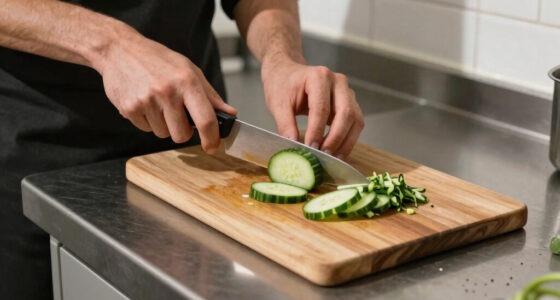
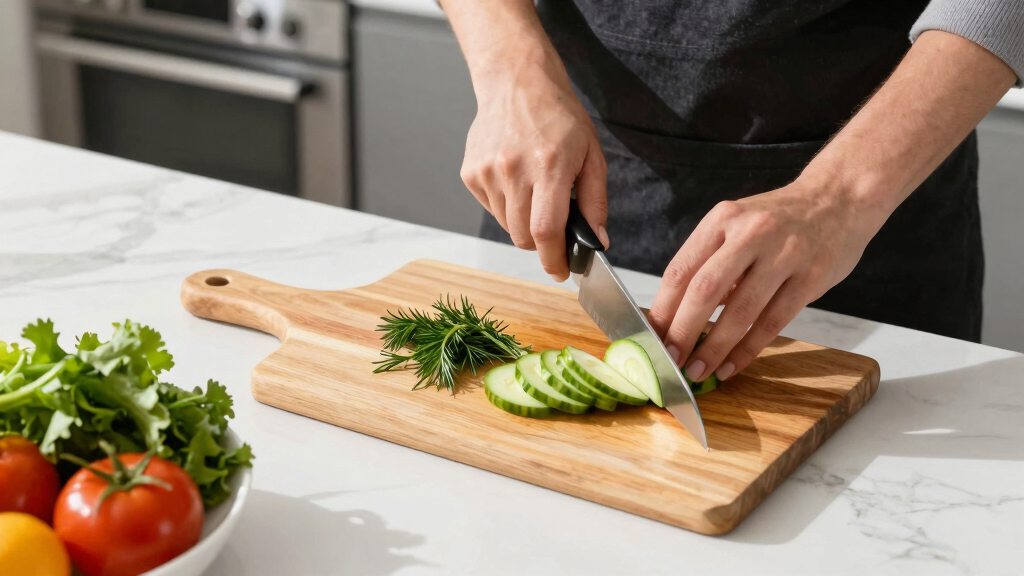
Keep the blade tip close to the board while the heel rises and falls. Guide the food with curled fingertips and let the blade—not brute force—do the work.
Cook in batches. Organize in zones.
Upfront planning replaces daily decision fatigue. The same system protects perishable food, reduces rummaging, and keeps essential equipment ready.
Build components, not repetition
Roasted vegetables can become a grain bowl, soup, omelet filling, or side dish. Neutral staples create more flexibility than five identical finished meals.
Give every action a home
Create dedicated prep, cooking, pantry, and cleaning zones. Put frequently used items at arm’s reach and reserve harder-to-access space for occasional tools.
| Approach | Daily effort | Waste control | Off-grid fit | Flexibility |
|---|---|---|---|---|
| Cook every meal from zero | ✗ High | ~ Variable | ✗ Weak | High |
| Batch identical meals | ✓ Low | ✓ Strong | ✓ Good | ~ Limited |
| Batch versatile components | ✓ Low | ✓ Strong | ✓ Best | ✓ High |
| Rely on packaged convenience food | ✓ Low | ✗ Packaging | ~ Mixed | Medium |
Best balance: prepare adaptable foundations, then change toppings, seasoning, texture, and cooking method.
Choose tools by jobs completed
The strongest minimalist tools are durable, repairable, easy to clean, and useful across several cooking methods. Versatility earns shelf space.
Chef’s knife
One balanced blade can replace a crowded block of lesser knives for most daily preparation.
Cast iron skillet
A durable pan moves from flame to oven and stores heat well when energy is inconsistent.
Immersion blender
When power is available, blend directly in the cooking vessel and avoid extra appliances and cleanup.
Small maintenance prevents kitchen chaos
Immediate care is cheaper than replacement. The routine is short enough to repeat after every meal and powerful enough to extend equipment life for years.
Wipe the blade, rinse the pan, dry every surface, return tools to their zone, and inspect for damage.
The One Knife Technique That Will Speed Up Every Meal
Knowing how to hold and sharpen your knife properly turns chopping from a chore into a quick, satisfying task. It’s the backbone of minimalist cooking. When your knife slices smoothly through vegetables, you save seconds and avoid frustration. Practice a simple rocking motion, keep your blade sharp, and your prep time drops dramatically. For example, dicing an onion in under a minute becomes easy, making stir-fries and stews faster to prepare.
Invest in a good quality chef’s knife, learn to hone it regularly, and your cooking will flow better. It’s like upgrading your hands—more control, less effort. This matters because a dull knife not only slows you down but also increases the risk of accidents and uneven cuts. Sharpening and proper technique reduce fatigue and frustration, making your kitchen routines more efficient and safer. Over time, the confidence gained from mastering this skill can inspire you to experiment more and trust your instincts, leading to more flavorful, well-prepared meals.
As an affiliate, we earn on qualifying purchases.
Mastering Batch Cooking to Keep Your Kitchen Running Smoothly
Batch cooking isn’t just about saving time; it’s about creating a resilient food system that supports your lifestyle, especially when resources are scarce or shopping options are limited. By preparing large quantities of versatile ingredients or meals, you reduce the daily decision-making and effort required to cook from scratch every day. This approach also minimizes waste—leftovers can be transformed into new meals, and perishable ingredients are used efficiently, reducing spoilage.
For off-grid living, where access to fresh supplies might be sporadic, batch cooking becomes a strategic tool. It ensures you have nourishing food ready to go, which can be a lifeline during busy days or emergencies. The key is understanding how to select ingredients that store well and can be combined creatively. This means choosing foods that can be repurposed—roasted vegetables can be turned into soups, grains can serve as a base for various toppings, and proteins like beans or eggs are easy to prepare in bulk. The tradeoff is that batch cooking requires planning and some upfront effort, but the long-term payoff is a kitchen that runs smoothly with less daily fuss and more flexibility in your meal choices.
As an affiliate, we earn on qualifying purchases.
How to Organize Your Minimalist Kitchen for Durability
An organized kitchen isn’t just tidy; it’s a strategic system that enhances durability and efficiency. Proper organization means tools and ingredients are accessible when needed, reducing wear and tear on your equipment and minimizing clutter that can lead to damage or loss. Vertical storage solutions, like hooks and open shelving, save space and keep frequently used items within easy reach, which encourages regular maintenance and reduces the likelihood of items becoming obsolete or damaged.
For example, mounting a knife rack not only keeps blades sharp but prevents accidental damage and dulling caused by jamming knives into drawers. Labeling jars and containers ensures you can quickly find what you need, reducing rummaging that can cause breakage. Over time, a well-maintained, logical layout minimizes the need for replacements and repairs, making your kitchen more durable. The tradeoff involves some initial effort to set up, but the payoff is a system that supports long-term use and resilience—key for off-grid or minimalist setups where repairs or replacements are less convenient.
food storage containers for off-grid
As an affiliate, we earn on qualifying purchases.
As an affiliate, we earn on qualifying purchases.
Simple Tools That Do More Than One Job
In a minimalist kitchen, selecting versatile tools isn’t just about saving space—it’s about maximizing functionality and reducing reliance on multiple gadgets that can clutter your environment. For instance, a cast iron skillet isn’t just for frying; it can bake bread, roast vegetables, and even serve as a makeshift oven in a pinch. Its durability means it can last for decades, making it a worthwhile investment. Similarly, a good chef’s knife can replace an entire set of lesser blades, enabling a wide range of cutting techniques with one tool.
An immersion blender isn’t just for purees; it can whip up smoothies, emulsify dressings, or blend soups directly in the pot, eliminating the need for multiple small appliances. These tools, when chosen carefully, reduce the clutter of specialized equipment, which is especially important when space and resources are limited. The tradeoff is that multi-purpose tools may sometimes compromise a bit on specialized performance, but in a minimalist context, their overall utility outweighs this. They also encourage a more mindful approach to cooking—focusing on technique and ingredient quality rather than relying on gadgets.
As an affiliate, we earn on qualifying purchases.
The One-Minute Skill That Prevents Kitchen Chaos
Maintaining your tools immediately after use is a small but powerful habit that preserves their function and safety, ultimately supporting a durable kitchen. A quick wipe of your knife prevents rust and corrosion, while rinsing your skillet and drying it thoroughly prevents rust and extends its lifespan. Regularly inspecting tools for damage—like cracks or loose handles—allows you to address issues early, avoiding costly replacements or accidents down the line. This routine fosters a sense of ownership and attentiveness that keeps your kitchen running smoothly over years.
For example, sharpening your knife weekly with a simple stone ensures it stays effective, reducing the need for excessive force and decreasing the risk of slips or uneven cuts. This small investment of time translates into safer, more efficient cooking sessions. Over time, these habits build a resilient kitchen environment that can withstand the wear and tear of off-grid living, where repairs or replacements may be harder to come by. The tradeoff is minimal effort for maximum longevity, safety, and confidence in your cooking process.
How to Keep Your Meals Simple, Nutritious, and Tasty
Minimalist cooking isn’t about sacrificing flavor; it’s about understanding how to enhance natural ingredients with minimal effort. Fresh, seasonal produce offers the best flavor and nutrition, but it’s often overlooked because many assume complexity is required for good taste. In reality, simple preparations—like roasting vegetables with a drizzle of oil and herbs—bring out their natural sweetness and depth. Combining these with staple grains and proteins creates balanced, satisfying meals that require little more than basic seasoning and a few fresh herbs or citrus for brightness.
Understanding flavor fundamentals—like the importance of salt, acidity, and fresh herbs—allows you to elevate simple dishes without complicated sauces or a long list of spices. For example, a bowl of rice topped with sautéed greens, a squeeze of lemon, and a sprinkle of herbs can be as delicious as a multi-step recipe. This approach emphasizes quality ingredients and thoughtful seasoning, which is especially valuable when shopping options are limited or your resources are tight. The result is a nutritious, flavorful meal that supports your minimalist, off-grid lifestyle without sacrificing enjoyment or health.
Frequently Asked Questions
What is the most important skill for a minimalist kitchen?
Mastering basic knife skills is the foundation. A sharp, well-handled knife makes prep faster, safer, and more enjoyable, setting the tone for efficient cooking.How can I start batch cooking if I have a small kitchen?
Begin with one or two staple ingredients like rice or beans. Use a large pot or oven to cook in bulk, then store in simple containers for quick meals during the week.Are minimalist tools enough for flavorful meals?
Yes. Focus on fresh ingredients, herbs, and simple seasoning. Minimalist tools like a good knife and cast iron skillet help you prepare diverse, tasty dishes without excess fuss.How do I prevent clutter over time?
Regularly declutter, keep only what you use often, and store tools in designated zones. A simple, consistent routine keeps your kitchen durable and efficient.Can minimalist cooking be as nutritious as elaborate recipes?
Absolutely. Using seasonal, whole foods with fresh herbs and proper seasoning can deliver rich flavors and nutrients without complicated steps.Conclusion
Building a durable, minimalist kitchen isn’t about having everything but mastering a few essential skills. These techniques—sharp knives, batch prep, smart storage—turn your kitchen into a reliable workshop. With practice, you’ll cook more confidently, waste less, and enjoy your food more.
Think of it as turning your kitchen into a well-oiled machine—simple, sturdy, ready for anything. The real magic lies in the skills you develop, not the gadgets you collect.
Fall Picks
fall essentials
As an affiliate, we earn on qualifying purchases.