
TL;DR

Get kitchen gear delivered free with Prime
- Fast, free delivery on millions of items
- Prime Video, Amazon Music and more included
- Member-only deals all year
Caring for a Japanese kitchen knife means gentle cleaning, correct storage, regular honing, and periodic sharpening with the right tools. Keeping rust at bay and handling carefully preserves its sharpness and durability.
Always hand wash and dry your Japanese knife immediately after use to prevent rust and corrosion.
Store your knife in a magnetic strip, sheath, or dedicated block to avoid dulling and accidents.
Hone regularly with a ceramic or steel rod to maintain the edge, and sharpen with a water stone every 6-12 months.
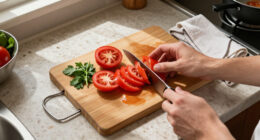
Use wooden or plastic cutting boards to protect the blade during prep.
Avoid cutting on glass, marble, or using the knife for tasks outside its purpose.
How to Clean Your Japanese Knife Without Dulling the Edge
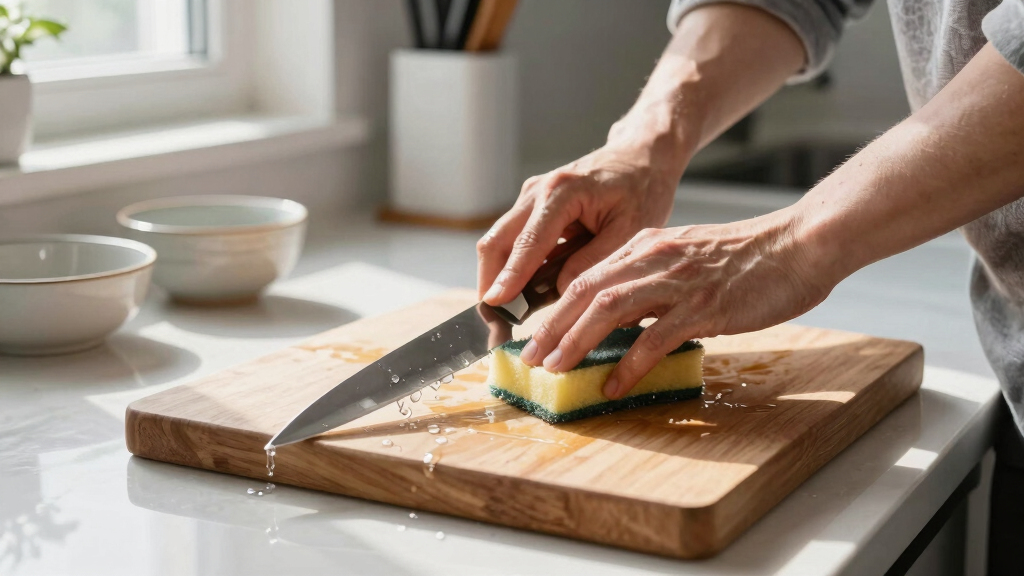
Cleaning a Japanese knife properly is about gentle care. Immediately after use, rinse it under warm water, using a soft sponge or cloth with a dab of mild dish soap. Avoid dishwashers — the harsh detergents and tumbling can chip the blade or dull the edge. Dry the knife thoroughly with a soft towel, paying attention to the area around the handle and spine, where moisture can hide. This quick routine prevents rust and corrosion, especially on high-carbon steel blades, which are more prone to oxidation.
Japanese kitchen knife sharpening stone
As an affiliate, we earn on qualifying purchases.
As an affiliate, we earn on qualifying purchases.
Smart Storage Ways to Keep Your Knife Sharp and Safe
Proper storage is a simple step that saves you from dulling and accidents. Use a magnetic strip mounted on the wall, a dedicated knife block, or a protective sheath (called a ‘Saya’) for individual blades. Keep each knife separated—never toss them in a drawer with other utensils—so the edge doesn’t nick or chip. For example, a well-placed magnetic strip keeps your knife accessible and prevents accidental damage from loose utensils. The way you store your knife directly impacts its longevity; improper storage can cause micro-chips or dulling over time, which means more frequent sharpening and potential damage to the blade’s integrity. Thoughtful storage options act as a safeguard, maintaining the sharpness and structural health of your knife, and reducing the risk of injury during retrieval.
magnetic knife strip for Japanese knives
As an affiliate, we earn on qualifying purchases.
As an affiliate, we earn on qualifying purchases.
How Regular Honing and Periodic Sharpening Keep Your Knife Cutting Like New
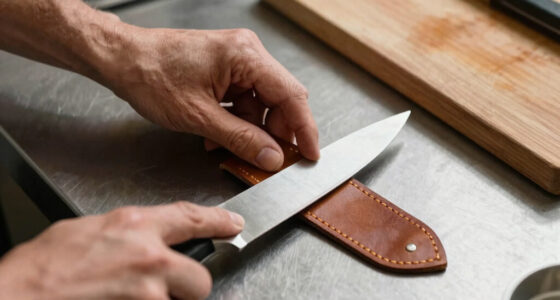
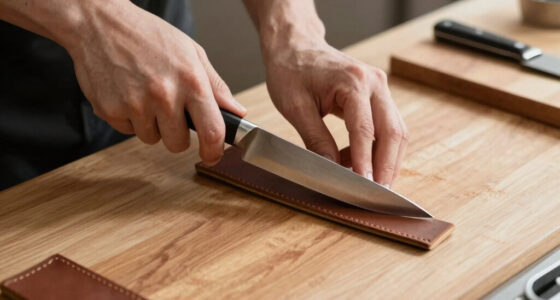
Your Japanese knife’s edge benefits from regular honing. Use a ceramic or steel honing rod to realign the edge—think of it as a quick tune-up. Honing is essential because everyday use causes microscopic bends and misalignments along the edge, which can lead to a less precise cut and increased micro-chipping over time. By maintaining a true edge, honing ensures your knife slices effortlessly, reducing strain and prolonging the intervals needed for full sharpening. When honing is neglected, these micro-bends accumulate, forcing you to exert more pressure during cutting, which can cause micro-chips or even cracks. Sharpening is more intensive; every 6-12 months, use a high-quality water stone, ideally a Japanese grit like 1000 or 3000, to restore the bevel. This process removes material to rebuild the sharp edge, effectively resetting the blade’s cutting ability. Properly balancing honing and sharpening preserves the integrity of the steel, prevents unnecessary wear, and ensures your knife remains a precise, reliable tool. Ignoring regular maintenance can lead to a dull, less responsive blade, requiring more aggressive sharpening or risking damage that shortens its lifespan.
As an affiliate, we earn on qualifying purchases.
Compare Sharpening Tools to Find What Works Best for Your Knife
| Tool | Ease of Use | Best For | Drawbacks |
|---|---|---|---|
| Whetstone (Water Stone) | Moderate – requires technique | Periodic sharpening, precision | Requires practice, soaking |
| Guided Sharpening System | Easy – guided angles | Consistent results, beginner-friendly | Less traditional, cost |
| Honning Rod (Ceramic/Steel) | Easy – quick touch-up | Daily honing, maintaining edge | Doesn’t replace sharpening |
As an affiliate, we earn on qualifying purchases.
Using the Correct Cutting Surface to Protect Your Blade
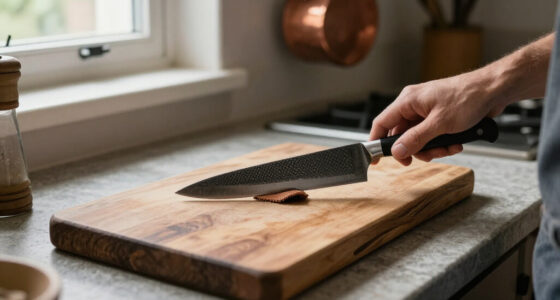
Japanese knives love gentle surfaces. Hard materials like glass or marble are tough on edges, causing chips and dulling. Instead, opt for wooden or high-quality plastic cutting boards. They absorb some of the impact, reducing wear. For instance, a dense maple board offers a smooth, forgiving surface that keeps your blade sharp longer and makes chopping feel effortless.
Handling Your Knife with Care — What Not to Do
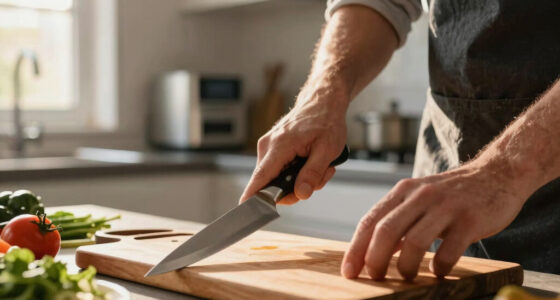
Avoid using your Japanese knife for tasks outside its design. Don’t open cans with the edge, cut through bones, or chop on hard surfaces. Also, handling techniques matter: use a gentle, rocking motion and don’t press down hard. For example, trying to pry open a stubborn root vegetable with a sharp blade can cause microchips, reducing its lifespan over time.
Recent Innovations in Knife Care That Make Maintenance Easier
Technology is catching up with tradition. Modern guided sharpening systems and angle guides help you maintain the perfect bevel at home, even if you’re new to sharpening. Some Japanese knives now feature ceramic coatings that resist rust and sticking, reducing cleaning needs. Additionally, natural water stones and eco-friendly honing pastes are gaining popularity among off-grid cooks who prefer sustainable tools.
Frequently Asked Questions
How often should I sharpen my Japanese kitchen knife?
Typically every 6 to 12 months, depending on usage. Regular honing can extend the intervals, but a professional sharpening restores the edge fully when needed.Can I put my Japanese knife in the dishwasher?
No. The harsh detergents and high heat can damage the blade and handle. Always hand wash with warm water and dry thoroughly.What’s the best way to hone my Japanese knife at home?
Use a ceramic or steel honing rod at a 15°-20° angle. Glide the blade along the rod about 5-10 times, maintaining a consistent angle for best results.How can I tell if my knife needs sharpening?
If it becomes difficult to slice smoothly, tears ingredients instead of slicing cleanly, or feels dull even after honing, it’s time for a sharpen.Are Japanese knives more delicate than Western ones?
They are often made from harder steel, which means a sharper edge but also increased care to prevent chipping or cracking. Handle them gently and with respect.Conclusion
Caring for your Japanese knife isn’t a mystery — it’s about respecting its craftsmanship with simple, consistent habits. Think of it as nurturing a fine tool: gentle cleaning, smart storage, and regular upkeep keep it performing at its peak. The result? A blade that slices with precision and endures for decades, turning every meal prep into a satisfying ritual. Your knife deserves this care — your kitchen, the reward.Halloween Picks
halloween
As an affiliate, we earn on qualifying purchases.