TL;DR

Get kitchen gear delivered free with Prime
- Fast, free delivery on millions of items
- Prime Video, Amazon Music and more included
- Member-only deals all year
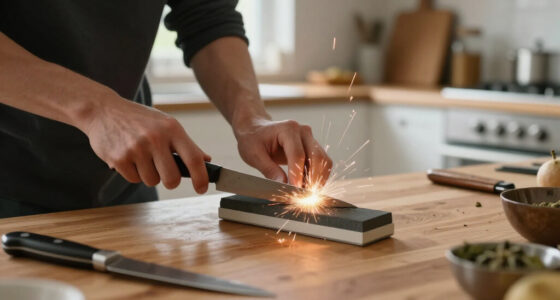
Sharpening at the right angle is key to a sharp, long-lasting knife edge. Most kitchen knives benefit from a 15°–20° angle, with recent tools making it easier to maintain precision at home.
Maintain a consistent sharpening angle, ideally between 15° and 20°, to extend your knife’s lifespan.
Using an angle guide simplifies the process and helps you develop a steady hand.
Choose the right tool for your skill level and knife type — whetstone for precision, electric for convenience.
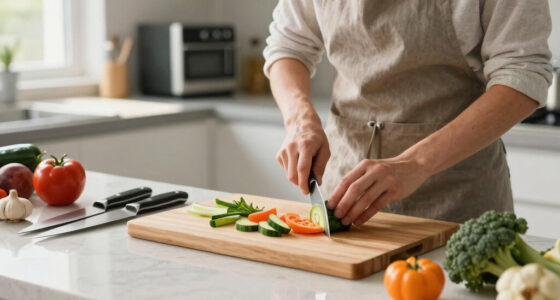
Honing is a quick way to keep edges aligned; sharpen only when slices become noticeably dull.
Avoid guessing your angle — practicing with guides or preset tools prevents damage and dulling.
Sharper Knives Start With the Right Angle
TL;DR: Most kitchen knives perform best at a consistent 15°–20° per side. A finer angle slices beautifully but needs care; a wider angle trades a little finesse for durability. The real secret is consistency, not pressure.
Use the lower end for precision slicing and the upper end for tougher daily prep.
Consistent angles can extend knife life compared with inconsistent or overly wide sharpening.
Honing realigns the edge; sharpening removes metal only when cutting becomes noticeably dull.
Finer edge for delicate, precise cuts.
Sturdier profile for everyday durability.
Typical interval for many home cooks.
Uneven angles create dull spots, chips, and excess wear.
What the Angle Actually Changes
Knife sharpening angles are the degrees at which you grind the blade’s edge. Think of them like tuning an instrument: too acute and the edge can become fragile; too wide and it loses effortless slicing power.
Best for Japanese-style knives, paring knives, and fine slicing where clean cuts matter most.
A flexible middle ground for cooks who want strong performance without babying the blade.
Ideal for Western chef’s knives, heavier prep, and blades that see frequent board contact.
Sharpness-to-Durability Spectrum
Consistency Beats Force
A steady angle preserves the microscopic edge. Heavy pressure and angle changes grind unevenly, which shortens blade life and makes sharpening harder the next time.
Choose based on knife type and use: finer for slicing, wider for resilience. Then repeat that angle every session.
Use an angle guide or preset tool until the motion becomes reliable muscle memory.
Pick whetstone precision, pull-through speed, or electric convenience based on skill and knife value.
Hone regularly to realign the edge; sharpen only when the blade stops cutting cleanly.
Avoid guessing. Inconsistent angles cause dull patches, extra metal loss, and possible chipping.
Pick the Right Sharpening Angle
Start with the knife, decide whether you need finesse or durability, then use a guide or preset tool to repeat the same angle with each stroke.
Identify
Check whether the knife is Japanese, Western, serrated, or straight-edged.
Choose
Select 15° for fine slicing or 20° for stronger everyday durability.
Guide
Use an adjustable angle guide, guided system, or fixed-angle sharpener.
Repeat
Keep the wrist steady and let consistency do the work, not pressure.
Test
Slice paper or tomato skin. A clean cut means the edge is aligned.
Which Sharpener Fits Your Knife?
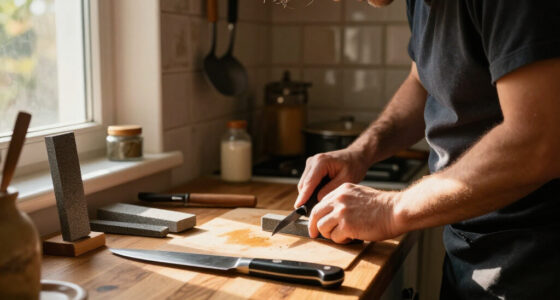
Modern tools make precision easier at home. Whetstones offer maximum control, while pull-through and electric sharpeners simplify the angle for faster maintenance.
| Tool type | Typical angle | Advantages | Tradeoffs | Best fit |
|---|---|---|---|---|
| Whetstone | 15°–20° | ✓Precise, sharp, customizable edge geometry. | ~Requires practice and takes more time. | High-control sharpening and valuable knives. |
| Pull-through | Preset, often 20° | ✓Quick, easy, and beginner-friendly. | ✗Less control; can remove more metal than needed. | Fast touch-ups on durable everyday knives. |
| Electric sharpener | Fixed, usually 15° or 20° | ✓Convenient and consistent with minimal skill. | ~Limited customization and risk of over-sharpening. | Busy kitchens that value speed and repeatability. |
| Guided system | Adjustable | ✓Professional-level repeatability for home users. | ~More setup than simple handheld tools. | Beginners who want precision without freehand guessing. |
Hone Often, Sharpen Only When Needed
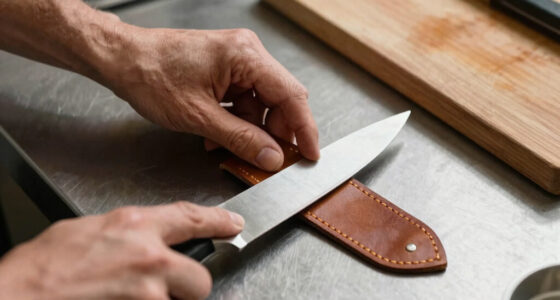
Honing realigns the existing edge without removing material. Sharpening grinds fresh steel. The longer you keep the angle consistent, the less aggressive sharpening your knife needs.
When to Hone
Use a honing steel when the knife still cuts but feels slightly less crisp. This keeps the edge aligned between sharpenings.
When to Sharpen
Sharpen when the edge can no longer slice cleanly through tomato skin or paper after honing.
From Angle Choice to Better Cutting
The benefit is cumulative: the right angle leads to an even bevel, which creates cleaner cuts, which reduces force, which protects the blade over time.
What is the best angle?
Most kitchen knives perform best at 15°–20° per side. Japanese knives often favor 15°, while Western styles lean toward 20°.
How do I know I’m correct?
Use an adjustable guide or fixed-angle system until your wrist motion becomes consistent and repeatable.
Can I sharpen at home?
Yes. Many knives can be sharpened at home with practice. High-end or specialty blades may benefit from a professional.
What damages the edge?
Wrong angles, inconsistent strokes, too much pressure, and over-sharpening can shorten blade life or create chips.
What Are Knife Sharpening Angles, and Why Do They Matter?
Knife sharpening angles are the degrees at which you grind the edge of a blade. They shape how sharp and durable your knife will be. Think of it like the pitch of a guitar string — too sharp or too flat, and it won’t sound right. For knives, a sharper angle (around 15°) delivers a razor edge but can chip easier. A wider angle (around 20°) gives more strength but less sharpness.
Getting this angle right is crucial because it directly influences how well your knife performs over time. A too-sharp angle might give you a pristine edge initially, but it can be fragile and prone to chipping if used on tougher foods or surfaces. Conversely, a wider angle offers robustness but sacrifices some of that razor-like sharpness, which can make slicing softer items less effortless. The tradeoff is balancing sharpness with durability based on your typical kitchen tasks. For example, a delicate paring knife benefits from a finer angle to maximize precision, while a heavy-duty cleaver needs a sturdier edge to withstand force without dulling or chipping prematurely. Recognizing these differences helps you tailor your sharpening approach, ensuring your knives are both effective and long-lasting.
As an affiliate, we earn on qualifying purchases.
How to Pick the Perfect Sharping Angle for Your Knives
- Identify your knife type — Japanese or Western, serrated or straight.
- Decide your priority — razor-sharp edge or longer-lasting durability.
- Use a sharpening guide with adjustable angles, set it to 15° or 20°, depending on your choice.
- Practice maintaining a consistent angle while sharpening — it’s about muscle memory, not pressure.
- Check your work by slicing a tomato or paper—if it cuts cleanly, you’re there!
Choosing the right angle isn’t just about initial sharpness; it affects how your knife performs in everyday use and how often you’ll need to sharpen or replace it. A 15° angle produces a finer, more delicate edge, ideal for precision tasks but requiring more careful handling. A 20° angle creates a sturdier edge better suited for heavy-duty tasks, resisting chips and dulling longer. The tradeoff is that a sharper angle may need more frequent maintenance, while a wider angle sacrifices some finesse for resilience. By selecting an angle aligned with your typical cooking activities, you optimize your knife’s performance and lifespan. Practicing consistency in maintaining this angle ensures each sharpening session reinforces the edge’s integrity, reducing uneven wear and prolonging its effectiveness.
electric knife sharpener with angle control
As an affiliate, we earn on qualifying purchases.
As an affiliate, we earn on qualifying purchases.
The Pros and Cons of Different Sharpening Tools & Angles
| Tool Type | Typical Angle | Advantages | Disadvantages |
|---|---|---|---|
| Whetstone | 15°–20° | Precise, sharp edges, customizable | Requires skill, takes time |
| Pull-Through | Preset, often 20° | Easy, quick | Less control, can be less precise |
| Electric Sharpener | Fixed angles, usually 15° or 20° | Fast, convenient | Limited customization, potential for over-sharpening |
Understanding the tradeoffs of each tool type and angle helps you choose the best option for your skill level and the kind of knives you own. For example, a whetstone with adjustable guides allows for precise control over the sharpening angle, enabling you to tailor the edge to your specific needs—whether you want a super-sharp Japanese-style cut or a more durable Western blade. Pull-through and electric sharpeners are more user-friendly and faster, making them suitable for quick touch-ups, but they often lack the finesse of manual sharpening. Recognizing these differences helps you decide whether convenience or precision is more important for your kitchen arsenal, and how the chosen angle impacts the longevity and performance of your knives.
As an affiliate, we earn on qualifying purchases.
Maintaining Consistency — The Secret to Long-Lasting Sharpness
Keeping your sharpening angle steady isn’t just about making a good cut — it’s about preserving the integrity of your blade’s edge over time. When you maintain a consistent angle, you prevent uneven wear, which can lead to dull spots or chips. Think of it like tuning a musical instrument; small inconsistencies can cause the entire performance to suffer. Using an angle guide or developing a steady wrist motion helps reinforce muscle memory, ensuring each stroke is uniform. This consistency means your blade’s microscopic teeth are aligned properly, resulting in a sharper, more durable edge that resists dulling during routine use. Over time, this disciplined approach reduces the frequency of full sharpenings and keeps your knives performing at their best longer. It’s the difference between a blade that needs frequent, aggressive sharpening and one that maintains a keen edge with gentle, regular touch-ups.
As an affiliate, we earn on qualifying purchases.
Frequently Asked Questions
What is the best sharpening angle for my kitchen knives?
Most kitchen knives perform best at a 15°–20° angle. Japanese knives often favor closer to 15°, while Western styles lean toward 20° for extra durability.How do I know if I’m sharpening at the correct angle?
Use an adjustable angle guide or practice with a consistent wrist motion. Over time, muscle memory helps you keep the angle steady, giving you a sharp, even edge.Can I sharpen my knife at home or should I go to a professional?
Many knives can be sharpened at home with the right tools and practice. For high-end or specialty blades, a professional sharpening ensures precision and minimizes risk of damage.How often should I sharpen my knives?
Depending on usage, most home cooks sharpen every 3–4 months. Frequent use or professional environments may require more regular touch-ups with honing steel or partial sharpening.What’s the difference between honing and sharpening?
Honing realigns the existing edge without removing material, while sharpening grinds away metal to create a new, sharper edge. Both are essential for maintaining cutting performance.Conclusion
Remember, sharpening isn’t about grinding away blindly. It’s about precision and control. Keeping your knife at the right angle transforms a dull blade into a razor-sharp tool that makes prep work effortless. Think of it as tuning your instrument—once you get the hang of it, every cut sings.Columbus Day / Indigenous Peoples' Day Picks
long weekend sales
As an affiliate, we earn on qualifying purchases.