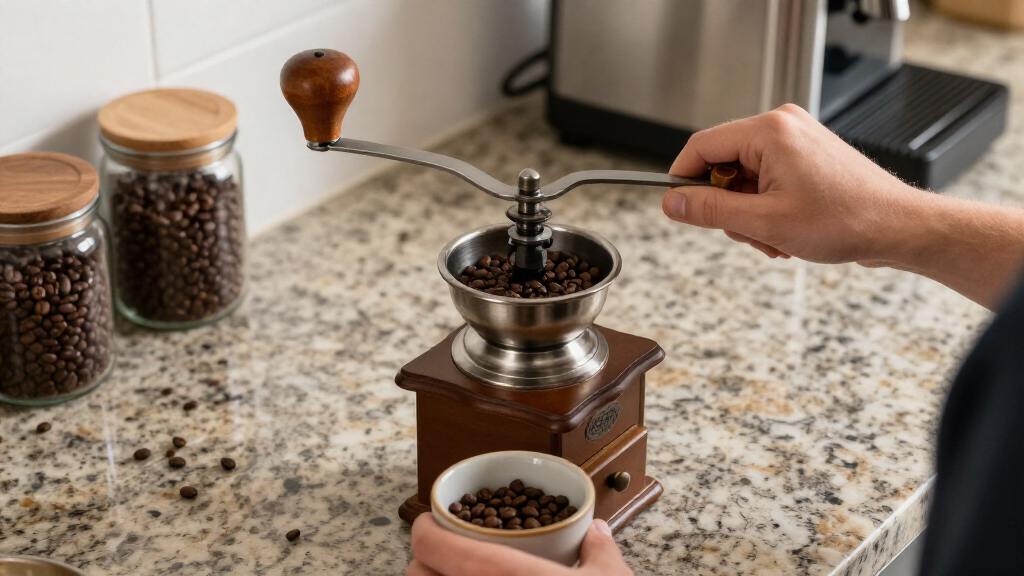

A good manual coffee grinder gives you café-level grind consistency for a fraction of what an electric burr grinder costs, and the real differences between models come down to burr material, capacity, and how precisely you can dial in the grind. Of the 14 manual coffee grinders I compared, the TIMEMORE Chestnut C3S Pro is the best overall for most people, thanks to its stainless steel conical burr, all-metal body, and foldable handle that travels well. Budget shoppers get strong value from the JavaPresse Manual Stainless Steel Coffee Grinder, a proven travel-friendly pick with 18 settings, while households brewing for a crowd should look at the CEVING 60g Large Capacity line, which holds two to three times more beans per load than standard mills. The main tradeoffs in this category are consistency versus price, capacity versus pack size, and ceramic versus steel burrs. Keep reading for the full ranking, how I scored each grinder, and a buying guide matched to your brew method.
Play games included with Prime
Start a Prime free trial and play with Amazon Luna on your devices.
Start playingAs an affiliate, we earn on qualifying purchases.
Complete the kit


Key Takeaways
- Steel burrs separate the top tier from the budget tier. Every grinder near the top of this ranking — led by the TIMEMORE Chestnut C3S Pro — uses stainless steel burrs, while the sub-$30 picks (JavaPresse, PARACITY, Hario) all use ceramic and trade particle uniformity for a lower price.
- Capacity splits this roundup cleanly in half. The four CEVING 60g models hold two to three times the beans of every other grinder here, making them the only realistic single-load options for households brewing four cups or more.
- Settings count turned out to be marketing noise. The 55-setting stainless model and the 40-click CEVING and Circle Joy minis cover nearly the same usable range as the 18-setting JavaPresse — adjustment design and repeatability separated the ranks, not click totals.
- Four of the 14 products are essentially one grinder. The CEVING 60g appears in four color and adjustment variants, so their positions reflect small usability differences — external versus internal adjustment rings — rather than four genuinely different products.
- No budget pick belongs near an espresso machine. Every sub-$30 grinder in this lineup produces too many fines at fine settings for a clean shot; espresso drinkers should treat a steel-burr model as the entry price, not an upgrade.
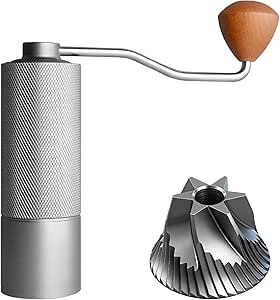


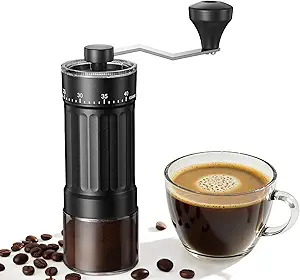


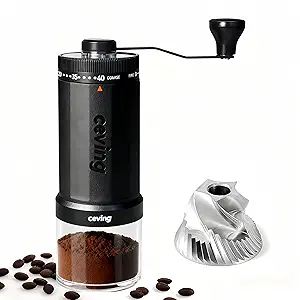


| manual coffee grinder | Grind Settings | Capacity | Burr Type | Weight |
|---|---|---|---|---|
| Manual Coffee Grinder with Adj | Adjustable | — | Stainless steel burrs | — |
| Hario Ceramic Coffee Mill | — | Approx. 2 cups (24 g coffee powder) | Ceramic | 14.1 oz (400 g) |
| Manual Coffee Grinder with Con | 40 adjustable | 30 g | Ceramic conical burr | 11.3 oz |
| CEVING Mini Manual Coffee Grin | — | 30 g | Ceramic conical burr | 325 g |
| Manual Coffee Grinder with Cer | 40 adjustable | 25 g coffee beans | Ceramic conical burr | 11.3 oz |
| CEVING World’s First 60g Large | 40 external | 60g | Ceramic conical | 346g |
| Circle Joy Mini Manual Coffee | 40 external | Compact single-cup size | Ceramic | — |
| CEVING 60g Large Capacity Manu | 40 external | 60g | Stainless steel conical | 416g |
| Manual Coffee Grinder with Sta | 55 | 22g | — | — |
| JavaPresse Manual Stainless St | 18 internal clicks | — | Ceramic conical | — |
| CEVING Large Capacity Manual C | 40 external settings | 60g | — | 462g |
| PARACITY Manual Coffee Grinder | — | 11 oz per jar | — | — |
| CEVING 60g Large Capacity Manu | 40 external settings | 60g | — | 462g |
| TIMEMORE Chestnut C3S Pro Manu | Approx. 36 levels | — | — | — |
More Details on Our Top Picks
Manual Coffee Grinder with Adjustable Settings and Stainless Steel Burrs
If I were shopping on a tight budget, this is where I’d start. The stainless steel burrs are the main selling point here — they chew through beans faster and hold their edge longer than the ceramic burrs in the Hario Ceramic Coffee Mill or the CEVING Mini, which matters if you grind daily. The tradeoff is precision: unlike the CEVING Mini’s 40 external settings, this model’s adjustment feels vaguer, so dialing in a repeatable espresso grind takes more guesswork. Capacity is also modest, fine for one or two cups but annoying when you’re filling a full French press. I’d call it a sensible first grinder for someone who wants steel burr speed without spending much, though anyone chasing brew-method accuracy will likely outgrow it within a year.
Pros:- Stainless steel burrs grind faster and resist wear better than ceramic rivals
- Handles a wide range of brew methods from espresso to French press
- Compact body stores easily and travels well
- Lower price than brand-name options with similar hardware
Cons:- Grind adjustment lacks the precision of externally indexed models
- Small capacity means multiple loads for larger batches
- Fine espresso grinding requires real arm effort
Best for: Budget-conscious daily drinkers who want fast stainless steel burrs for drip or French press
Not ideal for: Espresso hobbyists who need precise, repeatable grind steps — the adjustment lacks clear markings
- Material:Stainless Steel
- Grinder Type:Manual, hand-cranked
- Burr Type:Stainless steel burrs
- Grind Settings:Adjustable
- Suitable Brewing:Espresso, drip, French press, filter
- Design:Compact and portable
- Color:White
Our verdict“A smart low-cost entry point for casual brewers who value speed and durability over grind-dial precision.”
Hario Ceramic Coffee Mill – Original, Black
The Hario Ceramic Coffee Mill is the name I hear most when people ask for a first hand grinder, and that reputation is earned. Its ceramic burrs won’t rust and rinse clean easily, and the slim body tucks away where bulkier rivals like the CEVING Mini won’t. Compared with the stainless burr options in this roundup, though, it grinds slowly, and its adjustment ring offers less precision than the 40 external settings on the CEVING Mini — espresso drinkers will find the steps too coarse to fine-tune. At 400g it’s also heavier than the 11.3-ounce travel picks, so it’s happier on a counter than in a backpack. For someone brewing pour-over or French press at home, it remains the safest beginner buy; for travel or espresso, I’d steer you elsewhere.
Pros:- Ceramic grinding mechanism resists rust and lasts for years
- Simple to take apart, rinse, and reassemble
- Slim footprint fits crowded counters and cabinets
- Backed by a long-standing specialty coffee brand
Cons:- Grind adjustment lacks the fine steps needed for espresso
- Heavier than most travel-oriented grinders in this roundup
- Handle storage needs a little care to avoid damage
Best for: First-time buyers brewing pour-over or French press at home who want a proven, low-fuss grinder
Not ideal for: Espresso shooters and frequent travelers — the adjustment is too coarse for espresso and the 400g body is heavy to pack
- Material:Methacrylic resin, ceramic, polypropylene, stainless steel
- Burr Type:Ceramic
- Size:15 x 7.2 x 22 cm
- Weight:14.1 oz (400 g)
- Capacity:Approx. 2 cups (24 g coffee powder)
- Rust Resistance:Rust-free ceramic mechanism
- Cleaning:Easy to disassemble and clean
Our verdict“The dependable starter grinder for home brewers who care more about reliability and easy cleanup than grind-dial precision.”
Manual Coffee Grinder with Conical Burr, 40 Adjustable Settings, 30g Capacity, Portable for Travel and Home Use
This model is built around one idea: fresh grounds anywhere. At 11.3 ounces with a 30g hopper, it packs smaller and lighter than the Hario Ceramic Coffee Mill yet holds enough for two cups, and the glass catch jar lets you watch output so you stop before overfilling. The ceramic conical burr runs cooler than steel, which protects aroma on lighter roasts, but it’s slower — expect real elbow work on espresso settings, a complaint I’d also level at the CEVING Mini. Its dial covers 40 steps, though switching between them lacks the click-stop feel of the CEVING Mini’s external ring, so repeatability is weaker. The glass jar is the weak link for camping; drop it on rock and the trip is over. For hostel kitchens, hotel rooms, and weekend bags, it’s a well-judged lightweight travel companion.
Pros:- Lightweight 11.3 oz build suits bags and carry-ons
- 30g capacity covers two cups per load
- Glass viewing jar shows grind progress at a glance
- Ceramic burr runs cool and preserves coffee aroma
Cons:- Glass catch jar can break if dropped on hard ground
- Internal grind dial is harder to reset than external rings
- Fine settings demand slow, effortful cranking
Best for: Travelers and campers who want a light, packable grinder that still covers every brew method
Not ideal for: Rough-and-tumble backpackers and espresso perfectionists — the glass jar is fragile and the internal dial is hard to repeat
- Capacity:30 g
- Weight:11.3 oz
- Dimensions:6.7 x 2.3 x 6.7 inches
- Material:ABS plastic body
- Burr Type:Ceramic conical burr
- Grind Settings:40 adjustable
- Catch Jar:Glass viewing jar
- Intended Use:Travel, camping, home
Our verdict“The right pick for frequent travelers who want full brew-method range in a featherweight package, as long as the glass jar survives the journey.”
CEVING Mini Manual Coffee Grinder with 40 Adjustable Settings, Black
The CEVING Mini earns its spot through 40 external adjustment settings — you twist a numbered ring on the outside of the body instead of counting clicks blindly inside, which makes repeating yesterday’s grind far easier than on the Hario Ceramic Coffee Mill or the other 40-setting models in this batch. That precision suits drinkers who bounce between pour-over, moka pot, and AeroPress. The ceramic conical burr keeps flavors clean and uniform, but fine espresso settings demand patience and arm strength, and 30g is the ceiling per load. Cleaning is the real catch: dry brushing only, no water, which feels fussy next to the rinse-friendly Hario. At 325g it’s light enough for a pack, and it undercuts premium rivals like the TIMEMORE Chestnut C3S Pro on price while giving up some burr speed.
Pros:- External numbered ring makes grind settings easy to repeat
- Ceramic conical burr delivers uniform grounds and clean flavor
- Light 325g build travels well
- Disassembles quickly for dry cleaning
Cons:- No water cleaning allowed — dry brushing only
- 30g capacity limits batch size
- Fine espresso settings require slow, tiring cranking
Best for: Brew-method switchers who want repeatable, numbered grind steps without paying premium-grinder prices
Not ideal for: Anyone who hates brush-only cleaning or needs more than 30g per grind cycle
- Capacity:30 g
- Weight:325 g
- Dimensions:6.7 x 2.3 x 7.4 inches
- Burr Type:Ceramic conical burr
- Adjustment:40 external settings
- Cleaning:Dry cleaning only, no water
- Portability:Suited to travel, camping, outdoor use
Our verdict“The best choice in this batch for drinkers who value precise, repeatable grind settings and can live with dry-only cleaning.”
Manual Coffee Grinder with Ceramic Burrs for Espresso, French Press, Adjustable Settings, Portable Hand Coffee Bean Mill for Home and Travel
Where the CEVING Mini chases precision, this grinder chases quiet, low-key convenience. The hand crank runs softer than most rivals, which apartment dwellers and early risers will appreciate, and the stainless steel body feels sturdier in hand than the ABS-plastic shells on other budget picks like the 30g travel model above. The transparent glass container makes it easy to monitor output mid-grind, so you know when you’ve hit a single dose. The catch is capacity: at 25g it’s the smallest hopper in this batch, so two strong mugs means grinding twice. The ABS plastic fittings are also a long-term wear point, and its ceramic burr, like the CEVING Mini’s, works slowly at fine settings. I’d pick it for quiet single-cup brewing, not for households that brew in volume.
Pros:- Hand crank runs quietly, good for shared living spaces
- Stainless steel body feels more solid than plastic-bodied rivals
- Transparent glass jar lets you monitor grind output
- Covers espresso, French press, and pour-over with 40 settings
Cons:- Smallest capacity in the batch at just 25g
- ABS plastic components may wear with heavy use
- Grinding larger quantities is slow and tedious
Best for: Apartment dwellers and early risers who brew one or two cups and want a quiet, sturdy-feeling grinder
Not ideal for: Multi-cup households — the 25g capacity forces repeat grinding for anyone brewing more than two servings
- Grind Settings:40 adjustable
- Material:Ceramic burr, stainless steel body, ABS plastic
- Burr Type:Ceramic conical burr
- Capacity:25 g coffee beans
- Dimensions:6.7 x 2.3 x 6.7 inches
- Weight:11.3 oz
- Container:Transparent glass
- Model Number:HS-011
Our verdict“The grinder for quiet single-cup brewers who want a solid-feeling body and can accept frequent refills.”
CEVING World’s First 60g Large Capacity Manual Coffee Grinder, Black
Most hand grinders top out around 20–30g, which forces anyone brewing for two or more people into multiple rounds of cranking. The CEVING 60g solves that directly: its oversized hopper handles a full French press batch in one session, and at 346g it’s actually lighter than its stainless-steel-burr sibling, the CEVING 60g stainless model, which weighs 416g. I see the ceramic conical burr as the right call here for flavor purists — it generates less heat during long grinding sessions, which matters more when you’re working through 60g of beans. The 40 external settings are easy to adjust mid-session without disassembly, a real step up from the JavaPresse’s internal click system. The tradeoff is effort: filling that big chamber means more cranks, and static buildup means you’ll want to mist beans first. Compared with the compact Circle Joy Mini, this is the opposite philosophy — capacity over portability.
Pros:- 60g capacity covers large-batch brewing in a single session
- Ceramic burr runs cooler than steel during long grinding sessions
- 40 external settings adjust quickly without taking the grinder apart
- Lighter (346g) than the stainless-burr CEVING 60g variant
Cons:- Grinding a full 60g by hand is genuinely tiring
- Static buildup requires pre-wetting beans to avoid mess
- Bulkier footprint than 20–30g travel grinders
Best for: Couples or small households brewing French press or cold brew who want one grinding session instead of two or three
Not ideal for: Solo espresso drinkers — the large body is wasted on 18g doses, and a compact grinder like the Circle Joy Mini is easier to handle
- Capacity:60g
- Grind Settings:40 external
- Burr Type:Ceramic conical
- Weight:346g
- Dimensions:2.7 x 7.8 x 5.3 inches
- Power:Manual hand crank
Our verdict“If you regularly brew for more than one person and want to grind it all in one go, this is the capacity pick of the lineup.”
Circle Joy Mini Manual Coffee Grinder with 40 Adjustable Settings and Ceramic Burrs
The Circle Joy Mini is the grinder I’d point a traveler toward before anything else in this lineup. Where the CEVING 60g models chase batch size, this one trims everything down — small hopper, stainless steel body, and a footprint that disappears into a carry-on. Despite the size, it keeps 40 external settings, the same count as the full-size CEVING grinders, so dialing in pour-over versus French press doesn’t require guesswork. The extra-long handle is a smart touch: it adds leverage, which offsets some of the effort that plagues small grinders with short cranks. Compared with the JavaPresse, the Circle Joy feels more modern — external adjustment instead of internal clicks, and double the grind settings. The honest tradeoff is capacity: single-cup drinkers won’t care, but anyone brewing a full carafe will be refilling constantly. It’s a one-mug-at-a-time machine, and it owns that role well.
Pros:- Compact form factor fits easily in luggage or a backpack
- 40 external settings match full-size grinders for precision
- Stainless steel body shrugs off travel abuse
- Extra-long handle reduces cranking effort
Cons:- Small capacity limits it to one or two cups per grind
- Manual grinding still demands real effort for finer settings
Best for: Frequent travelers and single-cup drinkers who want precise grind control in a packable, durable body
Not ideal for: Anyone brewing large batches — the small hopper means constant refilling compared with the CEVING 60g models
- Grind Settings:40 external
- Burr Type:Ceramic
- Body Material:Stainless steel
- Hopper Material:Glass
- Handle:Extra-long crank
- Capacity:Compact single-cup size
Our verdict“The right choice if your grinder needs to live in a travel bag and you brew one cup at a time.”
CEVING 60g Large Capacity Manual Coffee Grinder, Black with 40 External Settings
This is the same 60g chassis as its ceramic-burr CEVING sibling, but swapping in stainless steel conical burrs changes who it’s for. Steel burrs cut faster and stay sharper through years of daily grinding, so this version makes more sense for someone cranking through large batches every morning rather than occasionally. The 70g weight penalty over the ceramic model (416g versus 346g) is the price of that durability, and it’s noticeable if you’re holding both. Against the JavaPresse, which also uses a steel body but pairs it with ceramic burrs and only 18 settings, the 40 external settings here give far finer control for pour-over dialed-in brewing. The tradeoffs mirror the ceramic CEVING: filling 60g means a long cranking session, and static can scatter chaff unless you mist the beans. I’d call this the workhorse variant — pick it over the ceramic version if grinding is a daily ritual, not a weekend one.
Pros:- Stainless steel burrs grind faster and resist wear longer than ceramic
- 60g capacity handles multi-cup batches in one session
- 40 external settings offer repeatable, precise adjustments
- Sturdy build suited to daily countertop duty
Cons:- Heavier (416g) than the ceramic-burr CEVING 60g
- Long 60g grinding sessions are tiring by hand
- Static buildup may require misting beans with water
Best for: Daily brewers making large batches who want steel burrs that hold an edge through years of heavy use
Not ideal for: Occasional brewers or ultralight travelers — the ceramic CEVING 60g shaves 70g off, and compact grinders pack smaller
- Capacity:60g
- Grind Settings:40 external
- Burr Type:Stainless steel conical
- Weight:416g
- Dimensions:2.7 x 7.8 x 5.3 inches
- Body Material:Stainless steel
- Power:Manual hand crank
Our verdict“Choose this over the ceramic CEVING if you grind large batches daily and want burrs built to last.”
Manual Coffee Grinder with Stainless Steel Burr – 22g Capacity, 55 Adjustable Settings, Quiet
Two things set this grinder apart in the lineup: 55 grind settings — the most of any pick here — and a quiet grinding action. That setting count beats the 40 on the CEVING models and triples the JavaPresse’s 18, which matters for espresso drinkers who need to nudge grind size in tiny increments rather than jump between coarse steps. The aluminum body with a steel burr keeps weight low while steel handles the cutting, a sensible pairing at this size. Where it gives ground to the competition is capacity: 22g covers a double espresso or a single pour-over, but it’s half what the CEVING Mini-style grinders handle and a third of the 60g CEVING models. Compared with the Circle Joy Mini, this trades travel-first design for finer adjustment and lower noise — early risers sharing walls with light sleepers will notice. The tradeoff is real: small chamber, more refills, and no electric fallback when your arm gets tired.
Pros:- 55 settings give the finest adjustment range in the lineup
- Quiet operation suits early-morning grinding
- Steel burr cuts efficiently across espresso to pour-over sizes
- Aluminum body keeps it light for travel
Cons:- 22g capacity means frequent refilling beyond one or two cups
- Fine espresso grinding by hand takes real effort
Best for: Espresso and pour-over drinkers who want fine-tuned adjustment, and anyone grinding early without waking the household
Not ideal for: Multi-cup brewers — at 22g per load, batch brewers are far better served by the CEVING 60g models
- Capacity:22g
- Grind Settings:55
- Burr Material:Stainless steel
- Body Material:Aluminum
- Noise Level:Quiet operation
- Best Methods:Espresso, pour-over
- Power:Manual hand crank
Our verdict“The precision pick for single-cup espresso drinkers who value quiet, incremental grind control over capacity.”
JavaPresse Manual Stainless Steel Coffee Grinder – 18 Adjustable Settings
The JavaPresse is the long-running default recommendation in this category, and it earns that spot for newcomers even if its spec sheet looks dated next to newer rivals. With 18 internal click settings, it covers espresso through French press without overwhelming a first-time buyer — the Circle Joy Mini’s 40 external settings offer more precision, but they also demand more knowledge to use well. The ceramic conical burr resists dulling and runs quiet, and the slim stainless tube packs easily for camping. Here’s the honest downside: internal adjustment means twisting, counting clicks, and guessing, where the CEVING grinders let you read the setting off an external dial. Grind consistency at the coarse end also trails the newer 40-setting competitors. I’d frame it this way: if you’re buying a first hand grinder and want something proven, simple, and giftable, this is the safe pick — upgrade later to a CEVING or the 55-setting model once you know your preferences.
Pros:- Simple, beginner-friendly internal click adjustment
- Ceramic burr outlasts steel and stays quiet
- Slim stainless body packs well for camping and travel
- Long track record and widely giftable
Cons:- Internal adjustment requires counting clicks with no visible dial
- Only 18 settings — coarser steps than the 40-setting CEVING and Circle Joy grinders
- Coarse grind consistency trails newer competitors
Best for: First-time manual grinder buyers who want a proven, simple starter for espresso through French press
Not ideal for: Experienced brewers chasing precise pour-over or espresso dialed-in settings — the 18 internal clicks are too coarse-stepped versus 40-55 setting rivals
- Grind Settings:18 internal clicks
- Burr Type:Ceramic conical
- Body Material:Stainless steel
- Best Methods:Espresso, French press, drip
- Use Case:Camping, travel, home
- Power:None (manual)
Our verdict“A dependable first grinder for beginners, with the caveat that precision-focused brewers will outgrow its 18 settings.”
CEVING Large Capacity Manual Coffee Grinder, 60g, Green
The CEVING 60g is my Best Overall pick because it fixes the biggest annoyance with hand grinders: capacity. Most rivals in this roundup, the TIMEMORE Chestnut C3S Pro included, hold enough for one or two cups, which means grinding twice on a two-mug morning. This one’s 60g hopper covers a full pour-over carafe or a French press batch in a single session. The 40 external settings matter more than they sound — adjusting from the outside is far less fiddly than the internal dial on the PARACITY, so jumping between espresso and coarse grinds takes seconds. The ceramic burr also runs cool, protecting delicate aromas. The tradeoffs: ceramic grinds slower than the C3S Pro’s steel burr, and a full hopper is a genuine arm workout. Its gray sibling performs identically, so I’d simply buy whichever color costs less that day.
Pros:- 60g hopper grinds a multi-cup batch in one session
- 40 external settings change quickly without disassembly
- Ceramic burr runs cool to protect delicate flavor notes
- At 462g it still travels well despite the large capacity
Cons:- Ceramic burr grinds slower than steel-burr rivals like the TIMEMORE
- Grinding a full 60g hopper is a real forearm workout
- Bulkier than true mini grinders for ultralight packers
Best for: Households brewing two or more cups at once who want one grinder to cover espresso through French press
Not ideal for: Single-cup drinkers — the extra hopper size and grinding effort go unused, and a 30g mini grinder packs smaller
- Capacity:60g
- Burr:Ceramic conical burr
- Grind settings:40 external settings
- Weight:462g
- Dimensions:2.7 x 7.8 x 5.3 inches
- Color:Green
- Operation:Manual hand crank
- Best uses:Travel, camping, daily home brewing
Our verdict“If you regularly brew more than one cup and want a single grinder that does everything well, this is the one to buy.”
PARACITY Manual Coffee Grinder with Ceramic Burr and Glass Jars
The PARACITY is the grinder I’d hand to someone just getting into manual brewing. Its clear glass jars do something the opaque CEVING 60g models can’t: they let a beginner watch the grounds pile up and learn what coarse French press versus fine espresso actually looks like. The ceramic burr stays quiet enough for early mornings, and the second jar with a silicone lid doubles as bean storage, stretching the value of an affordable kit. The tradeoff is refinement. Coarseness adjustment is a simple internal dial rather than the 40-click external ring on the CEVING, so repeatable settings take some trial and error. Glass also travels poorly — if the grinder is headed for a backpack, the TIMEMORE Chestnut C3S Pro’s metal body is the safer buy. For a kitchen counter and a learning curve, this works.
Pros:- Transparent jars make grind size easy to judge while learning
- Bundled second jar with silicone lid doubles as bean storage
- Quiet ceramic burr suits early-morning kitchens
- Nonslip base and stainless handle keep grinding steady
Cons:- Glass jars are fragile and have arrived damaged in shipping
- Coarse grinds demand real effort with this mechanism
- Small capacity rules out multi-cup batches
Best for: First-time manual brewers on a tight budget who want to see their grounds while they learn grind sizes
Not ideal for: Anyone brewing for a crowd or traveling — the small jars limit batch size, and glass won’t survive a backpack
- Burr:Ceramic
- Capacity:11 oz per jar
- Body:Glass jars with silicone lid
- Handle:Stainless steel
- Included:Grinder plus 2 glass jars
- Coarseness:Adjustable for French press, drip, espresso, Turkish
- Base:Nonslip
- Operation:Manual, no electricity
Our verdict“The right starter grinder for a countertop learner, as long as it never has to leave the kitchen.”
CEVING 60g Large Capacity Manual Coffee Grinder, Gray
If the green CEVING 60g is sold out or priced higher the day you’re shopping, this gray version is the same grinder — same 60g hopper, same 40 external settings, same 462g weight and ceramic conical burr. I’m calling it out separately because color variants often drift apart in price, and this one frequently lands a few dollars above basic models. That’s why I see it as the travel and camping pick: it packs nearly the capacity of a countertop grinder into a bag-friendly frame, going places the PARACITY’s glass jars would never survive. The compromises carry over, too. A full hopper of coarse beans is a forearm workout, and the ceramic burr can’t match the grinding speed of the steel burr inside the TIMEMORE Chestnut C3S Pro. Buy whichever CEVING color is cheaper; skip both if you mostly brew one cup at a time.
Pros:- 60g capacity covers group brewing at a campsite
- 40 external settings dial in espresso to French press fast
- Compact 462g body fits easily in a camp kit or carry-on
- Ceramic conical burr preserves flavor without heat buildup
Cons:- Priced above basic hand grinders with similar burrs
- Full-capacity grinding takes sustained manual effort
- Ceramic burr is slower than the steel burr in premium rivals
Best for: Campers and frequent travelers who still need multi-cup capacity away from a kitchen
Not ideal for: Budget buyers who brew one cup at a time — it costs more than basic mills and the extra capacity goes to waste
- Capacity:60g
- Burr:Ceramic conical
- Grind settings:40 external settings
- Weight:462g
- Dimensions:2.7 x 7.8 x 5.3 inches
- Color:Gray
- Operation:Manual hand crank
- Best uses:Travel, camping, daily home use
Our verdict“Functionally identical to the green Best Overall pick — grab it when it’s the cheaper color or you prefer the look.”
TIMEMORE Chestnut C3S Pro Manual Coffee Grinder
The TIMEMORE Chestnut C3S Pro is my pick when build quality outranks hopper size. Its all-metal aluminum body and stainless hexagonal burr, rated 55-58 HRC, grind faster and more uniformly than the ceramic burrs in the CEVING models — ceramic edges can chip over years of use, while steel keeps its bite. That consistency shows up in the cup as fewer stray fines and cleaner extraction, which espresso drinkers notice first. The foldable handle is also a smarter travel solution than the fixed cranks elsewhere in this roundup, slipping into a bag without snagging. Roughly 36 grind levels cover everything from Turkish to French press. What you give up versus the CEVING 60g is capacity and price: the chamber suits one or two cups, so brewing for a group means refilling, and the premium materials cost more. For solo drinkers chasing grind quality, that math favors the C3S Pro.
Pros:- All-metal aluminum body shrugs off drops and dissipates heat
- Steel hexagonal burr grinds faster and more uniform than ceramic rivals
- Foldable handle packs flat for travel
- Approx. 36 settings span Turkish through French press
Cons:- Costs more than the ceramic-burr options in this lineup
- Smaller chamber can’t match the CEVING’s 60g batch capacity
- Manufacturer doesn’t publish a weight, complicating pack-weight decisions
Best for: Solo coffee drinkers who prioritize grind consistency and durability, especially for espresso and pour-over
Not ideal for: Multi-cup households on a budget — the premium price is real, and the smaller chamber means refilling for a group
- Body:Aluminum alloy, all-metal
- Burr:Stainless hexagonal conical burr
- Burr hardness:55-58 HRC
- Grind settings:Approx. 36 levels
- Handle:Foldable
- Diameter:52 mm
- Color:Black
- Operation:Manual hand crank
Our verdict“Pay more here if grind consistency and metal durability matter more to you than hopper capacity.”
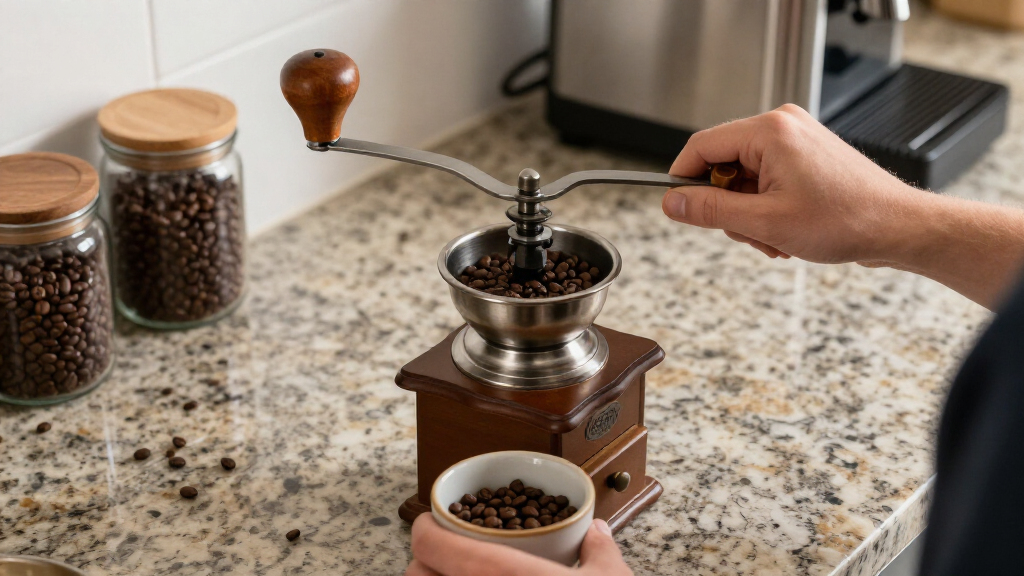
How We Picked
I ranked these 14 manual coffee grinders on six buyer-relevant factors: grind consistency (burr material, burr size, and how firmly the shaft is supported), adjustment range and precision, hopper capacity, build quality, portability, and value for money. Grind consistency carried the most weight, because it is the one factor that changes what ends up in your cup — a grinder that produces uniform particles extracts evenly, while one that sprays fines and boulders makes muddy, bitter coffee no matter how good your beans are. That weighting is why steel-burr, all-metal designs like the TIMEMORE Chestnut C3S Pro sit above cheaper ceramic mills, even when the cheaper mills advertise more adjustment clicks.
Capacity and portability acted as tiebreakers rather than primary scores, since the right answer depends on how you brew: a 60g hopper is a real advantage for a household French press routine but dead weight in a carry-on. Where products were near-identical variants — the CEVING 60g line appears four times in different colors and adjustment styles — I ranked them by the usability differences that actually separate them, such as external versus internal grind adjustment. Price entered the picture last: a grinder only ranks as a value pick if its consistency holds up for the brew methods its buyers are most likely to use.
| manual coffee grinder | Burr Type |
|---|---|
| Manual Coffee Grinder with Adj | Stainless steel burrs |
| Hario Ceramic Coffee Mill | Ceramic |
| Manual Coffee Grinder with Con | Ceramic conical burr |
| CEVING Mini Manual Coffee Grin | Ceramic conical burr |
| Manual Coffee Grinder with Cer | Ceramic conical burr |
| CEVING World’s First 60g Large | Ceramic conical |
| Circle Joy Mini Manual Coffee | Ceramic |
| CEVING 60g Large Capacity Manu | Stainless steel conical |
| Manual Coffee Grinder with Sta | — |
| JavaPresse Manual Stainless St | Ceramic conical |
| CEVING Large Capacity Manual C | — |
| PARACITY Manual Coffee Grinder | — |
| CEVING 60g Large Capacity Manu | — |
| TIMEMORE Chestnut C3S Pro Manu | — |
Factors to Consider When Choosing Manual Coffee Grinders
The reviews above cover how each grinder performs; this section covers the decisions that should happen before you pick one. Most disappointment with manual coffee grinders comes from matching the wrong burr, capacity, or price tier to a brew method — not from buying a genuinely defective product. Work through these five factors in order, and the right row in the ranking above usually picks itself.
Match the Burr Material to Your Brew Method
Burr material is the single biggest divider in this roundup, and the right choice depends on what you brew. Stainless steel burrs are machined with sharp cutting edges, so they slice beans fast and produce a tighter, more uniform particle spread — exactly what espresso and light-roast pour-over demand. Ceramic burrs crush more than they cut, which creates extra fines at fine settings but stays perfectly acceptable at the coarse end, where French press and cold brew forgive a little dust. The most common mistake buyers make is pairing a $25 ceramic mill with an espresso machine, then concluding that hand grinders can’t do espresso — the grinder was wrong for the method, not the other way around. Durability cuts both ways: ceramic resists dulling but can chip if a small stone slips into your beans, while steel shrugs off abuse at the cost of added weight. The pattern in this ranking is no accident: every grinder in the top tier uses steel, while the ceramic picks earn their spots on price and packability rather than cup quality.
Capacity Is a Lifestyle Spec, Not a Performance Spec
Hopper size changes nothing about grind quality, but it decides how well a grinder fits your routine. The standard 20–30g capacity covers one to two cups, which matches most solo pour-over and AeroPress habits. The CEVING 60g models hold enough for a full French press carafe or a batch of cold brew without stopping to refill — a genuine quality-of-life gain for households, and the reason they occupy their own tier in this roundup. Bigger capacity means a bigger body, though: the large mills are taller, heavier, and harder for smaller hands to grip through a long grind. One common mistake is buying maximum capacity just in case, then wrestling an oversized grinder every single morning. The reverse happens too — a four-person household refilling a 22g hopper three times before anyone sits down. Match capacity to your largest regular brew, not the brunch you host once a year.
More Settings Doesn’t Automatically Mean a Better Grind
Spec sheets in this category love big numbers — 40 settings, 55 settings — but the count alone tells you little. What matters is the usable range (does it go fine enough for espresso and coarse enough for French press?) and the step size between clicks, which sets how precisely you can dial in. Repeatability matters just as much: a setting you cannot reliably return to is a setting you do not really have. This is where adjustment design beats raw numbers — external numbered rings, like the one on the external-setting CEVING 60g, let you log a position and jump straight back to it, while internal thumb nuts, like the JavaPresse’s, make you count clicks from zero every time you switch. A grinder with 18 well-spaced, repeatable steps serves most people better than one with 55 vague clicks. Before buying, find out whether adjustment is external or requires taking the grinder apart — that single detail shapes daily ownership more than any other spec.
Grinding Effort Is a Daily Cost Most Buyers Ignore
Every manual grinder asks for physical work, and buyers routinely underestimate how much. A coarse 20g load takes roughly 30–45 seconds of cranking; an espresso-fine dose can take 90 seconds or more of firm, steady effort. Burr sharpness is the main lever — steel burrs cut more per rotation, which is part of why they finish faster and dominate the top of this ranking. Handle design plays a role too: a longer crank gives more leverage, while foldable handles like the Chestnut C3S Pro’s trade a touch of rigidity for packability. Over a year of daily brewing, half a minute saved per load adds up to real hours, and a grinder that annoys you becomes shelf decor by March. Be honest about your patience and grip strength — that answer, more than any spec, decides whether you want a travel-only mill or a daily driver.
When Paying More Actually Pays Off
The sub-$30 tier of this roundup cuts costs with ceramic burrs and plastic shaft stabilizers, and the compromise is real: the shaft develops wobble over time, and grind consistency slides with it. The $40–80 bracket is where money turns into cup quality — metal internals, tighter machining tolerances, and bearings that keep the burr centered under load. Past $100 or so, you are paying for refinement — alignment out of the box, premium coatings, nicer fit and finish — which espresso drinkers can taste and French press drinkers mostly cannot. A useful rule: spend in proportion to how unforgiving your brew method is. Espresso and light-roast pour-over punish inconsistency; cold brew forgives nearly anything. The worst value in this category is a premium grinder used only for coarse batches, and the second worst is a budget mill asked to pull daily espresso duty — both buyers end up paying twice.
Frequently Asked Questions
Can a manual coffee grinder really handle espresso?
Yes, but only from the steel-burr end of this roundup. Espresso needs a fine, highly uniform grind with small, repeatable adjustment steps, which is exactly where budget ceramic mills fall short — they produce too many fines and their adjustment steps are too coarse to dial in a shot. The TIMEMORE Chestnut C3S Pro is the pick here I’d trust for daily espresso, because its steel conical burr holds alignment at fine settings and its clicks are closely spaced. Expect 60–90 seconds of firm cranking per 18g dose; that effort is the real cost of manual espresso. If you pull several shots a day for milk drinks, that time adds up fast and an electric grinder starts making sense. For one or two shots a day, a good hand grinder delivers cup quality that rivals electrics costing three to four times more.
How much should I spend on a manual coffee grinder?
Match the spend to your brew method. Under $30 gets you a ceramic-burr mill like the JavaPresse or PARACITY — perfectly serviceable for French press, cold brew, and travel, but not for espresso. The $40–80 bracket is the sweet spot for most people: steel burrs, metal internals, and adjustment precise enough for pour-over plus the occasional espresso. Spending past $100 buys refinement — better machining, alignment, and coatings — rather than a different class of cup quality, which is worth it if espresso is your daily driver and hard to justify for coarse brews. The most common money mistake in this category is buying cheap for an unforgiving brew method, then paying twice when the first grinder disappoints.
What is the real difference between ceramic and stainless steel burrs?
Steel burrs are machined with sharp cutting edges, so they slice beans quickly and produce a more uniform particle spread — that’s why the top of this ranking is all steel. Ceramic burrs are molded and crush more than they cut, which creates extra fines at fine settings; at coarse settings the gap shrinks enough that most people won’t taste it in a French press. Durability cuts both ways: ceramic resists dulling but can chip if a small stone slips into your beans, while steel tolerates abuse at the cost of some long-term edge wear. Ceramic is also lighter and cheaper, which is why it dominates the travel and budget picks in this lineup. Neither material meaningfully heats the grounds at hand-grinding speeds, so you can ignore marketing claims about ceramic protecting flavor from heat.
Can one manual grinder cover both French press and espresso?
On paper, most of these grinders span the full range; in practice, the question is how painful the switching is. Moving from espresso-fine to French-press-coarse and back means re-dialing your espresso setting from scratch unless the grinder has a numbered, repeatable adjustment ring. External numbered rings — like the one on the 40-external-setting CEVING 60g — make switching a ten-second job, while internal click nuts like the JavaPresse’s force you to count from zero every time. If you alternate brew methods daily, prioritize the adjustment mechanism over burr specs. Many two-method households end up dedicating an inexpensive ceramic mill to coarse brewing and keeping a steel-burr grinder dialed for espresso — at this category’s prices, owning two grinders is a legitimate strategy.
Should I buy a 60g large-capacity grinder or a standard 30g one?
Buy for your biggest regular brew, not your average one. A standard 20–30g mill covers one to two cups at a time, which suits solo pour-over drinkers and travelers — and the smaller body is easier to grip and pack. The CEVING 60g models make sense if you brew a full carafe, make cold brew in batches, or serve three or more people, because refilling a small hopper three times gets old fast. The tradeoff is real: the large mills are taller, heavier, and harder for smaller hands to hold steady through a long grind. One detail worth checking: several of the CEVING 60g entries in this roundup are the same grinder in different colors and adjustment styles, so compare those listings on price and adjustment type rather than treating them as four separate products.
Conclusion
Every buyer in this category is really choosing between three things — consistency, capacity, and cost — and no grinder in this roundup maxes out all three at once. For most people, the TIMEMORE Chestnut C3S Pro is the best overall manual coffee grinder: steel burrs, an all-metal build, and a foldable handle that works equally well on a counter and in a carry-on. If money is the main constraint, the JavaPresse is the best value pick — it won’t win on uniformity, but it brings years of proven reliability at a price that’s hard to argue with. Newcomers who want the gentlest learning curve should start with the Hario Ceramic Coffee Mill, a forgiving classic that’s cheap enough to outgrow without regret. Households brewing four cups or more should skip the small mills entirely and go straight to a CEVING 60g variant — the external-setting version if you switch brew methods often. And if pack size rules your decision, the CEVING Mini or Circle Joy Mini gives up capacity rather than cup quality. Pick the row that matches your mornings, and the rest of this list sorts itself out.
Fall yard work Picks
leaf blowers
As an affiliate, we earn on qualifying purchases.