
TL;DR

Get kitchen gear delivered free — and shop member deals
- Fast, free delivery on millions of items
- Access to Prime Big Deal Days deals on October 6–7
- Prime Video, Amazon Music and more included
Van life kitchen organization is about making limited space safe, functional, and easy to reset. Prioritize workflow, use every inch, and secure items to prevent rattles and accidents.
Design your kitchen around your cooking sequence to reduce clutter and movement.
Use every van dimension—drawers, wall rails, toe-kicks—to maximize storage without overloading.
Secure all items with latches, liners, and restraints to prevent dangerous shifts during transit.
Choose multi-use tools and containers to save space and simplify your setup.
Maintain good ventilation and moisture control to prevent mold, odors, and pest issues.
Van Life Kitchen Organization
A high-performing van kitchen is safe in motion, intuitive during meal prep, and fast to reset. Organize around the cooking sequence, use every dimension, and give every object a secure home.
Build a miniature assembly line
Place supplies in the order you use them. The best layout reduces crossing, unloading, and unnecessary movement while keeping frequently used tools within arm’s reach.
Retrieve
Bring food forward from pantry storage or the refrigerator.
Prepare
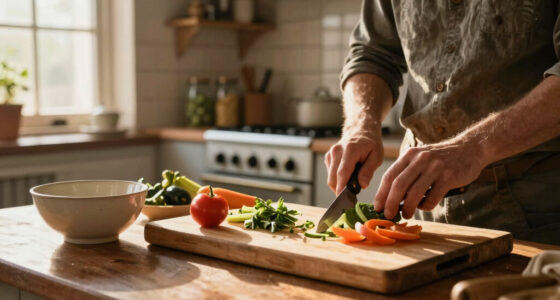
Wash, trim, and cut beside the sink or prep surface.
Cook
Keep pans, utensils, seasonings, and fuel in one zone.
Serve
Use a clear landing zone for plates, bowls, and portions.
Reset
Wash, dry, latch, ventilate, and return every item home.
Turn one surface into two: use a fitted cutting board or sink cover as prep space, or add a fold-down counter for temporary capacity.
Use width, height, depth—and the forgotten gaps
Storage density improves when awkward spaces become intentional zones. Match each location to the item’s weight, frequency of use, and need for visibility.
Deep drawers
Store pots, pans, bowls, and everyday cookware below the counter where the full contents remain visible.
Slim pull-outs
Give bottles, spices, wraps, and utensils a vertical lane that prevents them from disappearing behind larger items.
Wall rails
Keep lightweight daily tools accessible without sacrificing counter space. Secure every hanging item before travel.
Overhead cabinets
Use positive-locking latches and reserve upper storage for dry goods, cloths, and other low-risk supplies.
Toe-kick drawers
Use low, shallow cavities for trays, spare supplies, and rarely needed equipment that tolerates limited access.
Vertical dividers
Stand cutting boards, lids, pans, and trays upright so one item can be removed without unloading the stack.
Choose storage by behavior, not habit
A compact kitchen rewards full visibility, controlled movement, and fast access. This matrix shows where common storage formats perform best.
| Storage type | Rear visibility | Transit security | Best use | Primary caution |
|---|---|---|---|---|
| Full-extension drawer | ✓Excellent | ✓With latch | Cookware and daily tools | Use dividers to stop sliding |
| Deep fixed cabinet | ✗Limited | ~Variable | Large, infrequent items | Items become buried at the back |
| Narrow pull-out | ✓Excellent | ✓With rails | Bottles, spices, utensils | Protect tall containers from tipping |
| Open wall rail | ✓Immediate | ✗Parked use | Light tools during cooking | Clear or restrain before driving |
| Overhead cabinet | ~Moderate | ✓With lock | Lightweight dry supplies | Never load with heavy appliances |
If it can move, it needs restraint
Vibration, sharp turns, and sudden braking can turn ordinary kitchen gear into damaged equipment or dangerous projectiles. Secure the container, then secure what is inside it.
Lock drawers and cabinet doors closed during transit.
Reduce rattling beneath trays, cookware, and containers.
Prevent objects from gaining momentum inside drawers.
Create adjustable barriers inside cupboards and shelves.
Use a locking drawer, sheath, or secure enclosed mount.
Take a short drive, listen, inspect, and tighten the system.
Carry fewer things that do more
Every object pays rent in a van. Favor tools that nest, collapse, combine functions, or work across several meals.
High-value kit
Keep- Nesting cookware: several vessels in one compact footprint.
- Multipurpose skillet: fry, bake, steam, reheat, and serve.
- Collapsible prepware: bowls, strainers, and measuring cups.
- Sink-cover board: food preparation plus added counter space.
- Three core utensils: choose pieces that cover most daily tasks.
Space drains
Question- Duplicate tools: keep the version that performs best.
- Single-purpose gadgets: remove items used only occasionally.
- Mismatched lids: standardize compatible sizes where possible.
- Round containers: replace with square or rectangular formats.
- Oversized quantities: buy only what available storage can hold.
A practical filter: a compact set of versatile knives and utensils can handle the large majority of routine cooking. If an item is rarely used and cannot serve another purpose, reconsider its place.
Protect food, water, and air quality
Good organization supports hygiene as well as convenience. Visibility, rotation, temperature control, ventilation, and strict separation reduce waste and prevent contamination.
See and rotate
Group food by use, choose airtight stackable containers, transfer preparation and expiration details, and move older stock to the front.
Leave room for air
Use compact category bins, avoid overpacking, keep frequent items forward, and seal raw meat on the lowest safe shelf.
Separate every stream
Clearly label fresh and gray-water containers. Check fittings and levels regularly to prevent leaks, overflow, and contamination.
Make cleanup immediate
Keep a basin, soap, microfiber cloths, drying solution, and lidded waste bin together in an accessible work zone.
Move moisture out
Run the roof vent or open a window while cooking and washing. Dry wet surfaces before closing the van for the night.
Isolate chemicals
Store cleaning products in a leak-proof container away from food, fuel, and water. Never place chemicals in drink bottles.
The organization chain
The four-minute reset
End each meal with the same repeatable sequence so the kitchen is clean, dry, secure, and ready to move.
How to Design Your Van Kitchen for Smooth Cooking Workflow
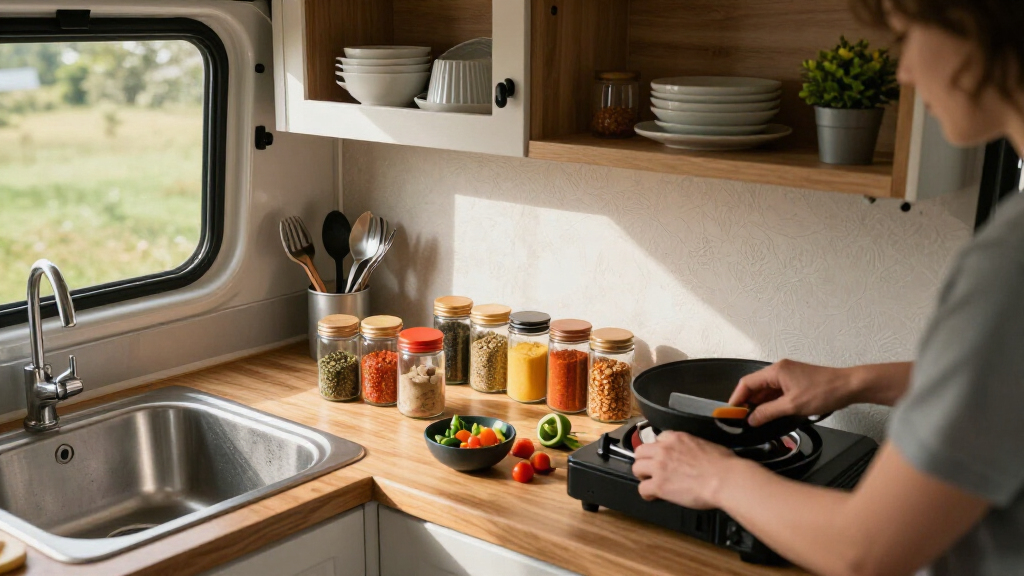
Your van kitchen should follow the sequence of meal prep: grab ingredients, wash or prep, cook, serve, and clean. Arrange your tools and supplies based on this flow. Keep your most-used utensils, seasonings, and cookware within arm’s reach, ideally in a small, dedicated zone.
For example, a fold-down counter or a sink cover that doubles as a prep surface can give you extra space. Think of your kitchen like a miniature assembly line—everything should be where you need it, just in the right order.
By organizing around your cooking steps, you reduce unnecessary movement and frustration, making every meal feel less like an obstacle course and more like a simple task.
van life kitchen organization storage bins
As an affiliate, we earn on qualifying purchases.
As an affiliate, we earn on qualifying purchases.
Use Every Corner and Dimension of Your Van
Maximize your storage by tapping into every available space. Deep drawers under the counter are perfect for bulky items like pots and pans. Narrow pull-outs can hold spices, bottles, or utensils.
Wall-mounted rails keep tools accessible without cluttering counters. Overhead cabinets with secure latches store dry goods and lightweight supplies. Toe-kick drawers near the floor can hold rarely used equipment, while inside benches or steps hide essential gear.
Stackable bins and vertical dividers turn awkward spaces into organized zones. For example, a tall cabinet with adjustable shelves can keep your baking supplies tidy and visible, saving time when you need something fast.
Using every inch prevents clutter and keeps your van feeling open and manageable—no more digging through deep cabinets to find that one lid.
secure drawer latches for camper van
As an affiliate, we earn on qualifying purchases.
As an affiliate, we earn on qualifying purchases.
How to Keep Items Secure During Travel
Vibration, sharp turns, and sudden stops mean your kitchen gear must be strapped in tight. Use positive-locking latches on drawers and cabinets. Nonslip liners under trays and inside drawers prevent rattling.
Adjustable dividers and snug baskets keep items from sliding. Heavy tools and appliances should be stored low and close to the vehicle’s center of gravity—think of it like balancing a scale.
For fragile items like glassware or knives, invest in protective sleeves or secure mounts. Knives should be stored in enclosed, locked drawers or sheaths, not loose in a tray.
Test your setup by taking a short drive and listen for rattles or shifting objects. Proper restraint not only prevents damage but also reduces safety hazards, as loose items can become projectiles or cause injury in sudden stops or rough terrain. This level of security ensures your kitchen remains intact and safe, even on challenging roads.
compact multi-use kitchen tools for RV
As an affiliate, we earn on qualifying purchases.
As an affiliate, we earn on qualifying purchases.
How to Pick and Use Multipurpose, Space-Saving Tools
In a van, fewer tools mean less clutter. Focus on versatile, multi-use items like a nesting cookware set that stacks into a single compact unit. A skillet with multiple functions—frying, baking, steaming—can replace several gadgets.
Collapsible bowls, strainers, and measuring cups shrink down when not in use. A cutting board that doubles as a sink cover keeps your workspace clean and functional.
Opt for a small set of knives and utensils that cover most tasks. For example, a paring knife, a serrated bread knife, and a spatula might suffice for 90% of your needs.
Every item should justify its space by its utility. Prioritize quality over quantity, and avoid bringing duplicates or seldom-used tools. This approach minimizes clutter, streamlines your workflow, and makes cleaning easier. While this may mean sacrificing some convenience, it encourages smarter packing and reduces the time spent searching for tools, ultimately making your kitchen more efficient and less cluttered.
van kitchen moisture control solutions
As an affiliate, we earn on qualifying purchases.
As an affiliate, we earn on qualifying purchases.
How to Organize Food for Easy Access and Freshness
Group dry goods by type—breakfast, snacks, baking, dinner—and store each in airtight, stackable containers. Clear containers with labels help you see at a glance what you have left.
Use square or rectangular containers—they fit together neatly and use space more efficiently than round ones. Label contents and expiration dates to avoid waste.
Keep older food at the front and rotate stock regularly. Buying in bulk can save space, but only if you have room to store large quantities without clutter.
Separate food from chemicals or fuel to prevent contamination. When decanting, transfer labels and expiration info to your containers to keep track of freshness. Proper organization reduces waste, saves space, and ensures you can quickly find what you need without rummaging through cluttered shelves. An organized pantry also helps prevent food spoilage, which is especially important in a small space where odors and mold can spread quickly.
Optimizing Refrigerator Storage for Freshness and Space
Your van fridge is small—so organize it with care. Use compact bins to segregate dairy, produce, leftovers, and drinks. Keep frequently used items near the front for quick access.
Avoid overpacking; cold air needs space to circulate. Raw meat should be sealed tightly and stored on the bottom shelf to prevent drips onto other foods. Consider using clear, stackable containers inside the fridge to maximize every inch while keeping your items organized.
Use a thermometer to monitor temperature—vehicle vibrations and outdoor temps can fluctuate. Opening the door less often keeps everything cooler and saves energy. Proper organization ensures your perishables stay fresh longer, reduces waste, and prevents spoilage, which is critical in a limited space. Regularly cleaning and rotating items can also help maintain freshness and prevent unpleasant odors from developing.
Easy Water and Cleaning Supply Setup
Quick cleanup starts with accessible water and supplies. Use a small basin for washing dishes and keep biodegradable soap nearby. Microfiber cloths and a drying rack make the process swift.
Separate fresh water and gray-water containers—label them clearly. Keep a small waste bin with a lid handy, and empty it regularly.
Store cleaning products in a dedicated, leak-proof container away from food. Never transfer chemicals into food or drink bottles.
Having everything within arm’s reach means you can rinse and wipe as you go, preventing buildup and odors.
Proper organization of cleaning supplies minimizes messes, keeps your space hygienic, and ensures quick cleanup after meals or spills, which is essential in a confined van environment. Regularly checking and maintaining your water and waste containers prevents leaks and contamination, ensuring your setup remains safe and functional.Controlling Moisture, Odors, and Pests in Your Van Kitchen
Moisture from cooking and washing can cause mold, so ventilation is key. Use roof vents or crack a window while cooking. Dry dishes thoroughly before storing and wipe away condensation.
Store food in sealed containers to keep pests out. Clean crumbs and spills immediately to prevent attracting insects.
Inspect hidden corners regularly for leaks or mold. Good airflow and dry storage prevent musty smells and health issues.
Ventilate damp cloths outside or in a designated area, never leave them crammed in cupboards where mold can develop. Regularly cleaning and inspecting your space helps identify potential problems early, preventing the buildup of mold, pests, and bad odors. Maintaining a dry, clean environment is crucial for health and safety, especially in small, enclosed spaces where issues can escalate quickly.
Make Fire and Fuel Safety Part of Your Organization System
Safety starts with proper storage and operation. Keep fuel cylinders outside or in ventilated compartments, away from heat and flames. Regularly check for leaks in gas lines and connections.
Install smoke and carbon monoxide alarms inside the van. Keep a fire extinguisher close, accessible, and suitable for kitchen fires.
Ensure all appliances are used according to the manufacturer’s instructions. Turn off burners and gas valves before moving the vehicle.
Never use outdoor-only cooking gear inside—the risk of fire or carbon monoxide poisoning is too high. Proper storage and cautious use of fuels and appliances are vital to prevent accidents, protect your vehicle, and ensure your safety on the road. Developing a routine safety check and keeping emergency equipment accessible can make all the difference in preventing disasters and ensuring peace of mind during your travels.
Frequently Asked Questions
How much kitchen storage does a van need?
It depends on your trip length, cooking habits, and shopping frequency. Focus on storing what you actually use regularly, and design your layout around that realistic inventory.Are drawers or cabinets better?
Drawers generally give better access to items at the front and make it easier to reach everything without rummaging. Cabinets work well for taller or irregularly shaped gear, but plan for pull-outs or organizers to maximize them.How do I stop dishes and pans from rattling during travel?
Use fitted dividers, nonslip liners, and snug baskets. Test your setup on a short drive and adjust as needed. Securing items prevents damage and noise, making your ride more comfortable.Should food be removed from its original packaging?
Decanting into labeled, airtight containers saves space and keeps things tidy. Always include expiration dates and labels, especially if you transfer food, to avoid confusion and waste.How can I organize a kitchen with no permanent cabinets?
Use stackable, secured bins, portable containers, and seat-back organizers. Make sure everything is fastened during transit—nothing should be loose or unsecured.Conclusion
A well-organized van kitchen transforms a cramped space into a safe, efficient hub for your adventures. Think through your workflow, use every inch wisely, and keep everything secured. After all, a tidy kitchen isn’t just prettier—it’s safer and more enjoyable to cook in, mile after mile.Fall Picks
fall essentials
As an affiliate, we earn on qualifying purchases.