TL;DR

Get kitchen gear delivered free — and shop member deals
- Fast, free delivery on millions of items
- Access to Prime Big Deal Days deals on October 6–7
- Prime Video, Amazon Music and more included
A House Beautiful report describes 12 features in older homes that can look unusual today but once served practical purposes. The examples include service bells, dumbwaiters, carriage houses, boot scrapers and windows designed to bring light or air into rooms; their use and meaning varied by home and era.
House Beautiful has published a guide to 12 features in historic homes that may seem odd or outdated today but once answered practical needs, including moving meals, cleaning footwear and bringing light or airflow into interiors. The report offers historical explanations rather than documenting a new preservation finding, and notes that the function of a particular feature can depend on the home and its period.
Among the examples are butler bell boards: rows of labeled bells, commonly installed in a butler’s pantry, that let household staff know which room was requesting help. The report says bells could be connected to pulleys inside walls, while some systems used distinct tones assigned to different staff members. Dumbwaiters served a related household need by carrying food and other items between floors, reducing the need to bring trays up and down stairs.
The report also describes carriage houses, small outbuildings used to store horse-drawn vehicles before widespread automobile use, and boot scrapers, iron fittings near entrances that helped remove dirt and manure from shoes. In larger homes, a separate, narrow staff stairway could keep household workers out of guests’ view, while a more prominent staircase made an impression in the entrance hall.
The supplied report begins to discuss transom windows, panes above doors that could admit natural light. Its title promises 12 features, but the source excerpt provided here does not include the full list or the complete explanation of those windows. The examples available do not establish that every feature had the same purpose in every home.
How Household Design Met Daily Needs
These features show how homes were designed around the technologies, labor arrangements and routines of their time. A dumbwaiter made sense in a large house where kitchens and dining rooms might be far apart; a boot scraper addressed the realities of muddy streets and horse traffic. What now appears decorative, inconvenient or mysterious could have been a working part of household life.
The explanations can also help owners and renovators interpret older buildings before changing them. A sealed shaft or unusual doorway might be connected to a former service system, while a small outbuilding may have had a transportation-related use. The report does not provide a property-by-property survey, so identifying a feature’s purpose in a specific home may require further research.
As an affiliate, we earn on qualifying purchases.
Homes Before Modern Conveniences
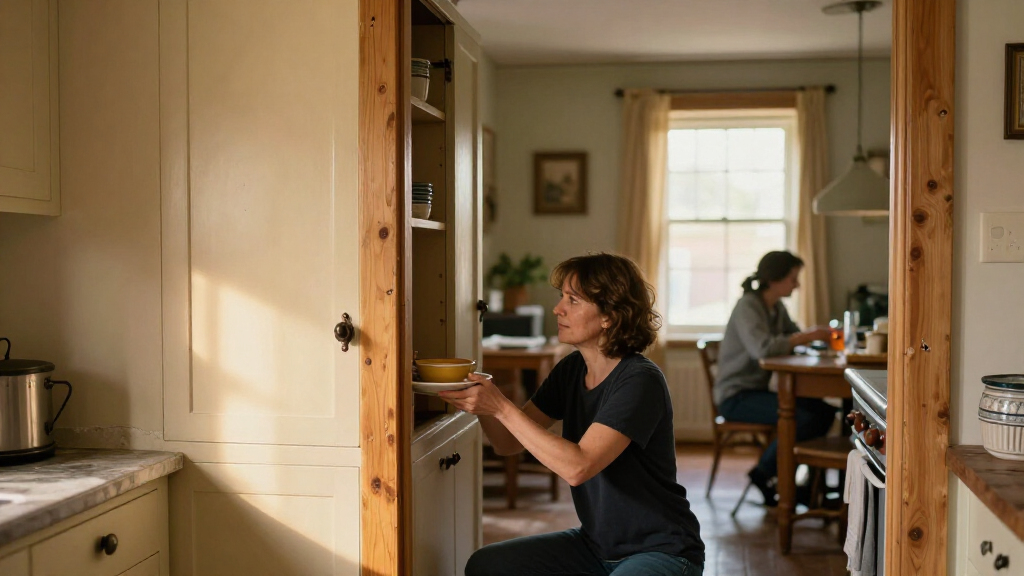
The report places many of these elements in the 19th and early 20th centuries, when household layouts and daily travel differed from today. In large houses, cooking, food preparation and dining could take place in separate areas, and staff might have assigned roles and routes through the building. Bell systems and secondary stairs reflected that domestic organization, not simply a preference for unusual decoration.
Carriage houses likewise relate to a period when horse-drawn carriages were a common way for wealthier households to travel short distances. As cars became widespread and household practices changed, such buildings and fixtures could lose their original function. The source says carriage houses have since been converted into residences in some cities; it does not give a broader count or timeline for those conversions.
“Dumbwaiters were popular contraptions in large homes during the Gilded Age.”
— House Beautiful report
As an affiliate, we earn on qualifying purchases.
What Each Feature Can Tell Us
The source excerpt does not provide the full set of 12 features, the complete transom-window explanation, or supporting interviews and historical citations for every item. It also does not give dates or locations for each feature. The descriptions should therefore be read as general explanations in the report, not as definitive diagnoses of a particular building.
A feature’s original use may be uncertain without details about the home’s construction and later alterations. The report also notes that dumbwaiters can be expensive to maintain and dangerous, but supplies no cost estimates or safety specifications. Whether an old system remains functional is not established.
As an affiliate, we earn on qualifying purchases.
Checking Features in a Specific Home
For readers who encounter these details in an older property, the report’s explanations offer starting points for asking what a feature may have done. Confirming an answer may require checking architectural records, consulting local preservation resources or seeking advice from a specialist familiar with the building. The source does not announce a follow-up investigation or additional findings.
Owners considering changes should distinguish historic appearance from present-day function: a former dumbwaiter shaft, for example, may have been altered or repurposed. Any decision to restore, remove or operate an old feature depends on its condition and the requirements that apply to the property.
As an affiliate, we earn on qualifying purchases.
Key Questions
What is a butler bell board?
A butler bell board is a group of bells labeled for different rooms. According to the report, staff could use the ringing bell or its tone to learn where assistance was requested.
Why did older homes have dumbwaiters?
Dumbwaiters carried food and other items between floors. The report says they reduced the need to carry full trays along stairs, particularly in large homes where kitchens and dining rooms were separated.
What were carriage houses used for?
Before cars became widespread, carriage houses stored horse-drawn vehicles. Some have since been converted into homes, the report says.
Why are there two staircases in some old houses?
A secondary, often narrower staircase could serve household staff, while a more prominent staircase provided a formal entrance for residents and guests. The arrangement varied by house.
Did every old-house feature have one standard purpose?
No. The report gives common uses, but a feature’s function can depend on its age, location and later changes. The supplied material does not verify the history of any particular property.
Source: rss
Halloween Picks
halloween
As an affiliate, we earn on qualifying purchases.