TL;DR

Get kitchen gear delivered free — and shop member deals
- Fast, free delivery on millions of items
- Access to Prime Big Deal Days deals on October 6–7
- Prime Video, Amazon Music and more included
You can clean dishes off-grid with minimal water and no sink by scraping, wiping, using safe water, and properly managing greywater. Follow practical steps to stay hygienic and protect the environment.
Imagine cooking a hearty stew over a campfire, then facing the messy cleanup without a sink in sight. No plumbing, no running water — just you, your gear, and the wild around you. How do you keep your dishes clean without polluting the environment or attracting animals? That’s what this guide is for.
Off-grid cleanup isn’t just about washing dishes; it’s a system. You’ll learn how to minimize water use, handle wastewater safely, and keep your camping site tidy and wildlife-friendly. It’s about smart, simple routines that respect nature while keeping you hygienic.
Use a three-basin system with labeled containers to keep water organized and prevent cross-contamination.
Strain greywater thoroughly and scatter it over a broad area, following local regulations.
Prioritize potable water for cleaning and sanitizing, treating untreated sources first.
Handle raw meat carefully—use separate tools and surfaces, and avoid rinsing raw poultry to prevent spreading bacteria.
Invest in lightweight, collapsible gear like basins and portable pumps for efficient outdoor cleanup.
Off-Grid Cooking Cleanup Without a Sink
Turn a messy camp kitchen into a controlled system: remove residue first, wash with safe water, prevent cross-contamination, and manage every drop of greywater without inviting wildlife or polluting the wild.
The six-step cleanup chain
Do the dry work before adding water. Each early step reduces the burden on the next, conserving water while producing less contaminated wastewater.
Scrape
Move leftovers into sealed trash or approved compost. Keep every solid out of the wash water.
Wipe
Remove grease with a flexible scraper, paper towel, or designated cloth before wet cleaning.
Wash
Use warm potable water and only a small amount of soap. Start with the cleanest items.
Rinse
Pour clean water over items or move them through a dedicated rinse basin. Never dip into the supply.
Sanitize
Use a food-contact sanitizer as labeled after raw meat, illness, or questionable water exposure.
Air-dry
Place dishes on a clean rack or mesh surface. Towels can transfer contamination back to dishes.
Give every container one job
Clearly labeled containers make the system easy to follow when hands are busy, light is fading, or multiple people share cleanup duties.
Lift soil
Warm potable water, a small dose of soap, and a brush or cloth loosen the residue left after scraping and wiping.
Remove soap
Clean potable water carries away loosened soil and detergent. Pour or use a controlled-flow spigot to reduce waste.
Control pathogens
Food-safe sanitizer, mixed and used according to its label, adds protection for high-risk utensils and surfaces.
Only two basins?
Use one for washing and one for rinsing, then empty and prepare the second basin for sanitizing when needed. Keep the clean-water supply separate and pour from it—never dip dirty utensils or hands inside.
Choose the setup for the risk
The best method depends on available water, the food prepared, and contamination risk. Raw animal products demand stricter separation and sanitation.
| Method | Water demand | Separation | Raw-meat cleanup | Best fit |
|---|---|---|---|---|
| Three basins | ~ Moderate | ✓ Strong | ✓ Best option | Groups, base camps, full meals |
| Two basins | ~ Low–moderate | ✓ Good | ~ Reconfigure | Small camps, limited gear |
| Minimal-water wipe | ✓ Very low | ~ Technique-led | ✗ Not alone | Low-risk meals, scarce water |
| Single mixed bucket | ✓ Low | ✗ Poor | ✗ Avoid | Not recommended |
Never rinse raw poultry: splashing can spread bacteria to hands, utensils, and nearby surfaces.
Clear water is not necessarily safe water
Anything touching food or clean dishes should be washed with potable water. Treat untreated lake, river, or stream water before it enters the cleanup system.
Separate the streams
Label containers by purpose, use a spigot or pump for controlled flow, and keep the handwashing station distinct from dishwashing equipment.
What leaves camp matters
Greywater can carry food, grease, soap, and bacteria. Treat it as waste—not harmless water—and follow the rules for the exact park, campground, or land agency.
Five habits that keep camp clean
Prevention begins before the first burner is lit. Plan low-mess meals, carry the right tools, and build cleanup into the cooking routine.
Label two or three collapsible basins so wash, rinse, and sanitizer never become confused.
Use potable water and treat untreated sources before cleaning food-contact items.
Separate raw-food tools and surfaces; wash hands at a dedicated station.
Carry a scraper, fine-mesh strainer, sealed waste jar, drying rack, and controlled-flow jug.
Check local greywater rules. When required, seal and pack out the entire wastewater load.
How to Clean Dishes Off-Grid Without a Sink in 6 Easy Steps
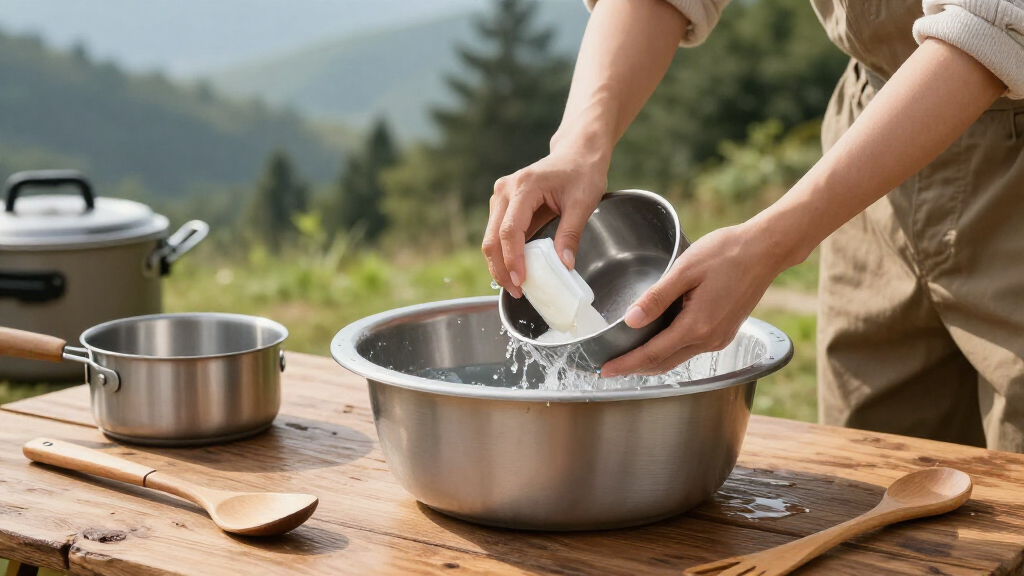
Cleaning dishes without a sink starts with a clear plan. Use a three-basin method — wash, rinse, sanitize — with labeled containers for each step. This structured approach ensures thorough cleaning while conserving water and preventing cross-contamination. Each basin serves a specific purpose, reducing the need for excess water and minimizing environmental impact. Always scrape leftovers into trash or compost first, which prevents food debris from clogging your containers and reduces bacterial growth. Wiping greasy residues with a spatula or cloth before washing reduces soap and water use, making the process more efficient. Use a small amount of biodegradable soap and warm, potable water for washing, then rinse thoroughly with clean water to remove soap residues. Sanitizing, especially after raw meat or when dealing with bacteria-prone items, is crucial—using a food-safe sanitizer ensures pathogens are destroyed. Properly managing water at each step helps prevent the spread of bacteria and reduces the volume of wastewater needing disposal. Finally, allow dishes to air-dry on a clean rack to prevent recontamination. This method emphasizes efficiency, hygiene, and environmental responsibility, ensuring your cleanup is effective without harming the surroundings.
Imagine you’re at a remote lake. You’ve got two collapsible basins, a small pot for heating water, and a mesh drying rack. By following this sequence, you keep everything clean and minimize water waste. Plus, you avoid heavy water use and prevent wildlife from digging through your leftovers.
collapsible camping dishwashing basins
As an affiliate, we earn on qualifying purchases.
As an affiliate, we earn on qualifying purchases.
Choosing the Right Containers for Off-Grid Dishwashing
The best containers are lightweight, durable, and clearly labeled to avoid confusion during busy cleanup sessions. Using two or three collapsible basins for washing, rinsing, and sanitizing allows you to allocate water efficiently and keep each step distinct, which is vital for preventing cross-contamination. Incorporating a small water jug with a spigot or pump gives you controlled water flow, which reduces unnecessary water use and splashes that can spread bacteria. A fine-mesh strainer is essential for removing food particles from greywater; this step is critical because leftover food can clog drainage or attract animals, creating hygiene issues. For heating water, a compact kettle or pot is ideal, especially if you need to boil water for sanitation purposes. Properly labeled containers not only prevent accidental misuse but also serve as a reminder of each container’s specific purpose, which enhances safety and hygiene. When finished, strain greywater into a sealed container and pack out any food debris, maintaining a clean site and safe water practices. Choosing the right containers and understanding their role helps you manage water resources effectively, minimize waste, and prevent environmental contamination, especially in sensitive ecosystems where even small mistakes can have significant impacts.
As an affiliate, we earn on qualifying purchases.
How to Handle Greywater Safely and Legally
Greywater is the wastewater generated from washing dishes, which can contain food residues, grease, soap, and bacteria. Managing it properly is crucial because improper disposal can harm the environment and attract animals, risking contamination of water sources and local wildlife. Straining out food particles is essential because leftover food can clog drainage systems, create bacterial hotspots, and attract scavengers. Dispersing greywater over a broad area—at least 200 feet from water sources and campsites—helps dilute contaminants, reducing the risk of pollution and protecting aquatic ecosystems. Following local regulations is vital; some areas require packing out greywater entirely to prevent environmental degradation, especially in protected or sensitive ecosystems. Never pour greasy water directly onto soil or into streams, as it forms a film that impedes water absorption and harms aquatic life. Instead, scatter the greywater over a vegetated area, ensuring it is well-diluted and far from water bodies. Proper greywater management preserves the health of ecosystems, prevents wildlife from being attracted to food residues, and helps keep your campsite compliant with regulations. This responsible approach not only protects the environment but also ensures your outdoor experience remains sustainable and enjoyable, highlighting the importance of understanding local rules and practicing minimal-impact waste disposal.
off-grid dishwashing water containers
As an affiliate, we earn on qualifying purchases.
As an affiliate, we earn on qualifying purchases.
Conclusion
Cleaning dishes off-grid isn’t just about washing; it’s about protecting your environment and your health with simple, smart routines. Think of it as a mini-system that keeps your camp tidy and wildlife safe.
Remember: every splash and leftover can ripple outwards. Treat your water, your gear, and the land with care. Good cleanup isn’t just practical — it’s a way of respecting the wild around you.
outdoor dish scrubber and scraper set
As an affiliate, we earn on qualifying purchases.
As an affiliate, we earn on qualifying purchases.
Halloween Picks
halloween
As an affiliate, we earn on qualifying purchases.