
TL;DR
Listen free for 30 days with Audible
Thousands of audiobooks and originals — cancel anytime.
Start your free trialAs an affiliate, we earn on qualifying purchases.
A rocket stove is a simple, efficient device that uses a vertical, insulated chamber to burn small amounts of biomass. It creates a strong draft for complete combustion, reducing fuel use and emissions—making it perfect for off-grid kitchens.
A rocket stove’s insulated chamber and vertical chimney create a high-temperature draft that burns fuel efficiently and cleanly.
Building your own rocket stove is straightforward with simple materials like firebrick, clay, or metal, and can save up to 70% fuel.
Compared to open fires, rocket stoves produce far less smoke, soot, and emissions—beneficial for health and the environment.
Modern rocket stoves incorporate durable materials and portability features, expanding their use in off-grid and emergency situations.
They are highly versatile, suitable for boiling, baking, and even water heating, making them a practical off-grid cooking solution.
What Exactly Is a Rocket Stove, and Why Should You Care?
A rocket stove is a compact, highly efficient cooking device that uses biomass—like wood or sticks—to produce a blazing, clean flame. Its design makes it burn less fuel while generating more heat. For off-grid folks or anyone looking to cut back on firewood, it’s a game-changer.
Imagine boiling water for tea with just a handful of twigs. That’s the power of a well-designed rocket stove. It’s not just about saving fuel; it’s about doing more with less, in a way that’s friendly to the environment and your wallet.
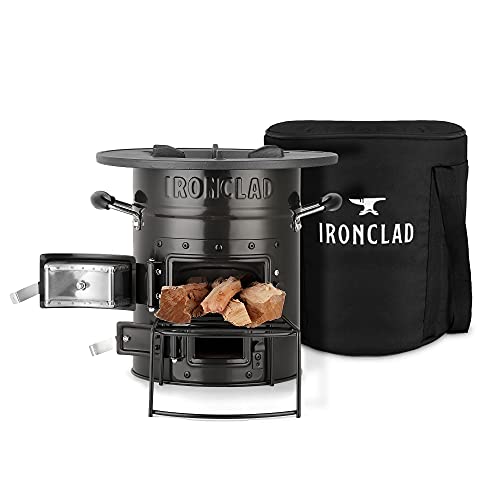
IronClad Supply Rocket Stove – Camping Wood Stove for Emergency Preparedness, Survival, Off Grid Living Supplies – Portable Wood Burning Stove with Canvas Storage Bag and Fuel Support System
- High-Efficiency Heating: Heats up to 23,000 BTUs quickly
- Off-Grid & Emergency Ready: No propane, gas, or electricity needed
- Portable & Durable: Lightweight at 10 lbs with weather-resistant bag
As an affiliate, we earn on qualifying purchases.
As an affiliate, we earn on qualifying purchases.
How Does a Rocket Stove Actually Work? The Simple Science Behind It
The core of a rocket stove is a vertical, insulated chamber—think of it as a tiny, high-temperature furnace. When you feed it small sticks or biomass, the high insulation keeps the heat concentrated, pushing temperatures well above 1,100°F (593°C). This intense heat encourages complete combustion, meaning fewer smoky emissions and more heat directed at your pot.
The design creates a natural draft: as hot gases rise, they pull in more air through the fuel feed port. This continuous airflow feeds the fire, keeping it burning hot and clean. The result? Less fuel wasted, less smoke, and more efficient cooking.
Understanding this mechanism is important because it highlights how the design maximizes energy use. The insulation traps heat, reducing fuel requirements and emissions, but it also means the stove needs to be built carefully to avoid hotspots that could cause cracking. The balance between insulation, airflow, and material durability directly impacts the stove’s efficiency and lifespan.
Why does this matter? Because optimizing these factors means your stove can operate longer, burn cleaner, and use less fuel—crucial benefits when resources are limited. However, it’s a tradeoff: too much insulation may cause hotspots and cracking, while too little reduces efficiency. Achieving the right balance is essential for sustainable, long-term use.

GODSAX Rocket Stove Portable Wood-Burning Camping Stove with Storage Bag
- Structural Design: Chimney effect for efficient combustion
- Material: Made of durable 1.8mm steel
- Weight Capacity: Supports over 130 lbs
As an affiliate, we earn on qualifying purchases.
As an affiliate, we earn on qualifying purchases.
Step-by-Step: How to Build a Basic Rocket Stove at Home
- Choose a sturdy, heat-resistant container or build a frame—metal or refractory bricks work well.
- Insulate the combustion chamber with clay, ceramic, or even crushed firebrick. The goal: trap heat and promote complete combustion.
- Attach a vertical chimney or flue that’s about 2-3 feet tall to create a strong draft.
- Cut an opening at the bottom for feeding fuel; keep it small enough to control airflow.
- Place a flat, stable surface or a metal plate on top for your pot or pan.
Imagine setting up your own little forge—this simple setup is all about maximizing heat with minimal fuel. Proper construction ensures the stove heats efficiently and minimizes the risk of cracking or warping, which can compromise performance over time. Using quality materials and precise insulation not only improves efficiency but also extends the lifespan of your stove, making it a worthwhile investment for sustainable cooking.
Keep in mind that the design choices you make—such as the size of your combustion chamber and insulation quality—directly influence how well your stove performs. A well-built stove will burn fuel more completely, produce less smoke, and last longer, while a poorly constructed one may crack or be inefficient. Balancing these factors is key to creating a reliable, long-lasting device that meets your cooking needs sustainably.
GODSAX Rocket Stove Portable Wood-Burning Camping Stove with Storage Bag
- Structural Design: Chimney effect for efficient combustion
- Material: Made of durable 1.8mm steel
- Weight Capacity: Supports over 130 lbs
As an affiliate, we earn on qualifying purchases.
As an affiliate, we earn on qualifying purchases.
What Makes Rocket Stoves So Much Better Than Open Fires?
| Feature | Rocket Stove | Open Fire |
|---|---|---|
| Fuel Use | 50-70% less | More fuel for same heat |
| Emissions | Fewer smoke and particulates | Much smoke and soot |
| Heat Efficiency | 90% heat transfer | Less than 50% |
| Portability | Highly portable | Stationary, bulky |
Compared to a campfire or traditional stove, a rocket stove squeezes every bit of heat from each stick, saving your resources and cleaning the air. This increased efficiency not only reduces fuel consumption but also minimizes smoke, which is crucial for health and environmental considerations—especially in enclosed or semi-enclosed spaces where smoke buildup can be dangerous. The portability of rocket stoves makes them ideal for outdoor adventures or emergency situations, where reliable, clean cooking is essential. Overall, their design reflects a thoughtful balance between performance, safety, and environmental impact.
Understanding why rocket stoves outperform open fires is key to appreciating their value. The focused combustion process ensures more complete burning of fuel, which means less smoke and soot—beneficial for your health and the environment. Additionally, the high heat transfer efficiency allows you to cook faster and use less fuel, which is especially important when resources are scarce. The tradeoff, however, is that rocket stoves require some initial effort to build or acquire and proper operation to maintain efficiency. But once set up, they offer a sustainable, cleaner alternative to traditional open fires, especially in off-grid or emergency contexts.

GasOne High Pressure Single Propane Burner – Outdoor Cooking with Heat Shield and Guard – Propane Burner Head for Camping, Tailgating, Seafood Boil, Home Brewing – Patented
- Outdoor Cooking Designed for Outdoorsmen: Durable, reliable, and safe for outdoor use
- High-Output Flame: Provides steady, continuous heat for fast cooking
- Enhanced Heat Protection: Includes top heat guard and bottom heat shield
As an affiliate, we earn on qualifying purchases.
As an affiliate, we earn on qualifying purchases.
The Latest in Rocket Stove Tech: What’s New and Exciting
Modern designs focus on durability and portability. Using ceramic and refractory bricks, builders create stoves that last decades—some even fold or break down for easy transport. Innovations now include hybrid models that combine solar cookers—adding versatility for off-grid cooking.
Community projects and disaster relief efforts leverage these improvements, making rocket stoves more accessible and reliable worldwide. As materials improve, so does their efficiency and lifespan, turning simple fires into high-tech solutions.
How Much Fuel Can You Really Save? The Numbers Say It All
Research shows rocket stoves can slash fuel needs by up to 70%. If you usually burn a bundle of wood every day, switching to a rocket stove might cut that down to half or less—that’s a lot of time, effort, and firewood saved.
For instance, in a typical off-grid cabin, a rocket stove can boil a pot of water in about 15 minutes using just a handful of sticks—compared to an open fire that might take twice as long and require twice as much wood.
Your Common Questions About Rocket Stoves—Answered
- Is it safe to use indoors? With proper ventilation and a well-built stove, it’s safe. Always ensure good airflow and use a non-flammable surface.
- Can I build one myself? Absolutely. With basic tools, some firebricks, and insulation, you can craft a reliable stove in a weekend.
- How long does a typical rocket stove last? Well-made models can last 10-20 years with minimal maintenance, especially if built from durable materials like ceramic or metal.
- Can it heat water or be used for baking? Yes. Many models include water jackets or flat surfaces for baking, making them versatile for different tasks.
Frequently Asked Questions
Can I use any kind of wood in a rocket stove?
Stick to small, dry, seasoned wood for best results. Softwoods like pine ignite faster, but hardwoods burn longer and cleaner. Avoid green or wet wood to prevent smoke and inefficiency.How do I prevent my rocket stove from cracking over time?
Use high-quality, heat-resistant materials like refractory bricks or ceramic. Properly managing thermal stress by avoiding rapid cooling or overheating is essential—gradual heating and cooling help prevent cracks. Regularly inspect your stove for cracks or warping, and repair or replace worn parts promptly. Selecting materials with suitable thermal expansion properties ensures durability. Understanding these tradeoffs allows you to maintain a reliable stove that can last decades, making it a worthwhile investment in sustainable cooking.Are there safety tips I should follow when operating a rocket stove?
Always operate in a well-ventilated area. Keep flammable materials away, and never leave it unattended when burning. Use heat-resistant gloves and tools for handling hot parts. Proper setup and maintenance reduce risks, but awareness of potential hazards—like hot surfaces, smoke, and proper airflow—is key to safe, sustainable use.Conclusion
A rocket stove takes the chaos out of outdoor cooking—delivering blazing heat with less fuel and cleaner air. Build one, tweak it, and watch your efficiency jump while your fuel bills drop. It’s a simple, smart upgrade for anyone serious about off-grid independence.Back to school Picks
back to school
As an affiliate, we earn on qualifying purchases.