TL;DR

Get kitchen gear delivered free — and shop member deals
- Fast, free delivery on millions of items
- Access to Prime Big Deal Days deals on October 6–7
- Prime Video, Amazon Music and more included
Storing whole beans in airtight, opaque containers in a cool, dark place keeps them fresh longer. Grind only just before brewing with a burr grinder for the best flavor. Recent innovations in packaging and grinders help maintain peak freshness for up to 4 weeks after roasting.
Nothing beats the rich aroma of freshly ground coffee in your off-grid kitchen. Yet, even the best beans can quickly lose their vibrant flavor if not stored or ground properly. If you want your coffee to taste as good as it smells, understanding how to preserve and prepare your beans is essential.
In this guide, you’ll discover practical ways to store whole beans to prevent flavor degradation, plus the secrets to grinding at just the right moment—maximizing freshness without fancy gadgets. Whether you brew with a hand grinder or a manual press, these tips help you keep each cup bursting with flavor.
Store whole beans in opaque, airtight containers in a cool, dark place to slow flavor loss.
Grind only immediately before brewing to preserve aroma and oils.
Use burr grinders for uniform grounds that ensure better extraction and flavor.
Modern packaging with valves and vacuum-sealing extends freshness beyond a typical 2-week window.
Avoid repeated freezing; if you do freeze, do it only once in vacuum-sealed bags.
How to Keep Whole Coffee Beans Fresher, Longer
The secret to fresh coffee is simple: keep the beans away from oxygen, light, and heat. Store your whole beans in an opaque, airtight container—think thick ceramic or metal, not clear plastic. Place it in a cool, dark corner of your pantry, away from the oven or sunlight. If you buy in bulk, consider vacuum-sealing the beans for extra protection.
For example, a vintage tin with a tight seal and dark finish keeps beans safe from light and air, preserving flavor for a couple of weeks longer than a clear jar. Remember, whole beans can stay fresh for about 2-4 weeks after roasting, but once exposed to air, that timeline shrinks rapidly.
While some might suggest refrigeration or freezing, these methods can introduce moisture and cause flavor changes unless done carefully. If you choose to freeze, do so only once, in a vacuum-sealed bag, and avoid repeated thawing—this prevents moisture buildup and flavor deterioration.
Understanding these storage practices is crucial because exposure to oxygen causes the oils and aromatics in coffee to oxidize, leading to stale flavors. Light accelerates this process by breaking down compounds responsible for aroma, while heat speeds up chemical reactions that degrade freshness. The tradeoff is that improper storage can rapidly turn your beans dull and flat, negating the effort you put into sourcing quality beans.
As an affiliate, we earn on qualifying purchases.
Why Grinding Just Before Brewing Keeps Flavors Bright
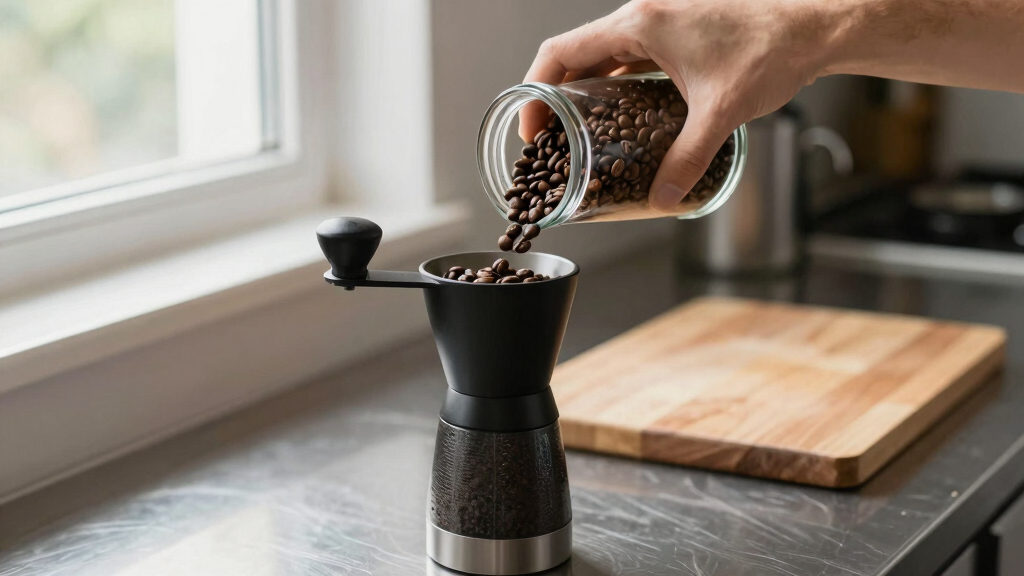
Grinding coffee exposes a large surface area to oxygen, which speeds up flavor loss. That means, to lock in aroma and taste, grind your beans only seconds before you brew. Imagine your favorite hand grinder—when you turn the handle, you release a burst of fresh, fragrant coffee particles that haven’t yet oxidized.
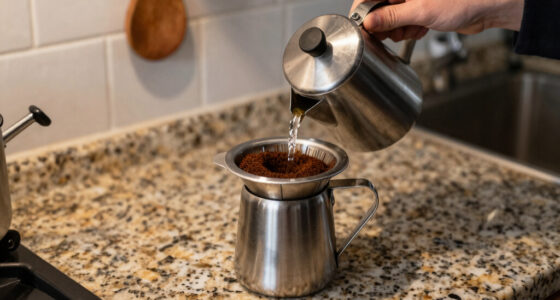
If you grind too early, those oils and aromatic compounds start to evaporate within minutes. For example, a French press or pour-over benefits from a coarse grind, while espresso demands a fine, even grind—adjust your grinder accordingly. The key: timing is everything.
By only grinding when you’re ready, you preserve the beans’ lively, nuanced flavors—your cup will taste richer, brighter, and more complex. This is because freshly ground coffee retains volatile compounds that quickly dissipate once exposed to air. The tradeoff is that it requires a bit more preparation, but the resulting depth of flavor makes it worthwhile for serious coffee enthusiasts.
As an affiliate, we earn on qualifying purchases.
Choosing the Right Grinder for Consistent, Fresh Grounds
Not all grinders are created equal. Burr grinders crush beans uniformly, resulting in even extraction and better flavor. Blade grinders chop randomly, leading to uneven grounds and inconsistent brew strength. For off-grid or manual setups, a good burr grinder—either hand-crank or manual—makes a big difference.
Imagine a hand burr grinder with ceramic or steel burrs—each rotation produces uniform particles, whether you’re making a French press or espresso. This consistency helps you avoid over- or under-extraction, which can turn your perfect coffee into a bitter or sour mess.
While electric grinders can be tempting, a well-made manual burr grinder offers control, durability, and less noise—ideal for off-grid living. Investing in quality ensures every batch of grounds is just right, preserving flavor and aroma.
Choosing the right grinder is about understanding the tradeoffs: electric models may offer convenience and speed but often at the cost of noise, power consumption, and sometimes inconsistent grind quality. Manual burr grinders, on the other hand, require effort but give you unparalleled control over grind size and consistency, which directly influences extraction and flavor. This control is especially important when you’re off-grid and can’t rely on electricity, making a high-quality manual burr grinder an essential tool for maintaining freshness and flavor integrity.
As an affiliate, we earn on qualifying purchases.
Latest Innovations in Coffee Storage and Grinding Technology
Modern packaging now includes vacuum-sealed bags with one-way valves that release CO₂ but keep oxygen out. This keeps beans fresher longer—sometimes up to 6 weeks post-roast. Some storage containers even feature temperature control, maintaining a stable environment that slows down staling.
On the grinding side, recent burr grinder designs incorporate digital dosing and ultra-quiet operation. These tools give you precise control over grind size, helping you tailor each brew to your taste and method.
For example, a vacuum-sealed bag with a built-in valve can extend freshness from 2 to 4 weeks, making it easier to enjoy fresh coffee even when you buy in bulk. These innovations support the off-grid coffee enthusiast in maintaining peak flavor longer.
Understanding these technological advances is important because they directly impact your coffee’s shelf life and flavor profile. Vacuum-sealed bags and valves prevent oxidation by releasing excess CO₂, which can otherwise cause stale, cardboard-like flavors. Temperature-controlled containers help stabilize the environment, slowing chemical reactions that degrade flavor. Similarly, advanced grinders with digital controls allow for precise, repeatable grinds, reducing variability and ensuring each brew is as fresh as possible. The tradeoff with these innovations is often cost, but for off-grid enthusiasts committed to high-quality coffee, they provide significant benefits in maintaining peak freshness over extended periods.
As an affiliate, we earn on qualifying purchases.
Quick Guide: Storing and Grinding Coffee for Peak Flavor
- Buy whole beans from a trusted source, ideally roasted within the last 2 weeks.
- Store beans in a dark, airtight container in a cool, dry place. This minimizes exposure to oxygen and light, which are primary factors in flavor degradation.
- Use vacuum-sealed or specially designed storage bags for longer preservation, as these reduce oxygen contact and slow oxidation.
- Grind only just before brewing—measure your beans and set your grinder accordingly. This ensures maximum retention of volatile oils and aromatic compounds.
- Adjust grind size based on your brewing method to ensure proper extraction. Finer grinds for espresso, coarser for French press—each size affects how quickly flavors are extracted and how the final cup tastes.
Picture this: you open your bag of freshly roasted beans, transfer them into your dark jar, and set your hand grinder nearby. When it’s time for your morning brew, you grind just enough for that cup—full of vibrant aroma, ready to pour over hot water. Simple, effective, and flavorful.
Frequently Asked Questions
How long do coffee beans stay fresh after roasting?
Whole coffee beans stay freshest for about 2-4 weeks after roasting. During this window, they retain the most vibrant aroma and flavor. After that, oils and aromatics slowly evaporate, diminishing the taste.
Should I store beans in the fridge or freezer?
It’s generally better to store beans in a cool, dark pantry. Freezing can help extend freshness if done carefully—use vacuum-sealed bags and avoid repeated thawing. Repeated freezing causes moisture buildup and flavor loss.
How often should I grind my coffee?
Grind only just before brewing for the freshest flavor. Prepare only the amount you need—this prevents oils from oxidizing and keeps your coffee lively and aromatic.
What’s the best type of grinder for manual brewing?
A burr grinder—especially a manual one—is best for consistent, even grounds. It gives you control over grind size, which is crucial for different brewing methods and flavor extraction.
Can I store coffee beans in plastic containers?
Plastic is less ideal because it often lets light and air penetrate. Opaque, airtight containers made of ceramic or metal are much better for preserving freshness.
Conclusion
Fresh coffee starts with smart storage and timely grinding. Keep your beans protected from light, oxygen, and heat, and grind just before brewing for maximum flavor. Small, deliberate steps make all the difference in every cup.
Next time you open a bag, think of it as a treasure—each step preserves that vibrant, complex aroma you love. A little effort in storage and timing transforms your off-grid coffee into a true daily ritual, rich with flavor and character.
Fall Picks
fall essentials
As an affiliate, we earn on qualifying purchases.