
TL;DR

Get kitchen gear delivered free with Prime
- Fast, free delivery on millions of items
- Prime Video, Amazon Music and more included
- Member-only deals all year
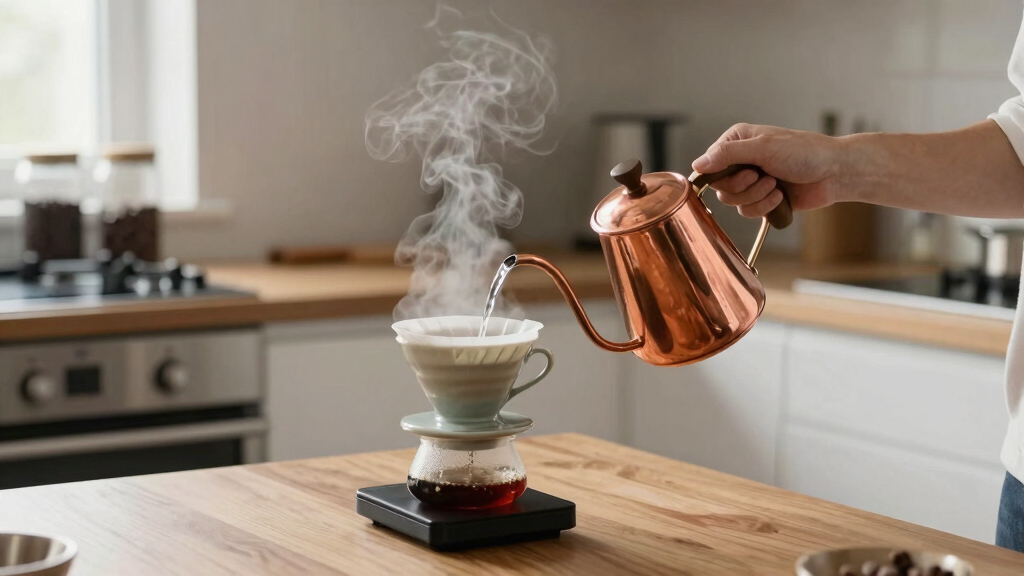
The distinctive gooseneck spout offers unmatched control over water flow, crucial for brewing high-quality coffee and tea. This shape helps you pour steadily, avoid splashes, and fine-tune every cup you make.
The shape of a gooseneck kettle’s spout is crucial for controlling water flow during brewing.
A narrow, curved spout helps achieve a slow, steady pour, essential for perfect extraction.
Material choice impacts heat conduction, durability, and ease of cleaning — copper offers excellent heat transfer.
Avoid wide or stubby spouts if you want consistent, precise pouring — they tend to splash and pour faster.
Practicing with your chosen kettle and measuring your flow rate can significantly improve your brewing results.
Why the Spout Shape Turns Good Coffee into Great Coffee
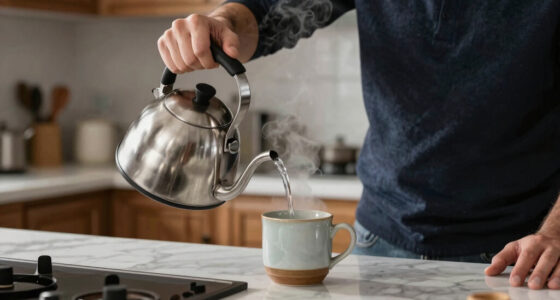
The shape of a gooseneck kettle’s spout is the secret weapon for pouring control. It’s like having a precision nozzle that lets you direct water exactly where you want it. This allows for even saturation of the coffee grounds or tea leaves, which is critical for extracting the best flavors. Imagine pouring hot water over a bed of coffee grounds. A smooth, steady stream from a well-designed spout helps you avoid splashes and uneven flow, leading to a more balanced brew.
For example, a barista at a specialty coffee shop uses a gooseneck kettle with a narrow, curved spout for a reason. It gives her the finesse to pour in a slow, circular motion, ensuring all grounds are evenly soaked. This control can make the difference between a good cup and a stellar one.
As an affiliate, we earn on qualifying purchases.
How Spout Shape Influences Pouring Control and Consistency
The key to a good pour is steady, controlled water flow. The long, narrow, curved spout of a gooseneck kettle ensures a consistent stream, usually at about 1-2 seconds per ounce. This allows you to modulate the flow rate based on your brewing technique. For instance, when brewing pour-over coffee, a slow, steady pour helps evenly extract flavors, avoiding bitter or sour notes caused by uneven saturation.
Take a scenario where you’re pouring over a Chemex. With a well-designed gooseneck, you can start with a slow circle, then adjust your flow to finish the pour. Contrast that with a wide-spouted kettle, which might cause splashes or inconsistent streams, messing up your brew.
As an affiliate, we earn on qualifying purchases.
Comparing Spout Shapes: What Makes a Good Gooseneck Spout?
| Feature | Ideal Gooseneck Spout | Wider or Standard Spout |
|---|---|---|
| Shape | Long, curved, narrow | Shorter, wider, less curved |
| Flow Control | Precise, slow, steady | Unpredictable, faster |
| Pour Rate | 1–2 seconds per ounce | Less controllable, often faster |
| Best For | Pour-over, delicate teas | Rapid boiling, general use |
As an affiliate, we earn on qualifying purchases.
Tips for Choosing a Spout Shape That Fits Your Brewing Style
- Match your brewing method: If you do pour-over daily, prioritize a narrow, long spout.
- Consider ergonomics: Handle placement and weight distribution matter for comfortable, controlled pouring.
- Material matters: Copper heats faster and more evenly, helping you maintain consistent water temperature during your pour.
- Check for features: Some kettles offer adjustable flow or interchangeable spouts for versatility.
coffee brewing kettle with narrow spout
As an affiliate, we earn on qualifying purchases.
As an affiliate, we earn on qualifying purchases.
Modern Innovations That Make Spouts Even Better
Today’s gooseneck kettles aren’t just about shape — they incorporate tech and design to improve control. Some feature digital temperature controls, so you heat water to the exact degree. Others have ergonomic handles designed for a comfortable grip during long brewing sessions. Manufacturers are also experimenting with eco-friendly coatings and materials that boost durability and simplify cleaning.
For example, a recent model uses double-walled insulation to keep water hot for longer, giving you more time to pour precisely without rushing. Such innovations keep the traditional art of pour-over alive in a busy, off-grid kitchen.
Why Material Choice Can Make or Break Your Pouring Precision
The material of your gooseneck kettle affects heat conduction, durability, and cleaning. Copper kettles are prized for their superior heat transfer, warming water evenly and quickly. Stainless steel models are more durable and easier to maintain, with some featuring a matte or brushed finish to hide fingerprints and scratches. Glass kettles, though less common, allow you to see the water level clearly, but often lack the thermal properties of metal.
For example, if you’re aiming for consistency in temperature during a long pour, a copper kettle’s quick response can help you fine-tune your flow before the water cools down.
What Happens If Your Spout Isn’t Designed Properly?
A poorly designed spout can turn a controlled pour into a splashing mess. Widened or stubby spouts tend to pour faster and less predictably, causing uneven saturation. This results in over-extraction or under-extraction, leading to bitter or bland flavors. It’s like trying to water plants with a garden hose — too fast, and water splashes everywhere, too slow, and it’s hard to keep a steady flow.
For example, a beginner might grab a wide-spouted kettle for convenience, but quickly realize that inconsistent pouring ruins the flavor of their carefully roasted beans.
Simple Steps to Improve Your Pouring Control
- Choose a kettle with a long, narrow, curved spout designed for precision.
- Practice pouring slowly, aiming for 1-2 seconds per ounce.
- Maintain a steady hand by gripping the handle firmly and supporting your arm.
- Use a scale to measure water flow and get consistent results over time.
- Experiment with different flow rates to find what best extracts your coffee or tea.
Frequently Asked Questions
Why does the spout shape matter so much in a gooseneck kettle?
Because it determines how smoothly and precisely water pours, directly affecting extraction quality. A narrow, curved spout lets you control flow rate and placement, leading to better-tasting coffee and tea.Should I choose an electric or stovetop gooseneck kettle?
Electric models often offer more precise temperature controls and consistent pouring, ideal for delicate brews. Stovetop kettles can be more traditional and affordable but may lack fine control features.Can I use a gooseneck kettle for other boiling needs?
Absolutely. While designed for precision pouring, they work just as well for boiling water for cooking or other hot water needs. Just be mindful that their shape is optimized for control, not rapid boiling.How do I maintain my gooseneck kettle?
Regularly clean to prevent mineral buildup, especially in hard water areas. Descaling with vinegar or citric acid every few months keeps the spout flowing smoothly and preserves heat conduction.What’s the biggest mistake beginners make with gooseneck kettles?
Using a wide, non-precision spout or rushing the pour. This causes uneven extraction and ruins the flavor. Practice slow, controlled pours with a proper spout for the best results.Conclusion
A well-designed gooseneck spout turns a simple kettle into a precision tool. It’s not just about looks — it’s about the control you gain over every drop. In the end, that control shapes every cup you make, from a delicate pour-over to a soothing cup of tea. So, pick your spout wisely — your taste buds will thank you.Halloween Picks
halloween
As an affiliate, we earn on qualifying purchases.