
TL;DR

Get kitchen gear delivered free with Prime
- Fast, free delivery on millions of items
- Prime Video, Amazon Music and more included
- Member-only deals all year
Honing restores a knife’s edge alignment without removing metal. Regular honing keeps your knife cutting well between sharpenings, saving time and preserving blade life.
Honing realigns your knife’s microscopic edge without removing metal, maintaining sharpness between sharpenings.
Proper technique — consistent angle and gentle pressure — is essential to avoid damaging the blade during honing.
Use a honing rod regularly — every few uses or weekly — to keep your knife slicing smoothly.
Honing can’t fix a very dull or damaged knife; sharpening is needed when the blade no longer cuts well despite honing.
Maintaining your honing rod ensures it stays effective and prolongs your knife’s lifespan.
What Is Honing, and Why Does It Matter?
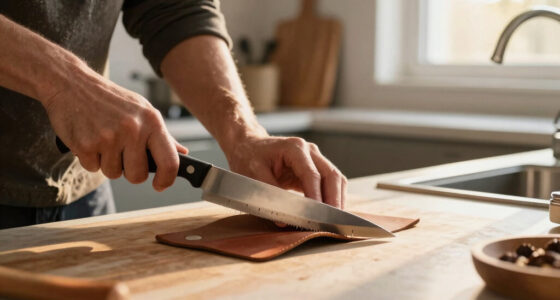
Honing is the process of realigning the tiny microscopic edge of your knife. Think of it like straightening a bent nail — it doesn’t add material, it just puts everything back in place. Over time, every cut, chop, or slice causes the edge to bend or roll slightly, dulling your blade’s effectiveness. Regular honing keeps that edge aligned, making your knife feel sharper and cut cleaner.
Imagine slicing a ripe tomato. When your knife is honed properly, it glides through with minimal pressure, and the skin parts effortlessly. If you skip honing, that same tomato might squish or require more force, even if the blade is still sharp on a visual level. Honing is your routine maintenance, like oiling a bike chain — simple but essential for peak performance. By maintaining the microscopic edge, honing ensures your knife performs at its best and prolongs the interval before you need to sharpen, which involves removing metal. Neglecting honing can lead to a duller, less efficient blade over time, forcing you to sharpen more frequently or risk damaging the edge with improper technique. The importance of honing lies in its ability to prevent micro-damage accumulation—tiny deformations that, if left unchecked, can compound and cause the edge to become more fragile or uneven. Proper honing can therefore extend the overall lifespan of your blade, maintaining its cutting ability and reducing the need for more aggressive sharpening methods that remove significant metal.
As an affiliate, we earn on qualifying purchases.
How to Hone a Knife in 5 Simple Steps
- Choose your honing tool: Steel or ceramic rods work well, but ceramic is gentler and better for fine-tuned honing.
- Hold the rod vertically or at a slight angle—around 15-20 degrees from the surface.
- Place the heel of your knife against the top of the rod, maintaining the right angle.
- Slide the blade down the rod from heel to tip, applying gentle pressure. Repeat 5-10 times per side.
- Check the blade’s feel and performance. Hone more if needed, but don’t overdo it; a few strokes are enough each session.
Imagine gently guiding your knife along the rod, like a dance. Consistency in angle and pressure is key. Practice this with a sense of rhythm, and your blades will thank you. Remember that proper technique prevents micro-damage and ensures that each stroke effectively realigns the microscopic edge without causing unnecessary wear. The goal is to keep the edge straight and aligned, not to remove metal, which is what sharpening does. Regular, careful honing preserves your blade’s longevity and cutting efficiency. It’s a subtle art: too much pressure or incorrect angle can micro-damage the edge, making it more fragile over time, while too little may not effectively realign the edge. Finding the right balance ensures the best results and a longer-lasting, sharper knife.
As an affiliate, we earn on qualifying purchases.
Honing vs. Sharpening: Why They’re Not the Same
| Honing | Sharpening |
|---|---|
| Realigns the existing edge, restoring its straightness and microscopic alignment, which is essential for maintaining cutting efficiency without removing material. This process is crucial because even a slight misalignment can cause the edge to feel dull or catch during cutting, leading to micro-damage and a shorter lifespan of the blade. | Removes metal from the blade to create a new, sharper edge, often used when the blade is dull or damaged beyond simple realignment. Sharpening is more aggressive and can change the geometry of the edge, which is necessary when honing alone no longer restores cutting performance. Over-sharpening, however, can thin the blade excessively and reduce its durability, so understanding when to sharpen is key to maintaining a healthy balance between sharpness and blade longevity. |
| Frequency: every few uses or weekly, depending on usage | When the knife is very dull, nicked, or damaged, requiring a significant metal removal. |
| Tools: Steel or ceramic rods, which gently straighten the microscopic edge | Whetstones, electric sharpeners, or professional services that grind away metal to form a new edge. |
| Effect: Keeps it cutting smoothly by maintaining the edge’s proper alignment | Restores sharpness from dull or damaged blades, often producing a visibly keen edge that slices effortlessly. |
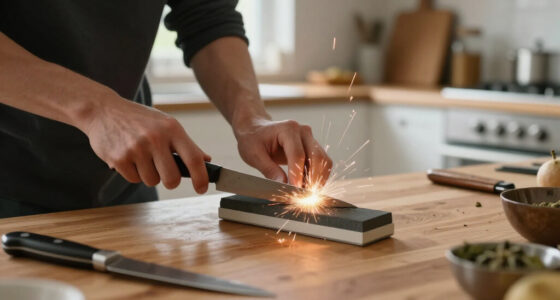
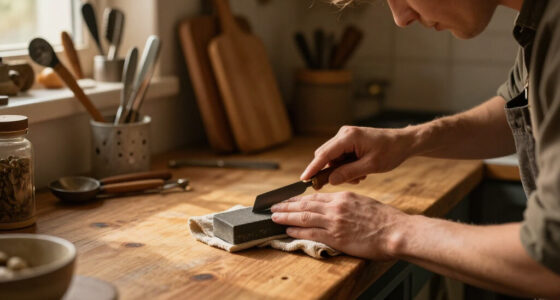
Think of honing as the regular tune-up that keeps your blade aligned and performing well, similar to straightening a bent nail or tuning a musical instrument. Sharpening, on the other hand, is like giving your blade a new, sharper point—necessary when honing can no longer restore the edge. Both are crucial for different stages of blade maintenance, but over-honing can cause micro-damage if done excessively, just as over-tuning a guitar can cause string breakage. Recognizing when to hone versus when to sharpen can extend the life of your knife and ensure optimal performance with each cut. The key distinction lies in their purpose: honing maintains the edge’s integrity, while sharpening renews it entirely. This understanding helps prevent unnecessary wear and ensures your knives stay in prime condition longer, ultimately saving money and effort.
As an affiliate, we earn on qualifying purchases.
Common Mistakes That Wreck Your Knife’s Edge
- Honing at the wrong angle — too steep or too shallow can bend or damage the edge, reducing its effectiveness and potentially causing micro-chipping or dulling. The tradeoff here is that improper angles can cause micro-damage that accumulates over time, weakening the edge’s structural integrity and making subsequent honing or sharpening less effective.
- Over-honing — doing it too often or with excessive force can micro-damage the microscopic edge, leading to a less durable cut and increased wear over time. Excessive honing can create micro-chips or deformities that compromise the edge’s strength and sharpness, necessitating more frequent sharpening or risking blade failure.
- Using a dull or damaged honing rod — a compromised tool won’t realign the edge properly and may cause more harm than good. A worn-out or bent rod can introduce irregularities, micro-damage, or uneven realignment, which shortens the lifespan of your blade and diminishes performance.
- Skipping the right technique — rushing or inconsistent angles reduce effectiveness and can create micro-damage, diminishing the blade’s lifespan and cutting quality. Proper technique ensures the edge is correctly aligned without undue stress, and neglecting this can accelerate dulling or damage, requiring more aggressive maintenance.
Picture trying to straighten a bent wire with a dull or misaligned tool — it’s frustrating and can cause more damage. Proper technique, good tools, and moderation are key. Regular practice helps develop a steady hand, which minimizes mistakes and extends your knife’s life by preventing micro-damage that can accumulate from improper honing. Think of honing as a delicate process: rushing or applying uneven pressure can turn a simple maintenance step into a source of damage, ultimately reducing your blade’s effective lifespan and performance.
As an affiliate, we earn on qualifying purchases.
When to Know It’s Time to Sharpen Instead
If your knife no longer slices paper with ease or tears through tomatoes, honing isn’t enough. When even after regular honing, cuts become ragged or require excessive force, it’s time for sharpening. Dull blades need metal removed to regain their edge, not just realignment. Recognizing these signs helps you avoid unnecessary damage to the blade and ensures you perform the right maintenance at the right time.
For example, a chef’s knife used daily might need sharpening every 6-12 months, depending on use. Regular honing keeps it performing well in between. Think of honing as routine maintenance—like changing oil in a car—while sharpening is like replacing worn-out parts to restore full function. Ignoring these cues can lead to increased effort in cutting, higher risk of accidents, and more frequent replacements, so understanding these signs is crucial for efficient knife care. Overlooking the need for sharpening can cause the blade to become so dull that it requires excessive force to cut, increasing the risk of accidents and damaging the edge further. Conversely, sharpening too frequently without need can thin the blade unnecessarily, reducing its durability. Striking the right balance ensures your knife remains effective and safe to use over time.
Maintaining Your Honing Rod for Best Results
A dull honing rod is like a dull pencil — it won’t do much. Keep your honing steel or ceramic rod clean and dry after each use. Occasionally, lightly buff it with a cloth to remove metal particles or debris. Proper storage in a dry place prevents rust or corrosion, especially on steel rods. If the rod becomes bent, chipped, or shows visible damage, it’s time to replace it because a damaged rod can cause micro-damage to your blade during honing. Regular inspection and maintenance of your honing tool ensure it remains effective, which directly impacts the quality of your honing sessions and the longevity of your knife’s edge. An improperly maintained rod can introduce irregularities during honing, leading to micro-damage that shortens your blade’s lifespan or reduces its effectiveness. Consistent care of your honing tools is a small investment that pays off by keeping your knives performing at their best for longer periods.
Frequently Asked Questions
How often should I hone my kitchen knives?
For most home cooks, honing every 3-4 uses or weekly keeps the edge straight and effective. Adjust based on how often you cook and how dull your knives feel.Can I hone a serrated knife the same way?
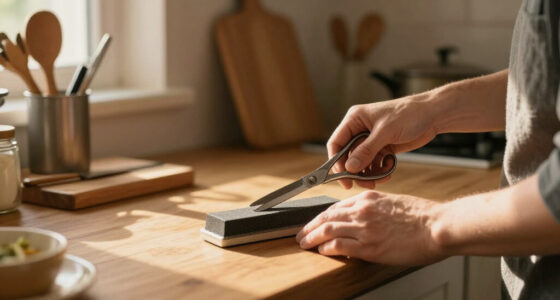
No, serrated knives require special tools and techniques. You typically only hone the plain edge part, and many serrated knives don’t need honing often, only occasional professional maintenance.Is honing really necessary if my knife looks sharp?
Yes. Even a visually sharp knife benefits from regular honing to realign the edge. It maintains cutting performance and prolongs the interval before sharpening becomes necessary.What’s the best angle for honing my kitchen knife?
Most kitchen knives are honed at an angle of 15-20 degrees. Maintaining this consistent angle during each stroke is key to effective honing without damaging the edge.How do I know if I need to sharpen or just hone?
If your knife no longer slices smoothly or requires excessive force, honing isn’t enough. Dull or nicked blades need sharpening, which involves removing metal to restore the edge.Conclusion
Think of honing as the routine tune-up for your knife — quick, simple, and vital. It keeps your blade aligned and ready for whatever kitchen challenge comes next. Don’t overlook this small step; your knives will thank you with every clean cut and effortless slice.Halloween Picks
halloween
As an affiliate, we earn on qualifying purchases.