
TL;DR

Get kitchen gear delivered free — and shop member deals
- Fast, free delivery on millions of items
- Access to Prime Big Deal Days deals on October 6–7
- Prime Video, Amazon Music and more included
A mandoline slicer offers perfect, uniform slices, but safety depends on proper handling and maintenance. Using a hand guard, setting the right thickness, and cleaning carefully cut injury risk and extend your device’s life.
Few kitchen tools deliver the precision of a mandoline slicer—thin, even slices that turn cooking into an art form. But those razor-sharp blades pose a real risk. A moment of distraction can lead to cuts that take weeks to heal. Knowing how to wield this device safely transforms it from a hazard into a kitchen ally.
This guide walks you through the key safety tips, recent innovations making the device safer, and practical tricks to keep your fingers intact. Whether you’re slicing cucumbers for a salad or prepping potatoes for chips, mastering safety means you get perfect results without the drama.
Always use the included hand guard to protect fingers during slicing.
Place your mandoline on a stable, flat surface before starting.
Adjust the thickness setting carefully and move food steadily across the blade.
Disassemble and clean the device carefully, avoiding direct contact with sharp blades.
Modern mandolines include safety features like locks and non-slip bases—choose models with these to reduce risk.
Know Your Mandoline: The Key Safety Features You Need to Use
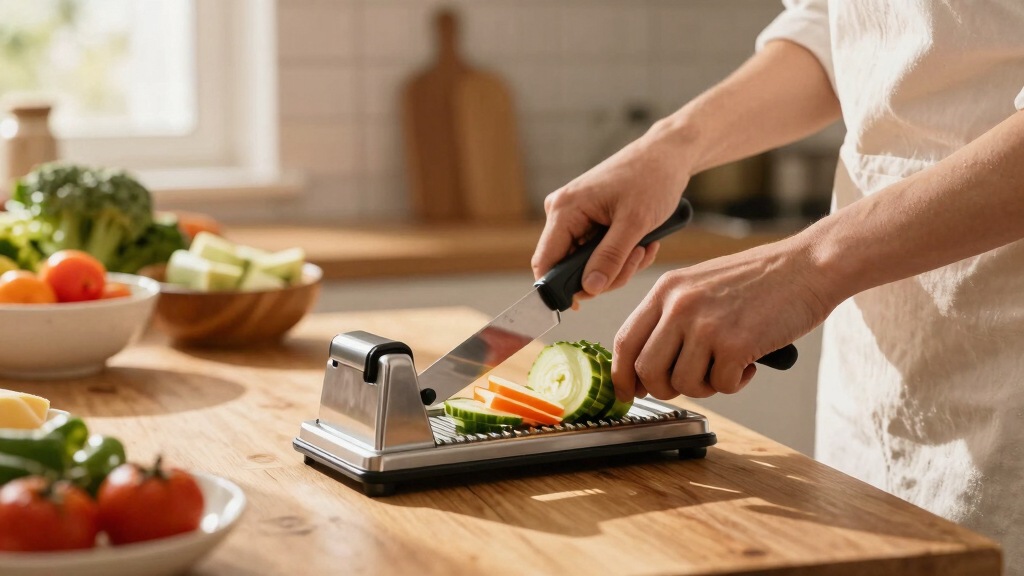
A mandoline slicer is a tool designed for uniform slicing of produce, often with adjustable blades. The most important safety features include a hand guard, a non-slip base, and a blade cover. These elements work together to protect your fingers and keep the device stable.
For example, a sturdy hand guard with prongs grips your food tightly, preventing slips. A non-slip base keeps the slicer from sliding during use—imagine slicing a slippery zucchini on a wobbly countertop. Familiarizing yourself with these features before slicing is crucial because each component plays a role in reducing specific risks. The hand guard prevents accidental finger contact, the non-slip base ensures stability to avoid slips, and the blade cover minimizes accidental cuts when the device is not in use. Neglecting these features can lead to slips, uneven slices, or injuries, especially when applying force or slicing tricky produce. Understanding their purpose helps you leverage safety benefits fully, making your slicing safer and more efficient.
Deeply understanding how these features function allows you to make better decisions during use. For instance, knowing that a good hand guard not only protects but also helps maintain consistent pressure can improve your slicing quality. Recognizing that a non-slip base is critical when applying force on hard vegetables prevents wobbles that could cause slips. Appreciating the purpose of a blade cover ensures you handle the device safely during cleaning and storage, reducing accidental cuts. This comprehensive awareness transforms your operation from merely following instructions to mastering the nuances that make your slicing safer and more effective.
mandoline slicer with safety features
As an affiliate, we earn on qualifying purchases.
As an affiliate, we earn on qualifying purchases.
3 Simple Steps to Slice Safely with Your Mandoline
- Place the slicer on a flat, stable surface—avoiding cluttered or uneven counters. A stable base prevents wobbling, which can cause slips or uneven cuts that might lead to injury. This stability is fundamental because it directly impacts your control over the device; an unstable surface increases the likelihood of sudden movements that could result in cuts.
- Use the hand guard to grip your produce, keeping fingers well away from the blade. The guard not only shields your fingers but also helps maintain a consistent pressure and angle during slicing, which improves the uniformity of your cuts. Proper use of the guard reduces the temptation to get closer to the blade out of frustration or haste, thereby minimizing risk.
- Adjust the thickness setting carefully, then move the food steadily across the blade, applying even pressure. Consistent pressure and correct setting are crucial because uneven force can cause slips or jamming, leading to potential injuries or uneven slices. Taking the time to set the right thickness ensures that your slices are uniform, which is especially important for presentation and cooking consistency.
Imagine slicing a firm sweet potato for chips. You start by cutting it into manageable chunks, secure each piece with the guard, and glide smoothly across the blade. Each step not only improves the quality of your slices but also significantly reduces hazards. Rushing or neglecting any of these steps increases the risk of slips or cuts. By understanding the purpose behind each step, you develop a safer, more controlled slicing technique that produces better results with less risk.
Deeply understanding the implications of each step—like how a slight misalignment can cause uneven slices or how applying uneven pressure increases slip risk—empowers you to adapt techniques for maximum safety and efficiency. This mindfulness turns a routine task into a safer practice, ensuring you protect your fingers while achieving perfect slices.
best mandoline slicer with hand guard
As an affiliate, we earn on qualifying purchases.
As an affiliate, we earn on qualifying purchases.
How to Clean and Maintain Your Mandoline Without Cutting Yourself
Cleaning your mandoline safely requires careful handling of the blades, which are often the most dangerous part. Disassemble the device following the manufacturer’s instructions—usually by removing the blade assembly—so you can access all parts without risking a cut. Use a brush or sponge to clean the blades, avoiding direct contact with sharp edges. Rinse thoroughly to remove residues and dry completely before storage. Proper cleaning prevents rust, which can dull blades and compromise safety, and keeps food residues from contaminating future slices. Regular maintenance, such as sharpening blades and checking for damage, ensures your mandoline remains safe and effective. Neglecting proper cleaning routines can lead to rust, dull blades, or hidden damages that increase injury risk over time. Developing a careful cleaning routine, including disassembly, cautious handling, and inspecting for damage, is essential because dull or damaged blades require more force, increasing the chance of slips or cuts. Additionally, rust or residue buildup can cause unexpected slips or contamination, compromising safety and performance. Taking time to clean thoroughly, handle blades with care, and inspect for damage preserves the device’s integrity, ensuring it remains a safe tool for years to come.
As an affiliate, we earn on qualifying purchases.
Latest Safety Innovations in Modern Mandoline Slicers
Recent models now come with robust safety locks, improved hand guards, and non-slip bases. These innovations are designed to address common safety pitfalls—like accidental blade exposure or slipping during use. For example, safety locks prevent accidental exposure of blades when not in use, reducing the chance of cuts during storage or cleaning. Improved hand guards often feature adjustable prongs or flexible shields that accommodate different food sizes and shapes, providing a more secure grip while keeping fingers away from blades. Non-slip bases ensure stability even on slippery surfaces, preventing wobbling or sliding that could cause injury. Some electric models incorporate automatic shut-offs and safety covers that activate when not in use or during blade adjustments. These advancements are especially beneficial for less experienced users or those with limited hand strength, as they reduce the cognitive and physical load during slicing. By choosing models with these features, you significantly reduce the risk of accidents and make the slicing process safer and more accessible for everyone.
Deeply understanding these innovations reveals their importance: they not only prevent injuries but also make the device more user-friendly, encouraging safer habits. For example, safety locks and covers reduce the mental load of remembering to store blades carefully, while non-slip bases ensure consistent control, especially on slick surfaces. Recognizing the implications of these features helps you select tools that align with your safety priorities, ultimately fostering a safer kitchen environment and empowering even novice users to operate with confidence.
As an affiliate, we earn on qualifying purchases.
What to Do When You Cut Yourself: First Aid and Prevention
If you nick a finger, immediately stop slicing and assess the wound. Rinse with clean water and apply gentle pressure with a clean cloth or sterile bandage to halt bleeding. For deeper cuts that won’t stop bleeding or appear to involve significant tissue damage, seek medical attention promptly. Prevention is the best strategy—always use the hand guard, focus on your technique, and avoid rushing or trying to catch slipping food with your bare hand. For example, if slicing a stubborn root vegetable and your hand slips, the guard acts as a barrier, preventing contact with the blade. Recognizing the early signs of injury—such as pain, bleeding, or swelling—and responding quickly can prevent minor nicks from becoming serious infections or requiring stitches. The key is to act swiftly and calmly, ensuring the wound is cleaned thoroughly and protected. Developing a routine of careful handling, combined with immediate first aid knowledge, minimizes pain, speeds healing, and reduces the risk of long-term scarring. Remember, being prepared with basic first aid skills and practicing safe handling habits creates a safer slicing environment overall.
Quick Comparison: Manual vs. Electric Mandoline Safety Pros and Cons
| Feature | Manual Mandoline | Electric Mandoline |
|---|---|---|
| Safety Locks | Usually basic, rely on user handling; effectiveness depends on user vigilance and proper use | Often include advanced safety features like automatic locks, preventing accidental blade exposure and ensuring safe operation |
| Ease of Use | Requires manual effort and skill; more control but higher physical demand, especially for repetitive slicing tasks | Less effort, with automatic or motorized slicing; reduces physical strain but may introduce complexity in operation |
| Risk of Injury | Higher if not careful, particularly during cleaning or blade adjustments; requires attentive handling | Lower during use due to safety covers and auto-shutoff features, but still requires careful handling during cleaning and maintenance |
| Cleaning | Disassemble carefully, avoid direct contact with blades; more labor-intensive | May be dishwasher safe, but always check instructions; some parts require cautious handling due to electrical components |
Understanding the safety implications of each type helps you make informed choices based on your needs and comfort level. Manual models offer more control but demand greater vigilance, especially during cleaning and blade adjustments, where the risk of injury is higher if you’re not careful. Electric models enhance safety with features like automatic locks and safety covers, reducing the chances of accidental contact but introducing reliance on electrical components that require careful handling. Recognizing these tradeoffs allows you to select a mandoline that aligns with your safety priorities, skill level, and usage habits—ultimately making your slicing experience safer and more satisfying.
Conclusion
Mastering safety with your mandoline slicer turns a potentially dangerous tool into a reliable ally. Focus on using the right safety features, handle blades with respect, and keep your device in good shape. The next perfect slice is just a steady hand away—fingers intact, of course.
Remember: safety isn’t optional. It’s the difference between a quick, satisfying prep and a trip to the ER. Keep your fingers safe, and enjoy the precise, beautiful slices every time you pick up your mandoline.
Halloween Picks
halloween
As an affiliate, we earn on qualifying purchases.