
TL;DR

Get kitchen gear delivered free with Prime
- Fast, free delivery on millions of items
- Prime Video, Amazon Music and more included
- Member-only deals all year
Mylar bags create a moisture- and light-proof barrier, while oxygen absorbers remove oxygen inside. Together, they extend food shelf life up to 25 years, making them essential for long-term storage. Proper use involves selecting the right size, sealing tightly, and storing in cool, dark places.
Ever opened a bag of dried beans or grains that still tastes fresh after years in storage? That’s the magic of Mylar bags paired with oxygen absorbers. They’re the secret weapon in the off-grid kitchen, emergency prep, and long-term storage.
In this guide, you’ll learn how these tools work, why they’re so effective, and how to get the most out of them. Whether you’re storing bulk staples or prepping for uncertain times, understanding this duo puts you in control of food security.
Use the right size oxygen absorber for your bag volume to ensure effective oxygen removal.
Proper sealing and storing in a cool, dark place are critical for maximum shelf life.
Mylar bags and oxygen absorbers can preserve dried foods for up to 25 years when used correctly.
Avoid common mistakes like leaks, wrong absorber size, and warm storage environments.
They’re versatile tools suitable for grains, dried herbs, and emergency supplies, but not for liquids or perishables.
Mylar Bags and Oxygen Absorbers, Explained
TL;DR: Mylar bags create a moisture- and light-proof barrier, while oxygen absorbers remove oxygen inside. Together, they can extend dry food shelf life up to 25 years when sealed tightly and stored cool, dry, and dark.
Barrier outside. Oxygen removal inside. Decades of pantry control.
The duo works because each part solves a different problem: Mylar blocks light, moisture, pests, and air transfer; absorbers reduce residual oxygen to slow oxidation, mold, insects, and nutrient loss.
The two-part preservation system
Long-term dry storage works best when the package protects food from the outside world and the inside air is stripped of oxygen before the seal is finished.
Mylar bag
Metallized polyester film blocks light, moisture, oxygen transmission, and pests. Thicker bags improve puncture resistance in basements, sheds, buckets, and busy pantries.
Oxygen absorber
Iron powder reacts with oxygen inside the sealed bag, creating an environment that slows oxidation, mold growth, insect activity, flavor loss, and nutrient degradation.
Hermetic storage
A tight heat seal plus cool, dry, dark storage keeps the preservation environment stable for years. Even tiny leaks can reset the clock in the wrong direction.
What to use, what to avoid
Mylar and oxygen absorbers are powerful, but they are designed for dry, shelf-stable foods. Liquids and perishables still need other preservation methods.
| Storage item | Mylar fit | Oxygen absorber | Why it matters | Risk note |
|---|---|---|---|---|
| Dried rice, beans, grains | ✓ Excellent | Use correctly sized packet | Low moisture plus oxygen removal supports very long shelf life. | ~ Protect from heat |
| Freeze-dried fruit or vegetables | ✓ Excellent | Recommended | Maintains flavor, texture, color, and nutrition over long storage windows. | ~ Avoid crushed pieces |
| Dried herbs and spices | ✓ Strong | Useful for longer storage | Light and oxygen protection helps retain aroma and potency. | ~ Volatile oils fade |
| Liquids, fresh food, perishables | ✗ Poor fit | Not appropriate | Moisture and spoilage biology require refrigeration, canning, freezing, or drying first. | ✗ Safety risk |
Seal sequence for reliable storage
Work quickly once absorbers are exposed to air. The goal is simple: match the absorber, remove excess air, seal fully, then store where heat and light cannot do damage.
Choose food
Use dry, shelf-stable staples such as rice, beans, pasta, grains, herbs, or freeze-dried foods.
Match size
Use about 200cc for quart bags and larger absorbers up to 3000cc for large gallon-sized bags.
Add absorber
Place the packet in the filled bag and limit open-air exposure so it keeps working inside the package.
Heat seal
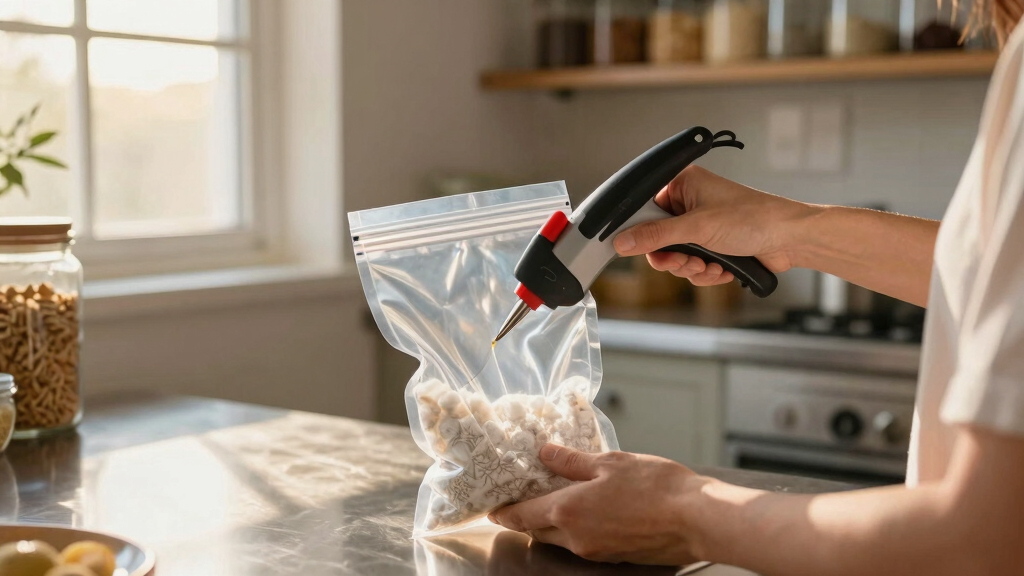
Press out excess air, seal with a heat sealer or hot iron, and inspect the seam for holes or gaps.
Store smart
Keep bags in a cool, dry, dark place, ideally protected inside buckets or bins against punctures.
The shelf-life equation
Each control layer removes a spoilage pathway. Better barrier quality, correct absorber sizing, and cooler storage all compound into longer usable life.
Oxygen control target
Oxygen absorbers can reduce oxygen inside the sealed package to less than 0.1%, creating an anaerobic environment that helps suppress oxidation, mold, insects, and quality loss.
Traceability chain
Think of every stored bag as a linked system. A weak link, especially a bad seal or hot storage location, can undo the rest of the work.
Reader questions, answered fast
The most common failures come from undersized absorbers, weak seals, humid storage, or trying to preserve foods this system was never meant to handle.
How do I choose absorber size?
Match the packet to bag volume and headspace. A quart bag often uses around 200cc, while larger gallon-sized bags can require up to 3000cc.
Can I reuse them?
Oxygen absorbers are not reusable once exposed and spent. Mylar bags are generally treated as single-use because opening can weaken or puncture them.
How do I know the seal worked?
Inspect the seam for full contact, no wrinkles, no pinholes, and no loose corners. A failed seal allows oxygen back inside.
Where should bags be stored?
Choose a cool, dry, dark location. Heat and humidity accelerate spoilage reactions even when the packaging system is otherwise correct.
What Are Mylar Bags and Why Are They Perfect for Storage?
Mylar bags are made from a shiny, metallic-looking polyester film—think of it as a super-strong, reflective shield for your food. They resist moisture, light, and oxygen transmission, which are the three biggest enemies of preserved foods.
Imagine sealing dried pasta or freeze-dried strawberries in a bag that blocks out the sun and keeps moisture at bay. That’s what makes Mylar bags so popular with preppers and home preservers alike.
For example, a 1-gallon Mylar bag can hold a couple of pounds of rice, keeping it fresh for decades if sealed properly. Their durability means they won’t easily tear or puncture, especially with the right handling.
Choosing the right material and thickness is crucial—thicker bags provide better protection against punctures and environmental factors, reducing the risk of spoilage over long periods. This durability is especially important when storing in less controlled environments, like sheds or basements, where physical damage or temperature fluctuations can occur. The upfront investment in quality bags pays off by maintaining food integrity over decades, preventing waste and ensuring your food remains nutritious and safe.
Mylar bags for long-term food storage
As an affiliate, we earn on qualifying purchases.
As an affiliate, we earn on qualifying purchases.
Oxygen Absorbers: Small Packets, Big Impact
Oxygen absorbers are tiny packets filled with iron powder that react with oxygen and remove it from inside the bag. They’re like tiny rusting agents that clean the air, leaving behind a vacuum-like environment.
When you open a new packet, you might see a color change—usually from pink to a dull gray—indicating it’s absorbed most of the oxygen. Proper sizing is key: a 300cc absorber is perfect for a quart-sized bag, while larger packages suit bigger volumes.
Why does this matter? Oxygen is a primary catalyst for spoilage, mold growth, and nutrient degradation. Removing it slows down these processes dramatically. For example, dried beans stored with an oxygen absorber can retain their texture, flavor, and nutritional value for much longer than those stored without. The tradeoff is that if the absorber is too small, residual oxygen can remain, risking spoilage; if too large, it may be unnecessary and costlier. Understanding the oxygen level inside your storage container allows you to optimize shelf life, balancing cost and protection. Properly sized and used, oxygen absorbers are a silent, powerful tool that extends the freshness of your stored foods by creating an environment hostile to decay and pests.
oxygen absorbers for food preservation
As an affiliate, we earn on qualifying purchases.
As an affiliate, we earn on qualifying purchases.
How Mylar Bags and Oxygen Absorbers Work Hand-in-Hand
Mylar bags serve as a physical barrier, blocking external threats like light, moisture, and pests that can compromise food quality. Inside, oxygen absorbers actively remove residual oxygen, creating an environment that halts the typical deterioration pathways.
This synergy is crucial because each component addresses different threats: the bag shields against external factors, while the absorber manages internal ones. This combination effectively extends shelf life far beyond traditional methods. Proper sealing after inserting the oxygen absorber and food ensures no leaks, which is vital because any breach can reintroduce oxygen and spoilage agents. Storing in a cool, dark place further slows enzymatic activity and microbial growth, maximizing preservation. For instance, packing dehydrated vegetables in a Mylar bag with an oxygen absorber and heat-sealing it ensures a near-permanent preservation environment, maintaining flavor, texture, and nutrients for decades. Recognizing this partnership allows you to design storage solutions tailored to your needs, whether for emergency preparedness or long-term pantry planning.
vacuum sealer with Mylar bag compatibility
As an affiliate, we earn on qualifying purchases.
As an affiliate, we earn on qualifying purchases.
Choosing the Right Size and How to Seal Properly
Picking the right size of oxygen absorber depends on your bag volume and intended storage duration. For a quart-sized bag, a 200cc absorber is generally sufficient, but if you’re storing larger quantities or want extra assurance, opting for a bigger absorber ensures residual oxygen is effectively eliminated. For larger, 1-gallon bags, a 3000cc absorber can remove oxygen more thoroughly, reducing spoilage risks. Sealing is just as critical as selecting the right size because even tiny leaks can reintroduce oxygen, undermining your efforts. Using a heat sealer or a hot iron to close the bag tightly is recommended; pressing out excess air before sealing enhances effectiveness. Double-check your seals for holes or tears—any breach can compromise the environment inside. For example, when storing 5 pounds of rice in a 2-gallon bag, selecting a 1500cc or 2000cc oxygen absorber and heat-sealing the bag ensures maximum protection. Proper sealing creates a hermetic environment, which is essential for long-term preservation, especially in fluctuating storage conditions.
food storage oxygen absorber packs
As an affiliate, we earn on qualifying purchases.
As an affiliate, we earn on qualifying purchases.
Common Mistakes That Ruin Your Long-Term Storage
One of the most critical mistakes is not sealing the bag tightly enough. Tiny leaks or improper seals allow oxygen to seep in, which can rapidly accelerate spoilage and negate the effects of the oxygen absorber. This often happens when using inadequate sealing tools or rushing the process. Another common error is choosing an oxygen absorber that’s too small for the volume—leaving residual oxygen that can promote mold, insect activity, or nutrient loss. Additionally, storing bags in warm or humid environments speeds up microbial activity and chemical reactions that degrade food quality. For example, a bag stored under the sink in a humid basement might experience faster deterioration compared to one in a cool, dry pantry. Proper storage conditions—cool, dark, and dry—are essential to maximize shelf life. Recognizing these pitfalls and addressing them ensures your investment in Mylar and oxygen absorbers yields the maximum preservation benefit over the years.
Frequently Asked Questions
How do I choose the right size oxygen absorber for my bag?
Match the absorber to your bag’s volume: about 200cc for a quart-sized bag and up to 3000cc for large gallon-sized bags. Using the correct size ensures all oxygen is removed, preventing spoilage.
Can I reuse Mylar bags or oxygen absorbers?
Mylar bags are generally single-use because they can be punctured or weakened during opening. Oxygen absorbers are not reusable once they have absorbed oxygen; they lose effectiveness and should be replaced for each new batch.
Are Mylar bags safe for all types of foods?
Yes, when using food-grade Mylar bags, they are safe for most dried, non-perishable foods. Avoid storing liquids or foods that require refrigeration in these bags.
How do I know if an oxygen absorber is still effective?
Some absorbers change color when saturated—usually turning from pink to gray. Others need a small scale or indicator. Always replace saturated absorbers to maintain oxygen removal.
What are the main limitations of Mylar bags and oxygen absorbers?
The main limits are their unsuitability for liquids, perishable items, or foods that need refrigeration. Also, improper sealing can compromise their effectiveness.
Conclusion
Mastering how to use Mylar bags with oxygen absorbers transforms your food storage from guesswork into a reliable system. It’s a simple, cost-effective way to keep your pantry stocked with nutritious, flavorful staples for decades.
Think of it as installing a tiny, invisible barrier that guards your food against spoilage, pests, and time itself. Your future self will thank you for the extra shelf life, flavor, and peace of mind.
Columbus Day / Indigenous Peoples' Day Picks
long weekend sales
As an affiliate, we earn on qualifying purchases.