
TL;DR
Open a free Amazon Business account
Business pricing, bulk buying and tax-exempt orders.
Create a free accountAs an affiliate, we earn on qualifying purchases.
Making jam without commercial pectin is straightforward once you balance fruit pectin, acid, and sugar. Using high-pectin fruit and proper cooking tricks, you can create your own stable, flavorful preserves with just simple ingredients.
Imagine a jar of homemade jam that’s thick, glossy, and bursting with fresh fruit flavor—all without a single drop of commercial pectin. It’s more doable than you might think. You don’t need fancy ingredients or complicated processes—just a good understanding of how fruit, sugar, and acid work together to form a gel.
If you’re tired of relying on store-bought pectin and want to craft your own preserves that reflect your local bounty, this guide is for you. You’ll learn how to select the right fruit, balance ingredients, and cook with precision. The result? Jams that set naturally and taste like the fruit itself, pure and vibrant.
Choosing high-pectin fruit or pairing low-pectin fruit with citrus or apples is key for natural gelling.
Balancing fruit, sugar, and acid is essential—too little of any weakens the gel, while proper cooking concentrates these ingredients.
Recognizing the gel point through temperature and visual cues prevents over- or under-cooking.
Reprocess runny jam in small batches with added acid or pectin sources; avoid overcooking to prevent rubbery textures.
Follow tested canning recipes and safety practices, even when making jam without commercial pectin, to ensure shelf stability.
How to Make Jam Without Commercial Pectin
Most fruit contains enough natural pectin to gel jam if combined with the right acidity and cooked properly — eliminating the need for packaged pectin. Balance fruit pectin, acid, and sugar, cook to the gel point, and you get thick, glossy preserves that taste like the fruit itself.
Know Your Fruit’s Pectin Level
Pectin concentrates in fruit skins, cores, seeds, and citrus pith — and declines as fruit ripens. Choose slightly underripe or peak-tartness fruit, and pair low-pectin berries with apples, currants, or citrus to boost gelling power.
| Pectin Level | Fruits | Jam Strategy |
|---|---|---|
| ● High | Tart apples, crab apples, quinces, currants, gooseberries, cranberries, citrus peel | Gel easily on their own — need minimal added acid or pectin support |
| ● Moderate | Blackberries, raspberries, plums, apricots | Usually reliable; blend ripe with underripe fruit for best results |
| ● Low | Strawberries, cherries, peaches, pears, blueberries, figs | Pair with apples, currants, citrus pith, or apple-pectin extract |
The Three-Part Gel Balance
When fruit, sugar, and acid combine correctly, they create a natural mesh that traps water and forms a firm, spreadable consistency. Weakness in any one leg weakens the whole gel.
Fruit Pectin
Use high-pectin fruit or pair low-pectin berries with citrus peel or tart apples. Mixing 3 parts ripe fruit with 1 part underripe balances flavor and gelling power.
Acid
Lemon juice helps pectin molecules bond and brightens flavor. A good rule: 1 tablespoon per pound of fruit. Bottled lemon juice offers standardized acidity for tested recipes.
Sugar
Sugar draws water out and supports gel formation. Traditional recipes use 50–60% sugar by fruit weight. Cutting back weakens the gel and shortens shelf life.
The Method, Step by Step
Cook rapidly in a wide, heavy-bottomed pan and work in small batches — doubling a recipe often prevents proper setting. Texture tests are more dependable than the clock.
Prepare & Measure
Follow a tested no-pectin recipe; measure fruit, sugar, and acid precisely.
Dissolve Sugar
Combine in a wide, nonreactive pan; heat gently until sugar fully dissolves.
Boil Hard
Reach a vigorous boil, stirring frequently to prevent scorching.
Hit Gel Point
Cook to ~220°F / 104°C; verify with temperature, sheet, and wrinkle tests.
Jar & Process
Skim, fill hot sterilized jars; water-bath process 10–15 min, adjusted for altitude.
Finding the Gel Point
Too little heat means runny jam; too much means rubbery or dark. Use more than one indicator — and take the pan off the heat while running a cold-plate test.
Temperature
At sea level, jam gels near 220°F — about 8°F above your local boiling point. Adjust for altitude: find your local boiling point first.
Sheet Test
Lift a cool metal spoon: near the gel point the liquid falls in a connected sheet, not separate watery drips.
Wrinkle Test
Drop jam on a chilled plate, wait, push with a finger. A finished jam wrinkles and doesn’t flood back together.
Troubleshooting Your Batch
Patience and small adjustments often rescue a failed batch. Note: jam continues to firm as it cools — some runny jams fully gel within 48 hours.
Didn’t Set
Usually undercooked, or short on pectin, acid, or sugar. Reheat in a small pan, simmer briefly, and retest. A splash of lemon juice or apple juice concentrate can boost pectin activity. Wait up to 48 hours before reprocessing.
Overcooked or Too Sweet
Recooking won’t fix overcooked jam. Use it as a glaze or dessert syrup — gentle warming can soften the texture for spreading.
Sugar Not Dissolved
Dissolve sugar fully over gentle heat before boiling to prevent crystal formation in the finished jar.
Gentle Stirring
Stir gently and don’t over-evaporate the water — excess reduction causes separation and tough texture.
Safety First — Then Refine
“No commercial pectin” doesn’t mean “no rules.” A sealed jar isn’t proof of safety — always follow tested boiling-water canning recipes.
Use tested recipes. Process filled jars 10–15 minutes in a boiling-water bath, adjusted for altitude.
Sterilize and fill hot. Underprocessed jars can harbor bacteria or mold — don’t shortcut safety steps.
Inspect before use. Check for leaks, mold, or off-odor; once opened, refrigerate and use within weeks.
Wide, shallow pan for faster evaporation and brighter color.
Small batches only — doubling a recipe often prevents proper setting.
Cook on dry days; humidity slows evaporation and lengthens cooking.
Illustrative relative contribution to gel formation in traditional no-pectin jam.
Frequently Asked Questions
Quick answers to the most common no-pectin jam questions.
Can any fruit become jam without commercial pectin?
Most fruit can gel naturally if you balance pectin, acid, and sugar. High-pectin options like crab apples or quinces are easiest; low-pectin fruit may need citrus peel or apple juice to help the gel.
Can I just leave out packaged pectin in a regular recipe?
No — recipes formulated for commercial pectin depend on its thickening power. Follow a recipe specifically designed for natural gelling.
How do I prevent rubbery or too-stiff jam?
Avoid overcooking or over-sugaring. Use a wide pan for quick evaporation and test the gel point frequently. Rubber jam still works as a glaze or dessert filling.
Fresh or bottled lemon juice?
Lemon juice supplies the acidity that helps pectin molecules bond. Bottled offers standardized acidity — preferable for tested recipes — but fresh works if adequately acidic.
What safety steps ensure shelf-stable jam?
Always use a tested boiling-water canning recipe, sterilize jars, fill while hot, and process for the correct time adjusted for altitude.
What makes fruit naturally pectin-rich and how to pick the best for jam
Fruit naturally contains pectin in its skins, cores, and seeds. High-pectin options include tart apples, crab apples, quinces, currants, gooseberries, cranberries, and citrus peel. These fruits gel easily because they pack enough pectin to form a network when heated with sugar and acid.
For best results, choose fruit that’s slightly underripe or at peak tartness—these have more pectin than fully ripe, overly soft fruit. Combining ripe fruit with underripe helps balance flavor and gelling power. For example, mixing ripe blackberries with a few underripe apples boosts the pectin content without sacrificing sweetness.
Knowing your fruit’s pectin level guides your recipe. High-pectin fruit needs less added acid or pectin, while low-pectin varieties—like strawberries or blueberries—benefit from an acid boost or blending with high-pectin fruit. Testing small batches helps fine-tune your mix.
As an affiliate, we earn on qualifying purchases.
How to combine fruit, sugar, and acid for perfect gel without pectin
The key to gelled jam without commercial pectin is balancing three ingredients: fruit, sugar, and acid. When combined correctly, they create a natural mesh that traps water and forms a firm, spreadable consistency.
1. Pick the right fruit: Use high-pectin fruit or pair low-pectin fruit with high-pectin additions like citrus peel or apples.
2. Add enough acid: Lemon juice is your best friend here. It not only brightens flavors but also enhances pectin bonding. Usually, a tablespoon of lemon juice per pound of fruit is enough.
3. Use the right sugar amount: Sugar helps water evaporate and supports gel formation. Traditional recipes often call for as much as 50-60% sugar by weight of fruit. Cutting back can weaken the gel and reduce shelf life.
Mixing these components thoroughly and cooking in a wide pan speeds water evaporation and concentrates the gel-building ingredients. This ensures your jam thickens properly without added pectin.
As an affiliate, we earn on qualifying purchases.
Cooking your jam just right: hitting the gel point without overdoing it
Cooking jam to the right temperature is critical—too little and it’s runny; too much and it’s rubbery or dark. The goal is reaching that sweet spot near 220°F (104°C) at sea level, or about 8°F above your local boiling point.
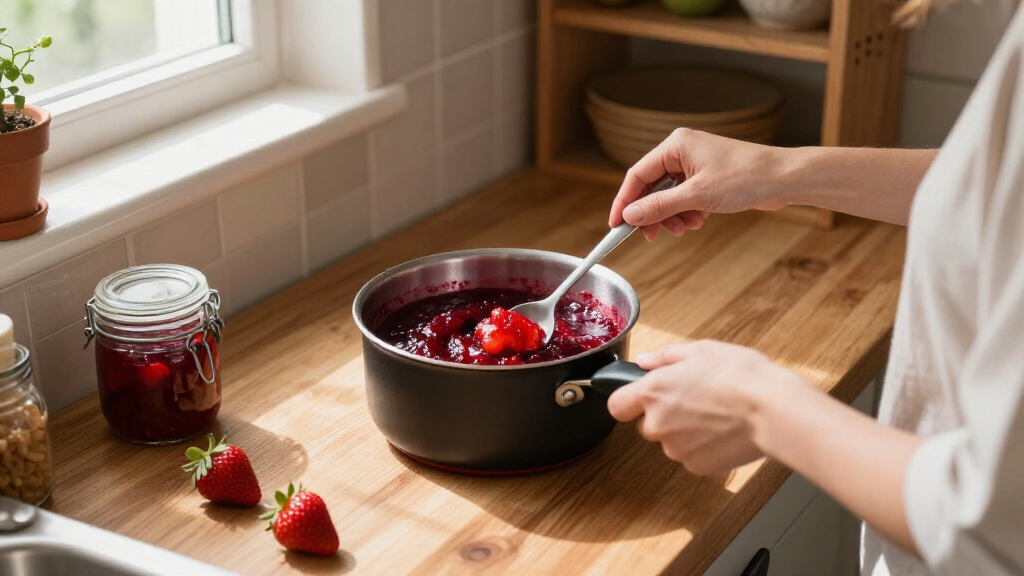
Use a wide, heavy-bottomed pan to promote even heating and evaporation. Stir frequently to prevent sticking or scorching. As the mixture thickens, it will start to sheet off the spoon, cling to the pan, and wrinkle when tested on a cold plate.
Perform multiple tests: the temperature, the sheet test, and the wrinkle test. Small variations in cooking time—often 10 to 20 minutes—can make a big difference in texture and flavor. Remember: the jam continues to firm up as it cools, so don’t overcook in pursuit of a perfect set in the pan.
As an affiliate, we earn on qualifying purchases.
Troubleshooting: what to do when your jam doesn’t set or turns rubbery
If your jam stays runny, it’s usually because it didn’t reach enough pectin, was undercooked, or lacked enough acid or sugar. Sometimes, it just needs more time to gel after cooling—up to 48 hours in some cases.
For a runny batch, reheat the jam in a small pan, simmer briefly, and test again. Adding a splash of lemon juice or a small amount of apple juice concentrate can boost pectin activity. Remember, recooking won’t fix a jam that was overcooked or made with too little pectin in the first place.
If your jam is rubbery, it’s overcooked or had too much sugar. While it’s no longer suitable for spreading, you can use it as a glaze or dessert syrup. Sometimes, warming it gently can soften the texture.
Other issues—like crystals or separation—are solved by dissolving sugar fully, stirring gently, and making sure you don’t over-evaporate the water. Patience and small adjustments often turn a failed batch into a delicious success.
As an affiliate, we earn on qualifying purchases.
Food safety: keeping your homemade jam safe without packaged pectin
Making jam without commercial pectin still requires strict food safety practices. Proper processing and acidity are vital for shelf-stability. Always use tested boiling-water canning recipes for shelf storage.
Ensure jars are sterilized, filled while hot, and processed for the correct time—usually 10–15 minutes—adjusted for altitude. Don’t shortcut safety steps; underprocessed jars can harbor bacteria or mold.
Remember: a sealed jar isn’t proof of safety. Examine jars for leaks, mold, or off-odor before storing. Once opened, refrigerate and use within a few weeks. When in doubt, refrigerate or freeze rather than risking spoilage.
Simple tips to improve your natural jam every time
- Use a wide, shallow pan for faster evaporation and brighter color.
- Test small batches first to avoid large failures.
- Always measure ingredients precisely—especially lemon juice and sugar.
- Cook in a humid environment or on a dry day; moisture affects evaporation.
- Label jars with date and fruit type for easy tracking.
- Don’t skip the cold-plate test—it’s your best indicator of gel readiness.
- Adjust sugar and acid levels based on taste and fruit pectin content.
Frequently Asked Questions
Can any fruit become jam without commercial pectin?
Most fruit can gel naturally if you balance their pectin, acid, and sugar content. High-pectin options like crab apples or quinces are easiest, but with low-pectin fruit, you might need to add citrus peel or apple juice to help it gel.
Can I just leave out packaged pectin in a regular recipe?
No. Recipes formulated for commercial pectin depend on its thickening power. For no-pectin jam, follow a recipe specifically designed for natural gelling, which balances fruit, acid, and sugar accordingly.
How do I prevent my jam from turning rubbery or too stiff?
Avoid overcooking or adding too much sugar. Use a wide pan for quick evaporation and test the gel point frequently. If it’s rubbery, gently warm and use as a glaze or dessert filling instead.
Why is lemon juice necessary, and can I use fresh or bottled?
Lemon juice supplies acidity that helps pectin molecules bond and brightens flavor. Bottled lemon juice offers consistent acidity, which is preferable when following tested recipes, but fresh lemon juice works if its acidity level is adequate.
What safety steps should I follow for shelf-stable jam?
Always use a tested boiling-water canning recipe, sterilize jars, process at the correct time for your altitude, and check seals before storing. Proper processing prevents bacteria, mold, and spoilage, even without commercial pectin.
Conclusion
Making jam without commercial pectin isn’t just possible—it’s a rewarding skill that deepens your understanding of fruit and preservation. Focus on selecting the right fruit, balancing ingredients, and cooking with attention. The result? Bright, firm, intensely flavored preserves that reflect your local bounty.
Next time you’re at the market, pick a handful of tart apples or citrus peel and give it a try. Your pantry will thank you—and so will your taste buds.
College move-in / dorm season Picks
dorm essentials
As an affiliate, we earn on qualifying purchases.