TL;DR

Get kitchen gear delivered free — and shop member deals
- Fast, free delivery on millions of items
- Access to Prime Big Deal Days deals on October 6–7
- Prime Video, Amazon Music and more included
You can make authentic wood-fired pizza at home using portable ovens or DIY setups. Focus on high heat, quality dough, and managing your fire for that perfect char and blistered crust. It’s simpler than you think with the right approach.
Imagine biting into a pizza with a smoky aroma, a blistered crust, and toppings that taste like they just came from a Neapolitan pizzeria. That’s the magic of a wood-fired pizza. But you don’t need a fancy, expensive oven to get that flavor at home. With a little know-how and some basic gear, you can bring that rustic, smoky goodness right to your backyard or off-grid kitchen.
This guide will walk you through every step — from choosing the right equipment to managing your fire and perfecting your dough. Whether you’re a seasoned outdoor chef or just starting out, you’ll find practical tips and real-world examples to help you master the craft of wood-fired pizza making.
A high-quality, long-fermented dough is the backbone of authentic wood-fired pizza.
Reaching and maintaining 700-900°F is crucial for that blistered, charred crust.
Use hardwoods like oak or fruitwoods for cleaner burn and better flavor.
A well-placed, rotating cook process ensures even blistering and crispness.
Safety gear and ventilation are non-negotiable when working with high heat outdoors.
Pick the Right Oven — Portable or DIY? Here’s Your Best Bet
Getting a good fire going in the right oven makes all the difference. You can choose a dedicated portable wood-fired oven, which are now more affordable and easier to set up than ever. Or, if you’re handy, building your own with bricks, clay, or cement is a rewarding challenge.
Portable models like the Ooni or Roccbox heat up quickly and maintain high temps, often reaching 900°F in 20-30 minutes. DIY setups with firebricks and a metal chimney can hit similar temps but require more time and effort to insulate and manage. The key? Your oven needs to get and hold 700-900°F for authentic results. For example, a portable oven’s advantage is rapid heating, making it ideal for quick weekend pizzas, whereas a DIY brick oven offers a deeper understanding of heat retention but demands patience and craftsmanship.
As an affiliate, we earn on qualifying purchases.
Build a Killer Dough — Your Foundation for Perfect Pizza
Great pizza starts with great dough. Use high-quality flour, like 00 flour or bread flour, and give it time to ferment—24 to 72 hours in the fridge develops flavor and chewy texture. Fermentation isn’t just about flavor; it also improves dough extensibility, making it easier to stretch thin without tearing. When you stretch, aim for a thin, even base with a slightly thicker crust. Use your hands—no rolling pins—to preserve air bubbles and texture. This not only creates a light, airy crust but also ensures better blistering in high heat, as the dough can expand rapidly without bursting. For instance, a well-fermented dough can develop a complex flavor profile, with subtle sour notes, that elevates your pizza above store-bought or rushed recipes. The tradeoff? Longer fermentation requires planning, but the payoff is a crust with depth and character that can’t be mimicked quickly.
As an affiliate, we earn on qualifying purchases.
Master the Fire — How to Reach 700-900°F Every Time
Getting your fire hot enough is the secret to that signature char and blistering. Start with hardwoods like oak, maple, or fruitwoods. These woods burn cleaner, produce less soot, and impart subtle, desirable flavors to the crust. Build a small, intense fire in your oven or firepit, then add more wood gradually to sustain high heat—think of it like maintaining a roaring campfire. It usually takes 30-60 minutes to reach 700-900°F, but this can vary based on your setup. Use an infrared thermometer to check your temperature—don’t rely on guesswork, as uneven heat can lead to undercooked or burnt spots. For example, in a backyard brick oven, you might notice hot spots, so rotating the pizza frequently ensures even blistering. Managing the fire isn’t just about reaching high temps; it’s about maintaining consistent heat and controlling airflow, which affects how the crust chars and the toppings cook. A well-managed fire produces a pizza with a perfect balance of smoky flavor and crisp texture, whereas poor fire management can result in uneven cooking or a burnt crust.
As an affiliate, we earn on qualifying purchases.
Cooking Your Pizza — The Step-by-Step Technique for Perfection
- Preheat your oven or fire until it hits 700-900°F. Keep the fire burning and the oven hot.
- Stretch your dough into a thin circle on a floured peel or board.
- Apply toppings sparingly—less is more to prevent sogginess. Think of toppings as accents rather than overwhelming layers, which helps the pizza cook evenly and develop that blistered crust.
- Transfer the pizza onto the hot oven floor or stone, using a peel. Make sure to slide it quickly to avoid deflation.
- Cook for 60-90 seconds, rotating frequently for even char and blistering. The rapid cooking time is crucial because high heat can burn toppings if not watched carefully; rotating ensures even exposure to the intense heat.
- Remove, slice, and enjoy—crisp, smoky, and bursting with flavor.
As an affiliate, we earn on qualifying purchases.
Safety First — Handle Fire and Hot Equipment Like a Pro
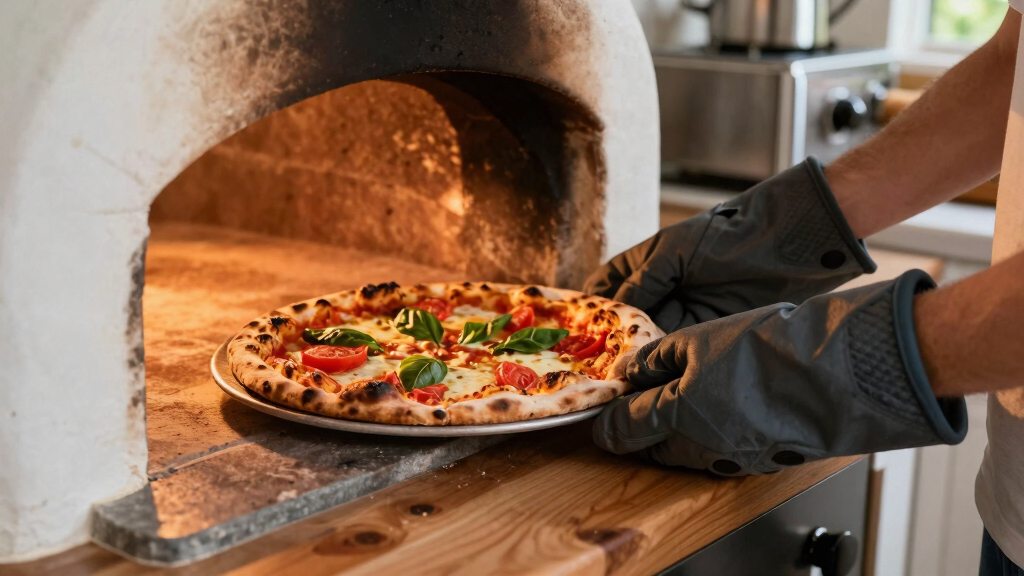
Working with high heat means safety matters. Always wear heat-resistant gloves and keep a fire extinguisher nearby. Use long-handled tools to handle the pizza and manage the fire. Ensure your setup is in a well-ventilated outdoor space, away from flammable materials. For example, never lean over a burning fire without protection, as high temperatures can cause burns quickly. Regularly clean ashes and soot from your oven to keep airflow clear—clogged vents can cause dangerous flare-ups or uneven heating. Never leave a burning fire unattended, and always double-check that the fire is fully extinguished after cooking. Think of safety as the foundation: it allows you to focus on perfecting your pizza without unnecessary risk.
Remember, high heat can be unforgiving, so always respect the fire and equipment to ensure a safe experience that keeps everyone protected.
Latest Trends — What’s New in Home Wood-Fired Pizza
Innovation is making wood-fired pizza more accessible. Compact, portable ovens like the Ooni Karu or Bastille are now common, heating up in 20-30 minutes — great for spontaneous gatherings or small backyards. Insulation tech, such as ceramic blankets or high-temp bricks, improves temperature retention, reducing fuel use and heating time, which means less waiting and more pizza. Hybrid models that combine wood with gas or electric features offer a balance—allowing you to get the smoky flavor with added convenience. For example, some models have gas burners with optional wood chips, giving you control over flavor intensity. New accessories, like infrared thermometers and high-temp stones, help you monitor and optimize your setup, ensuring consistent results every time. These advancements mean more home cooks can experiment confidently, knowing that technology is making high-heat pizza easier and more reliable than ever.
Frequently Asked Questions
Do I need a special oven to make wood-fired pizza at home?
Not necessarily. You can use a dedicated portable oven designed for high temperatures or build a DIY setup with firebricks and a chimney. The key is reaching and holding 700-900°F for authentic results.
What type of wood is best for cooking pizza?
Hardwoods like oak, maple, hickory, or fruitwoods burn cleaner and produce less soot, plus they add subtle flavor to the pizza. Avoid softwoods like pine, which can produce unpleasant smoke and creosote.
How long does it take to heat a home wood-fired oven?
Most setups require 30-60 minutes to reach cooking temperature. Using a thermometer helps ensure your oven hits the 700-900°F range before you start baking.
Can I make authentic Neapolitan pizza at home?
Absolutely. Use high-quality flour, ferment your dough well, and get your oven hot enough. With practice, you’ll get that characteristic blistered crust and smoky aroma.
What are common mistakes to avoid?
Overloading toppings, not preheating long enough, or using low-quality ingredients will hurt your results. Focus on simplicity, patience, and high heat for best pizza.
Conclusion
Mastering wood-fired pizza at home isn’t about fancy gear or secret recipes—it’s about understanding heat, dough, and timing. With patience and practice, you’ll transform simple ingredients into a smoky, crispy masterpiece that rivals any pizzeria.
Next time you fire up your oven, remember: it’s not just cooking—it’s crafting a small piece of Italy, right in your backyard. Keep practicing, stay safe, and enjoy every blistered, bubbling bite.
Halloween Picks
halloween
As an affiliate, we earn on qualifying purchases.