TL;DR

Get kitchen gear delivered free — and shop member deals
- Fast, free delivery on millions of items
- Access to Prime Big Deal Days deals on October 6–7
- Prime Video, Amazon Music and more included
Making matcha traditionally involves high-quality powder, specific utensils, precise water temperature, and vigorous whisking. This guide walks you through each step for a smooth, frothy cup with authentic flavor.
Imagine a vibrant, jade-green cup of tea—the kind that feels like a quiet meditation in a bowl. That’s the magic of making matcha the traditional way. It’s a process rooted in centuries of Japanese culture, blending craftsmanship with mindfulness.
In this guide, you’ll learn how to craft that perfect bowl—step by step—using simple tools and techniques. No shortcuts, no gimmicks. Just you, high-quality matcha, and the quiet rhythm of whisking. Ready to turn your kitchen into a serene tea ceremony?
Why Quality Matcha Matters More Than You Think
High-quality matcha isn’t just about bright color or fancy packaging. It’s the foundation of authentic flavor and health benefits. Ceremonial-grade matcha, made from shade-grown leaves, boasts a vibrant green hue and a rich, umami taste that’s unmistakably fresh.
Using lower-grade or culinary matcha can result in a duller color, bitter taste, and missed health perks. For a true traditional experience, invest in the best you can find—preferably organic and shade-grown.
As an affiliate, we earn on qualifying purchases.
The Essential Tools for a Perfect Matcha
Traditional matcha preparation relies on a handful of simple tools—each playing a vital role.
- Chawan: A wide, shallow bowl that helps whisk air into the tea, creating that signature froth. Its broad surface area allows for efficient whisking and helps develop a creamy foam, which is essential for the sensory experience.
- Chasen: A bamboo whisk designed with dozens of tines to aerate the matcha evenly. The flexibility and shape of the tines determine how well the matcha is frothed, impacting the texture and richness of the final drink.
- Chashaku: A bamboo scoop for precise measurement. Proper measurement ensures consistency in flavor and strength, avoiding overly bitter or weak brews.
- Sifter: To break up clumps and ensure a smooth, fine powder. This step is crucial because clumps can hinder proper mixing, resulting in a gritty texture and uneven flavor.
Using these tools, especially the chasen and chawan, transforms the process into a mindful ritual—more than just making tea, it’s a moment of focus and calm.
As an affiliate, we earn on qualifying purchases.
The Perfect Water Temperature and How to Achieve It
Hot water is the backbone of good matcha. Too hot, and it turns bitter; too cold, and it won’t blend well. The ideal range is about 70–80°C (158–176°F). This temperature range is critical because it balances extraction of flavor compounds without overcooking the delicate chlorophyll and amino acids that give matcha its umami and vibrant color.
To hit that sweet spot, heat your water until just before boiling, then let it sit for a minute or two. Using a thermometer can help, but if you don’t have one, feeling the steam is a good indicator—if it’s gently steaming and not boiling vigorously, you’re in the right zone. This precise control preserves the tea’s nuanced flavors and prevents bitterness or dullness.
Imagine pouring that gently steaming water over the vibrant green powder—it’s the moment when aroma and color burst into life, unlocking the full sensory potential of your matcha.
As an affiliate, we earn on qualifying purchases.
Step-by-Step: How to Whisk Matcha the Traditional Way
- Sift: Place 1 to 2 teaspoons of matcha into your chawan and sift to break up clumps. This ensures a smooth, velvety texture and prevents clumping during whisking, which can compromise the consistency and mouthfeel of your tea.
- Add water: Pour about 2 ounces of hot water (70–80°C).
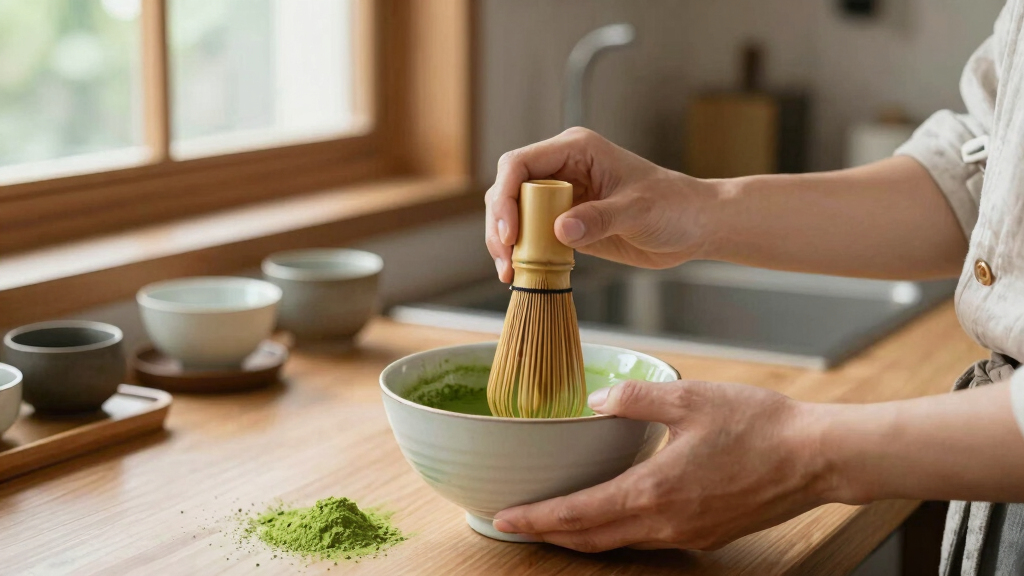
- Whisk: Hold the chasen upright and whisk vigorously in a quick zigzag or ‘M’ shape. Focus on creating a frothy layer with tiny bubbles. The vigorous whisking incorporates air into the tea, giving it a light, creamy foam that enhances the texture and visual appeal.
- Finish: When the surface is frothy and bright green, stop whisking. The tea should be smooth, with a creamy foam on top. This foam is not only aesthetic but also traps aroma compounds, enriching the drinking experience.
Think of it as a dance—your wrist moves in quick, confident strokes, turning simplicity into a lively, velvety foam. The technique is crucial because it influences the final mouthfeel and aroma, which are key to appreciating the full depth of traditional matcha.
As an affiliate, we earn on qualifying purchases.
How to Make Your Matcha Taste Better Every Time
Consistency comes from attention to detail. Use freshly sifted powder, maintain the right water temperature, and whisk with vigor. Here are some practical tips:
- Always sift your matcha before whisking to avoid clumps, which can lead to uneven flavor and gritty texture.
- Use filtered water for a cleaner, purer taste that highlights the tea’s nuanced flavors.
- Whisk briskly for about 20–30 seconds—enough to create a fine foam. Proper whisking not only aerates the tea but also ensures an even distribution of flavor compounds.
- Serve immediately to enjoy the freshest flavor and texture. The foam and aroma are most vibrant right after whisking, so timing is key to a delightful experience.
Imagine the satisfying crackle of the foam, the deep green color, and the rich aroma—each sip a moment of quiet focus. Mastering these small details elevates the entire experience, turning a simple cup into a mindful ritual.
Traditional Matcha in a Modern Kitchen: What Changes?
While the traditional way is rooted in ritual, modern tools can make the process easier without sacrificing authenticity. Electric whisks or small frothers can create a decent foam in seconds. However, these devices often produce a different texture—sometimes less creamy and more airy—due to the absence of the delicate tines of a bamboo whisk. If you’re seeking the authentic experience, manual whisking with a bamboo chasen allows for better control over the froth’s density and richness.
For example, many off-grid enthusiasts use a simple, hand-made bamboo whisk and a ceramic bowl—turning the act into a meditative ritual rather than a chore. This approach emphasizes the mindfulness and craftsmanship inherent in traditional preparation, fostering a deeper connection to the tea.
Ultimately, it’s about respecting the process while adapting to your lifestyle. Using modern tools can be a helpful shortcut, but understanding and appreciating the traditional method enriches the overall experience and preserves cultural integrity.
Savoring Your Matcha: Tips for the Best Experience
Enjoy your matcha immediately after whisking. Take a moment to appreciate the aroma—the umami, grassy scent that fills your senses. Sip slowly, feeling the velvety texture coat your palate. This mindful approach allows you to fully appreciate the complex flavors and the calming ritual.
Pair it with a quiet moment or a simple snack. The ritual of preparing and drinking matcha isn’t just about taste; it’s about creating a mindful pause in your day. Savoring each sip helps deepen your appreciation of the tea’s subtle nuances and the meditative quality of the process.
Key Takeaways for Perfect Traditional Matcha
- Use high-quality, ceremonial-grade matcha for the best flavor and health benefits.
- Sift the powder before whisking to prevent clumps and improve texture.
- Maintain water temperature between 70–80°C for a smooth, bitter-free drink.
- Vigorously whisk in a zigzag or ‘M’ motion until a fine foam forms.
- Serve immediately and enjoy the moment of mindful preparation.
Frequently Asked Questions
What’s the biggest mistake people make when making matcha?
The most common error is using water that’s too hot—boiling water can turn the matcha bitter and dull the flavor. Aim for 70–80°C and sift the powder well to avoid clumps.Can I use a regular whisk or spoon instead of traditional tools?
You can, but the texture and froth won’t be as fine or consistent. A small electric frother can work in a pinch, but for the authentic experience, a bamboo chasen is best.How important is sifting the matcha?
Very important. Sifting breaks up clumps and results in a smoother, creamier foam. It’s a simple step that makes a big difference in the final taste and texture.How long should I whisk the matcha?
About 20–30 seconds of vigorous whisking creates a fine, frothy layer. Watch for tiny bubbles and a bright green, velvety surface—then it’s ready to enjoy.Is there a difference in taste between ceremonial and culinary matcha?
Absolutely. Ceremonial matcha is more delicate, with a richer umami flavor, ideal for drinking straight. Culinary matcha tends to be more robust and is better suited for recipes.Conclusion
Making matcha the traditional way isn’t just about drinking tea—it’s about embracing a mindful ritual that connects you to centuries of Japanese culture. With patience, quality tools, and attention to detail, you craft a vibrant, velvety cup every time.
So, next time you prepare matcha, remember: it’s not just the tea, but the quiet moment you create with each whisk that makes it special. Take a breath, enjoy the process, and savor the green harmony in your hands.
Fall Picks
fall essentials
As an affiliate, we earn on qualifying purchases.