
TL;DR
Grinding meat at home lets you pick fresh cuts, control fat and seasoning, and ensure safety. With the right tools and techniques, you can produce better-tasting, healthier ground meat for any dish.
Imagine slicing into a perfectly cooked burger or meatball that bursts with flavor, all made from meat you ground yourself. No mystery additives, no preservatives—just pure, fresh ingredients with every batch.
Grinding meat at home isn’t just about freshness; it’s about reclaiming control over your food. Whether you’re off-grid, avoiding processed foods, or simply love the craft of cooking, learning this skill makes your kitchen more self-reliant and your meals more satisfying.
Use high-quality, fresh cuts with proper fat content for the best flavor.
Keep your meat and equipment cold—think ice cold—to prevent smearing and bacterial growth.
Manual grinders are perfect for small batches and off-grid setups; electric models handle larger quantities with ease.
Double grinding can improve texture, especially for finer dishes like sausages or meatloaf.
Sanitize all tools thoroughly after each use to prevent foodborne illness.
Pick the Right Meat for Flavor and Juiciness
Start with fresh, high-quality cuts—think chuck, sirloin, or brisket. These cuts bring rich flavor and the right fat content, usually around 15-20%, to keep your meat juicy and tender.
Seek out meat that’s bright red, firm, and cool to the touch. Avoid meat that looks dull or smells off. Remember, quality ingredients make all the difference when grinding at home.
For example, a well-marbled chuck gives a juicy burger, while leaner sirloin works great for lighter meatballs. It’s worth spending a few extra dollars for fresh, local sources when possible.
Choosing the right meat impacts not just flavor but also the texture and cooking versatility of your ground meat. Fattier cuts tend to produce a juicier, more flavorful product, but too much fat can lead to greasy dishes, so balance is key. Leaner cuts may require added fats or moisture to prevent dryness, especially if you’re making sausages or patties. Understanding these tradeoffs helps you tailor your meat selection to your specific recipe and dietary preferences.

Meat Grinder w Tabletop Clamp & 2 Cutting Disks, Cast Iron Heavy Duty Sausage Maker & Manual Meat Mincer- Homemade Burger Patties, Ground Beef & More, Portable Holiday Cooking, Kitchen Essential Gift
Meat Grinder features tabletop clamp for easy and safe use
As an affiliate, we earn on qualifying purchases.
As an affiliate, we earn on qualifying purchases.
Prep Your Meat and Equipment for a Clean Grind
Keeping everything cold is your secret weapon. Chill your meat in the fridge for at least an hour, and do the same with your grinder parts, blades, and plates. Cold meat and equipment prevent smearing and ensure a clean cut.
Cut the meat into 1- to 2-inch chunks—small enough to fit your grinder’s feed tube. This step isn’t just about convenience; it directly impacts the efficiency and consistency of your grind. Larger pieces can clog or strain your grinder, leading to uneven texture or damage over time.
For example, a chunk of meat that’s too large can cause the grinder to jam, forcing you to stop and clean, which interrupts your workflow. Cold is king here—think of it like a firm, cold butter that slices smoothly. This not only preserves the meat’s texture but also reduces the risk of bacterial growth during handling, which is crucial for safety. Proper prep minimizes frustration and maximizes your ability to produce a uniform, high-quality grind.

Electric Meat Grinder, Sausage Stuffer with 3 Sausage Tubes, 2 Blades, 3 Plates, 3200W Max, Meat Grinder Heavy Duty for Home Kitchen Use, Stainless Steel (Black)
【Powerful & Faster】Aiheal meat grinder has a powerful motor (300W, 3200W Max locked power). Helps you take less…
As an affiliate, we earn on qualifying purchases.
As an affiliate, we earn on qualifying purchases.
Choose the Right Grinder: Manual or Electric?
| Manual Grinder | Electric Grinder |
|---|---|
| Affordable, portable, and perfect for small batches. | Faster, handles larger quantities, ideal for frequent use. |
| Requires more effort; best for hobbyists or off-grid setups. | More power, less manual work, but usually more expensive. |
| Durable, often made of cast iron or stainless steel. | Requires electricity, but some models are battery-powered. |
For example, if you’re grinding a few pounds for a weekend burger night, a manual grinder works great. Planning to make sausages in bulk? An electric model might save your arm.
Beyond convenience, your choice impacts your workflow, noise level, and storage needs. Manual grinders are quieter and more portable, making them suitable for off-grid or small-scale use, but they demand physical effort and time. Electric grinders, on the other hand, can process larger batches quickly, freeing you to focus on seasoning or other prep work, but they require electrical access and are generally bulkier. Consider your typical batch size, available space, and willingness to put in manual effort when choosing. The right tool balances your needs with your cooking style, ensuring consistent results without unnecessary hassle.

#12 Stainless Steel Meat Grinder Plate Discs Blades (5/32 Hole Plate)
#12 Stainless Steel Meat Grinder Plate Discs Blades
As an affiliate, we earn on qualifying purchases.
As an affiliate, we earn on qualifying purchases.
Master the Grinding Process in 4 Simple Steps
- Prepare: Keep everything cold. Cut meat into manageable pieces.
- Set up: Assemble your grinder, ensuring blades and plates are sharp and clean.
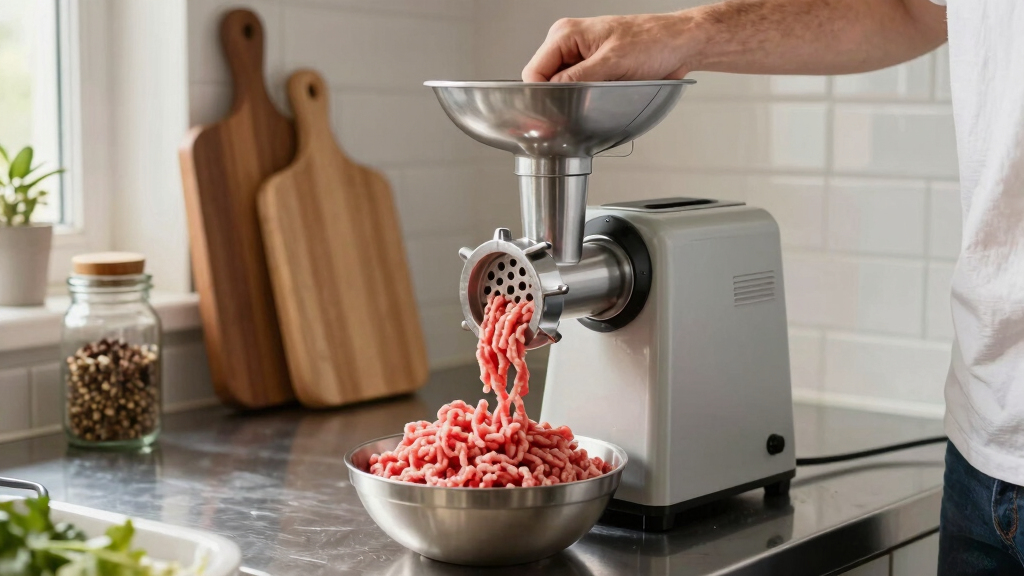
- Grind: Feed meat slowly into the chute, using steady pressure. For finer texture, pass through twice.
- Finish: Store or cook immediately. Keep ground meat below 40°F to prevent bacteria.
Imagine grinding a batch of beef for burgers. You feed the meat slowly, listen to the satisfying sound as it slices cleanly through, then marvel at the rich aroma of freshly ground meat—ready to season and cook.
Mastering these steps ensures your ground meat is safe, consistent, and tailored to your recipe. Rushing or neglecting temperature control can lead to bacterial growth or uneven texture, which might compromise safety and quality. Taking your time, maintaining cleanliness, and paying attention to temperature are investments in both flavor and safety, ultimately elevating your home-cooked dishes to professional standards.

LEM Products Ground Meat Packaging System, Poly Bag Sealer Machine with Tape, 50 Wild Game Meat Bags, Freezer-Ready Packing Kit for Meats, Ground Beef, Deer Processing
Complete Ground Meat Packing Kit: Includes everything to seal freshly ground meat fast—a poly bag tape machine, one…
As an affiliate, we earn on qualifying purchases.
As an affiliate, we earn on qualifying purchases.
Keep It Safe: Temperature, Hygiene, and Storage
The biggest risk when grinding meat at home? Bacterial growth. Always keep meat and equipment cold—below 40°F—during prep and grinding.
Disassemble your grinder immediately after use. Wash all parts with hot, soapy water, then dry thoroughly. Use a sanitized cloth for final wiping. Proper hygiene prevents cross-contamination and reduces the risk of foodborne illnesses, which can be severe if bacteria like Salmonella or E. coli are present. Neglecting sanitation can lead to bacterial transfer from dirty tools or surfaces to your ground meat, potentially causing health issues. Regularly inspecting and replacing worn parts also ensures your grinder functions safely and efficiently. Maintaining these practices not only preserves the quality of your meat but also protects your health and that of your family.
Once ground, store meat in the coldest part of your fridge, and cook within 1-2 days. If you want to keep it longer, freeze in airtight packaging for up to 3 months.
For example, grinding meat on a hot day? Keep everything on ice or in the fridge’s coldest zone. It’s about creating a barrier between bacteria and your fresh meat, ensuring safety from farm to fork.
Understanding the critical importance of temperature control and hygiene practices helps prevent foodborne illnesses, making your home grinding process both safe and reliable. These precautions are essential, especially when handling raw meat, to ensure you enjoy fresh, safe, and delicious results every time.
Flavor Boosts: Seasoning and Custom Blends
Adding herbs, spices, or even small bits of bacon can elevate your ground meat. Season during or after grinding—whichever fits your recipe best.
For example, mixing garlic and thyme into beef before grinding gives your burgers a savory punch. Or, blend in chopped bacon for a smoky, rich flavor.
Experiment with ratios: start with 1 teaspoon of salt per pound of meat, then add herbs to taste. Custom blends let you craft signature dishes tailored to your palate. Understanding how seasonings interact with the meat’s natural flavors allows you to create balanced, harmonious dishes. For instance, over-salting can overpower subtle flavors, while under-seasoning leaves dishes bland. Incorporating herbs and spices not only enhances flavor but can also introduce health benefits—like anti-inflammatory properties from garlic or antioxidants from certain herbs. Developing your seasoning palate and blending techniques enables you to innovate and personalize your ground meat dishes, making every meal uniquely yours.
Frequently Asked Questions
Is it safe to grind meat at home?
Yes, as long as you keep everything cold, sanitize your tools, and refrigerate or freeze ground meat promptly. Proper hygiene minimizes the risk of bacteria.What meat is best for grinding?
Cuts like chuck, sirloin, or brisket work best—rich in flavor and fat. Avoid meat that looks dull or smells off to ensure quality results.Can I grind frozen meat?
It’s best to partially thaw meat first—aim for slightly firm, not fully frozen. This makes grinding smoother and prevents damage to your equipment.How do I clean my grinder properly?
Disassemble all parts and wash with hot, soapy water immediately after use. Dry thoroughly to prevent bacteria growth and keep your tools in top shape.What are some creative ways to flavor ground meat?
Add herbs, spices, garlic, or chopped bacon during or after grinding. Experiment with ratios to craft unique blends tailored to your favorite dishes.Conclusion
Grinding meat at home transforms your kitchen into a craft space where quality rules. It’s a simple skill that boosts flavor, safety, and satisfaction—no more mystery ingredients lurking in store-bought packages.
Now, picture the satisfaction of biting into a burger or sausage made entirely by you—fresh, flavorful, and customized. The next time you shop, pick out your favorite cut, and get ready to take control in a way only a self-reliant cook can.