
TL;DR
Listen free for 30 days with Audible
Thousands of audiobooks and originals — cancel anytime.
Start your free trialAs an affiliate, we earn on qualifying purchases.
Oxygen absorbers chemically remove oxygen for long-term dry storage, while vacuum sealing mechanically reduces air for refrigeration, freezing, and short-term use. Knowing their strengths and limits helps you store food safely and efficiently.
Imagine storing a year’s supply of rice or dried beans. You want it to stay fresh, pest-free, and safe from spoilage. But the method you choose makes a big difference. Two main players dominate home food preservation: oxygen absorbers and vacuum sealers. Each tackles different problems, and understanding their strengths can save you time, money, and food waste.
This guide cuts through the hype. You’ll learn exactly how these tools work, when to use them, and how they can work together—or not. Whether you’re off-grid, prepping for emergencies, or just trying to keep pantry staples fresh longer, knowing the difference helps you make smarter choices.
Oxygen absorbers chemically remove oxygen, making them ideal for long-term dry storage of low-fat, shelf-stable foods.
Vacuum sealing mechanically reduces air, extending freezer life and protecting perishable foods in shorter-term storage.
The quality of packaging material is often more important than the presence of a vacuum—high-barrier films and proper seals matter.
Combining both methods can work but isn’t always necessary; get the packaging right first.
Food safety depends on proper storage conditions; oxygen control alone doesn’t prevent microbial growth in moist foods.
Oxygen Absorbers vs Vacuum Sealing
Oxygen absorbers chemically remove oxygen for long-term dry storage, while vacuum sealing mechanically reduces air for refrigeration, freezing, and short-term use. Knowing their strengths and limits helps you store food safely and efficiently—whether you’re off-grid, prepping for emergencies, or just keeping pantry staples fresh longer.
Two Machines, Two Very Different Jobs
Think of oxygen absorbers as tiny oxygen “traps” that work silently inside a sealed pouch. Vacuum sealers use a pump and heat to squeeze and seal air out of bags. Each solves a different problem—choosing the right one depends on your food type and storage goals.
Oxygen Absorbers
Fine iron particles react with moisture to oxidize, permanently capturing oxygen inside sealed high-barrier packaging. The packet may feel warm while working—this is normal—and the pouch may stay puffy because nitrogen remains.
- Reduces residual oxygen below 0.1%
- Single-use; packet must stay intact and never be eaten
- Effectiveness depends on capacity, seal integrity, and exposure time before sealing
Vacuum Sealing
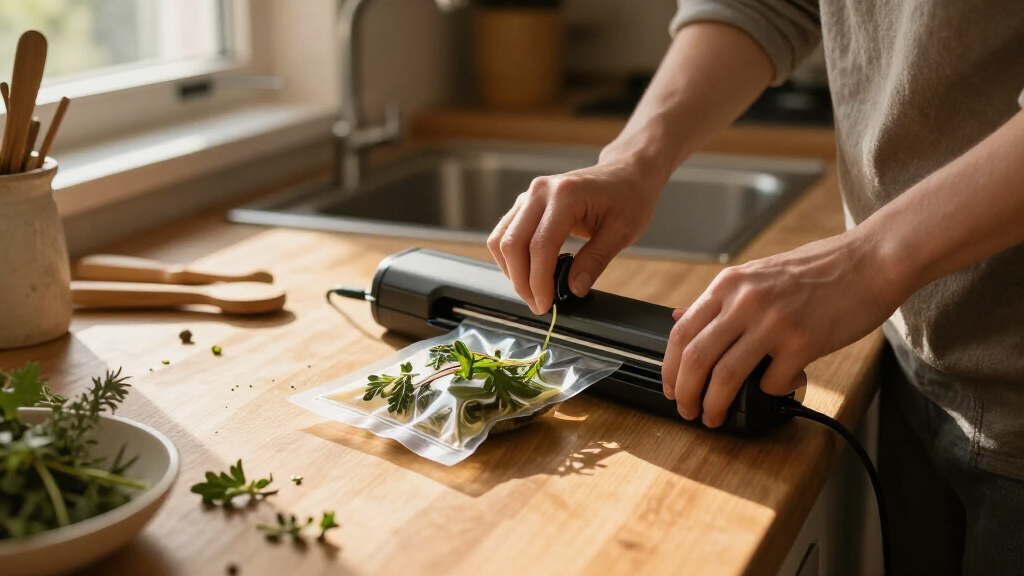
A pump removes most of the air, then a sealing bar closes the package. External-suction sealers are affordable but can draw liquids toward the seal; chamber sealers handle moist foods better but cost more.
- Removes much—but not all—of the air; nitrogen and inert gases remain
- Residual oxygen lingers in porous foods and irregular spaces
- Success depends heavily on the seal and the bag’s oxygen-barrier quality
How Low Can Oxygen Go?
Oxygen absorbers chemically bind oxygen remaining inside a sealed container, reaching levels vacuum sealing alone cannot achieve. This is why absorbers dominate long-term dry storage.
Residual Oxygen Level
Neither method sterilizes food
Oxygen absorbers and vacuum sealers do not remove moisture, reverse spoilage, or make an unsafe food safe. Food safety depends on proper storage conditions—oxygen control alone doesn’t prevent microbial growth in moist foods.
The Side-by-Side Comparison
The quality of packaging material is often more important than the presence of a vacuum—high-barrier films and proper seals matter most.
| Aspect | Oxygen Absorbers | Vacuum Sealing |
|---|---|---|
| How it works | Iron powder oxidizes and captures oxygen | Pump removes air, then heat-seals the package |
| Removes all air? | ✗ Nitrogen and other gases remain | ✗ Removes much, but not all, of the air |
| Best use | ✓ Long-term storage of dry staples | ✓ Freezer, fridge, sous vide, meal prep |
| Moist or oily foods | ✗ Unsafe or unsuitable | ~ Works with refrigeration or freezing |
| Main benefit | Very low residual oxygen | Less air, compact packaging, reduced freezer burn |
| Main weakness | No resealing convenience | Residual oxygen; bags may slowly admit air |
| Equipment cost | Low | Requires sealer + bags |
| Bag appearance | May not visibly collapse | Usually tightens around the food |
| Reusability | ✗ Single-use packets | ✓ Some bags and canisters reusable |
When to Pick Which
Matching the preservation method to your food’s characteristics is the single most important decision for safety and shelf life.
Dry Staples, Years Ahead
White rice, wheat berries, rolled oats, dried beans, pasta, nonfat dry milk, and low-fat flour stored in foil pouches or sealed cans stay shelf-stable for years—sometimes decades.
Perishables, Protected
Meat, fish, cheese, vegetables, leftovers, and coffee stay fresher 3–4× longer in the freezer. Ideal for portioning bulk foods, meal prep, and sous-vide cooking—but never a substitute for cold storage.
Both Together?
Placing an absorber inside a high-barrier pouch, then heat-sealing, gives chemical plus mechanical protection. But vacuuming sharp grains or pasta can puncture bags or hinder the absorber—usually unnecessary for dry foods.
The Long-Term Storage Chain
A common long-term setup combines the right packaging, the right chemistry, and the right conditions—get the packaging right first.
Dry the Food
Use thoroughly dry, low-fat, shelf-stable foods only.
High-Barrier Pack
Foil-laminate pouch, sealed can, or glass jar with sound lid.
Add Absorber
Size the packet correctly; minimize exposure before sealing.
Heat Seal
Tight, complete seal—integrity matters more than a vacuum.
Store Cool & Dark
Years of shelf life, pest-free and oxidation-free.
What’s the main difference between oxygen absorbers and vacuum sealing?
Oxygen absorbers chemically bind oxygen inside sealed containers, creating a low-oxygen environment ideal for long-term storage of dry, shelf-stable foods. Vacuum sealing, on the other hand, mechanically removes most of the air from packaging—mainly for quicker, shorter-term needs like freezing or refrigeration.
Think of oxygen absorbers as tiny oxygen ‘traps’ that work silently, while vacuum sealers use a pump and heat to squeeze and seal air out of bags. Each solves a different problem, and choosing the right one depends on your food type and storage goals.
oxygen absorbers for long-term food storage
As an affiliate, we earn on qualifying purchases.
As an affiliate, we earn on qualifying purchases.
How do oxygen absorbers actually work in your storage system?
Oxygen absorbers contain fine iron particles that react with moisture to oxidize, permanently capturing oxygen. When you place one inside a sealed high-barrier pouch with dry food—like rice or pasta—they effectively lower oxygen levels to less than 0.1%. This makes the environment inhospitable for pests and spoilage microbes.
For example, if you pack dried beans in a foil pouch with an oxygen absorber, the absorber reacts over hours, removing the residual oxygen. The pouch remains puffed initially but is safe for long-term storage without risking mold or insects.
Understanding this chemical process is crucial because it highlights why oxygen absorbers are so effective for dry storage: they actively reduce oxygen to levels that pests and microbes can’t survive. This is a fundamental advantage over passive methods like vacuum sealing, which only remove air mechanically and can’t chemically eliminate oxygen. The implication is that, for long-term dry storage, oxygen absorbers can drastically extend shelf life by creating an environment that actively prevents deterioration and infestation.
vacuum sealers for food preservation
As an affiliate, we earn on qualifying purchases.
As an affiliate, we earn on qualifying purchases.
How does vacuum sealing remove air, and what’s left behind?
Vacuum sealing uses a machine to suck air out of specially designed bags or containers. It creates a tight seal around your food, reducing oxygen, moisture, and air pockets. But it doesn’t remove all gases—nitrogen and other inert gases stay behind. So, a vacuum-packed piece of meat can still contain residual oxygen in tiny spaces or within the food itself.
For instance, vacuum-sealed steaks in the freezer are protected from freezer burn and oxidation, but they’re not completely oxygen-free. Over time, small amounts of oxygen may seep in, especially if the packaging isn’t high-quality or gets punctured.
Understanding this limitation is critical because it means vacuum sealing alone isn’t a foolproof method for long-term dry storage. The residual gases can still support microbial growth if conditions are right, especially in moist environments. The tradeoff is that vacuum sealing is highly effective for short to medium-term preservation, especially with perishable foods, but it doesn’t chemically alter the environment, so oxygen can gradually re-enter through tiny leaks or permeable materials. This is why combining vacuum sealing with other methods, like oxygen absorbers, can sometimes provide an extra layer of protection, especially for longer-term storage or high-value items.
As an affiliate, we earn on qualifying purchases.
When should you pick oxygen absorbers over vacuum sealing?
Oxygen absorbers shine brightest with thoroughly dry, low-fat foods meant for long-term storage. Think rice, dried beans, dehydrated vegetables, and powdered ingredients. If you store these in foil pouches with absorbers, they can last years—sometimes decades—without deterioration.
For example, you might pack wheat berries in a sealed foil bag with an oxygen absorber, then store it in a bucket. The environment stays inert, pests stay out, and your food remains shelf-stable for years.
However, the key here is moisture control. Oxygen absorbers are highly effective because they chemically remove oxygen from a stable, dry environment. If the food contains moisture or oil, the chemical reactions become less predictable, risking spoilage or mold. Therefore, their primary tradeoff is that they are unsuitable for moist or oily foods, which need refrigeration or freezing. The implication for the home prepper is that oxygen absorbers are best suited for carefully prepared, dry, and stable foods. Using them in unsuitable conditions can compromise food safety and shelf life, which underscores the importance of matching preservation methods to food characteristics.
As an affiliate, we earn on qualifying purchases.
When is vacuum sealing your best bet?
Vacuum sealing works well for protecting fresh, perishable foods—like meat, cheese, or cooked leftovers—especially when frozen or refrigerated. It also suits portioning bulk foods, prepping meals, or sous-vide cooking, where precise temperature control is vital.
Imagine sealing a batch of stew in a vacuum bag for quick thawing later or reducing freezer burn on chicken breasts. Vacuum sealing prevents moisture loss and keeps food fresher longer—up to 3-4 times longer in the freezer compared to traditional storage.
However, it’s important to recognize that vacuum sealing doesn’t kill bacteria or fungi. It simply reduces oxygen and moisture, which slows microbial growth but doesn’t halt it entirely. The key implication is that vacuum sealing is most effective when combined with proper refrigeration or freezing. It’s not a substitute for cold storage but a method to optimize existing conditions, making it ideal for short to medium-term preservation of perishable foods.
Can you combine oxygen absorbers and vacuum sealing? Should you?
Yes, you can combine these tools, but it’s usually unnecessary for most dry foods. The typical setup involves placing an oxygen absorber inside a high-quality, high-barrier foil pouch, then sealing it with a heat sealer. This method gives you both chemical oxygen removal and a tight mechanical seal.
For example, some preppers use this combo to store dried grains or herbs in large Mylar bags with oxygen absorbers, then seal them for decades of shelf life. But beware—adding a vacuum may sometimes cause sharp grains or pasta to puncture the bag, or remove too much air, hindering the absorber’s efficiency.
The main tradeoff here is that vacuuming can sometimes create stress on the packaging, leading to punctures or tears, which can allow oxygen in over time. Additionally, in some cases, removing too much air can limit the oxygen absorber’s capacity to function properly. The key implication is that, while combining methods can be beneficial for certain high-value or long-term storage, it requires careful packaging and handling. Properly selecting the right packaging materials and understanding the limitations of each method ensures you don’t inadvertently compromise your stored food’s safety or longevity.
Food safety: what you need to know about oxygen removal and spoilage risks
Reducing oxygen slows many microbial processes, but it doesn’t kill everything. Certain bacteria and fungi thrive in low-oxygen environments if moisture and temperature are right. Clostridium botulinum, for example, can grow in sealed, low-oxygen conditions if foods are moist and stored at room temperature.
This means that even with oxygen removal, some pathogens can still pose a risk if other conditions are favorable. The key implication is that oxygen absorbers are effective only when used with foods inherently resistant to microbial growth, such as dry grains or dehydrated products. For moist, perishable foods, other methods like refrigeration, freezing, or proper canning are essential. Misconception exists that oxygen removal alone guarantees safety, but in reality, it’s just one part of a comprehensive preservation strategy. Always consider the entire environment—moisture, temperature, and packaging integrity—to ensure safety and prevent foodborne illnesses.
Additionally, improper use—such as sealing moist foods with oxygen absorbers—can create anaerobic conditions that favor dangerous bacteria, emphasizing the importance of proper food handling and storage protocols.
Packaging quality matters more than just sealing tight
The best seal in the world won’t help if your packaging material isn’t up to the job. High-barrier films, heavy-duty foil pouches, and properly sealed jars are essential for long-term storage. Cheap, porous plastics or thin bags let oxygen seep in over time, undoing all your efforts.
For example, a shiny Mylar pouch with a proper heat seal can last decades, whereas a regular freezer bag might only last a year or two before oxygen and moisture compromise the food.
Investing in quality packaging isn’t just about durability—it’s about ensuring your preservation efforts are effective over the long haul. The key implication is that inferior materials can render even the best sealing techniques ineffective, leading to food spoilage and waste. Always select packaging with low oxygen transmission rates, and verify that seals are complete and secure. Remember, durability and barrier properties are the foundation of successful long-term preservation.
Choosing the right oxygen absorber capacity for your storage needs
Oxygen absorbers are rated in cubic centimeters (cc) of oxygen they can absorb. Picking the right size depends on your container’s volume, the amount of headspace, and the food’s shape and density.
For example, a 100 cc absorber might work well for a 1-liter pouch of dried oats, but too little for a bulk bin of wheat berries. Slightly overestimating capacity is safer—better to have a little leftover absorption power than to fall short.
Understanding the capacity helps prevent storage failures. If the absorber is too small, residual oxygen can support microbial growth, undermining your preservation effort. Conversely, an excessively large absorber might be unnecessary and costlier, with marginal benefit. The key is to match absorber size to your specific volume and food type, considering potential moisture and oxygen ingress over time. Proper sizing ensures the chemical reaction fully depletes oxygen, maximizing shelf life and safety.
Troubleshooting common failures in preservation
Oxygen absorber failures often happen when packets are exposed to air before use, or if the capacity is too small. Packaging moist foods or using poor-quality bags also causes problems. If an absorber’s packet is swollen or warm, it might have been exposed to moisture or oxygen too long.
Vacuum sealing failures include leaks caused by punctures, wrinkles in the seal, or overfilling. Also, using incompatible or thin bags can lead to oxygen ingress over time.
To minimize failures, always use the correct packaging, handle packets with dry hands, and double-seal when storing for long periods. Regularly inspect stored items for signs of spoilage or packaging compromise, and replace or reseal as necessary. Proper handling and quality materials are the best defenses against common pitfalls.
Shelf-life claims: how long can your food really last?
Long-term storage depends on many factors: food type, moisture, fat content, packaging quality, and storage conditions. While oxygen absorbers and vacuum sealing can extend shelf life, no method guarantees decades without quality loss.
For example, dried grains stored in a foil pouch with an oxygen absorber can often last 10-15 years in a cool, dark place. But oily foods or those with higher moisture content won’t last nearly as long, regardless of the method.
The key implication is that shelf-life estimates are often optimistic unless backed by testing. Overestimating storage duration can lead to unexpected spoilage, waste, and potential health risks. Always consider the specific food characteristics, storage environment, and proper packaging to get realistic expectations about longevity. Regularly check stored items, and rotate stock to maintain freshness and safety.
Latest trends and future directions in food preservation
The landscape is shifting with new technologies. Compact chamber vacuum sealers are becoming more affordable for home use. Active packaging materials that include oxygen-scavenging components are gaining interest, especially for high-value dry foods.
Many companies are developing recyclable, high-barrier films that balance protection with environmental concerns. Increased focus on food safety and proper labeling helps avoid false security. These innovations aim to make preservation safer, more effective, and more sustainable.
For the home prepper or off-grid enthusiast, understanding these trends means choosing better tools and materials that can stand the test of time.
Quick decision guide: what preservation method fits your needs?
- Long-term dry storage: Use oxygen absorbers in foil or metallized pouches. Ensure strong, high-barrier packaging.
- Refrigeration or freezing: Vacuum seal to extend freshness and prevent freezer burn. Keep at consistent cold temperatures.
- Short-term pantry or meal prep: Vacuum seal for convenience and portioning. Use within a year for best quality.
- Moist or perishable foods: Avoid oxygen absorbers; refrigerate or freeze instead. Use tested preservation methods like canning or freezing.
Frequently Asked Questions
Do oxygen absorbers create a vacuum?
No, oxygen absorbers do not create a vacuum. They chemically bind oxygen, which can slightly lower internal pressure but do not remove all gases like nitrogen. The package might not shrink significantly, but oxygen levels drop to safe, low levels.
Which method keeps food fresh longer?
Oxygen absorbers in high-barrier packaging excel for long-term dry storage, often lasting years or decades. Vacuum sealing is more versatile for refrigerated or frozen foods, extending their shelf life but not as long as dry storage with absorbers.
Can I put an oxygen absorber in a vacuum-sealed bag?
Yes, for suitable dry foods, but many regular vacuum bags aren’t high enough barrier for long-term storage. Using oxygen absorbers with high-quality foil pouches often yields the best results. Combining methods isn’t always necessary unless you’re aiming for ultra-long storage.
Are oxygen absorbers safe to touch?
Food-grade oxygen absorbers are safe to handle when intact. They should never be eaten, and if a packet is torn or damaged, discard it immediately. Keep them away from children and pets.
How long after opening should I use an oxygen absorber?
Use them as quickly as possible—ideally within minutes—to prevent exposure to air. If you don’t use the entire packet, store the remaining in an airtight, sealed container to preserve capacity.
Conclusion
Choosing between oxygen absorbers and vacuum sealing isn’t about which is better—it’s about matching the right tool to your food and storage goals. Dry, shelf-stable staples thrive with oxygen absorbers, while fresh or frozen foods benefit from vacuum sealing.
Mastering these techniques means less waste, longer shelf life, and more confidence in your food storage system. Remember, the best preservation method is the one that suits your food, your space, and your skill.
Labor Day sales Picks
labor day deals
As an affiliate, we earn on qualifying purchases.