TL;DR

Get kitchen gear delivered free — and shop member deals
- Fast, free delivery on millions of items
- Access to Prime Big Deal Days deals on October 6–7
- Prime Video, Amazon Music and more included
Storing coffee beans in airtight, opaque containers in a cool, dark place keeps them fresh longer. Buying small quantities and using specialized storage options can extend flavor. Proper storage can preserve quality for up to 2-4 weeks.
Store coffee beans in airtight, opaque containers to block oxygen and light.
Keep beans in a cool, stable environment—avoid heat and temperature swings.
Moisture is the silent destroyer; always use sealed, dry storage options.
Freezing can help preserve beans if done correctly, but isn’t necessary for daily use.
Buy smaller quantities regularly to enjoy beans at their peak flavor.
Keep Coffee Beans Fresh From Roast to Rich Brew
TL;DR: Store whole coffee beans in airtight, opaque containers in a cool, dark, dry place. Buy smaller quantities, grind only before brewing, and use freezing only for sealed long-term portions. Proper storage helps preserve flavor for about 2-4 weeks, but it cannot bring stale beans back.
Beans are most vibrant soon after roasting, before oxidation dulls aroma and oils.
Good storage can stretch quality, especially for whole beans in sealed containers.
Freshness is protected by blocking air, light, heat, and moisture before they flatten flavor.
Main driver of stale, papery flavor.
Blocks light and protects aromatic oils.
Cool, stable storage slows degradation.
Humidity invites mold and off-flavors.
Frequent purchases beat bulk exposure.
The Four Freshness Enemies
Fresh coffee is fragile because beans are porous and aromatic oils are reactive. The storage goal is simple: reduce contact with oxygen, light, heat, and moisture while keeping daily access practical.
Seal out oxygen
Oxygen speeds oxidation, breaking down oils and aromatic compounds. Use an airtight container, ideally with a one-way degassing valve for freshly roasted beans.
Choose opaque storage
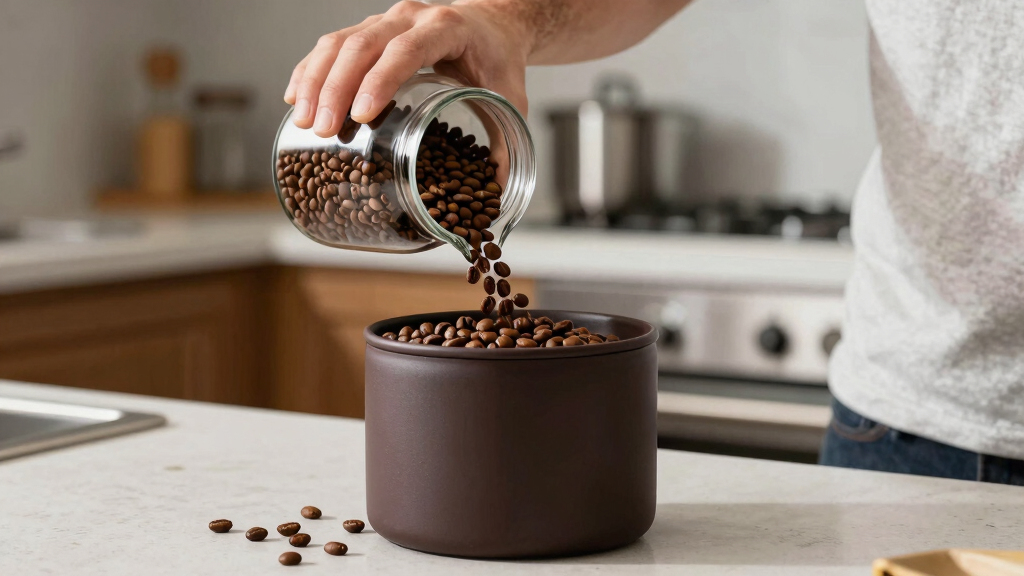
UV exposure triggers photo-oxidation. Ceramic, stainless steel, or dark glass containers protect beans better than clear jars left on a counter.
Keep temperature stable
Heat and temperature swings stress oils and cell structure. A shaded pantry or cellar works better than a spot near a stove, window, oven, or heat vent.
The Freshness Flow
Think of storage as a chain. Each step removes one common cause of dull, bitter, flat coffee before it can reach your brew.
Buy whole beans
Whole beans expose less surface area than ground coffee.
Transfer fast
Move opened bags into sealed storage with minimal air contact.
Block light
Use opaque containers or keep clear jars inside a cabinet.
Keep dry
Avoid steam, condensation, humid basements, and wet scoops.
Brew promptly
Use daily beans within the peak window whenever possible.
Storage Method Comparison
The best container depends on how often you brew, how much you buy, and whether you need daily access or longer backup storage.
| Method | Air Control | Light Control | Moisture Risk | Best Use | Verdict |
|---|---|---|---|---|---|
| Opaque airtight canister with valve | ✓ Excellent | ✓ Excellent | ✓ Low | Daily beans after opening | ✓ Best everyday choice |
| Stainless steel or ceramic sealed jar | ✓ Strong | ✓ Strong | ✓ Low | Pantry storage | ✓ Reliable |
| Clear glass jar in dark cabinet | ~ Depends on seal | ~ Good if hidden | ✓ Low | Small batches | ~ Acceptable |
| Original opened coffee bag | ~ Limited | ~ Depends on bag | ~ Moderate | Very short-term use | ~ Better if clipped tight |
| Fridge storage | ~ Variable | ✓ Dark | ✗ High | Not recommended | ✗ Moisture and odor risk |
| Vacuum-sealed freezer portions | ✓ Excellent | ✓ Excellent | ~ Risk if thawed wrong | Long-term backup | ✓ Good with care |
Freshness Data at a Glance
Proper storage slows the slide, but the clock still starts at roast. The smartest approach is to protect beans and buy only what you can enjoy soon.
Freshness Protection Impact
Relative importance score based on common storage risks: oxygen, light, heat, moisture, and time.
Flavor Window After Roasting
1-2 weeks: peak complexity. 2-4 weeks: good flavor with proper storage. After that, beans may still brew coffee, but brightness and aroma usually fade.
Freezing: useful, not casual
Freeze only in small, vacuum-sealed portions. Remove what you need, let it warm before opening, and avoid repeated thaw-refreeze cycles that create condensation.
Modern storage trends
- Degassing valves release carbon dioxide without pulling oxygen inside.
- UV-protective coatings shield delicate oils from light damage.
- Smart containers monitor humidity, temperature, and freshness signals.
- Small-batch buying reduces the need for long-term storage altogether.
Traceability: From Bean to Brew
Each protective choice connects directly to a flavor outcome. Keep the chain intact and every cup has a better chance of tasting vivid, sweet, and aromatic.
Less oxygen
Slower oxidation and fewer stale notes.
Less light
Protected oils and cleaner aromatics.
Less heat
Stable structure and slower flavor loss.
Less moisture
Lower mold risk and cleaner storage.
Grind later
Less exposed surface area before brewing.
Better brew
More aroma, sweetness, and complexity.
Why Air Is the Enemy of Fresh Coffee — and How to Block It
Air is coffee’s biggest foe. When beans are exposed to oxygen, they undergo oxidation, which accelerates the breakdown of aromatic compounds and oils. This process not only causes staleness but also diminishes the complex flavors that make each coffee unique. Think of it like an apple turning brown—the same process happens with coffee, leading to a duller taste and loss of freshness. To combat this, use airtight containers equipped with one-way valves. These valves are crucial because they allow gases like carbon dioxide, released by freshly roasted beans, to escape without letting oxygen in. This balance prevents the buildup of gases that can cause off-flavors and delays oxidation. The tradeoff here is that while these containers extend freshness, they don’t stop staling entirely—so timing your use is still essential. For example, a stainless steel canister with a rubber seal and a venting valve maintains the optimal environment, ensuring your beans stay vibrant longer. Avoid leaving beans in open bags or flimsy jars, as they expose the beans directly to oxygen, speeding up flavor degradation. Transferring a small amount into a dedicated container immediately after opening minimizes air contact and preserves the beans’ nuanced profile.
airtight opaque coffee storage container
As an affiliate, we earn on qualifying purchases.
As an affiliate, we earn on qualifying purchases.
Keep Coffee Beans in the Dark — Why Light Spoils Flavor
Light, especially ultraviolet rays, can be just as damaging as oxygen. UV exposure triggers photo-oxidation, which accelerates the breakdown of coffee oils and aromatic compounds responsible for flavor. Over time, this leads to a flat, bitter taste and loss of the beans’ original character. Storing beans in opaque or dark containers minimizes this risk because it blocks the UV rays from penetrating and degrading the oils. Think of light as a catalyst that speeds up the natural aging process—by shielding your beans, you slow down this deterioration, effectively extending their peak freshness window. For example, a ceramic jar with a tight lid and dark glaze acts as a protective barrier, preserving the delicate oils inside. Even clear containers can be effective if stored in a dark cabinet or away from direct sunlight, but opaque options offer peace of mind. The tradeoff is convenience—clear containers are easier to monitor visually, but they require consistent hiding away from light sources. Protecting beans from light is a simple yet powerful way to maintain their aromatic integrity and ensure each brew tastes as intended.
As an affiliate, we earn on qualifying purchases.
Control the Temperature — Keep It Cool and Stable
Temperature fluctuations are subtle yet destructive forces that accelerate coffee staling. When beans experience repeated heating and cooling cycles, the expansion and contraction of their oils and cell structures cause micro-damage, leading to faster oxidation and flavor loss. Maintaining a consistent, cool environment—ideally between 50-60°F (10-15°C)—minimizes these effects. Think of it like storing perishable food; the colder and more stable the environment, the longer the freshness lasts. For example, a shaded pantry, cellar, or dedicated off-grid cool storage space works well because they avoid heat sources and temperature swings. Avoid storing near the stove, oven, or windows where sunlight and heat can cause temperature spikes. The tradeoff is that overly cold environments, like freezing, can cause condensation and flavor transfer if not managed properly. A stable, cool environment preserves the delicate oils and aromatic compounds, maintaining the beans’ flavor profile for longer periods. This consistency prevents the rapid staling that results from thermal stress, ensuring each cup remains rich and vibrant.
As an affiliate, we earn on qualifying purchases.
Moisture Is a Killer — Keep Beans Dry and Safe
Moisture is one of the most insidious enemies of coffee. When beans absorb humidity, they become a breeding ground for mold and bacteria, and the oils inside can break down prematurely, leading to off-flavors and spoilage. Moisture also speeds up staling because water facilitates chemical reactions that degrade the aromatic compounds. To prevent this, always store beans in a dry, airtight container that blocks out humidity. Avoid humid environments like basements or kitchens where steam and condensation are common, as these conditions introduce unwanted moisture. For instance, if you’ve bought a bag of beans after a rainstorm or in a humid climate, storing them improperly can ruin the entire batch quickly. Using a sealed, moisture-proof container creates a barrier that keeps humidity at bay, preserving the beans’ integrity and flavor. The tradeoff is that airtight containers must be kept dry—any residual moisture inside can accelerate spoilage. Regularly inspect your storage and ensure the container remains dry and clean, especially in high-humidity settings. This diligence guarantees that your beans stay free from mold and retain their fresh, aromatic qualities for as long as possible.
coffee storage container for freshness
As an affiliate, we earn on qualifying purchases.
As an affiliate, we earn on qualifying purchases.
Reconsider Freezing — When It Might Help and When It Doesn’t
Freezing coffee beans is a nuanced topic. When done correctly, it can effectively preserve freshness by halting oxidation and slowing chemical reactions responsible for staling. The key is to freeze in small, vacuum-sealed portions, which minimizes exposure to air and moisture. However, improper freezing—like storing beans in a regular freezer bag or repeatedly thawing and refreezing—can cause condensation, leading to flavor transfer and a loss of aromatic oils. For example, vacuum-sealing beans before freezing creates a barrier that prevents moisture and oxygen ingress. When you need to use some, remove only what’s necessary and allow the beans to warm to room temperature before opening, preventing condensation from forming on the beans’ surface. Keep in mind that freezing is best suited for long-term storage, not daily use, because each cycle of freezing and thawing can degrade flavor. If you’re off-grid and lack controlled refrigeration, freezing can serve as a backup method—just be aware of the tradeoffs involving moisture and flavor transfer. Properly frozen, beans can retain their quality for several months, but they should be used promptly once thawed to maximize flavor preservation.
Latest Trends in Coffee Storage — What Modern Enthusiasts Are Using
New storage technologies are revolutionizing how coffee lovers preserve their beans. Modern containers often feature degassing valves that allow excess gases to escape without letting oxygen in, preventing build-up that can accelerate staling. UV protection coatings on containers shield oils from light-induced degradation, extending freshness. Some enthusiasts use vacuum sealers to remove air from bulk bags, creating an almost entirely oxygen-free environment. Additionally, smart containers equipped with sensors monitor temperature, humidity, and gas levels, providing real-time data to optimize storage conditions. Imagine a small, off-grid setup with a stainless steel container that vents gases but keeps air out, or a vacuum-sealed batch stored in a cool corner—these innovations help maintain bean quality longer with minimal fuss. The trend is toward integrating technology to automate freshness tracking, reducing guesswork and ensuring your coffee stays at its peak. The tradeoff is cost and complexity, but for dedicated enthusiasts, these tools offer a significant advantage in preserving the nuanced flavors of their favorite beans.
Buying Smaller Batches — Keep It Fresh, Save Money
Freshness diminishes significantly after about 2-4 weeks, especially once the bag has been opened and oxygen exposure begins. Buying smaller quantities ensures you consume beans while they are at their flavor peak, maintaining maximum aromatic integrity. This approach also minimizes waste—no more stale beans lingering in the back of your pantry. For example, instead of bulk-buying 2 pounds at once, opt for smaller, weekly purchases like 8 ounces. This way, each batch is used up while still fresh, and you can better tailor your buying habits to your consumption rate. Additionally, frequent small purchases support local roasters and specialty shops, promoting sustainable practices and ensuring high-quality beans. The tradeoff is that buying small quantities might be slightly more expensive per ounce, but the flavor payoff is worth it. By aligning your purchase size with your brewing schedule, you ensure each cup is as vibrant and flavorful as possible, turning your daily coffee ritual into a celebration of freshness.
How to Store Coffee Beans in a Nutshell — Your Quick Guide
- Use airtight, opaque containers with one-way valves.
- Keep beans in a cool, dark, dry place. This reduces exposure to heat, light, and humidity, which are the primary factors in flavor deterioration.
- Avoid storing near heat sources or windows where temperature and light fluctuations are common. Instead, choose a dedicated storage space like a pantry or cellar with stable conditions.
- Buy smaller batches frequently, and aim to use beans within 2 weeks of opening to enjoy peak freshness and aroma.
Frequently Asked Questions
Should I store coffee beans in the fridge or freezer?
Refrigeration is generally not recommended because moisture and odors transfer easily. Freezing can work if you vacuum-seal small portions and only take out what you need. For daily use, storing in a cool, dark place is simpler and just as effective.What container is best for storing coffee beans?
Look for airtight, opaque containers with a one-way degassing valve. Materials like stainless steel, ceramic, or dark glass with tight seals work best. These keep oxygen, light, and moisture out, preserving flavor longer.How long do coffee beans stay fresh?
Properly stored, whole beans stay flavorful for about 2-4 weeks after roasting. For peak taste, aim to consume them within 2 weeks of opening. After that, oils and aroma start to fade noticeably.Can I store coffee beans in the pantry?
Yes, if the pantry is cool, dark, and dry. Keep beans away from heat sources, sunlight, and humidity. A dark cabinet or a cellar works well for off-grid setups.Does grinding coffee affect its freshness?
Absolutely. Ground coffee loses freshness much faster because of increased surface area exposed to air. For best flavor, grind just before brewing, especially for manual methods like pour-over or French press.Conclusion
Your coffee’s flavor hinges on how you store it. A simple, airtight, dark container in a cool place makes all the difference. Think of your storage method as the foundation for every delicious cup—small change, big impact. Keep your beans protected, and every brew will taste richer, brighter, and more satisfying.Fall Picks
fall essentials
As an affiliate, we earn on qualifying purchases.