
TL;DR

Get kitchen gear delivered free — and shop member deals
- Fast, free delivery on millions of items
- Access to Prime Big Deal Days deals on October 6–7
- Prime Video, Amazon Music and more included
Cloud cover reduces a solar oven’s efficiency, but you can still cook successfully by optimizing placement, preheating, and adding reflectors. Hybrid systems and better materials make low-light cooking more reliable.
Think a solar oven is useless when the sky turns grey? Think again. Cloudy days can dim the sun’s glare, but they don’t turn off the solar cooking process. With a few simple tricks, you can keep your off-grid meals simmering, roasting, and baking—even when the weather isn’t perfect.
This guide walks you through how to get the most out of your solar oven on overcast days, from positioning to hybrid options. Whether you’re camped deep in the woods or living off-grid, mastering low-light cooking keeps your independence intact and your pantry stocked.
Position your solar oven to face the sun directly and adjust it periodically for maximum diffuse light capture.
Use reflectors—like aluminum foil—to boost the amount of light entering the oven during cloudy weather.
Choose recipes that tolerate longer cooking times, such as stews or baked goods, for better results on overcast days.
Preheat early and consider hybrid setups with small backup stoves to keep cooking when the sky stays stubbornly gray.
Even in less-than-ideal conditions, patience and clever techniques keep your off-grid kitchen humming.
Why Your Solar Oven Still Works on Cloudy Days
Solar ovens don’t just rely on direct sunlight—they can use diffuse light too. When clouds drift across the sky, sunlight scatters in all directions. Your solar oven can catch some of that scattered light, especially if it’s designed to maximize exposure.
For example, a box cooker with reflective sides can bounce more of that ambient light into the cooking chamber. This means you can still get a decent temperature, even on days when the sun’s hiding behind clouds.
According to an anonymous researcher, a well-placed solar oven can operate at 50-70% efficiency in diffuse conditions. That’s enough to cook most foods, just with a bit more patience.
Understanding this is crucial because it highlights that your solar oven isn’t completely dependent on direct sunlight. It also emphasizes the importance of positioning and design. Ovens optimized for diffuse light can significantly extend your cooking days, making your off-grid lifestyle more resilient. However, this also means tradeoffs—cooking times are longer, and some foods may require patience or hybrid methods to finish properly.
As an affiliate, we earn on qualifying purchases.
How to Position Your Solar Oven for Best Results on Cloudy Days
- Find the sunniest spot—look for patches of clear sky even if the rest is overcast. This is important because positioning in the most exposed area maximizes the diffuse sunlight reaching your oven, which is especially critical when direct rays are scarce.
- Face the oven directly toward the sun, adjusting as the sun moves across the sky. Small adjustments can significantly increase the amount of light captured, similar to how a sunflower tracks the sun, but even subtle tilts can boost efficiency.
- Place the oven where it won’t be shaded by trees or buildings. Shadows can drastically cut down the available diffuse light, reducing heat buildup and extending cooking times.
- Use a reflector or two—like a piece of aluminum foil—to bounce extra light into the chamber. Reflectors can amplify the available diffuse light, which is especially valuable during overcast conditions where every bit of reflected rays makes a difference.
- Preheat your oven for 15-20 minutes before starting to cook, to maximize heat retention. Preheating ensures the oven’s internal temperature is higher when the food goes in, reducing cooking time and compensating for lower light conditions.
Imagine you’re trying to catch every stray ray, like a sunflower turning its face toward the sky. Even a slight tilt toward the sun can make a big difference, especially when sunlight is limited. This technique helps you extract the maximum possible heat, making your cooking more efficient and reducing the waiting time. Repositioning periodically, such as every 30 minutes, can further optimize heat absorption, turning a sluggish day into a surprisingly productive one.
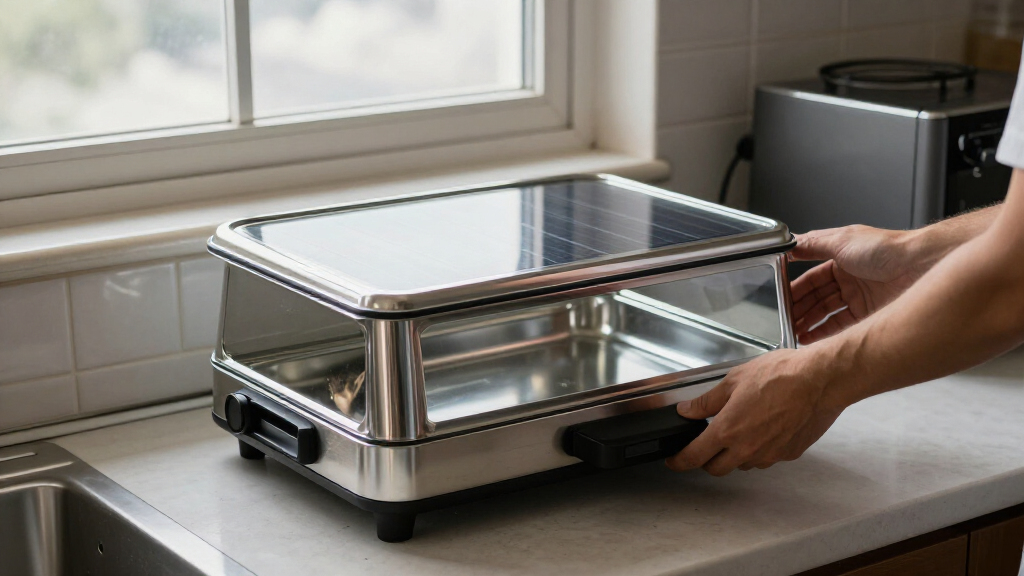
off-grid solar oven with hybrid backup
As an affiliate, we earn on qualifying purchases.
As an affiliate, we earn on qualifying purchases.
Using Reflectors and Hybrid Methods to Boost Performance
| Method | How It Helps |
|---|---|
| Adding Reflectors | A simple sheet of aluminum foil or reflective panel directs more diffuse light into the oven, raising internal temperatures by 10-20°F. This is especially important on overcast days because it compensates for the reduced direct sunlight, effectively increasing the energy input into your cooking chamber. The tradeoff is that reflectors require careful positioning and can be less effective if not aligned properly, but when used correctly, they can significantly improve performance. |
| Hybrid Cooking | Combine solar with a small camping stove or an alcohol burner for reliable results, especially during very cloudy days or late in the afternoon. Hybrid systems are a practical tradeoff—while they may require extra equipment, they ensure you can complete your cooking regardless of weather conditions. This approach adds flexibility and can prevent frustration when the weather turns persistently gloomy. |
For instance, a DIY reflector made from aluminum baking sheets can boost your oven’s heat by nearly 15°F. Hybrid systems give you backup when the sun’s too shy to cooperate. This combination allows you to adapt to changing conditions without sacrificing your off-grid independence, but it also means carrying extra gear and managing additional complexity in your cooking process.
Think of it as having a backup battery for your solar power—extra tools to keep you cooking no matter what. The tradeoff is that hybrid setups may require more setup time and extra fuel sources, but the reliability they offer can be well worth the effort during extended cloudy periods.
As an affiliate, we earn on qualifying purchases.
What Foods Are Best When the Sun Is Playing Hide and Seek?
Long-cooking dishes like stews, beans, or baked bread handle lower temperatures better. They give you more flexibility, especially when the sunlight isn’t strong. These foods benefit from extended cooking times, which are more forgiving during overcast days, allowing your food to reach the desired tenderness without the need for high heat.
For example, a hearty chili simmered for 3 hours on a cloudy afternoon turned out tender and flavorful. The slow, gentle heat allows flavors to meld and ingredients to break down, which is ideal when your heat source is weaker. Choosing such recipes means you can plan ahead and have confidence that your meal will turn out well, even with less sun.
Foods that need quick, high heat—like stir-fries or thin steaks—are less suitable during overcast conditions. They require intense, direct sunlight to cook quickly and evenly, so during cloudy days, it’s better to reserve those for sunnier weather or use hybrid methods. Otherwise, you risk undercooked or unevenly cooked results, which can be disappointing and wasteful.
solar oven accessories for diffuse light
As an affiliate, we earn on qualifying purchases.
As an affiliate, we earn on qualifying purchases.
How to Keep Cooking When the Clouds Won’t Clear
If the sky stays stubbornly cloudy, don’t give up. Consider these options:
- Use a portable, hybrid stove alongside your solar oven to maintain reliable heat when sunlight is insufficient. This backup ensures that you can continue cooking without interruption, especially during extended periods of poor weather.
- Preheat your oven early in the day, so it’s already hot when you start cooking. This strategy takes advantage of the available sunlight while it lasts, and a preheated oven retains heat longer, allowing for slower, steady cooking even when conditions worsen later.
- Cook thicker, more forgiving dishes that require longer simmering. These recipes are less sensitive to temperature fluctuations, making them ideal for cloudy days where heat may be less consistent.
- Wrap food in dark, heat-absorbing cookware and cover tightly to retain warmth. Dark-colored pots absorb and retain heat better, helping to keep the cooking environment stable despite lower ambient temperatures.
For example, starting a pot of beans at 9 a.m. and letting it simmer slowly in the solar oven can turn out perfectly even if the sun ducks behind clouds mid-morning. This approach emphasizes patience and strategic planning, ensuring that your meal is ready when you are, regardless of the weather’s mood.
Patience and flexibility are your best tools—sometimes, you just need to wait out the weather. Recognizing these tradeoffs and planning accordingly can make the difference between a failed meal and a successful one, even on the gloomiest days.
Frequently Asked Questions
Can I cook a full meal in a solar oven on a cloudy day?
Yes, but it takes longer. Focus on dishes that cook slowly—like stews, beans, or bread. Patience is key, and using reflectors or hybrid methods helps speed things up.
How much does weather affect solar oven performance?
Cloud cover reduces efficiency by about 30-50%, depending on thickness. But diffuse light still allows you to cook, especially with good positioning and reflective aids.
What foods are best for cloudy days?
Foods that need long, gentle cooking—like roasts, casseroles, or baked goods—are ideal. They tolerate lower temperatures and longer cooking times better.
Can I use a solar oven indoors on cloudy days?
Not usually. Solar ovens depend on direct or diffuse sunlight outdoors. Near a large window with good sunlight, you might get some heat, but it’s limited compared to outdoor use.
Are there accessories to improve performance on cloudy days?
Yes. Reflectors, extra insulation, and hybrid systems with small backup stoves make cooking more reliable in low-light conditions.
Conclusion
Cloudy days don’t have to mean no cooking. With a little planning—smart positioning, reflectors, hybrid options—you can keep your solar oven working through the gloom. It’s about making the most of what you’ve got, no matter the sky’s mood.
Next time the clouds roll in, remember: your off-grid skills can turn grey skies into a cooking advantage. Keep that oven sunny-side up, rain or shine.
Fall Picks
fall essentials
As an affiliate, we earn on qualifying purchases.