
TL;DR

Get kitchen gear delivered free — and shop member deals
- Fast, free delivery on millions of items
- Access to Prime Big Deal Days deals on October 6–7
- Prime Video, Amazon Music and more included
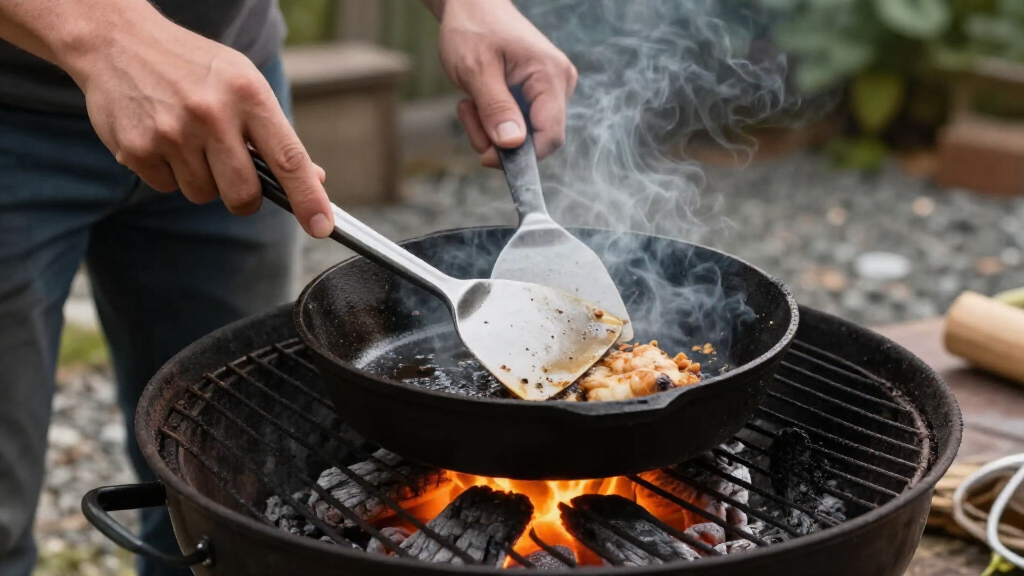
Cooking with cast iron over coals combines durable cookware with steady, controllable radiant heat. Mastering coal placement and rotation ensures even cooking and flavorful results, making outdoor meals more reliable and delicious.
There’s something uniquely satisfying about cooking outdoors with real fire and simple, durable tools. When you harness the steady glow of coals instead of flickering flames, your meals become more predictable and full of smoky flavor. It’s a skill that rewards patience, practice, and understanding how heat moves through cast iron.
If you want to turn an ordinary campfire into a reliable kitchen, mastering cast iron over coals is the way to go. It’s about controlling heat, using the right tools, and knowing how to read the fire. This guide will walk you through the essentials—no hype, just practical steps for delicious, off-grid cooking.
Use a well-managed bed of glowing coals for steady, even heat—flames are unpredictable and soot-prone.
Adjust coal placement and rotate your cookware regularly to prevent hot spots and uneven cooking.
Choose the right cast iron—skillets for frying, Dutch ovens with legs for baking—and match size to your meal.
Preheat slowly, and avoid adding cold liquids to hot cookware to prevent warping and accidents.
Safety gear and proper fire management tools are essential for safe, consistent outdoor cooking.
Cooking with Cast Iron Over Coals
Turn an ordinary campfire into a reliable outdoor kitchen. The secret is not chasing flames—it is building steady radiant heat, placing it deliberately, and letting cast iron do what it does best: retain energy.
A reliable coal bed in four moves
Active flames flicker, flare and leave soot. Mature coals radiate steadier energy into the iron, giving bread, roasts and stews time to cook evenly.
Choose quality fuel
Use seasoned hardwood, lump charcoal or predictable briquettes. Dry, clean fuel ignites faster and produces a more useful coal bed.
Burn to maturity
Build a small mound or teepee. Let it burn until the fuel glows red beneath a thin gray ash coating—usually 20–30 minutes.
Shape the bed
Use a shovel or long tongs to spread coals deliberately. Dense clusters create high heat; wide, thin layers create gentler heat.
Manage continuously
Add fully lit coals to raise heat or remove coals to lower it. Cast iron responds slowly, so make small adjustments early.
Think in zones, not one temperature
A fire can perform several jobs at once. Sear over concentrated coals, finish over moderate heat, then move food to the cool edge while the rest of the meal catches up.
Control comes from moving the pot or rearranging coals—not from waiting for the entire fire to change.
Sear
Preheat the skillet gradually, then place it over a compact, bright coal cluster.
Finish
Shift meat or cookware to the warm zone before the exterior scorches.
Hold
Use the cooler perimeter to keep cooked components warm without drying them out.
Match the iron to the job
Skillets excel when heat comes from below. A camp Dutch oven—with legs and a rimmed lid—creates a compact oven by holding coals both above and beneath the food.
| Cookware | Best jobs | Heat placement | Primary strength | Watch for |
|---|---|---|---|---|
| Cast-iron skillet | ✓Searing, frying, vegetables, shallow baking | Bottom heat; usually uncovered | Direct surface contact and fast access | Handle becomes extremely hot |
| Camp Dutch oven | ✓Bread, cobbler, casseroles, roasts | Coals above and beneath | True surrounding oven heat | Bottom scorching from excess coals |
| Standard Dutch oven | ~Stews, chili, beans and braises | Mostly underneath | Deep walls and strong heat retention | Rounded lid cannot securely hold coals |
| Enameled cast iron | ✓Acidic sauces and shorter braises | Moderate, controlled heat | No seasoning reaction with acid | Enamel can chip under rough handling |
Size matters: cookware should fit the meal without excessive empty mass or overcrowding.
Heat distribution by cooking mode
These ratios are practical starting points rather than guarantees. Weather, oven construction, briquette size and food volume all change the result.
Baking
Top dominantMore lid heat browns and lifts baked goods while reducing the risk of a scorched base.
Roasting
Nearly balancedA slightly stronger upper heat promotes browning while the lower coals cook the food through.
Stewing
Bottom dominantConcentrate heat beneath the vessel, then reduce coal density once the liquid reaches a steady simmer.
Frying
Open-lid methodUse direct bottom heat and leave the lid off for browning, frying and skillet-style cooking.
Flavor, control or convenience?
Every fuel behaves differently. Natural coals offer character, briquettes offer repeatability, and lump charcoal offers intense heat with greater variation.
Hardwood coals
Oak, hickory and other hardwoods provide clean, long-lasting heat and natural smoke character, but individual coals vary in size and intensity.
Briquettes
Uniform size makes briquettes easy to count and arrange. They are beginner-friendly, though they create more ash and may contain binders.
Lump charcoal
Lump charcoal burns hot and clean, with less ash than briquettes. Irregular pieces make its heat less uniform and harder to count precisely.
+ lid
Turn the pot and lid in opposite directions.
Coal beds are never perfectly uniform. Periodic opposing rotation averages out concentrated heat without opening the oven and releasing valuable energy.
Control the fire. Protect the iron.
Good tools reduce improvisation around live coals. Proper cleaning and complete drying preserve the seasoning that makes cast iron increasingly useful over time.
Fire-side essentials
- Long tongs and shovel: adjust coals without reaching over heat.
- Insulated gloves and lid lifter: handle hot iron with secure control.
- Instant-read thermometer: verify food doneness instead of relying on coal counts.
- Fireproof surface: keep cookware stable and away from combustible ground cover.
- Water or extinguisher: keep suppression equipment within immediate reach.
Seasoning care
- Remove residue: scrape or wipe out food while the cookware is still warm.
- Wash sensibly: use hot water and mild soap when needed.
- Dry completely: place the iron over low heat until all moisture evaporates.
- Oil sparingly: apply a very thin film, then wipe away the excess.
- Store with airflow: never seal damp cookware inside a humid container.
The path from raw fire to a reliable meal
Each decision supports the next. Consistency is built through a chain of small, observable controls.
Why Coals Beat Flames for Consistent Cooking
Cooking over glowing coals, not active flames, is the secret to even heat and fewer soot messes. Flames flicker and shift, making temperature control tricky. Coals, however, radiate steady heat that penetrates cast iron evenly—like a heat lamp, but outdoors.
Why does this matter? Because inconsistent heat can lead to undercooked or burnt food, especially over longer cooking periods. Flames tend to flare unpredictably, which can cause hot spots or flare-ups that scorch your food. Coals, on the other hand, provide a stable, radiant heat source that allows you to cook more precisely. This consistency is crucial when baking bread, roasting meats, or simmering stews, where even heat distribution impacts texture and flavor. The tradeoff is that managing coals requires more planning and patience upfront, but the payoff is a more reliable cooking process and better flavor development.
According to an anonymous researcher in outdoor cooking, managing radiant heat with coals results in more predictable results, especially for baking, roasting, and simmering.
cast iron skillet for outdoor cooking
As an affiliate, we earn on qualifying purchases.
As an affiliate, we earn on qualifying purchases.
How to Build a Reliable Bed of Coals in 4 Easy Steps
- Choose quality fuel. Hardwood coals or lump charcoal burn hotter and cleaner than briquettes, giving you more control. This choice impacts not just heat, but also the flavor and ash cleanup. Hardwoods like oak or hickory produce a cleaner, longer-lasting heat that minimizes soot and ash, which can affect the taste of your food and the cleanliness of your cooking surface.
- Arrange your fire. Build a small teepee or mound, then let it burn until coals are glowing red with a light ash coating—about 20-30 minutes. This process ensures a consistent, high-quality heat source. Rushing this step can lead to uneven or weak coals that don’t produce the desired steady heat, compromising your cooking control and results.
- Spread coals for even heat. Use a shovel to create a flat, even bed. For baking, put two-thirds of the coals on top and one-third underneath. This distribution allows for precise control of heat intensity—more coals underneath for higher heat, more on top for radiant heat for baking. Proper spreading ensures that heat penetrates the cast iron evenly, preventing hot spots that can cause burning or undercooking, which are common pitfalls when coals are unevenly distributed.
- Manage the fire during cooking. Add more lit coals to raise heat, or remove some to lower it, without touching the cast iron. This ongoing management is essential because the initial coal bed is only part of maintaining consistent heat. Adjusting the number and placement of coals during cooking allows you to respond to temperature fluctuations, ensuring your food cooks evenly and thoroughly. Neglecting this step leads to uneven results and potential food spoilage.
In a real scenario, I once watched a friend carefully build a coal bed for a bread bake. The result? An evenly risen loaf with a beautifully crispy crust, thanks to the predictable heat from a carefully managed coal bed. This demonstrates how understanding and controlling your heat source directly translates into better, more consistent results.
As an affiliate, we earn on qualifying purchases.
Understanding Heat Zones and How to Use Them
Before placing your cast iron cookware, it’s helpful to understand the concept of heat zones within your fire. Think of your coals as creating different temperature areas—hot, warm, and cool zones—that you can use to your advantage. The hottest zone is directly over a dense cluster of glowing coals, ideal for searing or quick-cooking tasks. The warm zone, with fewer coals or less intense heat, is perfect for simmering or slow cooking. The cooler zone can be used to keep food warm or to gently finish cooking.
By learning to identify and utilize these zones, you can cook more precisely. For example, you might sear a steak over the hot zone, then move it to the warm zone to finish cooking without burning. This spatial control allows for better management of cooking times and results, especially when preparing multiple components of a meal simultaneously.
Practicing how to shift your cookware between these zones and adjusting coal placement accordingly will elevate your outdoor cooking game, giving you more control and consistency in your results.
fireproof cooking gloves for grilling
As an affiliate, we earn on qualifying purchases.
As an affiliate, we earn on qualifying purchases.
Frequently Asked Questions
How do I build a reliable bed of cooking coals?
Start with quality hardwood or lump charcoal, build a mound or teepee shape, then let it burn until coals glow red with ash coating. Spread into an even layer for consistent heat. This method ensures your heat source is stable and predictable, which is essential for successful outdoor cooking. The tradeoff is that it takes some time to build and wait for the coals to reach the proper state, but this patience pays off in more consistent and flavorful results.
Should I use hardwood, lump charcoal, or briquettes?
Hardwood coals and lump charcoal burn hotter and cleaner, offering better flavor and control. Briquettes are more predictable but produce more soot and uniform heat, making them easier for beginners. The tradeoff is that briquettes often contain binders and additives that can affect flavor, and they tend to produce more ash, which can complicate temperature management. Choosing the right fuel depends on your priorities: flavor and control versus convenience and ease.
How can I estimate temperature without a thermometer?
Practice by observing coal color—bright red is hot, dull red is moderate, gray ash indicates cooler heat. Feel the heat with the back of your hand at arm’s length, but use a thermometer for accuracy. Recognizing these visual cues helps you respond quickly and adjust your setup. Understanding how these indicators relate to actual temperature allows you to better manage your cooking process and avoid over- or under-heating.
How do wind and cold weather affect cooking?
Wind cools the coals and disperses heat, requiring more lit coals or wind shields. Cold weather slows coal ignition and reduces heat retention—plan for more fuel and longer cooking times. The tradeoff is that managing these environmental factors demands additional planning and fuel, but doing so ensures your food cooks evenly and thoroughly despite challenging conditions.
Can I place cast iron directly on coals?
Yes, but only if the coals are evenly spread and not piled too high, to avoid warping or cracking. Use a stable, flat coal bed and monitor temperature carefully, especially during long cooks. Direct contact with high, uneven heat can cause damage to your cookware, but when done properly, it provides rapid heat transfer—ideal for searing or quick cooking. The tradeoff is the risk of damage if not managed carefully, so always observe your cookware during direct contact.
As an affiliate, we earn on qualifying purchases.
Conclusion
Mastering cast iron over coals turns outdoor cooking into a reliable craft. Focus on controlling heat with coal placement, rotation, and patience. With practice, your fire-cooked meals will become the highlight of every trip or backyard feast.
Remember, every crackle and glow is an invitation to improve your skills and enjoy simple, flavorful food—off-grid, no fuss, just fire and skill.
Fall Picks
fall essentials
As an affiliate, we earn on qualifying purchases.