
TL;DR

Get kitchen gear delivered free — and shop member deals
- Fast, free delivery on millions of items
- Access to Prime Big Deal Days deals on October 6–7
- Prime Video, Amazon Music and more included
Cast iron griddles excel at cooking everything from pancakes to smashed burgers thanks to their heat retention and durability. Proper seasoning and care keep them performing for generations, making them essential for off-grid kitchens.
Imagine flipping a pancake that sizzles perfectly on a searing hot cast iron griddle, or pressing down a burger until the crust turns deep brown and crispy. That’s the magic of cast iron—its ability to handle everything from delicate breakfast items to heavy-duty burgers.
If you’re serious about cooking without fuss and want your tools to last a lifetime, mastering a cast iron griddle is a game-changer. This guide will show you how to get the most out of your skillet, from seasoning to cooking techniques, in a way that’s practical and rooted in real-world use.
Proper seasoning and care turn cast iron into a naturally non-stick, flavor-enhancing surface that improves over time.
Preheating your skillet thoroughly is key to achieving perfect pancakes and crispy smash burgers.
Modern innovations like pre-seasoned and enameled options make cast iron more accessible and easier to maintain.
High heat is essential for searing, but control your temperature carefully to avoid sticking or burning.
Regular cleaning with hot water and oil, rather than soap, preserves your skillet’s seasoning for years to come.
Why Your Cast Iron Griddle Is the Ultimate All-Rounder
Cast iron griddles are prized for their ability to handle a wide range of foods. Whether you’re flipping fluffy pancakes or searing thick-cut steaks, their heavy mass and excellent heat retention make them reliable. Unlike lighter pans, a cast iron distributes heat evenly, preventing hot spots and ensuring your food cooks uniformly.
Take a typical Saturday morning: you start with golden-brown pancakes, then crank up the heat to smash a burger for lunch. Your cast iron can do both with ease—no need to switch cookware. It’s like having a kitchen workhorse that’s always ready for whatever you throw at it.
Beyond convenience, this versatility means fewer pots and pans clutter your kitchen, and fewer replacements over time. The tradeoff is that cast iron is heavy and requires some care to prevent rust, but the durability and consistent performance often outweigh these considerations for dedicated home cooks and outdoor enthusiasts.
cast iron griddle for pancakes and burgers
As an affiliate, we earn on qualifying purchases.
As an affiliate, we earn on qualifying purchases.
The Secret to Perfect Pancakes Every Time
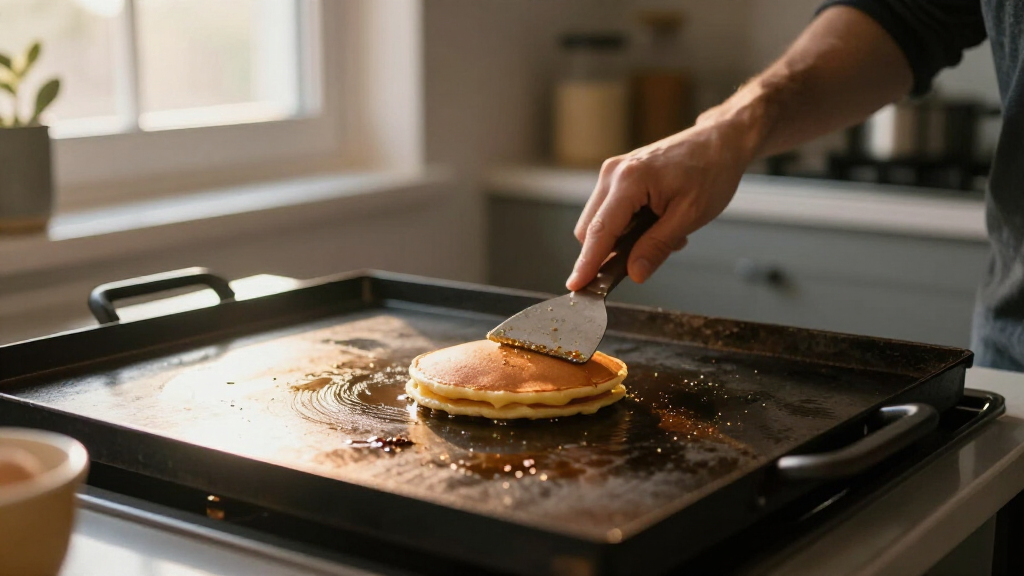
Cooking pancakes on a cast iron griddle is simple—if you know how to control the heat and manage the surface. Preheat your skillet over medium-low heat for about 5 minutes. A drop of water should dance and evaporate within a second. Why? Because a well-preheated, evenly heated surface creates the ideal environment for pancake batter—hot enough to quickly set the batter and form a crispy exterior, but not so hot that it burns before cooking through.
Use a well-seasoned surface to prevent sticking, which is crucial because sticking can ruin the pancake’s texture and make flipping difficult. Pour your batter—about 1/4 cup for each pancake—and let it cook until bubbles form on top, about 2-3 minutes. Flipping too early can cause tearing, while waiting too long might lead to uneven browning. Flip with confidence once the edges look set and bubbles appear, then cook another minute or so until golden.
For extra flavor, add a touch of butter or even cook bacon strips alongside the batter. The rich aroma fills your kitchen and makes breakfast feel special. Mastering this timing and temperature control ensures consistently fluffy, evenly cooked pancakes that showcase the heat retention qualities of cast iron—why it matters is because it minimizes guesswork and produces predictable results, essential for breakfast perfection every time.
As an affiliate, we earn on qualifying purchases.
Why Smash Burgers Love a Cast Iron Skillet
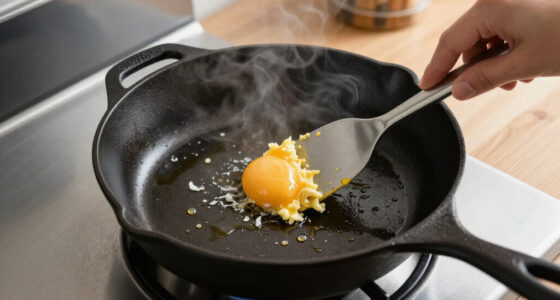
Smashed burgers get their signature crispy crust from direct contact with very hot, seasoned cast iron. To cook one, heat your griddle over high heat until it’s just shy of smoking—this ensures maximum heat transfer and rapid searing. Place a ball of ground beef—around 4 ounces—on the surface, then press down firmly with a spatula or burger press for about 10 seconds. This creates a thin patty with maximum contact to the hot metal, which is crucial because surface area contact ensures the Maillard reaction—responsible for the crust—happens quickly and uniformly.
The deep-brown crust not only adds flavor but also creates a textural contrast that enhances the eating experience. Cook for 2-3 minutes, then flip and cook the other side briefly to keep the interior juicy. The key is high heat and immediate pressing—why? Because this method locks in juices while developing a flavorful, crispy exterior. It’s a tradeoff: you sacrifice some internal cook time for maximum crust, but the result is a burger that’s both crunchy and tender.
Remember: don’t overcrowd the pan, as this can lower the temperature and hinder searing. Maintaining high heat throughout the process is essential for that perfect crunch—your cast iron’s excellent heat retention makes this possible, but it also requires careful attention to avoid burning. The benefit is a burger with depth of flavor and satisfying texture that’s hard to achieve with other pans.
As an affiliate, we earn on qualifying purchases.
How to Care for Your Cast Iron Griddle to Keep It in Prime Shape
Proper maintenance is the secret to a long-lasting, non-stick cast iron surface. After cooking, let your skillet cool slightly, then rinse with hot water and use a stiff brush or scraper to remove stuck-on bits. Avoid soap—over time, it can strip the seasoning, which is the layered oil that creates the non-stick surface. Instead, rely on hot water and physical scrubbing—this preserves the seasoning layer and ensures your skillet remains slick and ready for the next cook.
Dry thoroughly immediately—water is the enemy because it promotes rust. To prevent rust, apply a thin layer of oil (like flaxseed or vegetable oil) and heat the skillet on the stove or in the oven for 10 minutes. This process polymerizes the oil, creating a durable, slick surface that improves with each use. Think of it as a protective armor that enhances cooking performance and flavor development.
If rust appears, don’t panic. Scrub it away with steel wool or a heavy-duty scrub brush, then re-season your skillet by applying oil and heating it in the oven at 450°F for an hour. Regular care—cleaning, drying, and oiling—builds a glossy, black patina that’s almost non-stick and full of flavor. Neglecting this can lead to rust and degradation, but consistent maintenance ensures your cast iron remains a trusted kitchen companion for decades.
As an affiliate, we earn on qualifying purchases.
What’s New? The Latest in Cast Iron Griddle Innovation
Modern cast iron griddles are more user-friendly today. Many come pre-seasoned, saving you time and effort. Enameled versions resist rust and are easy to clean—perfect for acidic foods like tomato sauce or citrus-based dishes. These innovations reduce the learning curve and maintenance, making cast iron accessible to more cooks.
Design improvements include larger cooking surfaces, integrated handles, and features like pouring spouts for sauces. These enhancements not only improve usability but also expand the range of dishes you can prepare. Some models are even made to work with induction cooktops, broadening where and how you can cook with cast iron, which is especially valuable for off-grid or portable setups. Eco-conscious manufacturing is also on the rise, with brands using recycled materials and greener processes. Hybrid designs combine cast iron with non-stick coatings, giving you options for different types of cooking. These advancements demonstrate a focus on durability, convenience, and sustainability—why they matter is because they make cast iron more adaptable and easier to maintain, ensuring it remains a kitchen staple for generations.
Your Quick Guide to Cooking on a Cast Iron Griddle
- Preheat your skillet thoroughly over medium heat—patience pays off, as a properly heated surface prevents sticking and promotes even cooking.
- Apply a light coating of oil if needed, especially after cleaning, to maintain the seasoning and improve non-stick performance.
- Cook your foods, adjusting heat as needed. Remember, cast iron holds heat well, so start low and increase gradually to avoid burning or sticking.
- Use appropriate tools—metal spatulas work fine but avoid scratching the surface, as damage can compromise the seasoning and non-stick qualities.
- After cooking, clean properly and re-season to keep that slick, non-stick surface. Regular maintenance extends the life and performance of your skillet.
Frequently Asked Questions
How do I season my cast iron griddle for the first time?
Start by washing it with hot water and a stiff brush to remove any factory coating or rust. Dry thoroughly, then apply a thin layer of oil all over the surface. Heat it in the oven at 450°F (230°C) for about an hour. Repeat this process a few times to build a durable non-stick coating.
Can I cook acidic foods on my cast iron without damaging it?
Yes, but with caution. Long cooking of highly acidic foods like tomato sauce can strip seasoning. Use enameled cast iron if you want to cook acidic dishes frequently, or limit the exposure time on uncoated cast iron.
What’s the best way to clean and store my cast iron after use?
Rinse with hot water and scrub off stuck bits with a stiff brush or scraper. Dry thoroughly, then lightly oil before storing. Keep it in a dry place to prevent rust, and avoid stacking heavy objects on it to protect the seasoning.
How do I fix rust on my cast iron skillet?
Use steel wool or a scrub brush to remove rust. Rinse and dry thoroughly. Then, re-season your skillet by applying oil and heating it in the oven at 450°F for an hour. With regular care, your skillet will regain its smooth, non-stick surface.
Conclusion
Mastering your cast iron griddle isn’t just about cooking; it’s about building a kitchen tool that lasts a lifetime. With proper care and technique, you can turn simple ingredients into memorable meals—crispy, juicy, fluffy, and rich in flavor.
Next time you hear that satisfying sizzle or see the deep, dark crust forming, remember: your cast iron’s magic comes from patience, attention, and a little bit of love. That’s the real secret behind pancakes to smash burgers—crafted with skill, built to last.
Evergreen bestsellers Picks
bestsellers
As an affiliate, we earn on qualifying purchases.