
TL;DR

Get kitchen gear delivered free with Prime
- Fast, free delivery on millions of items
- Prime Video, Amazon Music and more included
- Member-only deals all year
Regular rinsing plus weekly deep cleaning with simple agents like vinegar or baking soda keeps your French press free of oils and residue. Proper cleaning prevents flavor contamination and extends its lifespan.
Imagine pouring that first hot brew, the rich aroma filling your kitchen, only to find your French press tastes dull or stained next time. Proper cleaning isn’t just about aesthetics—it’s about keeping your coffee fresh and your device durable.
Whether you’re off-grid or just prefer a minimalist routine, knowing exactly how to clean your French press can make all the difference. This guide walks you through simple, effective steps to keep your press in top shape—no fancy gadgets needed.
Rinse your French press immediately after brewing to prevent oil buildup.
Deep clean weekly with vinegar or baking soda to remove stains and oils.
Use a soft brush on the mesh filter to avoid damage while cleaning.
Dry all parts thoroughly to prevent mold and rust.
Opt for eco-friendly cleaning options like vinegar and baking soda whenever possible.
Quick daily rinse to keep oils from spoiling your brew
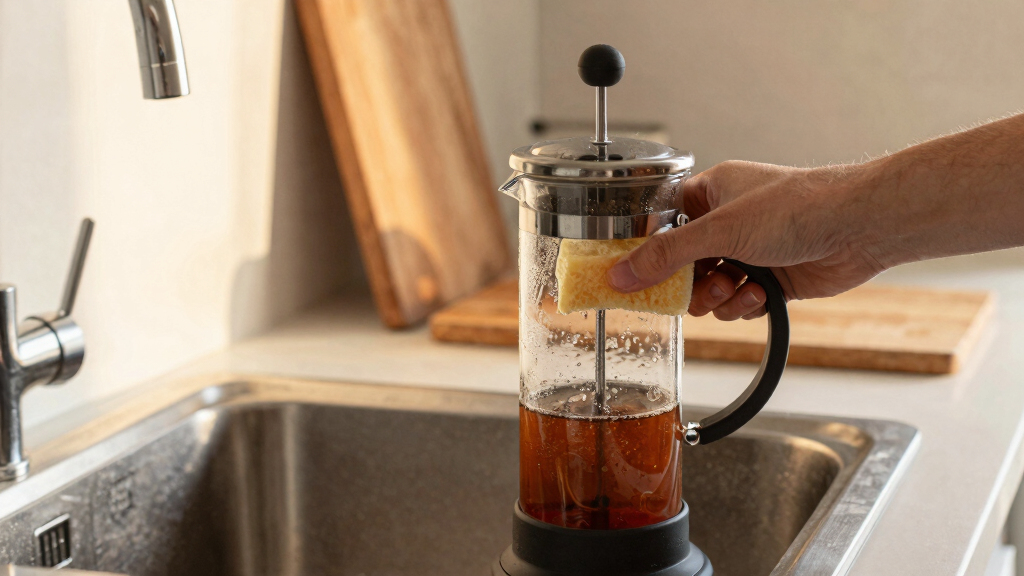
After each use, disassemble your French press—remove the plunger and lid. Rinse all parts with warm water to wash away leftover coffee grounds and oils. This quick step prevents buildup and keeps flavors clear.
For instance, rinsing your press with hot water immediately after brewing prevents coffee oils from hardening, making weekly cleaning easier. Think of it as brushing your teeth—small daily habits save major scrubbing later.
French press coffee maker cleaning brush
As an affiliate, we earn on qualifying purchases.
As an affiliate, we earn on qualifying purchases.
Deep cleaning with vinegar or baking soda every week
Deep cleaning removes stubborn oils and stains that regular rinsing can’t handle. Coffee oils tend to become rancid over time, which can lead to off-flavors and a less fresh-tasting brew. Residues can also trap odors, making your coffee taste stale even when it’s freshly brewed. Using vinegar or baking soda dissolves these residues, effectively breaking down oils and mineral deposits. This process restores the clean taste of your coffee and prevents long-term buildup that could cause corrosion, especially on metal parts. Choosing vinegar offers deodorizing benefits and dissolves mineral deposits, which is particularly useful in areas with hard water. Baking soda provides gentle abrasive cleaning, brightening surfaces without scratching. Regularly performing this step is essential because neglecting it allows oils and residues to accumulate, which can compromise flavor, damage your equipment, and shorten its lifespan. Think of deep cleaning as giving your French press a health check—preventative and restorative, ensuring your device remains a reliable tool for many coffee sessions.
vinegar cleaning solution for French press
As an affiliate, we earn on qualifying purchases.
As an affiliate, we earn on qualifying purchases.
Cleaning the mesh filter without damaging it
The mesh filter traps coffee oils and grounds, but over time, it can become clogged, reducing water flow and affecting brew strength and clarity. If not cleaned properly, residual oils can turn rancid, imparting unpleasant flavors to your coffee. Using a soft brush or toothbrush to gently scrub the mesh after soaking loosens stubborn oils and grounds without damaging the delicate mesh. Avoid abrasive cleaners or steel wool, which can tear or scratch the fine metal or nylon mesh, creating holes that allow grounds to escape and oils to seep through, leading to dirty-tasting coffee. Think of cleaning the mesh like caring for a delicate fishing net—gentle strokes preserve its integrity and effectiveness. Regular cleaning prevents rancid buildup, maintains optimal water flow, and ensures each brew is smooth and flavorful. Proper maintenance of this small but vital component is key to preserving the overall quality of your coffee experience.
baking soda for coffee maker cleaning
As an affiliate, we earn on qualifying purchases.
As an affiliate, we earn on qualifying purchases.
Choosing the right cleaning agents for safety and effectiveness
Most cleaning involves warm water and mild soap, but natural options like vinegar or baking soda are popular for their safety and environmental benefits. Commercial coffee machine cleaners exist but often contain chemicals that may not be suitable for all materials or off-grid use. Using the correct cleaning agents is crucial because some chemicals or harsh abrasives can degrade certain materials—glass may crack, plastic can discolor, and metal parts can corrode over time. Natural agents like vinegar and baking soda are safe choices that effectively remove oils, stains, and mineral deposits without risking damage. For example, vinegar’s acidity dissolves mineral buildup and neutralizes odors, while baking soda’s gentle abrasiveness helps lift stains and oils. However, overuse or improper dilution can cause etching or discoloration, especially on delicate surfaces. Balancing effective cleaning with material safety ensures your French press remains in top condition, preserving its appearance and functionality, and avoiding costly repairs or replacements.
French press mesh filter cleaning tool
As an affiliate, we earn on qualifying purchases.
As an affiliate, we earn on qualifying purchases.
Drying your French press to prevent mold and rust
After cleaning, dry each part thoroughly with a clean towel or air dry. Moisture left inside promotes mold growth or rust, especially on metal components. If moisture persists, it creates an environment where mold spores can settle or metals can corrode, leading to unpleasant odors, discoloration, and structural damage. Proper drying prevents these issues and extends the life of your French press. Think of leaving a damp sponge in the sink—eventually, mold blooms. Ensuring all parts are completely dry before reassembly or storage is a simple but vital step. This practice keeps your equipment smelling fresh, prevents deterioration, and maintains the integrity of your materials, ensuring each brew tastes as good as the first. Taking the time to dry thoroughly is a small investment that pays off in the long-term durability and performance of your French press.
Latest trends: eco-friendly cleaning and better design
Modern French presses often feature dishwasher-safe parts or easier-to-clean designs, making maintenance more convenient. Innovations such as removable filters and simplified assembly help reduce cleaning time and improve overall durability. Natural cleaning methods, like vinegar, baking soda, and lemon juice, are gaining popularity for their safety, effectiveness, and environmental benefits. These options eliminate the need for harsh chemicals, aligning with eco-conscious lifestyles and off-grid living. For example, some newer models have filters that snap out easily, allowing thorough cleaning without disassembly, while others are designed with smoother surfaces that resist staining and buildup. Embracing these trends not only makes cleaning simpler but also supports sustainable practices by reducing chemical waste and energy consumption. Staying updated with these innovations can help you maintain your French press more easily and responsibly, ensuring it remains a reliable, eco-friendly part of your daily routine.
Frequently Asked Questions
How often should I deep clean my French press?
Deep clean your French press once a week or after several uses, especially if you brew daily. This prevents oil buildup and keeps your coffee tasting fresh.Can I put my French press in the dishwasher?
Many models are dishwasher safe—check the manufacturer’s instructions. If allowed, dishwasher cleaning makes maintenance quick; otherwise, hand wash with gentle tools.What’s the best way to remove stubborn coffee stains?
Use a mixture of vinegar and water or a baking soda paste. Let it sit for 10-15 minutes, then scrub gently with a soft sponge or brush for best results.How do I clean the mesh filter without damaging it?
Use a soft brush or sponge and avoid abrasive cleaners. Soaking in vinegar or baking soda solution helps loosen oils without risking tears.Are natural cleaning solutions safe for my French press?
Yes, vinegar, baking soda, and lemon juice are effective, eco-friendly options that clean without harsh chemicals and preserve your device’s longevity.Conclusion
Keeping your French press spotless isn’t complicated—just a few simple steps protect flavor and prolong its life. Think of it like tuning a musical instrument; regular care keeps everything sounding perfect.
Next time you brew, remember: a quick rinse, a weekly deep clean, and careful drying make all the difference. Your coffee will thank you, and your French press will last for years of perfect pours.
Fall Picks
fall essentials
As an affiliate, we earn on qualifying purchases.