
TL;DR

Get kitchen gear delivered free with Prime
- Fast, free delivery on millions of items
- Prime Video, Amazon Music and more included
- Member-only deals all year
Cleaning your French press regularly prevents oil buildup and residue, preserving flavor and extending its lifespan. Use a mix of hot water, mild detergent, vinegar, or baking soda for deep cleaning. Proper disassembly and drying are key.
Clean your French press after every use to prevent oil and residue buildup.
Disassemble all parts for a thorough deep clean at least once a week.
Use natural agents like vinegar and baking soda for descaling and deodorizing.
Avoid harsh chemicals and always rinse thoroughly after cleaning.
Dry all parts completely before reassembling to prevent mold.
Cleaner Press, Brighter Coffee
A French press is simple and effective until trapped oils, grounds, minerals, and moisture start flattening the flavor. Regular rinsing, careful disassembly, natural deep cleaning, and complete drying keep every brew bold, aromatic, and free from stale residue.
Clean parts, clean flavor. Dry parts, longer life.
The Weekly Cleaning System
Think of French press care as three layers: remove loose grounds immediately, break down oils before they become stale, then periodically reset the hidden filter stack where residue hides.
Rinse Hot
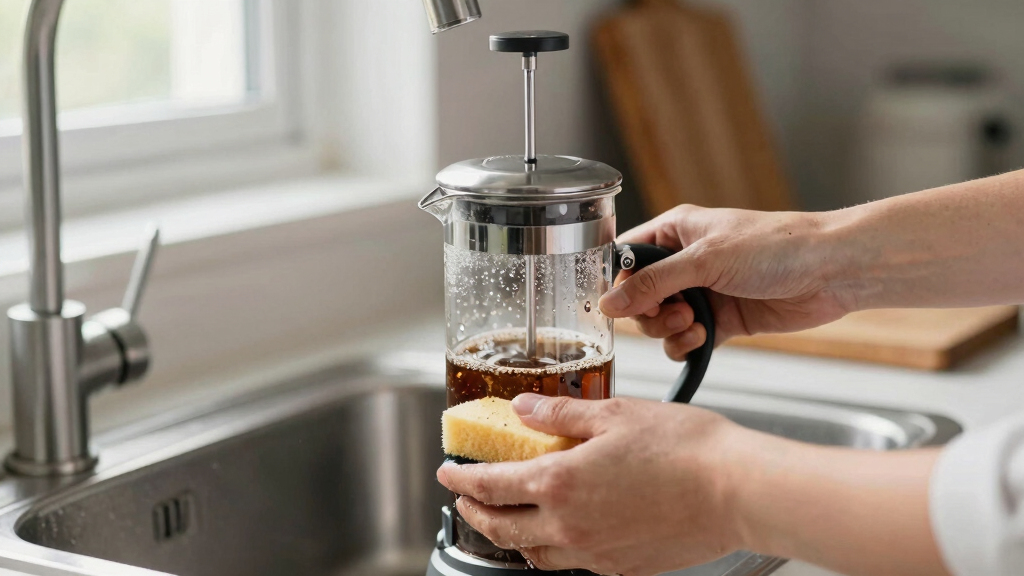
Empty grounds, rinse the carafe and plunger with hot water, and use mild detergent when oils feel slick. This quick habit protects flavor between brews.
Open the Stack
Separate the screens, rod, and gasket carefully. Grounds and oils often hide between layers, where they can clog flow and trap stale aromas.
Use Gentle Chemistry
Choose vinegar for mineral deposits, baking soda for stains, or lemon juice for light deodorizing. Rinse thoroughly so nothing dulls the next cup.
Disassembly Flow
The cleanest French press is not scrubbed harder; it is opened fully, cleaned gently, and dried completely before reassembly.
Remove
Lift the plunger assembly out of the carafe and discard used grounds.
Separate
Unscrew or loosen the filter stack, then separate screens and gasket.
Soak
Use hot water with mild soap, vinegar, or baking soda depending on residue.
Scrub
Use a soft brush or sponge to clear mesh, corners, and carafe stains.
Dry
Air-dry every part fully before rebuilding to prevent musty buildup.
Natural Cleaners Compared
Each method solves a different problem. Match the cleaner to the residue instead of reaching for harsh chemicals.
| Method | How It Works | Best For | Use Level |
|---|---|---|---|
| ✓Vinegar Soak | Acetic acid loosens mineral deposits, stale smells, and organic residue. | Scale, stubborn odor, cloudy glass. | Weekly or bi-weekly deep clean. |
| ✓Baking Soda Scrub | Gentle abrasion lifts oils and stains while neutralizing acidic odors. | Old stains, oily films, sour smell. | As needed for visible buildup. |
| ~Lemon Juice | Citric acid cuts light grease and leaves a fresh scent. | Light deodorizing between deep cleans. | Occasional refresh. |
| ✗Bleach or Harsh Chemicals | Can damage seals, affect materials, and leave flavor-tainting residue. | Not recommended. | Avoid. |
Residue Risk Map
Oil, minerals, and moisture behave differently. The right routine lowers all three without scratching glass or weakening seals.
Cleaning Priority
Oil Buildup Timeline
Hot water right after brewing interrupts buildup early. A missed week can leave sour odors, clogged mesh, and dull coffee.
Protect the Brew and the Press
Good cleaning is gentle, consistent, and complete. Avoid shortcuts that save a minute now but shorten the life of the glass, mesh, seals, or flavor.
- Do use non-abrasive brushes or sponges so scratches do not trap residue.
- Do rinse thoroughly after soap, vinegar, baking soda, or lemon juice.
- Don’t place delicate models in the dishwasher unless the maker says it is safe.
- Don’t reassemble while damp, because trapped moisture can invite mold and odors.
Traceability Chain
The payoff is not just a cleaner carafe. Each action protects the next cup, the next week, and the long-term condition of the brewer.
Brew
Oils and grounds coat the glass and mesh.
Rinse
Hot water removes residue before it hardens.
Scrub
Soft tools clear trapped grounds gently.
Reset
Vinegar or baking soda tackles buildup.
Dry
Airflow prevents mold and stale smells.
Taste
Clean equipment preserves bold flavor.
Why Regular Cleaning Keeps Your Coffee Tasting Better
Every time you brew, tiny coffee oils and residues cling to the glass, filter, and plunger. These oils can turn rancid and dull your flavor over time, creating off-notes that mask the coffee’s true profile. Regular cleaning prevents this buildup, so each cup tastes as fresh and vibrant as intended. Think of it like maintaining a fine wine — neglect can lead to spoilage, but consistent care preserves quality. When oils accumulate, they can also trap residual flavors from previous brews, leading to muddled, inconsistent taste. By understanding the importance of routine cleaning, you ensure your coffee remains rich, aromatic, and free of unwanted bitterness. Think of it as an investment in flavor integrity, where the tradeoff of a few extra minutes yields a significantly better cup every time.
For example, if you skip cleaning for a week, you might notice a sour, almost plastic-like smell that wasn’t there before. That’s coffee oils turning rancid, which not only impacts flavor but can also promote mold growth if left unchecked. A quick rinse after each use, combined with a thorough weekly scrub, keeps your brew tasting just as good as the day you got the French press, ensuring your mornings start with the best possible coffee experience.
As an affiliate, we earn on qualifying purchases.
How to Disassemble Your French Press for a Deep Clean in 3 Easy Steps
- Remove the plunger and filter assembly from the carafe, taking care to handle delicate parts gently to avoid damage.
- Separate the filter screens, plunger rod, and gasket carefully, inspecting each for trapped residues or buildup. This detailed disassembly allows you to access hidden spots where oils and grounds hide, ensuring a more thorough clean.
- Set all parts aside for cleaning, making sure to keep track of small pieces. Lay them out in order or in a container to prevent misplacing any components, which could compromise the integrity of your cleaning process or the assembly later.
This process exposes every nook and cranny — including those hard-to-reach spots where oils and residues accumulate. For example, a tangled filter can trap coffee grounds and oils, creating a breeding ground for bacteria and mold if not properly cleaned. Taking the time to disassemble ensures you remove these hidden pockets, prolonging the life of your French press and maintaining optimal flavor. Remember, neglecting these details might lead to persistent stains or odors that are difficult to remove later, so patience during disassembly pays off in the long run.
natural French press cleaner vinegar baking soda
As an affiliate, we earn on qualifying purchases.
As an affiliate, we earn on qualifying purchases.
Natural Cleaning Methods That Keep Your French Press Fresh
| Method | How It Works | Best For |
|---|---|---|
| Vinegar Soak | Descale mineral deposits and neutralize odors with white vinegar mixed with water (1:1). The acetic acid in vinegar breaks down mineral buildup and dissolves organic residues, restoring clarity and freshness. Let sit for 15-20 minutes to allow the vinegar to penetrate and loosen stubborn deposits. | Removing mineral deposits, stubborn stains, and lingering smells that soap alone can’t tackle. This method also inhibits mold growth, keeping your French press hygienic. |
| Baking Soda Scrub | Create a paste with baking soda and water, which acts as a gentle abrasive. This helps lift oils and stains from surfaces without scratching, while the alkaline nature neutralizes acids responsible for odors. | Stubborn stains and oil residues, especially in older or heavily used presses. It’s also effective for deodorizing. |
| Lemon Juice | Natural deodorizer that contains citric acid, which cuts through oils and organic residues while imparting a fresh scent. Lemon’s acidity helps break down grease and leaves a clean, citrus aroma. | Light cleaning, deodorizing, and refreshing your French press between deeper cleans. It’s a natural alternative to chemical cleaners when you want a pleasant scent. |
For example, if your French press smells a bit sour or has mineral buildup, a vinegar soak is an effective, eco-friendly way to restore its clarity and freshness. Baking soda and lemon juice not only clean but also leave behind a pleasant scent, making your cleaning routine more enjoyable. These methods are gentle but powerful, and understanding their mechanisms helps you choose the right one for your specific needs, balancing effectiveness with the health of your device and your environment.
As an affiliate, we earn on qualifying purchases.
The Do’s and Don’ts for Cleaning Your French Press
- Do use non-abrasive brushes or sponges to avoid scratching glass or delicate parts. Scratches can harbor bacteria and make cleaning more difficult over time, so gentle tools preserve your French press’s integrity.
- Do rinse thoroughly to remove soap or vinegar residues, which can leave a film that affects flavor and may cause staining if left to sit.
- Don’t put the entire French press in the dishwasher unless the manufacturer explicitly states it’s safe. The high heat and harsh detergents can weaken seals or crack glass components, reducing the lifespan of your device.
- Don’t use harsh chemicals like bleach — they can damage the glass, gaskets, and affect the coffee’s flavor profile. Natural or mild cleaning agents are safer and equally effective.
For example, a soft brush with a gentle scrub can dislodge coffee grounds from the filter without scratching, maintaining the smooth surface and functionality. Conversely, tossing your French press straight into the dishwasher without verifying its safety can lead to cracks or deformities, ultimately costing you more in replacements. Being mindful of these do’s and don’ts ensures your French press remains in excellent condition, delivering optimal flavor with each brew.
As an affiliate, we earn on qualifying purchases.
How to Keep Coffee Oils from Building Up in the First Place
Prevention is better than cure because coffee oils are sticky and tend to cling stubbornly to surfaces, making them harder to remove over time. Rinsing your French press with hot water immediately after brewing helps dissolve oils before they have a chance to adhere and harden. Using fresh beans and avoiding over-brewing also reduces the amount of oils released, which means less residue to clean later. Over-brewing extracts more oils and organic compounds, increasing the risk of buildup and affecting flavor clarity.
Every few weeks, perform a deep clean with vinegar or baking soda to eliminate any stubborn residues that regular rinsing might miss. Proper storage—such as in a dry, well-ventilated spot—prevents mold and bacteria growth, which can exacerbate oil and residue issues. For example, wiping down the plunger and filter with a damp cloth after each use prevents oils from settling into tiny crevices, making subsequent cleanings easier. These small habits cumulatively preserve your French press’s cleanliness and ensure each brew tastes as fresh as the first.
Frequently Asked Questions
How often should I clean my French press?
Routine rinsing after each use keeps oils from building. Deep cleaning with vinegar or baking soda should happen weekly or bi-weekly, especially if you notice sour smells or stains.Can I put my French press in the dishwasher?
It depends on the material. Many stainless steel and some glass models are dishwasher safe, but check the manufacturer’s instructions to avoid cracks or damage.What’s the best way to remove stubborn coffee stains?
Apply a paste of baking soda and water, or soak in vinegar for 15-20 minutes. Gently scrub with a soft brush or sponge afterward for best results.Is it okay to use soap every time?
Yes, mild dish soap is safe for cleaning your French press. Rinse thoroughly to eliminate any soap residue, which can affect flavor.How do I prevent coffee oils from building up?
Rinse immediately after use, avoid over-brewing, and do a deep clean with vinegar or baking soda regularly. Proper storage also helps keep oils in check.Conclusion
A little effort keeps your French press brewing vibrant, fresh-tasting coffee. Regular cleaning isn’t just about maintenance — it’s about savoring every sip. Spend a few minutes now, and your mornings will taste better for it. Imagine the rich aroma of a perfectly clean press, ready for your next brew—every single day.Halloween Picks
halloween
As an affiliate, we earn on qualifying purchases.