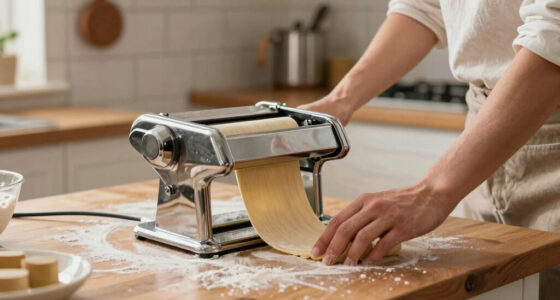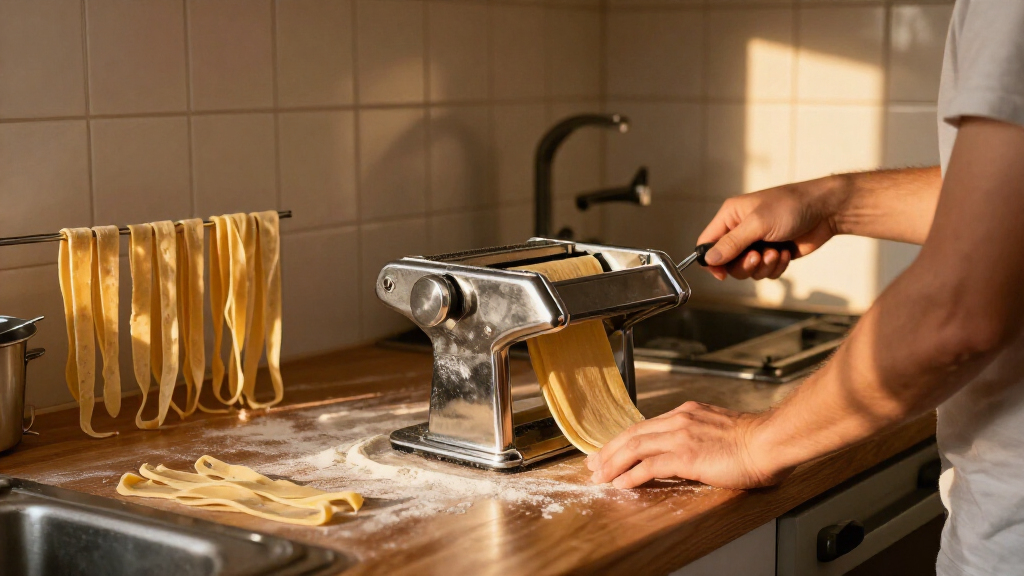

For most home cooks, I’d start with the Marcato Atlas 150 Design, a well-rounded manual pasta maker with a familiar roller-and-cutter format. The ISILER 3-in-1 and Sailnovo 3-in-1 stand out for offering multiple thickness settings and cutter functions, while the Marcato Atlas 180 is worth a look if wider sheets matter more than a compact footprint. The main tradeoffs are build and fit, how much control you want over dough thickness, and whether you need basic noodles or broader pasta-making options. I compare all 15 models by usability, versatility, construction, and upkeep. Read on for the full breakdown and help matching a machine to your cooking habits.

Get kitchen gear delivered free with Prime
- Fast, free delivery on millions of items
- Prime Video, Amazon Music and more included
- Member-only deals all year
Complete the kit


Key Takeaways
- The Atlas 150 models lead the lineup for a balanced roller-and-cutter setup; differences among the Design, standard, chrome-steel, and red versions are worth checking against included accessories and finish preferences.
- The Atlas 180 is the standout for buyers who want wider pasta sheets, while its larger format may be less appealing in a tight kitchen or for cooks who make small batches.
- ISILER and Sailnovo’s 3-in-1 models emphasize adjustable thickness and included cutting options, making them useful for variety, but buyers should compare the exact accessories and setup requirements.
- The Imperia Titania and IPASTA Classic Line offer distinct alternatives to the Atlas family, so brand familiarity alone should not determine the choice; compare their intended setup and pasta-making workflow.
- The lineup’s less conventional options, including the MZTOGR with a ravioli attachment and the green Sur La Table Va Bene, suit specific preferences better than buyers seeking the simplest standard roller-and-cutter machine.




| manual pasta maker | Operation | Thickness settings | Materials | Weight |
|---|---|---|---|---|
| Marcato Atlas 150 Design Manua | Manual | 10 | Aluminum and chrome-plated steel | 2.3 kg |
| ISILER 3-in-1 Manual Pasta Mak | Manual | 9 | Aluminum and stainless steel | 4 lb |
| YASHE 3-in-1 Manual Pasta Make | Manual | 9 | Aluminum and stainless steel | — |
| MARCATO Atlas 150 Manual Pasta | Manual | 10 | — | 2.6 kg |
| GOURMEX Manual Stainless Steel | Manual | 7 | — | 5 lb |
| Imperia Titania Manual Pasta M | Manual | 6 | — | — |
| Sailnovo 3-in-1 Manual Pasta M | Manual | 9 | Aluminum and stainless steel | — |
| MARCATO Atlas 150 Manual Pasta | Manual; compatible with a separately sold motor | 10 | Alloy steel and aluminum | 3 lb |
| Nuvantee Manual Pasta Maker wi | Manual | 7 | — | — |
| Sur La Table Va Bene Manual Pa | Manual | — | — | — |
| Marcato Atlas 150 Pasta Machin | Manual | 9 | — | 2.3 kg |
| MZTOGR 3-in-1 Manual Pasta Mak | Manual hand crank | 9 | Stainless steel body; carbon steel rollers | — |
| Sailnovo 3-in-1 Manual Pasta M | Manual | 9 | Stainless steel body; aluminum rollers | — |
| Marcato Atlas 180 Classic Manu | Manual | 10 | Chrome-plated steel body; anodized aluminum rollers | 3.16 kg |
| Imperia IPASTA Classic Line Ma | Manual | 6 | — | 3.66 kg |
More Details on Our Top Picks
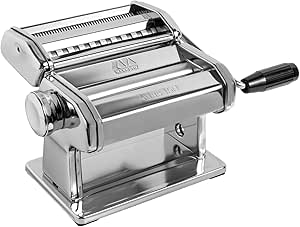
Marcato Atlas 150 Design Manual Pasta Maker, Chrome Steel
The Atlas 150 Design is my strongest all-round pick for cooks who want more than a basic roller-and-cutter setup. It makes sheets up to 150 mm wide and cuts fettuccine and tagliolini, while its 10 thickness settings give more adjustment than the ISILER and YASHE models, both of which offer nine. Its compatibility with 12 optional attachments also leaves room to expand into other shapes, though those accessories are sold separately. The chrome-plated steel and anodized aluminum construction gives this model a more considered build than the entry-level choices, but it still needs hand cranking and dry-cloth cleaning. Compared with the classic Marcato Atlas 150, this Design version lists a removable handle to help with storage; neither is suited to buyers who expect dishwasher-safe cleanup.
Pros:- Ten thickness settings provide more adjustment than the nine-setting ISILER and YASHE models.
- Makes lasagna sheets, 6 mm fettuccine, and 1.5 mm tagliolini.
- Compatible with 12 optional attachments for expanding pasta choices.
- Removable handle and clamp make storage easier.
Cons:- Additional pasta-shape attachments are sold separately.
- Requires dry-cloth cleaning and is not dishwasher safe.
- Manual cranking takes ongoing effort when rolling or cutting larger batches.
Best for: Home cooks who want fine control over sheet thickness, three built-in pasta formats, and the option to add more shapes later.
Not ideal for: Buyers who want an all-in-one set with extra cutters included or a machine they can clean in the dishwasher.
- Operation:Manual
- Materials:Aluminum and chrome-plated steel
- Thickness settings:10
- Sheet thickness:0.5–4.8 mm
- Pasta formats:Lasagna sheets up to 150 mm, 6 mm fettuccine, 1.5 mm tagliolini
- Weight:2.3 kg
- Dimensions:7.87 × 7.87 × 5.7 in
- Cleaning:Wipe with a dry cloth; not dishwasher safe
Our verdict“Choose the Atlas 150 Design if you want a versatile, adjustable manual maker with room to add cutters, and can accept hand cleaning and separately purchased attachments.”
ISILER 3-in-1 Manual Pasta Maker with 9 Thickness Settings
The ISILER 3-in-1 keeps the core job straightforward: roll dough to one of nine thicknesses, then cut it into 2 mm or 6.6 mm strands. That gives beginners a practical route to thin noodles, fettuccine-style pasta, and sheets without the optional-accessory ecosystem of the Marcato Atlas 150 Design. Its table clamp helps hold the machine steady while cranking, and the removable cutter is intended to make cleaning less awkward. The tradeoff is a narrower set of built-in cutting choices than the Marcato models, which include tagliolini as well as fettuccine. The ISILER also stops at a 2.6 mm sheet setting, so cooks seeking thicker sheets may prefer the YASHE, which reaches 3 mm. It is a practical, focused choice, not an expandable pasta system.
Pros:- Nine thickness settings cover a useful range for homemade sheets.
- Two cutter widths support different noodle styles.
- Table clamp helps limit movement during hand cranking.
- Removable cutter makes access for cleaning easier.
Cons:- Only two cutter widths are included.
- Maximum listed sheet thickness is 2.6 mm, less than the YASHE’s 3 mm.
- Manual operation requires continuous hand cranking.
Best for: First-time pasta makers who want adjustable rolling, two useful cutter widths, and a clamp without needing specialty attachments.
Not ideal for: Cooks who want tagliolini, several built-in cutter formats, or a wider maximum sheet-thickness range.
- Operation:Manual
- Thickness settings:9
- Sheet thickness range:0.3–2.6 mm
- Cutter widths:2 mm and 6.6 mm
- Materials:Aluminum and stainless steel
- Weight:4 lb
- Dimensions:7.87 × 7.67 × 6.1 in
- Included components:Pasta machine, cutter, hand crank, table clamp, user manual
Our verdict“Pick the ISILER for a straightforward starter machine with two cutter widths and a stabilizing clamp, but skip it if you want more pasta formats or thicker sheets.”
YASHE 3-in-1 Manual Pasta Maker with Adjustable Thickness
The YASHE QF-150 is a close alternative to the ISILER, with nine thickness settings and two cutter widths, but its listed range reaches 3 mm rather than the ISILER’s 2.6 mm. That extra room may suit cooks who prefer a somewhat thicker sheet; it does not add another pasta cutter or remove the work of hand cranking. Its most useful distinction is the included cleaning brush and cloth, which provide dedicated tools for clearing dough from the machine. The Atlas 150 models offer more settings and a broader attachment path, while YASHE keeps its package focused on rolling and two noodle widths. Choose it for a simple manual setup with cleanup tools included, not for a broad collection of shapes or hands-free production.
Pros:- Nine thickness settings span 0.3–3 mm.
- Two cutter widths make 2 mm and 6.5 mm pasta.
- Includes a cleaning brush and cloth.
- Aluminum alloy and stainless steel construction.
Cons:- Only two cutter widths are specified.
- Manual cranking can be tiring when processing several batches.
- The listed package does not include the broader optional-attachment range available for the Marcato Atlas 150 Design.
Best for: Home cooks who want a nine-setting roller, two common cutter widths, and cleaning tools supplied with the machine.
Not ideal for: Pasta makers who want built-in tagliolini, many cutter options, or a motorized way to reduce cranking.
- Operation:Manual
- Model:QF-150
- Thickness settings:9
- Sheet thickness range:0.3–3 mm
- Cutter widths:2 mm and 6.5 mm
- Materials:Aluminum and stainless steel
- Included components:Brush, cleaning rag, noodle roller, detachable noodle cutter, hand crank, fixing clamp
Our verdict“Choose the YASHE if included cleaning tools and a 3 mm maximum sheet setting matter more than extra cutter choices or an expandable accessory system.”
MARCATO Atlas 150 Manual Pasta Maker
The MARCATO Atlas 150 suits cooks who want three familiar pasta formats directly from one machine: lasagna sheets, fettuccine, and tagliolini. Its 10 settings match the Atlas 150 Design and exceed the nine on the ISILER and YASHE, while its maximum sheet width of 150 mm gives a consistent working size for rolling. Made and assembled in Italy from chrome steel, it also has a stated two-year warranty against manufacturing defects. Compared with the Design model, this version weighs slightly more and its listed package includes the machine, crank, and manual rather than a removable handle. A motor is compatible but sold separately, as are other shapes. Cleaning stays manual: use a dry brush, not a dishwasher.
Pros:- Includes cutters for lasagna, fettuccine, and tagliolini.
- Ten thickness settings and sheets up to 150 mm wide.
- Made and assembled in Italy from chrome steel.
- Compatible with a separately available motor and other accessories.
Cons:- Not dishwasher safe; cleaning requires a dry brush.
- Motor and additional pasta-shape accessories are sold separately.
- At 2.6 kg, it is heavier than the Atlas 150 Design listed here.
Best for: Cooks who want a traditional chrome-steel roller with lasagna, fettuccine, and tagliolini cutters included.
Not ideal for: Buyers who need dishwasher-safe parts, a motor included, or a compact package with additional cutters supplied.
- Operation:Manual
- Material:Chrome steel
- Thickness settings:10
- Sheet thickness:0.8–4.8 mm
- Maximum sheet width:150 mm (6 in)
- Included pasta formats:Lasagna, fettuccine, and tagliolini
- Weight:2.6 kg
- Warranty:2 years against manufacturing defects
- Country of manufacture:Italy
Our verdict“Choose this Atlas 150 for its included traditional cutters and Italian chrome-steel construction, provided you are comfortable cleaning it by hand and buying extras separately.”
GOURMEX Manual Stainless Steel Pasta Maker with Adjustable Thickness Settings
The GOURMEX manual pasta maker is the storage-minded pick in this group: its handle and clamp are removable, while its stated footprint is 8.4 × 8.4 × 7.8 inches. It offers seven thickness settings and a double cutter for spaghetti or fettuccine, so its setup is simpler than the 10-setting Marcato Atlas 150 models and does not include tagliolini. Its all-stainless-steel body may appeal to buyers seeking that material, but the supplied maximum sheet thickness of 7.8 cm is unusually large and does not fit neatly with typical pasta-sheet measurements. I would treat that figure cautiously rather than use it to choose this machine. For everyday decisions, the seven settings and two cutter styles are clearer guides; cooks wanting a more defined adjustment range should look at ISILER or YASHE.
Pros:- Removable handle and clamp support compact storage and countertop mounting.
- Stainless steel body and blades.
- Double cutter head makes spaghetti and fettuccine.
- Seven adjustable thickness settings.
Cons:- Offers fewer thickness settings than the Marcato Atlas 150, ISILER, and YASHE models.
- The listed maximum sheet thickness of 7.8 cm is unusually large and may be a specification error.
- Only spaghetti and fettuccine cutting are described.
Best for: Cooks with limited storage space who want a removable handle and clamp plus basic spaghetti and fettuccine cutting.
Not ideal for: Buyers who need a clearly specified sheet-thickness range, more than two pasta formats, or finer adjustment than seven settings.
- Operation:Manual
- Material:Stainless steel
- Blade material:Stainless steel
- Thickness settings:7
- Minimum sheet thickness:1.6 mm
- Maximum sheet thickness:7.8 cm (listed)
- Weight:5 lb
- Dimensions:8.4 × 8.4 × 7.8 in
Our verdict“Pick GOURMEX if removable parts and a stainless-steel body suit your storage needs, but choose another model if you need a dependable thickness range or more pasta formats.”
Imperia Titania Manual Pasta Maker
The Imperia Titania pairs a chromed-steel body with a straightforward set of everyday pasta functions: rolling sheets, cutting fettuccine, and making narrow tagliolini. Its six thickness settings offer less fine adjustment than the MARCATO Atlas 150 with 10, but suit buyers who want a simpler range for familiar doughs rather than frequent experimentation. The 150 mm sheet width is comparable to both machines, while compatibility with optional accessories leaves room to add shapes later. That flexibility comes with an extra-purchase tradeoff, and this remains a hand-cranked machine, so rolling larger batches takes sustained effort. I’d rank it for cooks who value a durable metal construction and the classic pasta pairings over the widest setting range or included shape variety.
Pros:- Chromed-steel construction suits regular home pasta making
- Six thickness settings cover a useful range of sheet thicknesses
- Includes cutters for fettuccine and tagliolini
- Compatible with optional accessories for additional pasta shapes
Cons:- Manual cranking can be tiring when preparing large batches
- Additional shapes require separately purchased accessories
Best for: Home cooks who want a sturdy chromed-steel machine for pasta sheets, fettuccine, and tagliolini, with the option to add compatible accessories later
Not ideal for: Cooks who want many thickness increments or multiple specialty shapes included, since it has six settings and extra shapes require optional accessories
- Model:Titania 2190
- Operation:Manual
- Material:Chromed steel
- Pasta sheet width:150 mm
- Thickness settings:6
- Sheet thickness range:0.2–6.5 mm
- Cutters:6.5 mm fettuccine and 2 mm tagliolini
- Included components:Manual crank handle, non-slip base, table support, user manual
- Made in:Italy
Our verdict“Choose the Titania if you want a traditional chromed-steel roller with two built-in noodle cuts and do not need the Atlas 150’s broader thickness selection.”
Sailnovo 3-in-1 Manual Pasta Maker with 9-Setting Roller and Cutters, Red
This red Sailnovo 3-in-1 stands out for combining nine thickness choices, two cutter widths, and a detachable structure in one manual machine. The extra settings give more room to tailor dough thickness than the Imperia Titania, which has six; the stated range of 0.3–3 mm is also clearly specified for buyers comparing dough styles. Its desk clip helps steady the machine during cranking, while detachable parts can make access for cleaning less awkward. The tradeoff is that cleanup still calls for a dry brush, cloth, or toothpick rather than a quick wash of dough residue, and operation remains fully manual. This is a practical pick for home cooks who want adjustable rolling and cutters without moving to a more accessory-focused setup.
Pros:- Nine settings allow finer thickness adjustment than the Imperia Titania
- Two cutters make 2 mm and 6.25 mm noodles
- Desk clip helps hold the machine steady while cranking
- Detachable structure provides access to parts during cleanup
Cons:- Manual cranking takes physical effort, especially for larger batches
- Cleaning may require a dry brush, cloth, or toothpick rather than rinsing
Best for: Home cooks who want a clamped manual machine with several thickness choices, two noodle widths, and detachable parts for cleaning
Not ideal for: People who need low-effort pasta making or expect to rinse dough residue away quickly, since cranking is manual and cleaning needs dry tools
- Operation:Manual
- Thickness settings:9
- Sheet thickness range:0.3–3 mm
- Cut widths:2 mm and 6.25 mm
- Materials:Aluminum and stainless steel
- Color:Red
- Included component:Desk clip
Our verdict“Pick this Sailnovo if you want nine thickness settings and a detachable design, and are comfortable with hands-on cranking and dry cleanup.”
MARCATO Atlas 150 Manual Pasta Machine, Chrome Steel
The MARCATO Atlas 150 earns this spot for its 10 thickness settings, the widest adjustment count in this group, giving cooks more steps for dialing in dough for lasagna, ravioli, or thinner sheets. Its 150 mm width matches the Imperia Titania and keeps the sheet size familiar, but the Atlas offers more control between settings. It can also accept a separately sold motor and Marcato attachments, so it has a clearer upgrade path than the Nuvantee Manual Pasta Maker, which is centered on its included two-width cutters. That flexibility is not included out of the box: motor and attachments cost extra, and cleanup means letting dough dry before brushing it away. I’d choose it for cooks who prioritize precise sheet adjustment and the option to expand their setup over an all-in-one accessory bundle.
Pros:- Ten thickness settings provide the most adjustment points among these five models
- Rolls sheets up to 150 mm wide for lasagna, ravioli, and other preparations
- Compatible with a separately sold motor and Marcato attachments
- Made and assembled in Italy
Cons:- Motor and additional pasta attachments are sold separately
- Dough residue should dry before it is brushed off, so cleanup is not immediate
Best for: Pasta makers who want many thickness increments for different doughs and may add a Marcato motor or attachments later
Not ideal for: Buyers seeking an all-in-one package with motorized operation or extra shapes included, since those accessories are sold separately
- Model:MCAT150ROL
- Operation:Manual; compatible with a separately sold motor
- Materials:Alloy steel and aluminum
- Sheet width:150 mm (6 inches)
- Thickness settings:10
- Listed sheet thickness:0.6 mm minimum; 15 cm maximum as supplied
- Blades:2
- Weight:3 lb
- Dimensions:8 × 5.5 × 8 inches
Our verdict“Choose the Atlas 150 if fine thickness control and an expandable accessory system matter more than getting a motor or specialty attachments in the box.”
Nuvantee Manual Pasta Maker with Adjustable Thickness Settings
The Nuvantee Manual Pasta Maker is the clearest fit here for cooks who want one roller to handle both noodles and dumpling wrappers. Its seven settings span 0.5–3 mm, and the included 2 mm and 6 mm cutters cover two common noodle widths. Compared with the Sailnovo 3-in-1, it has fewer thickness adjustments and does not list a detachable structure or desk clip, so it offers a more basic setup. Its appeal is a stainless-steel build and a stated use beyond pasta sheets, not a broad accessory system. The main compromise is simple but relevant: there is no way around physical effort with a manual crank, and the supplied details do not specify a sheet width or clamp. I’d shortlist it for wrapper-making and straightforward noodles rather than accessory-led pasta projects.
Pros:- Seven settings provide a useful range from 0.5 to 3 mm
- Two cutters make 2 mm and 6 mm noodles
- Suitable for preparing dumpling wrappers as well as pasta
- Stainless-steel material is specified
Cons:- Manual operation requires physical effort
- The supplied product details do not specify sheet width or a stabilizing clamp
Best for: Home cooks who want a manual roller for both two-width noodles and dumpling wrappers
Not ideal for: Buyers who need a specified wide sheet capacity, extra stability features, or a large number of thickness increments
- Operation:Manual
- Material:Stainless steel
- Thickness settings:7
- Dough thickness range:0.5–3 mm
- Cutter widths:2 mm and 6 mm
- Listed uses:Pasta and dumpling wrappers
Our verdict“Choose the Nuvantee if dumpling wrappers and basic two-width noodles are your priority, rather than the Sailnovo’s extra settings and stated desk clip.”
Sur La Table Va Bene Manual Pasta Maker with Rollers and Cutters – Stainless Steel / Juniper Green
The Sur La Table Va Bene makes a useful case for buyers who want a roller and a detachable shaper in the same package: it can form sheets and cut spaghetti or fettuccine without relying on optional attachments. Its nine settings give it more adjustment points than the Imperia Titania, though fewer than the Atlas 150’s 10, and the included clamp helps keep the machine stable while cranking. The juniper-green finish also sets it apart from the mostly chrome options, but the practical appeal is the included shaper, not color alone. It remains a manual machine, and the supplied maximum-sheet-thickness figure of 150 mm appears to describe a width rather than thickness, so buyers should not treat it as a clear dough-thickness range. Hand washing is required, and specialty shapes remain limited without additional attachments.
Pros:- Nine adjustable settings provide several dough-thickness choices
- Detachable shaper cuts both fettuccine and spaghetti
- Included clamp and handle support manual operation
- Stainless-steel construction with a distinctive juniper-green finish
Cons:- Manual cranking requires physical effort
- Hand wash only; it is not dishwasher safe
- The supplied 150 mm maximum-sheet-thickness specification is unclear, and additional shapes are limited without attachments
Best for: Home cooks who want a clamp-stabilized manual roller with an included shaper for spaghetti and fettuccine
Not ideal for: Buyers who want dishwasher-safe parts, clearly specified dough-thickness limits, or a wide selection of specialty shapes out of the box
- Model number:143823.01
- Operation:Manual
- Material:Stainless steel
- Color:Juniper Green
- Adjustable settings:0–9
- Listed maximum sheet thickness:150 mm
- Included components:Manual pasta maker, detachable shaper, handle, clamp
- Cleaning:Hand wash only
Our verdict“Choose the Va Bene if you want an included spaghetti-and-fettuccine shaper and clamp, but skip it if dishwasher cleaning or clearly documented thickness limits are priorities.”
Marcato Atlas 150 Pasta Machine – Red, includes cutter and hand crank
The Marcato Atlas 150 is my best all-around pick for buyers who want a straightforward manual machine from an established pasta-making line. Its nine thickness settings give you room to roll dough from sturdy sheets to thinner pasta, while the included cutter and crank provide the basics without requiring a separate starter purchase. Compared with the Marcato Atlas 180 Classic, this model is more compact and simpler, but it does not offer the wider sheets or interchangeable discs listed for that machine. The anodized aluminum body is easy to wipe clean, though dry cleaning means it is not a rinse-and-go appliance. Cranking takes effort, especially for larger batches, and the single included disc limits shape options. I’d choose it for versatile everyday rolling, not accessory-heavy pasta projects.
Pros:- Nine thickness settings support a range of dough sheet thicknesses.
- Includes a cutter and hand crank for a ready-to-use basic setup.
- Anodized aluminum construction can be cleaned with a dry cloth or brush.
- Smaller and lighter than the Marcato Atlas 180 Classic.
Cons:- Hand cranking can become tiring when preparing large batches.
- One included disc offers fewer shaping options than the Atlas 180 Classic’s eight discs.
Best for: Home cooks who want a compact, nine-setting manual roller and cutter for regular batches of fresh pasta.
Not ideal for: Cooks who want wide sheets, multiple shaping discs, or a motorized option without adding compatible accessories.
- Brand:Marcato
- Model:AT-150-RSO
- Operation:Manual
- Thickness settings:9
- Material:Anodized aluminum
- Weight:2.3 kg
- Dimensions:8.11 × 8.27 × 5.9 inches
- Included components:Pasta cutter and hand crank
- Warranty:10 years
Our verdict“Choose this Atlas 150 for a versatile, compact manual roller and cutter; pick the Atlas 180 Classic if wider sheets and more accessories matter more.”
MZTOGR 3-in-1 Manual Pasta Maker with Ravioli Attachment
The MZTOGR 3-in-1 earns its place for including a ravioli maker alongside the roller and cutters, so buyers can try filled pasta without sourcing another attachment. Its nine thickness settings match the range of the Sailnovo 3-in-1, while the MZTOGR adds ravioli shaping and a drying rack to the listed kit. The ravioli attachment forms 3 cm squares, which gives the machine a clear use beyond producing sheets, spaghetti, and fettuccine. That broader setup also means more parts to manage, and the hand crank still sets the pace for every batch. The countertop clamp needs an edge it can secure to, so it may not suit every work surface. I’d pick it over simpler cutters when filled pasta is a regular goal, but skip it if you only need basic noodles.
Pros:- Includes a ravioli attachment for 3 cm square portions.
- Nine thickness settings provide flexibility for rolling dough.
- Includes cutters for 2 mm and 7 mm pasta widths.
- A drying rack is included with the machine and attachments.
Cons:- Manual cranking takes sustained effort during larger batches.
- The clamp requires a suitable countertop or table edge.
- The additional ravioli parts create more pieces to store and handle.
Best for: Pasta makers who want to prepare ravioli as well as sheets, spaghetti, and fettuccine with one manual setup.
Not ideal for: Cooks with limited counter-edge access or buyers who only make basic pasta and do not need a ravioli attachment.
- Brand:MZTOGR
- Model:MZ-150PR
- Operation:Manual hand crank
- Thickness settings:9
- Sheet thickness range:0.5–2.5 mm
- Cutting widths:2 mm and 7 mm
- Ravioli size:3 cm squares
- Materials:Stainless steel body; carbon steel rollers
- Included components:Pasta cutter, ravioli maker, drying rack
Our verdict“Choose the MZTOGR if ravioli-making is part of your plan; for simpler noodle-making, the Sailnovo offers a less attachment-focused setup.”
Sailnovo 3-in-1 Manual Pasta Maker with 9 Thickness Settings
The Sailnovo 3-in-1 is a practical choice for buyers who want the core manual pasta-making jobs covered without the broader accessory kit of the MZTOGR. Its nine thickness settings and two cutter widths handle dough sheets and common pasta shapes, while manual operation keeps the setup independent of electricity. The listed cutters produce 2.0 mm and 4.5 mm widths; unlike the MZTOGR, it does not include a ravioli maker or drying rack. Its stainless steel body and aluminum rollers keep the design focused, but cleaning calls for a brush or wooden stick rather than water or a dishwasher. The crank also means you supply the effort. I’d favor this model for basic rolling and cutting, but not for buyers who want an all-in-one filled-pasta kit.
Pros:- Nine thickness settings accommodate different dough sheet needs.
- Two cutter widths make more than one pasta shape.
- Manual operation requires no electrical connection.
- Stainless steel body and aluminum rollers make up a relatively light, rust-resistant design.
Cons:- Cutter parts should not be cleaned with water or in a dishwasher.
- Manual rolling and cutting require repeated cranking.
- Does not include the ravioli attachment or drying rack supplied with the MZTOGR.
Best for: First-time pasta makers who want nine thickness settings and two cutter widths in a manual, electricity-free machine.
Not ideal for: Cooks who want ravioli attachments, a drying rack, or water-safe cleanup for the cutter assembly.
- Brand:Sailnovo
- Model:Machine1
- Operation:Manual
- Thickness settings:9
- Dough thickness range:0.5–3 mm
- Pasta widths:2.0 mm and 4.5 mm
- Materials:Stainless steel body; aluminum rollers
- Included components:Pasta maker, clamp, English manual
Our verdict“Pick the Sailnovo for straightforward rolling and cutting, but choose the MZTOGR if ravioli-making attachments are a priority.”
Marcato Atlas 180 Classic Manual Pasta Machine – Chrome Steel
The Marcato Atlas 180 Classic stands apart from the smaller Atlas 150 by rolling sheets up to 180 mm wide and including eight interchangeable discs. That combination suits cooks who want more shaping choices and broader sheets for lasagne, fettuccine, and tagliolini without relying on the simpler cutter setup of the Marcato Atlas 150 Red. It also has ten thickness settings, one more than the Atlas 150, and a chrome-plated steel body paired with anodized aluminum rollers. The cost of that expanded format is practical rather than electrical: it weighs over 3 kg, takes more effort to crank through big batches, and must be cleaned by hand. I’d choose it for variety and sheet width, but not for a kitchen where easy storage is the main concern.
Pros:- Rolls dough sheets up to 180 mm wide.
- Eight interchangeable discs expand the available pasta shapes.
- Ten thickness settings offer finer adjustment than the Atlas 150 Red.
- Chrome-plated steel body and anodized aluminum rollers provide a substantial build.
Cons:- At 3.16 kg, it is heavier and less convenient to store than the Atlas 150 Red.
- Manual cranking can be labor-intensive for large batches.
- Requires hand cleaning and is not dishwasher safe.
Best for: Experienced home pasta makers who want wider dough sheets and multiple shaping discs for varied pasta projects.
Not ideal for: Small-kitchen cooks who need a lighter machine that stores easily or who prefer dishwasher-safe cleanup.
- Brand:Marcato
- Operation:Manual
- Thickness settings:10
- Maximum sheet width:180 mm
- Discs:8 interchangeable discs
- Materials:Chrome-plated steel body; anodized aluminum rollers
- Weight:3.16 kg
- Dimensions:9 × 7.5 × 6 inches
- Color:Chrome
Our verdict“Choose the Atlas 180 Classic for wider sheets and a larger range of shapes; choose the Atlas 150 Red for a smaller, simpler machine.”
Imperia IPASTA Classic Line Manual Pasta Maker
The Imperia IPASTA Classic Line makes sense for buyers who want a sturdy manual base that can grow with compatible accessories. Its chromed alloy steel construction and included crank support the standard hands-on routine, while the 150 mm sheet width and cutters for fettuccine and tagliolini cover familiar pasta shapes. Compared with the Marcato Atlas 150 Red, the Imperia offers six thickness settings rather than nine, but its listed kit adds a cleaning brush, storage pouch, non-slip base, and table support. It is also compatible with an optional motor and pasta-making accessories, giving it a path beyond the included functions. That flexibility comes with a heavier 3.66 kg body, and ravioli requires a separate accessory. I’d choose it for a durable, expandable setup, not for buyers who want the most thickness adjustments out of the box.
Pros:- Chromed alloy steel construction gives the machine a durable frame.
- Cuts fettuccine and tagliolini as well as rolling sheets up to 150 mm wide.
- Compatible with an optional motor and additional pasta-making accessories.
- Includes a cleaning brush, storage pouch, non-slip base, and table support.
Cons:- Six thickness settings offer less adjustment than the Marcato Atlas 150 Red’s nine.
- Manual operation requires continuous hand cranking unless a compatible motor is added.
- Ravioli-making requires a separate accessory.
Best for: Home cooks who value a sturdy manual machine with included storage and support pieces, plus the option to add compatible accessories or a motor.
Not ideal for: Buyers who want nine or more thickness settings, included ravioli-making tools, or a lightweight machine for frequent storage.
- Brand:Imperia
- Model:4100
- Operation:Manual
- Material:Chromed alloy steel
- Dough sheet width:Up to 150 mm
- Thickness settings:6
- Adjustable roller thickness:0.5–5 mm
- Cutting widths:Fettuccine: 6.5 mm; tagliolini: 2 mm
- Weight:3.66 kg
Our verdict“Choose the Imperia if you want a solid manual machine with useful included support pieces and room to add accessories; favor the Atlas 150 Red for more thickness settings.”

How We Picked
I compared these manual pasta makers around the work they need to do at home: rolling dough evenly, offering useful thickness control, and cutting common pasta shapes without making setup unnecessarily complicated. I also weighed construction and stability, included attachments, expected cleaning effort, and how well each format fits a buyer’s likely routine. A feature mattered most when it changed what a cook could make or how easily they could repeat the process, not simply because it appeared on a specification list.
The ranking favors machines with a clear, versatile everyday role and a straightforward workflow. Models with broader included functions earn attention for variety, but an attachment-heavy setup does not automatically outrank a dependable basic roller and cutter. More specialized picks rank for the cooks who will use their distinguishing feature, such as wider sheets or ravioli making; buyers who only want familiar noodles may be better served by a simpler option. I also treat close variants as separate choices only where finish, format, or bundle may affect a buyer’s decision, and recommend checking the current listing for exact included parts.
| manual pasta maker | Operation | Materials |
|---|---|---|
| Marcato Atlas 150 Design Manua | Manual | Aluminum and chrome-plated steel |
| ISILER 3-in-1 Manual Pasta Mak | Manual | Aluminum and stainless steel |
| YASHE 3-in-1 Manual Pasta Make | Manual | Aluminum and stainless steel |
| MARCATO Atlas 150 Manual Pasta | Manual | — |
| GOURMEX Manual Stainless Steel | Manual | — |
| Imperia Titania Manual Pasta M | Manual | — |
| Sailnovo 3-in-1 Manual Pasta M | Manual | Aluminum and stainless steel |
| MARCATO Atlas 150 Manual Pasta | Manual; compatible with a separately sold motor | Alloy steel and aluminum |
| Nuvantee Manual Pasta Maker wi | Manual | — |
| Sur La Table Va Bene Manual Pa | Manual | — |
| Marcato Atlas 150 Pasta Machin | Manual | — |
| MZTOGR 3-in-1 Manual Pasta Mak | Manual hand crank | Stainless steel body; carbon steel rollers |
| Sailnovo 3-in-1 Manual Pasta M | Manual | Stainless steel body; aluminum rollers |
| Marcato Atlas 180 Classic Manu | Manual | Chrome-plated steel body; anodized aluminum rollers |
| Imperia IPASTA Classic Line Ma | Manual | — |
Factors to Consider When Choosing Manual Pasta Makers
Choosing a manual pasta maker is less about collecting the most features and more about matching its workflow to the pasta you actually plan to make. I’d settle the following practical questions before choosing between a standard roller, a multi-function model, and a specialized machine.
Match the machine to the pasta you make most
Start with your regular recipes rather than an imagined future menu. A roller and basic cutters suit cooks who mainly want sheets for lasagna or familiar noodles, while ravioli attachments or extra cutters matter only if those shapes will become part of your routine. A machine with more functions can take up more storage space and add parts to keep track of. Think about whether you’ll make one dependable shape often or experiment across several styles. If you want filled pasta, confirm what the attachment does and whether it supports the dough and filling workflow you expect. Choose the format that removes friction from your most common cooking task.
Treat thickness settings as useful control, not a score
A higher number of settings does not automatically mean better pasta. The important question is whether the range lets you move from a thick starting sheet to the thinness your recipes need, with repeatable steps between. More settings can help when you make different doughs or want precise control, but they also require attention as you adjust the roller. New cooks may benefit more from a simple, easy-to-follow sequence than from the longest setting list. Check whether thickness changes are clearly marked and whether the machine’s instructions explain how to reduce the setting gradually. Avoid forcing dough through a gap that is too narrow; a staged pass is easier to manage.
Check the clamp, counter space, and operating position
Manual machines need a stable place to work, and counter fit can matter as much as the machine’s width. Before buying, measure the available counter edge and check that it can accommodate the clamp without hitting a backsplash, drawer, or overhang. Leave room for the crank to turn and for a long sheet of dough to emerge. A compact kitchen may favor a simpler setup that is easier to store, while frequent pasta makers may prefer leaving the machine accessible. A machine that shifts during rolling can make the process frustrating, even if it offers many functions. Plan where the machine will live and where finished sheets will go before choosing.
Decide whether extra attachments earn their storage
Attachments are useful when they support pasta you genuinely plan to make, but each one adds handling and storage demands. Buyers sometimes mistake a longer accessory list for a more capable everyday machine, then find that their routine still relies on one cutter. Consider how quickly parts can be changed and whether the included tools cover your preferred shapes without requiring additional purchases. If you want to make ravioli, verify that the named attachment is included in the package you’re buying; product bundles can vary. A standard roller-and-cutter machine may be the better choice for a first pasta maker if you want to learn dough handling before adding specialized tools.
Plan for cleaning and dough management
Manual pasta makers are generally cleaned by removing dry dough and flour rather than washing the machine under running water. That makes access to the rollers and cutters, along with clear care instructions, more useful than a feature that sounds convenient but complicates the design. Dough that is too wet can cling to parts and make cleanup harder, so recipe consistency is part of ownership. Let residue dry when the manufacturer advises it, then use an appropriate brush or cloth. Check the care guidance for any removable accessories before putting them away. If you value quick cleanup, a straightforward machine with fewer parts may suit you better than an attachment-rich setup.
Pay for the distinction you will use
A higher-end or more specialized option makes sense when its added build, format, or included capability solves a real problem in your kitchen. Wider sheets can be useful for certain recipes, while a ravioli attachment only earns its space if filled pasta is a regular goal. If you are new to pasta making, prioritize manageable controls and a clear workflow over advanced accessories. For occasional use, a basic machine may meet your needs without adding features that sit unused. Compare the exact bundle contents and care directions before deciding, especially among similarly named variants. The best fit is the one that makes you more likely to roll dough again.
Frequently Asked Questions
Should I choose a 3-in-1 pasta maker or a standard roller-and-cutter model?
I’d choose a 3-in-1 model if you expect to use its added cutters or attachments, not just because the label suggests more capability. A standard roller-and-cutter machine can be easier to learn and may cover the pasta most home cooks make regularly. Added parts can bring more storage needs and extra steps when changing tasks. Compare the included accessories in the exact package, since similarly named versions may differ. If you are undecided, start with the pasta shapes you cook most often and let those decide.
Is the Atlas 180 a better choice than an Atlas 150?
Neither format is universally better; the difference matters most if you want wider sheets or have a particular recipe that benefits from them. The Atlas 150 is the more conventional choice in this lineup and suits buyers who want a familiar everyday format. The Atlas 180 deserves attention when sheet width is a priority and you have room to work with it. Think about counter space, storage, and the size of the pasta portions you usually prepare. If you rarely need wider sheets, the larger format may not add much to your routine.
Can a manual pasta maker work for a first-time pasta cook?
Yes, a manual machine can be a good way to learn how dough changes as it is rolled, though the process takes coordination. You’ll need to feed and guide the dough while turning the crank, so a stable clamp and clear thickness controls can make early attempts easier. Keep the first batches small and follow a recipe that explains how to rest and portion the dough. Avoid choosing a machine solely for its accessory count if extra setup would distract you from learning the basics. A straightforward roller-and-cutter format is often enough to begin.
What should I check before ordering a pasta maker online?
Check the machine’s dimensions, clamp fit, included cutters, and care instructions before placing an order. This roundup includes several close variants, and a familiar model name does not guarantee that every listing has the same bundle or finish. Confirm whether a ravioli tool or other attachment is actually included rather than shown only in product imagery. Look for the thickness range and operating details that suit your recipes, then compare the storage footprint with your kitchen. These checks help prevent a mismatch between the machine you expect and the setup you receive.
How should I clean a manual pasta machine without damaging it?
Follow the manufacturer’s care directions, since washing a manual pasta machine with water may damage parts or leave moisture where it should not remain. Many machines are cleaned by letting dough residue dry and then brushing or wiping it away. Avoid pushing sharp tools into rollers or cutters, which can mark or damage working surfaces. Take extra care with removable accessories and confirm whether each part has its own cleaning instructions. Keeping dough at a workable consistency can also reduce sticking and make cleanup simpler.
Conclusion
For most buyers, I’d choose the Marcato Atlas 150 Design as the best overall because it represents the lineup’s balanced, familiar manual roller-and-cutter approach. The ISILER 3-in-1 is my best-value-style pick for cooks who want adjustable thickness and multiple functions in one machine, while the Marcato Atlas 180 is the best premium-style fit for buyers who specifically want wider sheets. For beginners, I’d favor a straightforward Atlas 150 or another simple roller-and-cutter model over an attachment-heavy setup. If ravioli is your priority, look closely at the MZTOGR 3-in-1 and confirm the attachment is included in the listing; for an alternative classic format, compare the Imperia models. Choose by the feature you will use often, then verify the clamp fit, bundle, and care requirements before buying.