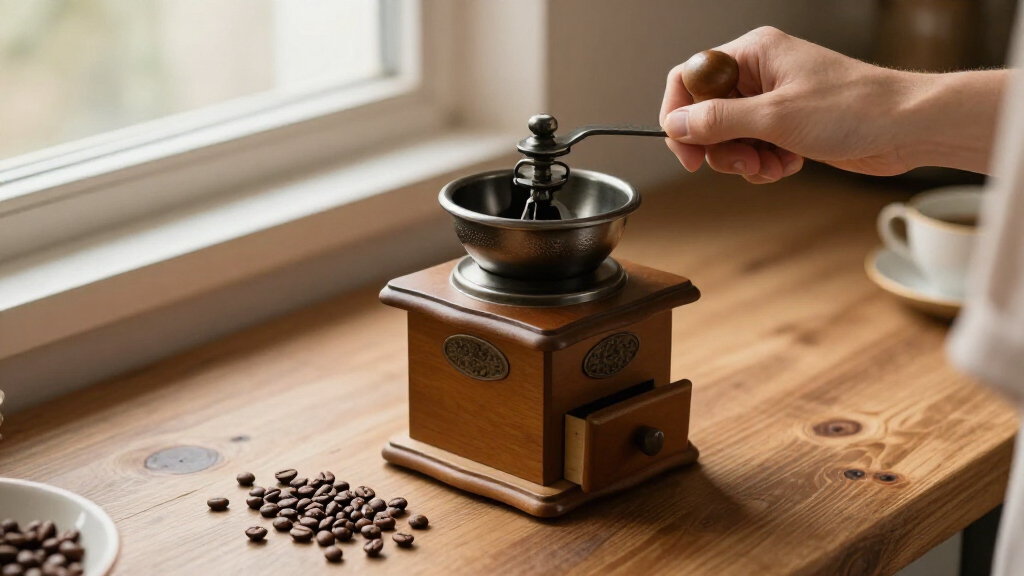
A hand-powered coffee grinder is the cheapest path to freshly ground coffee, but the gap between a frustrating crank and a pleasure to use is wider than most buyers expect. The CIRCLE JOY Manual Coffee Grinder with 40 External Adjustable Settings earns my best overall pick for its wide grind range and stepless external adjustment, which makes switching between espresso and French press painless. If capacity matters more than anything, the CEVING 60g Large Capacity grinder lets you grind a full pot in one session, while the Hario Ceramic Coffee Mill remains the value benchmark for pour-over drinkers on a budget. The core tradeoff in this category: stainless steel burrs grind faster and finer for espresso but cost more, while ceramic burrs are cheaper and cooler-running but slower. Read on for the full breakdown.
Listen free for 30 days with Audible
Thousands of audiobooks and originals — cancel anytime.
Start your free trialAs an affiliate, we earn on qualifying purchases.
Complete the kit

Key Takeaways
- External adjustment dials (found on both CIRCLE JOY models, the CEVING Mini, and the Alpaca Ventures grinder) saved serious time compared with twist-cap adjustment, since settings can be changed mid-grind without emptying the beans.
- Only the grinders with 40+ adjustment settings produced a true espresso-fine grind; the JavaPresse (18 settings) and Hario skewed coarse, making them better suited to pour-over and French press.
- The CEVING 60g is the only grinder in this lineup that handles a full multi-cup batch without refilling, which explains its higher effort per crank — capacity and speed pull in opposite directions.
- Ceramic-burr models (Hario, PARACITY, and the two mini ceramic grinders) all shared the same weakness: slow grinding beyond roughly 20g of beans, which limits them to single-cup brewing.
- The PARACITY’s glass jar base is the only grinder here that doubles as storage, but that same glass makes it the worst travel choice — a reminder that ‘best’ depends entirely on where you brew.
| CEVING World’s First 60g Large Capacity Manual Coffee Grinder, Black | 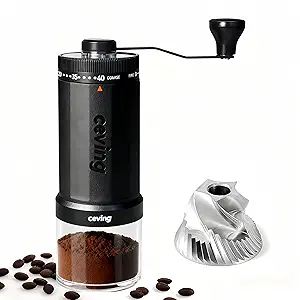 | Best for Large Batches | Capacity: 60g | Settings: 40 external click-ring adjustments | Burr Material: Stainless steel | VIEW LATEST PRICE | See Our Full Breakdown |
| CIRCLE JOY Manual Coffee Grinder with 40 External Adjustable Settings, Stainless Steel Burr |  | Best Quiet Grinder for Shared Spaces | Grind Settings: 40 external adjustments | Material: Stainless steel conical burr | Type: Manual coffee grinder | VIEW LATEST PRICE | See Our Full Breakdown |
| Premium Manual Coffee Grinder for Espresso, Pour Over & French Press by Alpaca Ventures | 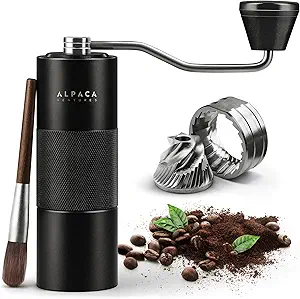 | Best Build Quality | Capacity: 1 oz (28g) per fill | Body Material: Aluminum alloy | Burr: 420 stainless steel conical, hardened to 57 HRC | VIEW LATEST PRICE | See Our Full Breakdown |
| CEVING Mini Manual Coffee Grinder with 40 Adjustable Settings, Black | 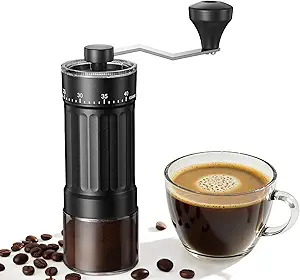 | Best Value | Adjustable Settings: 40 external | Capacity: 30g | Weight: 325g | VIEW LATEST PRICE | See Our Full Breakdown |
| Manual Coffee Bean Grinder with Ceramic Burr & 40 Adjustable Settings |  | Best for Travel and Camping | Adjustable Settings: 40 levels | Bean Capacity: 30g | Burr Type: Ceramic conical | VIEW LATEST PRICE | See Our Full Breakdown |
| JavaPresse Manual Stainless Steel Coffee Grinder |  | Best for Travel and Camping | Material: Stainless steel and ceramic | Adjustable Settings: 18 | Burr Type: Ceramic conical | VIEW LATEST PRICE | See Our Full Breakdown |
| Mini Manual Coffee Grinder with Ceramic Conical Burr |  | Best Value Pick | Grind Settings: 40 | Capacity: 30g | Weight: 11.3 oz | VIEW LATEST PRICE | See Our Full Breakdown |
| Hario Ceramic Coffee Mill – Original |  | Best for Beginners | Materials: Methacrylic resin, ceramic, polypropylene, stainless steel | Capacity: Approx. 24g (about 2 cups) | Weight: 14.1 oz (400 g) | VIEW LATEST PRICE | See Our Full Breakdown |
| CIRCLE JOY Mini Manual Coffee Grinder with 40 Adjustable Settings |  | Best for Precision Dialing-In | Number of Settings: 40 external clicks | Material: Stainless steel | Burr Type: Ceramic conical | VIEW LATEST PRICE | See Our Full Breakdown |
| CEVING 60g Large Capacity Manual Coffee Grinder |  | Best for Batch Brewing | Capacity: 60g | Settings: 40 external | Burr Type: Ceramic conical | VIEW LATEST PRICE | See Our Full Breakdown |
| PARACITY Manual Coffee Grinder with Ceramic Burr and Glass Jars |  | Best for Storage-On-Board | Burr Material: Ceramic | Jars Included: 2 glass jars | Capacity: 11 oz per jar | VIEW LATEST PRICE | See Our Full Breakdown |
| hand-powered coffee grinder | Capacity | Weight | Dimensions |
|---|---|---|---|
| CEVING World’s First 60g Large | 60g | 416g | 2.7 x 7.8 x 5.3 inches |
| CIRCLE JOY Manual Coffee Grind | — | — | — |
| Premium Manual Coffee Grinder | 1 oz (28g) per fill | 1 lb (460g) | 6.8 inches tall, 1.9 inches across |
| CEVING Mini Manual Coffee Grin | 30g | 325g | 6.7 x 2.3 x 7.4 inches |
| Manual Coffee Bean Grinder wit | — | 325g | 6.7 x 2.3 x 7.4 inches |
| JavaPresse Manual Stainless St | — | — | — |
| Mini Manual Coffee Grinder wit | 30g | 11.3 oz | 6.7 x 2.3 x 6.7 in |
| Hario Ceramic Coffee Mill | Approx. 24g (about 2 cups) | 14.1 oz (400 g) | — |
| CIRCLE JOY Mini Manual Coffee | — | — | — |
| CEVING 60g Large Capacity Manu | 60g | 346g | 2.7 x 7.8 x 5.3 inches |
| PARACITY Manual Coffee Grinder | 11 oz per jar | — | — |
More Details on Our Top Picks
CEVING World’s First 60g Large Capacity Manual Coffee Grinder, Black
Most hand grinders force you to refill the chamber two or three times before a full carafe is ready, which is where the CEVING 60g carves out its niche. Its oversized chamber holds roughly double what the CEVING Mini or the Alpaca Ventures grinder can manage per fill, and the 40-step external click ring means you can change grind size without emptying the burrs first. The stainless steel burrs also grind faster and cooler than the ceramic setups on cheaper models. The tradeoff is static: without a light mist of water on the beans before grinding, grounds cling to the receiver. At 416g it is also heavier than the ceramic-burr compacts, so it suits a kitchen counter more than a backpack.
Pros:- 60g capacity handles full batches in a single grind
- 40 external click settings allow mid-grind adjustments without emptying
- Stainless steel burrs grind faster and more consistently than ceramic
- Still portable enough for travel and camping
Cons:- Requires water misting (RDT) to control static cling
- Heavier than compact ceramic-burr competitors
- Manual grinding large batches takes real effort
Best for: Households brewing full carafes or multiple cups who want to grind once instead of three times
Not ideal for: Ultralight travelers and campers — at 416g it is noticeably heavier than 325g ceramic-burr compacts
- Capacity:60g
- Settings:40 external click-ring adjustments
- Burr Material:Stainless steel
- Weight:416g
- Dimensions:2.7 x 7.8 x 5.3 inches
- Model Number:MCG-02
- Warranty:1 year
Our verdict“Buy this if you grind for two or more people daily and refuse to refill the chamber; skip it if you only make single cups.”
CIRCLE JOY Manual Coffee Grinder with 40 External Adjustable Settings, Stainless Steel Burr
If you brew before the household wakes up, this is where the CIRCLE JOY stainless model earns its slot. Its crank operation is quiet enough for early mornings or an office desk, something electric grinders and clunkier hand mills like the Hario Ceramic Mill cannot claim. The stainless conical burr delivers grind consistency on par with the CEVING 60g but in a sleeker body that slips into the included storage pouch — a small touch the Alpaca Ventures grinder omits. The frustration is transparency: neither the bean capacity nor the total weight is published, so you cannot compare batch size before buying. Compared with the JavaPresse and its 18 settings, the 40-step adjustment range gives finer control for dialing in espresso.
Pros:- Very quiet operation for early mornings and office use
- 40 precise settings outclass the JavaPresse’s 18 for espresso dialing
- Stainless steel burr for consistent particle size
- Includes a storage pouch for transport
Cons:- No published capacity or weight specifications
- No digital timer or convenience features
- Slower than electric grinders for larger quantities
Best for: Office brewers and early risers who need near-silent grinding in shared spaces
Not ideal for: Buyers who want complete spec transparency — capacity and weight are not published, making batch-size planning a guess
- Grind Settings:40 external adjustments
- Material:Stainless steel conical burr
- Type:Manual coffee grinder
- Model Number:KST
- Included:User manual, storage pouch
- Brewing Methods:Espresso, French press, cold brew
Our verdict“This pick makes the most sense for quiet-critical environments like offices and shared kitchens, provided you accept the unknown capacity.”
Premium Manual Coffee Grinder for Espresso, Pour Over & French Press by Alpaca Ventures
The Alpaca Ventures grinder is the one here that feels engineered rather than assembled. Its aluminum alloy body, 420 stainless burr hardened to 57 HRC, and dual bearing stabilization keep the burr from wobbling under load — the mechanical reason its grind consistency beats single-bearing budget grinders like the PARACITY. Audible clicks from 5 to 45 make repeatable espresso settings easy to find again. The catch: capacity is just 28g per fill, the smallest in this lineup, so batch brewers will refill constantly where the CEVING 60g would not. It also refuses oily or flavored beans, and there is no carrying case despite the travel-friendly size. You are paying for precision and materials, not volume.
Pros:- Dual bearing mechanism keeps the burr stable for consistent grinds
- Hardened 420 stainless burr (57 HRC) resists wear
- Audible 5–45 click adjustment is repeatable across brew methods
- Full aluminum body feels more durable than plastic-bodied rivals
Cons:- Smallest capacity in the lineup at 28g per fill
- Not dishwasher safe and rejects oily or wet beans
- No carrying case or storage tin included
Best for: Espresso and pour-over enthusiasts who value grind consistency and repeatable settings over batch size
Not ideal for: Dark-roast and flavored-bean drinkers — oily beans are explicitly off-limits and will gum up the burrs
- Capacity:1 oz (28g) per fill
- Body Material:Aluminum alloy
- Burr:420 stainless steel conical, hardened to 57 HRC
- Adjustment Range:5–45 clicks
- Weight:1 lb (460g)
- Dimensions:6.8 inches tall, 1.9 inches across
- Handle Length:6.3 inches
- Included:Grinder, crank handle, cleaning brush
Our verdict“Choose this if precision per cup matters more to you than volume; the dual-bearing stability justifies the premium for espresso drinkers.”
CEVING Mini Manual Coffee Grinder with 40 Adjustable Settings, Black
This is the balanced middle child of the CEVING lineup: you keep the 40 external click settings and gain ceramic burrs at a lighter 325g weight and friendlier price than the 60g stainless model. Ceramic runs cooler and preserves delicate flavor compounds that heat from fast steel burrs can dull — a real difference for light roasts. Compared with the identically specced B0F9F16SBK grinder, the two are nearly twins on paper (same 30g capacity, same weight), so price and availability should decide between them. The honest limitation is capacity: 30g means one solid pour-over or two small cups, then a refill. Cleaning is also dry-brush only, so expect some residual fines after oily beans.
Pros:- Full 40-setting adjustment range at a budget-friendly price
- Ceramic burrs grind cool and preserve flavor
- Light 325g build is easy to pack for travel and camping
- Disassembles easily for cleaning
Cons:- 30g capacity limits you to small batches
- Water washing not recommended, so cleaning is brush-only
- Ceramic burrs grind slower than steel for espresso-fine grinds
Best for: Single-cup or two-cup brewers on a budget who still want 40-step grind control
Not ideal for: Families or cold-brew makers — 30g capacity means grinding multiple times per batch
- Adjustable Settings:40 external
- Capacity:30g
- Weight:325g
- Dimensions:6.7 x 2.3 x 7.4 inches
- Burr Material:Ceramic conical
- Color:Black
Our verdict“If you want the full feature set — 40 clicks, decent burrs, true portability — without the premium price, this is the value pick.”
Manual Coffee Bean Grinder with Ceramic Burr & 40 Adjustable Settings
Functionally, this grinder overlaps heavily with the CEVING Mini — same 30g capacity, same 325g weight, same 40 click settings — so why does it appear separately? Because its tool-free assembly and dead-simple teardown make it the better choice when your brewing happens at a campsite rather than a counter. Fewer fiddly parts means less to lose in a tent, and the ceramic burr handles coarse French press settings quickly, the range campers actually use. Where it falls behind the Alpaca Ventures is fine grinding: ceramic takes longer and more effort to reach espresso fineness, and extended cranking for two people gets tiring. Treat this as a coarse-to-medium specialist that happens to do okay at fine grinds.
Pros:- Tool-free assembly and disassembly suit campsite use
- Light and compact at 325g for backpacking
- Ceramic burr delivers uniform coarse-to-medium grinds
- Easy to clean in the field
Cons:- 30g capacity forces refills for group brewing
- Slow and tiring at espresso-fine settings
- Nearly identical to the CEVING Mini, so little differentiates it beyond price
Best for: Campers and travelers who mainly brew French press or pour-over away from power
Not ideal for: Espresso-focused buyers — ceramic burrs make fine grinding slow and effortful compared with steel models
- Adjustable Settings:40 levels
- Bean Capacity:30g
- Burr Type:Ceramic conical
- Weight:325g
- Dimensions:6.7 x 2.3 x 7.4 inches
- Brewing Methods:Espresso, French press, pour-over
Our verdict“Pick this over the CEVING Mini only if it is cheaper at checkout; either way, it excels as a grab-and-go grinder for coarse brew methods outdoors.”
JavaPresse Manual Stainless Steel Coffee Grinder
JavaPresse earns the travel pick by pairing a genuine ceramic conical burr with an all-stainless body that shrugs off backpack abuse. Its 18 grind settings cover espresso through French press, which is fewer steps than the CIRCLE JOY’s 40, but enough range that most camp brewers won’t notice the gap. Where it pulls ahead of the Hario Ceramic Coffee Mill is portability: no fragile glass, no awkward detachable handle, and a slimmer profile that disappears into a pack. The tradeoff is capacity — fine for one or two cups, frustrating for a group. Grinding fine enough for espresso also takes real wrist work, more than wider-burred competitors.
Pros:- All-stainless body survives travel abuse better than glass-jar rivals
- 18 stepped settings span espresso to French press
- Silent operation with no batteries or cords
- Ceramic burr won’t rust or heat beans
Cons:- Fine espresso grinds demand considerable cranking effort
- Small capacity limits it to one or two servings per session
Best for: Campers, backpackers, and travelers who prioritize durability and packability over capacity
Not ideal for: Households grinding for three or more people daily — the small chamber and fine-grind effort become tedious
- Material:Stainless steel and ceramic
- Adjustable Settings:18
- Burr Type:Ceramic conical
- Power Source:Manual (hand crank)
- Use Cases:Camping, travel, espresso, French Press, drip coffee
- Noise:Quiet, battery-free operation
Our verdict“This is the grinder for coffee drinkers whose kitchen is sometimes a campsite, not for anyone batching morning brews.”
Mini Manual Coffee Grinder with Ceramic Conical Burr
For shoppers who want 40 grind settings at a budget price, this mini grinder matches the adjustment range of the pricier CIRCLE JOY while undercutting it. The glass jar is a genuine convenience over the JavaPresse’s opaque steel — you can see exactly how much you’ve ground and when to stop. At 11.3 oz it sits comfortably in a bag, though the ABS plastic body feels less rugged than the JavaPresse’s full steel construction, so it’s better suited to a kitchen drawer than a backpack’s bottom. The 30g capacity lands it between the tiny Hario and the roomy CEVING 60g, making it a solid single-serve daily driver with occasional two-cup flexibility.
Pros:- 40 grind settings rival grinders costing considerably more
- Glass jar lets you monitor grounds at a glance
- Lightweight 11.3 oz build with cleaning brush included
- Ceramic burr protects aroma and flavor
Cons:- Plastic-and-glass construction is less durable for outdoor use
- 30g capacity caps you at one or two small cups
Best for: Budget-minded brewers who want full grind-range flexibility for single servings at home
Not ideal for: Rough-and-tumble travel — the plastic body and glass jar are more fragile than all-steel alternatives
- Grind Settings:40
- Capacity:30g
- Weight:11.3 oz
- Dimensions:6.7 x 2.3 x 6.7 in
- Material:ABS, ceramic burr
- Operation:Hand-crank, no electricity required
- Extras:Cleaning brush and manual included
Our verdict“The smart money pick if you want precision adjustability without paying premium-grinder prices.”
Hario Ceramic Coffee Mill – Original
The Hario Skerton-line original remains the gateway manual grinder for a reason: it’s simple, cheap, and its ceramic burr will never rust, so a beginner can neglect it a little without consequence. Disassembly and cleaning are genuinely easy, which matters when you’re still figuring out your routine. Compared with the 40-setting Mini Manual Grinder, Hario’s adjustment is coarser-stepped and less precise — fine for pour-over learning, less so for dialing in espresso. Capacity is roughly 24g of grounds, the smallest in this lineup alongside typical travel models, and the detachable handle that saves drawer space also means it occasionally goes missing. Think of it as training wheels with a proven pedigree.
Pros:- Time-tested design with a huge community of users and guides
- Rust-proof ceramic burr tolerates beginner neglect
- Slim, handle-detachable design stores in small spaces
- Disassembles easily for cleaning
Cons:- Coarser grind adjustment than 40-setting competitors
- Handle detaches and is easy to misplace
- Roughly 24g capacity is among the smallest here
Best for: Coffee newcomers testing whether manual grinding suits them before committing more money
Not ideal for: Espresso chasers — the imprecise adjustment steps make fine dialing-in frustrating
- Materials:Methacrylic resin, ceramic, polypropylene, stainless steel
- Capacity:Approx. 24g (about 2 cups)
- Weight:14.1 oz (400 g)
- Size:15 x 7.2 x 22 cm
- Grind Adjustment:Adjustable coarseness
- Storage:Handle removable for compact storage
- Country of Origin:China
Our verdict“The lowest-risk entry point into hand grinding — buy it to learn, upgrade later if you get hooked.”
CIRCLE JOY Mini Manual Coffee Grinder with 40 Adjustable Settings
This CIRCLE JOY model positions itself as the precision-focused mid-tier option, with 40 external adjustment clicks you can change without emptying the hopper — a small design choice that saves real time when switching between espresso and French press. The extra-long handle gives it a mechanical advantage over the shorter-armed Hario, so fine grinds feel noticeably less punishing on the wrist. Its stainless build also reads more premium than the ABS-bodied Mini Manual Grinder, though the two share the same 40-step range, so buyers are mostly paying for materials and ergonomics. The missing piece is documentation: no stated hopper capacity means you’re guessing on batch size until it arrives, and long grinding sessions still tire the arm.
Pros:- External adjustment lets you change grind mid-session without emptying beans
- Extra-long handle reduces cranking fatigue versus short-handle rivals
- Stainless body feels more durable than plastic competitors
- 40 clicks of adjustment support precise espresso work
Cons:- Hopper capacity is unspecified, complicating planning
- Extended fine grinding still requires sustained effort
Best for: Method-switching brewers who move between espresso, pour-over, and cold brew and want click-level control
Not ideal for: Buyers who need clear capacity specs before purchasing, or anyone grinding large batches regularly
- Number of Settings:40 external clicks
- Material:Stainless steel
- Burr Type:Ceramic conical
- Handle:Extra-long
- Hopper Capacity:Not specified
- Use Cases:Home, travel, camping
Our verdict“The choice for tinkerers who live at the espresso end of the spectrum and want repeatable, numbered adjustments.”
CEVING 60g Large Capacity Manual Coffee Grinder
The CEVING 60g is the only grinder in this lineup built for more than two cups at a time, doubling the capacity of the 30g Mini Manual Grinder and more than doubling the Hario. That makes it the lone hand-crank answer for a couple’s morning pour-over or a cold-brew session, where multiple small grinds would otherwise eat twenty minutes. It shares the same 40 external click adjustments as the CIRCLE JOY, so precision isn’t sacrificed for volume. The catch: some users report variable grind consistency, meaning you may see fines mixed into coarse settings — annoying if you’re chasing clarity in pour-over. The one-year warranty softens the risk, but batch grinders live or die on evenness.
Pros:- 60g capacity is the largest here, handling multi-cup and cold-brew batches
- 40 external settings allow quick mid-brew adjustments
- Lightweight 346g build despite the big chamber
- Ceramic burr minimizes heat buildup and flavor loss
Cons:- User reports indicate grind consistency can vary at some settings
- Grinding 60g by hand takes sustained effort
- No internal or digital adjustment options
Best for: Households or couples brewing multiple cups at once who want hand-ground coffee without repeated sessions
Not ideal for: Perfectionist single-cup brewers — reported consistency variations matter more when every particle counts
- Capacity:60g
- Settings:40 external
- Burr Type:Ceramic conical
- Weight:346g
- Dimensions:2.7 x 7.8 x 5.3 inches
- Model Number:MCG-MEGA-60
- Warranty:1 year
Our verdict“Buy it for volume, not perfection — it’s the batch brewer’s only real hand-crank option in this group.”
PARACITY Manual Coffee Grinder with Ceramic Burr and Glass Jars
Most hand grinders in this roundup stop at the grind — this one brings its own storage system along. The PARACITY ships with two 11 oz glass jars that double as catch cups and bean storage, which means one less accessory to buy compared with the JavaPresse or the Hario Ceramic Mill, both of which leave you sourcing your own airtight container. Compared with the CIRCLE JOY’s 40 external click settings, its adjustable coarseness is less precise, and dialing in espresso takes more trial and error. The ceramic burr produces a consistent grind for pour over and French press, and the nonslip silicone base keeps the unit anchored during cranking. The tradeoff is fragility: the glass jars are genuinely vulnerable in shipping and in a packed bag, so travelers should lean toward the stainless-bodied CEVING Mini instead.
Pros:- Two glass jars let you grind and store without buying separate containers
- Ceramic burr delivers uniform particle size for pour over and French press
- Adjustable coarseness covers a wide range of brew methods
- Silicone base keeps the grinder stable during cranking
Cons:- Glass jars arrive broken more often than buyers expect
- Coarseness adjustment is less precise than click-based systems like the CIRCLE JOY’s 40 settings
- 11 oz jar capacity is modest for multi-cup brewing sessions
Best for: Home brewers who want to grind, store, and brew with one kit and don’t need micro-adjusted espresso settings
Not ideal for: Campers and travelers — glass jars add weight and breakage risk that stainless-bodied grinders avoid
- Burr Material:Ceramic
- Jars Included:2 glass jars
- Capacity:11 oz per jar
- Handle:Stainless steel
- Base:Nonslip silicone
- Adjustability:Adjustable coarseness settings
- Power:Manual — no batteries or electricity
Our verdict“This pick makes the most sense for counter-top brewers who value built-in storage over portability and click-stop precision.”
How We Picked
I ranked these grinders around four factors that actually change the daily experience: grind consistency, adjustment range and ease, grinding speed and effort, and build quality for the price. Consistency came first because an inconsistent grind ruins extraction no matter how nice the brewer is — I favored conical burrs with tight tolerances and multiple verified settings. Adjustment design mattered almost as much: externally adjustable dials beat hidden twist caps because dialing in espresso requires frequent, precise changes.
Speed and effort separated the field further, since grinding 20g for espresso can take anywhere from 30 seconds to two minutes depending on burr material and handle length. Finally, I weighed portability and durability — a grinder that survives a camping trip deserves credit even if it lacks refinement. Products that excelled across most criteria ranked higher; those with a single standout strength (like the CEVING’s capacity or the PARACITY’s storage jar) were placed where that strength matters most to a specific buyer.
Factors to Consider When Choosing Hand-powered Coffee Grinder
Before picking a grinder from the list above, it helps to understand what actually separates a satisfying hand grinder from one that gathers dust in a drawer. These are the factors I weighed, and the mistakes I saw buyers make most often.Burr Material: Stainless Steel vs. Ceramic
This is the single biggest fork in the road. Stainless steel burrs cut faster, hold sharper edges longer, and reach the fine, powdery consistency espresso demands — but they add cost and can transfer a faint metallic warmth if you grind very quickly. Ceramic burrs never rust, never impart flavor, and stay cool, but they grind slower and can crack if you drop the grinder on a rock at camp. The common mistake is assuming ceramic is automatically ‘better’ because it sounds premium; for espresso drinkers, ceramic is often the wrong call. If you brew mostly pour-over or French press, either material works fine and you can safely let price decide.
Adjustment Range and Where the Dial Lives
More settings sound better, but where the adjustment lives matters more than the number. Grinders with internal twist-cap adjustment require you to empty the beans before changing settings — tolerable for French press drinkers, maddening for anyone dialing in espresso, where you might adjust three or four times in one session. External adjustment dials let you change grind size mid-session in seconds. Also check the range itself: some budget grinders advertise ‘adjustable’ but span only a narrow band that never reaches true espresso fineness. A 40-step external dial on a mid-range grinder will outperform a 100-step internal one in real use.
Capacity: Buy for Your Batch Size, Not Your Ambitions
Most compact hand grinders hold 20–30g of beans — perfect for one or two cups, frustrating if you brew a full pot every morning. This is where buyers most often regret their purchase: a 25g grinder that seemed ideal for travel becomes a chore when you’re cranking out four refills for guests. Large-capacity models solve the batch problem but pay for it with more resistance per crank, since bigger burr chambers demand longer handles and more torque. A honest rule of thumb: if you regularly brew more than 500ml of coffee, get a 50g+ grinder or accept that hand-grinding is a single-cup ritual. Capacity is also a durability question — overstuffed chambers cause bean popping and inconsistent grinds.
Speed, Effort, and Handle Design
Grinding time for 20g of beans ranges from about 30 seconds on well-geared steel-burr grinders to over 90 seconds on small ceramic models, and that difference compounds daily. Handle length and bearing quality drive most of this gap: longer handles give leverage, and dual bearings keep the shaft from wobbling, which reduces both effort and grind inconsistency. A shaky axle doesn’t just tire your arm — it bounces the burr and produces bimodal grounds. If you have wrist or hand issues, prioritize grinders with stable bearings and comfortable grips over raw grind quality. Skim reviews for words like ‘wobble’ — it’s the most reliable red flag in this category.
Portability and What You’ll Actually Carry
Almost every hand grinder markets itself as ‘portable,’ but there’s a real difference between a grinder that fits in a backpack pocket and one that merely lacks a cord. Look for detachable handles, covered threads, and a body under 18cm when disassembled if travel is the priority. Glass jars look elegant on a kitchen counter and shatter in a suitcase — a lesson the PARACITY teaches directly. Conversely, a heavy steel grinder that’s ‘travel-rated’ may be so bulky you leave it home anyway. Match the grinder to your actual bag, not the camping trips you imagine taking.
Price Tiers: When Spending More Actually Helps
Under $30 buys a functional grinder with compromises — slower grinding, fewer settings, and shorter lifespan on the burr. The $30–60 tier is where this category delivers its best value, combining steel burrs, external adjustment, and solid bearings. Above that, you’re paying for refinements: faster gearing, better static control, and grind consistency that approaches electric machines at a fraction of the noise. The mistake to avoid is buying premium for coarse brewing — a French press drinker gains almost nothing from a $100 grinder that a $35 ceramic model doesn’t deliver. Spend up only if espresso or fine-tuned pour-over is in your routine.
Frequently Asked Questions
Can a hand-powered grinder actually get fine enough for real espresso?
Yes, but only some of them. The grinders with 40 external adjustment settings and stainless steel burrs — the CIRCLE JOY models and the CEVING Mini in this lineup — reach genuine espresso fineness with repeatable settings. Ceramic-burr budget grinders like the Hario and PARACITY technically adjust fine, but their grind distribution produces more fines and boulders, which shows up as uneven espresso extraction. If espresso is your main brew, treat a steel burr and external adjustment as non-negotiable. For moka pots, which are more forgiving than true espresso machines, ceramic models usually suffice.
How long does it really take to grind coffee by hand?
For a single 18–20g dose, expect roughly 40–90 seconds depending on the grinder and target fineness — coarse French press grinds run faster, fine espresso grinds slower. Steel-burr grinders with good bearings sit at the faster end; small ceramic models like the minis in this list sit at the slower end. Large-capacity grinders don’t speed up per gram, they just eliminate refill stops, so a full 60g batch might take three minutes of cranking. If that sounds tedious, hand grinding works best as a one-or-two-cup habit rather than a full-pot routine.
Is a bigger capacity grinder always the better buy?
No, and this is a common trap. Large chambers like the CEVING 60g are fantastic for multi-cup households, but they demand more physical effort per session and produce a bulkier grinder you’re less likely to grab for one cup. Most single drinkers will never fill a 60g chamber, and grinding stale beans in advance defeats the purpose of fresh grinding anyway. Capacity only wins if you genuinely brew large batches or grind for multiple people at once. For solo brewers, a compact 25g grinder with better burrs delivers a better daily experience than a big grinder with mediocre ones.
Do ceramic burrs ever need replacing?
Ceramic burrs essentially never wear out from normal use — ceramic hardness far exceeds what coffee beans can abrade — but they can chip or crack from drops or from grinding foreign objects like pebbles mixed into unsorted beans. Stainless steel burrs slowly dull over years of daily use, though most home grinders never reach that point. The more realistic maintenance concern is coffee oil buildup: oils coat the burr and go rancid, so a monthly brush-out and occasional wash keeps flavors clean regardless of burr material. Buy for burr quality, not replacement worries — both materials outlast the rest of the grinder in almost every case.
Are more grind settings actually better, or just marketing?
The number matters less than whether the settings are distinct, repeatable, and externally adjustable. A 40-step external dial like the CIRCLE JOY’s lets you return to yesterday’s exact espresso setting, which is the feature that actually changes your brewing. An 18-click grinder like the JavaPresse has fewer stops but each one is still usable — the real problem is grinders with vague, unmarked adjustment where you can’t reproduce a good result. What matters for consistency is burr stability at each setting, not the click count. More steps only help with fine-tuning espresso; coarse brewers won’t notice the difference between 18 and 40.
Conclusion
The right pick depends entirely on how you brew and where. Best overall goes to the CIRCLE JOY 40-setting grinder, which balances grind range, external adjustment, and price better than anything else here. Best value is the Hario Ceramic Coffee Mill — it’s the cheapest grinder in the lineup that still produces respectable pour-over grounds. Best premium pick is the Alpaca Ventures grinder, which justifies its price with refined consistency across espresso, pour-over, and French press. Beginners should start with the JavaPresse, whose simpler 18-setting design is forgiving and teaches grind basics without overwhelming. For specific needs: the CEVING 60g handles full-pot households, the CEVING Mini and CIRCLE JOY Mini suit travelers, and the PARACITY fits countertop brewers who want built-in storage. Whatever you choose, match the burr and capacity to your actual routine — that single decision matters more than any brand name on the box.
Labor Day sales Picks
labor day deals
As an affiliate, we earn on qualifying purchases.