
Finding the best chef’s knives under $200 requires balancing exceptional edge retention with ergonomic comfort, a sweet spot where brands like Shun and Victorinox dominate. While the Shun Premier stands out for its premium Tsuchi finish and razor-sharp VG-Max steel, the Victorinox Fibrox Pro remains the unbeatable value champion for high-volume prep work. Buyers face a real tradeoff between the aesthetic allure and delicate edge of Japanese Damascus blades versus the rugged, stain-resistant reliability of Western stainless steel. This guide breaks down eleven distinct options, ranging from ultra-sharp carbon steel to budget-friendly full-tang workhorses, to help you identify which tool fits your kitchen habits. Continue reading for a detailed analysis of performance, maintenance needs, and long-term value for each pick.

Get kitchen gear delivered free with Prime
- Fast, free delivery on millions of items
- Prime Video, Amazon Music and more included
- Member-only deals all year
Complete the kit


Key Takeaways
- Japanese high-carbon and VG10 steel models (Shun, Emojoy, Sunnecko) offer superior initial sharpness but demand more careful maintenance to prevent corrosion and chipping.
- The Victorinox Fibrox Pro proves that professional-grade performance does not require a premium price, serving as the benchmark for durability and ease of sharpening.
- Damascus cladding on budget knives (PAUDIN, SHAN ZU) often serves as aesthetic decoration over standard stainless cores, whereas premium Damascus (Shun) indicates a complex, high-performance steel structure.
- Ergonomic handle designs significantly impact comfort during prolonged prep; the Mercer Millennia and Victorinox Fibrox excel here, while some traditional wooden handles may require breaking in.
- For beginners, a forgiving, stain-resistant stainless steel blade is preferable to high-carbon steel, which can pit or rust if not dried immediately after use.
| PAUDIN 8-Inch Chef Knife with Ergonomic Wood Handle |  | Best Budget-Friendly Wood-Handle Pick | Blade length: 8 inches | Blade material: High-carbon stainless steel (5Cr15MoV) | Blade thickness: 2 mm | VIEW LATEST PRICE | See Our Full Breakdown |
| Emojoy 8-Inch Damascus Chef Knife, 67-Layer Japan Steel, Olive Wood Handle |  | Best Gift-Ready Forged Pick | Blade length: 8 inches | Blade material: 67-layer Damascus steel (Japan steel) | Hardness: 58 HRC | VIEW LATEST PRICE | See Our Full Breakdown |
| HOSHANHO Japanese High Carbon Steel 8-Inch Chef’s Knife – Ultra Sharp, Non-Slip Ergonomic Handle |  | Best for a Fine, Precise Edge | Blade length: 8 inches | Blade material: Japanese 10Cr15CoMoV high-carbon stainless steel | Hardness: Up to 60 HRC | VIEW LATEST PRICE | See Our Full Breakdown |
| Mercer Culinary Millennia 8-Inch Chef’s Knife with Black Handle |  | Best for Everyday Grip and Practicality | Blade length: 8 inches | Blade material: High-carbon Japanese steel | Handle material: Santoprene | VIEW LATEST PRICE | See Our Full Breakdown |
| Amazon Basics Classic 8-inch Full Tang High Carbon Stainless Steel Chef’s Knife, Silver |  | Best Value Forged Full-Tang Option | Blade length: 8 inches | Overall dimensions: 13.28 × 1.85 × 0.87 inches | Weight: 0.23 kg | VIEW LATEST PRICE | See Our Full Breakdown |
| Shun Premier 8″ Chef’s Knife |  | Best for Refined Japanese Craftsmanship | Blade length: 8 inches | Blade material: VG-MAX steel core with Damascus cladding | Edge angle: 16 degrees | VIEW LATEST PRICE | See Our Full Breakdown |
| Sunnecko 8-Inch Japanese Damascus Chef Knife – VG10 Steel |  | Best for a Fine, Low-Angle Edge | Blade length: 8 inches | Blade material: 67-layer Damascus steel with VG10 core | Edge angle: 10–12 degrees | VIEW LATEST PRICE | See Our Full Breakdown |
| Victorinox Fibrox Pro 8-Inch Chef’s Knife | 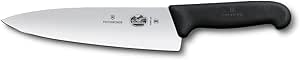 | Best for Everyday Practicality | Blade length: 8 inches | Blade material: Stainless steel | Handle material: Thermoplastic elastomer (TPE) | VIEW LATEST PRICE | See Our Full Breakdown |
| SHAN ZU 8-Inch Chef Knife – 67-Layer Japanese Damascus Steel with G10 Handle |  | Best for a Substantial, Grippy Handle | Blade length: 8 inches | Blade material: 10Cr15Mov Damascus steel, 67 layers | Hardness: 62 HRC | VIEW LATEST PRICE | See Our Full Breakdown |
| Atumuryou Japanese Chef Knife 8 Inch, Handcrafted Damascus VG10 Steel |  | Best for a Very Fine Cutting Angle | Blade length: 8 inches | Blade material: Japanese VG10 steel with 67-layer Damascus cladding | Hardness: 62 HRC | VIEW LATEST PRICE | See Our Full Breakdown |
| Shun Classic 8″ Chef’s Knife |  | Best Premium Craftsmanship | Brand: Shun | Blade Length: 8 inches | Blade Material: VG-MAX Steel Core with 68-layer Damascus Stainless Steel Cladding | VIEW LATEST PRICE | See Our Full Breakdown |
| chef’s knives under $200 | Blade length | Blade material | Handle material | Construction |
|---|---|---|---|---|
| PAUDIN 8-Inch Chef Knife with | 8 inches | High-carbon stainless steel (5Cr15MoV) | Wood | Stamped |
| Emojoy 8-Inch Damascus Chef Kn | 8 inches | 67-layer Damascus steel (Japan steel) | Olive wood | Forged |
| HOSHANHO Japanese High Carbon | 8 inches | Japanese 10Cr15CoMoV high-carbon stainless steel | Pakkawood | Forged |
| Mercer Culinary Millennia 8-In | 8 inches | High-carbon Japanese steel | Santoprene | Stamped |
| Amazon Basics Classic 8-inch F | 8 inches | High-carbon stainless steel | Stainless steel | Forged full tang |
| Shun Premier 8" Chef’s Knife | 8 inches | VG-MAX steel core with Damascus cladding | Pakkawood | Forged |
| Sunnecko 8-Inch Japanese Damas | 8 inches | 67-layer Damascus steel with VG10 core | ABS with decorative rivet | Forged, full tang |
| Victorinox Fibrox Pro 8-Inch C | 8 inches | Stainless steel | Thermoplastic elastomer (TPE) | Stamped |
| SHAN ZU 8-Inch Chef Knife | 8 inches | 10Cr15Mov Damascus steel, 67 layers | G10 glass fiber | — |
| Atumuryou Japanese Chef Knife | 8 inches | Japanese VG10 steel with 67-layer Damascus cladding | Natural stabilized wood and resin | Forged |
| Shun Classic 8" Chef’s Knife | 8 inches | VG-MAX Steel Core with 68-layer Damascus Stainless Steel Cladding | Pakkawood | — |
More Details on Our Top Picks
PAUDIN 8-Inch Chef Knife with Ergonomic Wood Handle
The PAUDIN is a straightforward choice for cooks who want an 8-inch general-purpose blade and a wood handle without moving to a more elaborate forged knife. Its 5Cr15MoV high-carbon stainless steel blade is 2 mm thick, giving it a relatively light, nimble profile for chopping and slicing. Compared with the Mercer Culinary Millennia, it offers a more traditional-looking wood grip, while Mercer has the more practical textured handle for wet hands. The PAUDIN’s waved blade pattern is decorative, not Damascus construction, so it should not be mistaken for the layered steel found on the Emojoy. Its stamped build is a tradeoff against forged options, and the wood handle needs care around water. I’d choose it for everyday prep and appearance, not heavy-duty use or low-maintenance cleanup.
Pros:- 2 mm blade suits nimble chopping and slicing.
- Wood handle offers a comfortable, traditional grip.
- 6.88-ounce weight keeps it relatively light in hand.
- Includes a gift box and a 24-month warranty.
Cons:- Stamped construction is a less substantial choice than the forged Emojoy or Amazon Basics knife.
- Waved blade pattern is decorative rather than real Damascus steel.
- Wood handle needs careful drying and maintenance.
Best for: Home cooks who want a light, everyday 8-inch knife with a wood handle and an attractive gift-ready presentation.
Not ideal for: Cooks who want forged construction, a genuinely layered Damascus blade, or a handle they can leave wet after washing.
- Blade length:8 inches
- Blade material:High-carbon stainless steel (5Cr15MoV)
- Blade thickness:2 mm
- Handle material:Wood
- Construction:Stamped
- Weight:6.88 ounces
- Warranty:24 months
Our verdict“Choose the PAUDIN for light everyday prep and a wood-handled look; choose a forged alternative if construction durability is your priority.”
Emojoy 8-Inch Damascus Chef Knife, 67-Layer Japan Steel, Olive Wood Handle
The Emojoy pairs forged, 67-layer Damascus steel with an olive wood handle, making it the most presentation-focused choice in this group. Its stated 15-degree edge and 58 HRC hardness point to a fine, capable blade for controlled slicing and routine prep. Compared with the PAUDIN, this is the more substantial forged option with genuine layered construction; compared with the HOSHANHO, it trades a harder stated steel for an olive wood handle and gift box. That appeal comes with upkeep: the wood needs care, and a fine edge benefits from attentive handling and sharpening. The 8-inch length works for most home prep, but it does not offer extra reach for larger ingredients. I’d pick it for a cook who values finish and presentation as much as daily cutting utility.
Pros:- Forged 67-layer Damascus construction.
- Stated 15-degree edge supports precise slicing.
- Olive wood handle provides an organic grip.
- Comes in a wooden gift box.
Cons:- Wood handle requires more care than the Santoprene handle on the Mercer Millennia.
- Eight-inch blade may feel short for larger ingredients or long slicing strokes.
- Fine edge calls for attentive handling and regular sharpening.
Best for: Home cooks shopping for a forged, gift-ready chef’s knife with an olive wood handle and a fine stated edge.
Not ideal for: Buyers who prefer a low-maintenance synthetic handle or need a longer blade for large-volume prep.
- Blade length:8 inches
- Blade material:67-layer Damascus steel (Japan steel)
- Hardness:58 HRC
- Edge angle:15 degrees
- Handle material:Olive wood
- Construction:Forged
- Overall length:33 centimeters
Our verdict“Pick the Emojoy if forged layered steel, olive wood, and gift presentation matter more to you than a low-care handle.”
HOSHANHO Japanese High Carbon Steel 8-Inch Chef’s Knife – Ultra Sharp, Non-Slip Ergonomic Handle
HOSHANHO is the precision-oriented pick: its 13-degree-per-side edge and forged Japanese 10Cr15CoMoV steel are suited to cooks who value controlled, clean cuts. The stated hardness of up to 60 HRC distinguishes it from the Emojoy, which lists 58 HRC and a 15-degree edge; those specs suggest HOSHANHO is aimed at a finer, harder-cutting feel, though it asks for more care to preserve the edge. Its sloped bolster and pakkawood handle are designed to support a secure pinch grip, a useful fit for cooks who spend time dicing and slicing. Compared with the Mercer Millennia, HOSHANHO puts more emphasis on a refined edge and forged build, while Mercer’s Santoprene handle is the more practical choice around water. Keep the HOSHANHO dry, and skip it if you want a forgiving, low-maintenance workhorse.
Pros:- Forged Japanese 10Cr15CoMoV steel with stated hardness up to 60 HRC.
- 13-degree-per-side edge is suited to precise cutting.
- Sloped bolster supports a secure pinch grip.
- Pakkawood handle provides an ergonomic shape.
Cons:- The harder, fine edge needs regular maintenance to retain its performance.
- Pakkawood should not be exposed to prolonged moisture.
- Less suited to rough handling than the more utilitarian Mercer Millennia.
Best for: Confident home cooks who use a pinch grip and want a sharp, precise forged knife for frequent slicing and dicing.
Not ideal for: Cooks who want minimal edge maintenance, routinely leave knives wet, or prefer a grippy synthetic handle.
- Blade length:8 inches
- Blade material:Japanese 10Cr15CoMoV high-carbon stainless steel
- Hardness:Up to 60 HRC
- Edge angle:13 degrees per side
- Handle material:Pakkawood
- Construction:Forged
- Weight:350 g
Our verdict“Choose HOSHANHO for a fine edge and pinch-grip control if you’re willing to maintain the blade and handle.”
Mercer Culinary Millennia 8-Inch Chef’s Knife with Black Handle
The Mercer Millennia prioritizes secure handling over decorative finishes. Its Santoprene handle has textured finger points, giving cooks a more confidence-focused grip than the wood handles on the PAUDIN and Emojoy, especially when hands are damp. The 8-inch high-carbon Japanese steel blade is designed for familiar prep tasks, while the stamped construction keeps the knife relatively light. That makes it a practical kitchen tool, though not the forged build offered by the HOSHANHO or Amazon Basics knife. Mercer’s full-tang construction is listed as a strength, but the blade remains stamped, so I would not treat it as a heavy-duty chopping tool. It also needs hand washing. This is the sensible pick for cooks who want a functional, grippy handle and can accept a simpler finish and regular care.
Pros:- Textured Santoprene handle helps maintain a secure grip.
- High-carbon Japanese steel blade is designed to hold a sharp edge.
- Full tang contributes to balance.
- Versatile 8-inch blade handles common prep tasks.
Cons:- Stamped construction is less substantial than the forged HOSHANHO or Amazon Basics knife.
- Requires hand washing rather than dishwasher cleanup.
- Plain black handle and blade offer less decorative appeal than the wood-handled options.
Best for: Everyday home cooks who prioritize a secure, textured grip and a straightforward knife for chopping, mincing, and dicing.
Not ideal for: Buyers seeking forged construction, a wood or Damascus look, or a knife suitable for dishwasher cleanup.
- Blade length:8 inches
- Blade material:High-carbon Japanese steel
- Handle material:Santoprene
- Construction:Stamped
- Tang:Full tang
- Weight:6.7 ounces
- Edge type:Plain
Our verdict“Choose the Mercer Millennia for a practical, grippy everyday knife, but look elsewhere if forged construction is your priority.”
Amazon Basics Classic 8-inch Full Tang High Carbon Stainless Steel Chef’s Knife, Silver
The Amazon Basics Classic stands out for its forged full-tang build and uncomplicated 8-inch format. Its three-rivet construction gives the handle a traditional, secure assembly, while the high-carbon stainless blade is described as resistant to stains, rust, and pitting. Compared with the Mercer Millennia, this knife offers forged construction rather than a stamped blade; Mercer, in turn, has a more grip-focused Santoprene handle. It is less refined in presentation than the layered Emojoy and lacks the stated narrow edge angle of the HOSHANHO, so I’d view it as a sturdy general-purpose choice, not a specialist’s precision pick. The stainless-steel handle may also feel less forgiving than the wood or Santoprene alternatives. Hand washing is required, making it a fit for cooks who value construction over convenience.
Pros:- Forged full-tang construction with three rivets.
- High-carbon stainless steel is described as resistant to stains, rust, and pitting.
- Eight-inch blade suits a broad range of kitchen prep.
- Traditional silver finish is simple and functional.
Cons:- Stainless-steel handle lacks the textured grip of the Mercer Millennia.
- Does not list a fine edge angle or specialist steel details like HOSHANHO.
- Hand washing is required.
Best for: Budget-minded home cooks who want a forged, full-tang 8-inch knife for routine chopping, dicing, and mincing.
Not ideal for: Cooks who want a textured non-slip grip, a refined specialty edge, or dishwasher-safe cleanup.
- Blade length:8 inches
- Overall dimensions:13.28 × 1.85 × 0.87 inches
- Weight:0.23 kg
- Blade material:High-carbon stainless steel
- Handle material:Stainless steel
- Construction:Forged full tang
- Handle fastening:Three rivets
Our verdict“Choose this Amazon Basics knife if forged full-tang construction is your priority and you do not need a textured handle or specialist edge.”
Shun Premier 8″ Chef’s Knife
The Shun Premier pairs a VG-MAX steel core with a 16-degree edge for precise slicing, while its hammered tsuchime finish can reduce drag as food moves across the blade. That makes it a more polished, fine-cutting choice than the Victorinox Fibrox Pro, whose appeal is simpler handling and easy cleanup rather than layered construction. The contoured Pakkawood handle accommodates left- and right-handed users, and the stated lifetime warranty adds reassurance for a long-term kitchen tool. The tradeoff is upkeep: this fine edge calls for regular honing and careful maintenance, unlike the more forgiving everyday approach of the Fibrox Pro. I’d choose the Shun for cooks who value refined cutting feel and craftsmanship, not for someone who wants to put a knife in the dishwasher.
Pros:- VG-MAX core and 16-degree edge support precise slicing.
- Hammered tsuchime finish can reduce drag and food sticking.
- Contoured Pakkawood handle is designed for either hand.
- Lifetime warranty is listed.
Cons:- Needs regular honing and careful maintenance to retain its fine edge.
- Less suited to cooks seeking a low-fuss, dishwasher-safe knife.
Best for: Home cooks who regularly prepare vegetables, fish, and boneless meat and want a finely edged Japanese knife with a refined handle.
Not ideal for: Busy cooks who want dishwasher convenience or prefer a lower-maintenance blade that can take less careful handling.
- Blade length:8 inches
- Blade material:VG-MAX steel core with Damascus cladding
- Edge angle:16 degrees
- Handle material:Pakkawood
- Weight:214 g
- Construction:Forged
- Warranty:Lifetime
Our verdict“Choose the Shun Premier for fine cutting and Japanese craftsmanship if you are willing to maintain its edge by hand.”
Sunnecko 8-Inch Japanese Damascus Chef Knife – VG10 Steel
The Sunnecko stands apart for its 10–12-degree edge and VG10 core, a combination aimed at very fine slicing rather than rough, casual use. Its full-tang forged build and ABS handle give it a practical counterpoint to the more decorative Pakkawood grip on the Shun Premier; the synthetic handle may suit cooks who prioritize a secure grip over natural materials. At eight inches, it keeps the familiar chef’s-knife reach, while the Damascus cladding adds a layered appearance. The narrow edge angle brings a tradeoff: sharpening calls for suitable technique, and careful hand washing is recommended. I’d pick this for a cook who wants a keen, balanced blade and is prepared to maintain it, rather than someone seeking the straightforward cleanup of the Victorinox Fibrox Pro.
Pros:- VG10 core and narrow edge angle are suited to precise slicing.
- Full-tang construction supports balanced handling.
- ABS handle offers a non-slip grip when wet.
- Seamless blade-to-handle transition can simplify cleaning.
Cons:- The 10–12-degree edge may require more specialized sharpening technique.
- Careful hand washing is recommended to maintain the finish.
Best for: Confident home cooks who want a very fine slicing edge, a full-tang build, and a synthetic handle that feels secure in wet conditions.
Not ideal for: New knife owners who want simple sharpening guidance or cooks who prefer dishwasher-safe cleanup.
- Blade length:8 inches
- Blade material:67-layer Damascus steel with VG10 core
- Edge angle:10–12 degrees
- Handle material:ABS with decorative rivet
- Construction:Forged, full tang
- Edge type:Plain
- Model number:Sonne-ABS-S-8IN
Our verdict“Choose the Sunnecko if a fine slicing edge and full-tang balance matter more to you than easy sharpening and dishwasher cleanup.”
Victorinox Fibrox Pro 8-Inch Chef’s Knife
The Fibrox Pro is the most practical everyday pick in this group: its non-slip TPE handle and dishwasher-safe construction favor quick, uncomplicated kitchen work over showy materials. Compared with the forged Shun Premier and its layered blade, this Victorinox uses stamped stainless steel, giving up that more substantial construction and fine-edged character for easy care and a straightforward grip. Its laser-tested blade is described for chopping, mincing, and slicing, so it covers the routine jobs most home cooks repeat. The main compromise is that the stainless blade needs regular sharpening, and cooks who prefer a heavier, forged knife may find its feel less substantial. I’d choose it for a busy household that values reliable handling and cleanup over Damascus styling or a particularly fine edge.
Pros:- TPE handle is designed for a secure grip, even when wet.
- Dishwasher-safe construction simplifies cleanup.
- Stainless blade is suited to chopping, mincing, and slicing.
- Lifetime warranty against material and workmanship defects is listed.
Cons:- Stamped construction may feel less substantial than forged options such as the Shun Premier.
- Blade needs regular sharpening to maintain cutting performance.
Best for: Busy home cooks who want a comfortable, wet-grip handle and easy cleanup for frequent everyday chopping.
Not ideal for: Cooks seeking a forged, heavier-feeling knife or a fine-angle Japanese blade for delicate precision work.
- Blade length:8 inches
- Blade material:Stainless steel
- Handle material:Thermoplastic elastomer (TPE)
- Construction:Stamped
- Edge:Plain
- Item length:13.4 inches
- Warranty:Lifetime against defects
- Model number:5.2063.20BK
Our verdict“Choose the Fibrox Pro for low-fuss everyday prep and easy cleanup rather than a forged feel or decorative blade.”
SHAN ZU 8-Inch Chef Knife – 67-Layer Japanese Damascus Steel with G10 Handle
The SHAN ZU brings together a 270 g weight, a 62 HRC blade, and a frosted G10 handle, making it the most substantial-feeling choice among these five based on the listed specs. Its 15-degree cutting angle is less acute than the Sunnecko’s 10–12-degree edge, so the Sunnecko is the more specialized option for an especially fine edge; the SHAN ZU instead pairs a relatively sharp angle with a heavier build. The G10 handle offers a durable, grippy alternative to the Shun Premier’s Pakkawood. A 2.2 mm blade thickness and forged 67-layer construction add to its robust character. That weight may tire cooks who favor nimble knives, and its harder blade calls for careful maintenance. I’d choose it for a firm, substantial grip, not for the lightest possible prep knife.
Pros:- 62 HRC hardness and 67-layer construction are specified for the blade.
- Frosted G10 handle offers a grippy alternative to wood.
- Forged construction and a 15-degree cutting angle suit controlled cutting.
- 2.2 mm blade thickness and listed dimensions provide useful fit information.
Cons:- At 270 g, it is heavier than the Shun Premier listed at 214 g.
- Hard blade calls for careful maintenance to reduce the risk of edge damage.
- Warranty is listed for 12 months rather than as a lifetime term.
Best for: Cooks who prefer a heavier knife, want a grippy G10 handle, and are comfortable caring for a hard blade.
Not ideal for: Anyone who favors a lightweight knife for long prep sessions or wants a low-maintenance edge.
- Blade length:8 inches
- Blade material:10Cr15Mov Damascus steel, 67 layers
- Hardness:62 HRC
- Cutting angle:15 degrees
- Handle material:G10 glass fiber
- Weight:270 g
- Blade thickness:2.2 mm
- Warranty:12 months
Our verdict“Choose the SHAN ZU if you want a heavier, G10-handled knife and can accept more careful upkeep.”
Atumuryou Japanese Chef Knife 8 Inch, Handcrafted Damascus VG10 Steel
The Atumuryou’s defining feature is its hand-sharpened 12-degree edge, paired with a VG10 core and 62 HRC hardness. That makes it a fine-cutting alternative to the heavier SHAN ZU, whose 15-degree edge and 270 g weight point toward a more substantial feel. At 13 inches overall, the Atumuryou is shorter than the Shun Premier’s listed 14.25 inches, a useful distinction for cooks who prefer a more compact full-size knife. Its stabilized wood-and-resin handle is designed for a slip-resistant grip, while the forged Damascus-clad blade gives it a dressed-up finish. The tradeoff is careful care: the fine, hard edge may be more vulnerable to chipping if used roughly, and the product data does not list a warranty. I’d reserve it for cooks who value precision and handle comfort over forgiving use.
Pros:- Hand-sharpened 12-degree edge is suited to precise slicing.
- VG10 core and 62 HRC hardness are specified.
- Stabilized wood-and-resin handle is designed for a secure grip.
- 13-inch overall length is shorter than the Shun Premier’s listed length.
Cons:- Fine, hard edge calls for careful handling to reduce chipping risk.
- Product data does not specify a warranty.
- Forged construction may require more attentive care than the dishwasher-safe Fibrox Pro.
Best for: Experienced home cooks who want a fine edge for precise cuts and prefer a stabilized wood-and-resin handle.
Not ideal for: Cooks who regularly tackle hard or frozen foods, use rough cutting motions, or want a forgiving, low-maintenance knife.
- Blade length:8 inches
- Blade material:Japanese VG10 steel with 67-layer Damascus cladding
- Hardness:62 HRC
- Edge angle:12 degrees
- Handle material:Natural stabilized wood and resin
- Construction:Forged
- Item length:13 inches
- Model number:AT8101-US02
Our verdict“Choose the Atumuryou for a fine, compact-feeling Japanese knife if you are prepared to handle and maintain its hard edge carefully.”
Shun Classic 8″ Chef’s Knife
This knife stands out for its handcrafted Japanese precision, offering a level of refinement that budget options like the Mercer Culinary Millennia simply cannot match. The VG-MAX steel core delivers exceptional sharpness, slicing through delicate ingredients with minimal resistance. However, this performance comes with a requirement for strict maintenance. Unlike the more forgiving stainless steel in the Victorinox Fibrox Pro, the Shun Classic demands hand-washing and careful storage to prevent corrosion and chipping. It is a tool for those who appreciate culinary artistry and are willing to invest time in upkeep. The D-shaped Pakkawood handle provides a secure grip, though some may find it less versatile than the contoured handles on entry-level knives. Ultimately, this is an investment piece for serious home cooks who prioritize cutting performance over convenience.
Pros:- Exceptional sharpness and edge retention from the VG-MAX steel core
- Ergonomic D-shaped Pakkawood handle offers superior control and comfort
- Lifetime warranty and free sharpening support provide long-term value
- Beautiful 68-layer Damascus cladding adds aesthetic appeal and durability
Cons:- Requires strict hand-washing and careful storage to maintain the finish
- Thin edge is prone to chipping if used on bones or frozen foods
- Higher price point compared to standard stainless steel alternatives
Best for: Serious home cooks who value Japanese craftsmanship and are willing to hand-wash and maintain a high-maintenance blade.
Not ideal for: Casual cooks or those with busy kitchens who prefer dishwasher-safe, low-maintenance tools.
- Brand:Shun
- Blade Length:8 inches
- Blade Material:VG-MAX Steel Core with 68-layer Damascus Stainless Steel Cladding
- Handle Material:Pakkawood
- Edge Angle:16 degrees
- Weight:206 g
- Item Length:13 inches
- Warranty:Lifetime
Our verdict“Choose the Shun Classic if you want a top-tier, handcrafted slicing experience and accept the need for careful maintenance.”
How We Picked
I evaluated these eleven knives by prioritizing three core pillars: edge geometry, handle ergonomics, and material integrity. First, I analyzed the steel composition and heat treatment of each model. Japanese VG10 and high-carbon steels were compared against German-style stainless alloys to determine which offered the best balance of hardness (HRC) and toughness. A knife that is too hard may chip during heavy-duty tasks like breaking down chicken joints, while softer steel dulls quickly. Second, I assessed handle design and balance. A chef’s knife must feel like an extension of the hand; I looked for full-tang construction, secure grip textures, and center-of-gravity placement near the bolster to reduce wrist fatigue during repetitive chopping. Third, I considered long-term ownership costs and maintenance requirements. This included how forgiving each blade is to home honing versus professional sharpening, and whether the materials resist staining and corrosion in a typical home kitchen environment. Products were ranked based on this holistic view of performance, durability, and value, ensuring that premium aesthetics did not overshadow functional reliability.
| chef’s knives under $200 | Construction |
|---|---|
| PAUDIN 8-Inch Chef Knife with | Stamped |
| Emojoy 8-Inch Damascus Chef Kn | Forged |
| HOSHANHO Japanese High Carbon | Forged |
| Mercer Culinary Millennia 8-In | Stamped |
| Amazon Basics Classic 8-inch F | Forged full tang |
| Shun Premier 8" Chef’s Knife | Forged |
| Sunnecko 8-Inch Japanese Damas | Forged, full tang |
| Victorinox Fibrox Pro 8-Inch C | Stamped |
| SHAN ZU 8-Inch Chef Knife | — |
| Atumuryou Japanese Chef Knife | Forged |
| Shun Classic 8" Chef’s Knife | — |
Factors to Consider When Choosing Best Chef’s Knives Under $200
Selecting a chef’s knife is a personal decision influenced by your cutting style, maintenance tolerance, and budget. Beyond the specific products, these broader factors will help you make a choice that lasts for years.
Steel Composition And Edge Retention
The type of steel dictates how sharp the knife gets and how long it stays that way. Japanese steels like VG10 and high-carbon alloys are typically harder (60-62 HRC), allowing for a thinner, sharper edge that excels at slicing vegetables and fish. However, this hardness makes them more brittle and prone to chipping if used on bones or frozen foods. Western stainless steels, often found in German brands, are softer (56-58 HRC). They dull faster but are tougher, more resistant to corrosion, and much easier to sharpen on a standard whetstone. Choose Japanese steel for precision slicing and Western steel for heavy-duty, all-purpose chopping.
Handle Ergonomics And Grip Security
A beautiful blade is useless if the handle causes blisters or slips. Look for handles that fit your hand size securely, especially when wet. Synthetic materials like Fibrox or G10 offer superior grip and durability compared to traditional wood, which can warp or crack if soaked. The shape matters too; a rounded handle allows for versatile grips, while a D-shaped handle locks the hand in a specific position. If you plan to use the knife for hours at a time, prioritize ergonomic designs that reduce strain on the wrist and forearm, as fatigue leads to sloppy, unsafe cuts.
Maintenance Requirements And Forgiveness
High-performance knives require high-performance maintenance. Japanese high-carbon blades can rust or discolor if left wet, requiring immediate drying and occasional oiling. Stainless steels are more forgiving of neglect but still need regular honing. Consider your willingness to maintain the tool. If you prefer a ‘set it and forget it’ approach, a stain-resistant stainless steel knife is the pragmatic choice. If you enjoy the ritual of sharpening and care for your tools meticulously, a high-carbon or VG10 steel knife will reward you with superior cutting performance that outlasts softer alternatives.
Balance And Weight Distribution
Balance affects how the knife feels in your hand during use. Most Western knives are handle-heavy, which helps with downward chopping force. Many Japanese knives are blade-heavy, facilitating a push-cutting motion. There is no objectively ‘better’ balance, only what suits your technique. Hold the knife at the pinch point (where the blade meets the handle) before buying if possible. If it tips too far forward or back, it may feel awkward during extended prep. A well-balanced knife reduces the effort needed to guide the blade, making prep work feel effortless rather than laborious.
The Value Of Damascus Cladding
Damascus patterns are visually stunning, but they do not always improve performance. On premium knives, Damascus cladding adds flexibility and protects a hard core steel. On budget-friendly options, the pattern is often laser-etched onto a standard stainless blade purely for aesthetics. Do not pay a premium for the pattern alone; focus on the core steel quality and edge geometry. A plain stainless blade with good heat treatment will outperform a decorative Damascus blade with poor engineering. Verify the core steel specification rather than being seduced by the surface pattern alone.
Frequently Asked Questions
Is a Japanese chef’s knife better than a German one for general home cooking?
Neither is inherently better; they serve different cutting styles. Japanese knives typically have a thinner blade and a sharper factory edge, making them ideal for precise slicing of vegetables, fish, and boneless meats. However, they are more fragile and can chip if used on hard squash or bones. German knives have thicker, heavier blades that are tougher and better suited for rocking chops and breaking down poultry. For a home cook who does a mix of tasks, a high-quality German-style stainless knife is often more forgiving and versatile, while a Japanese knife excels if you prioritize precision and enjoy maintaining a sharper edge.
Do I really need to buy a separate honing steel for these knives?
Yes, regular honing is essential for maintaining the edge between sharpenings, regardless of the knife’s price. A honing steel does not remove metal; instead, it realigns the microscopic teeth of the blade that bend during use. For softer German steels, a steel rod is highly effective. For harder Japanese steels like VG10, a ceramic rod is often preferred to avoid damaging the brittle edge. Skipping honing means the knife will feel duller sooner, leading to more frequent, aggressive sharpening sessions that remove more material and shorten the knife’s lifespan.
Can I put any of these chef’s knives in the dishwasher?
No, you should never put a quality chef’s knife in the dishwasher. The high heat and harsh detergents can damage the handle materials, especially wood or synthetic composites, causing them to loosen or crack. More importantly, the blades banging against other utensils can chip the edge or dull the blade significantly. The abrasive nature of dishwasher detergent can also cause corrosion on high-carbon steels. Hand washing with mild soap and immediate drying is the only safe method to preserve the sharpness and structural integrity of your investment.
How often do I need to sharpen a knife under $200?
The frequency depends on usage and steel hardness, but generally, a home cook should expect to sharpen a knife every 6 to 12 months if honed regularly. Harder Japanese steels hold an edge longer but require finer grit stones to sharpen, which takes more time and skill. Softer Western steels dull faster but are easier to sharpen quickly on a basic whetstone. If you use the knife daily for prep, you may need to touch up the edge on a stone every few months. Listen to the knife: if it starts crushing tomatoes instead of slicing them, it is time to sharpen.
Is an 8-inch chef’s knife the right size for a small kitchen?
An 8-inch chef’s knife is the industry standard and works for most kitchen tasks, but it can feel cumbersome in very tight workspaces or for cooks with smaller hands. If you find an 8-inch blade unwieldy, consider a 6-inch or 7-inch chef’s knife, which offers the same versatility with better control. However, an 8-inch blade is generally preferred for its ability to clear the cutting board on either side of the food, allowing for a smooth, rocking motion without hitting the board’s edges. If your kitchen is small, prioritize a knife with a comfortable handle that feels secure, even if the blade is slightly longer than your hand span.
Conclusion
Choosing the right chef’s knife under $200 comes down to matching the tool’s characteristics to your cooking habits. For the best overall balance of premium aesthetics, sharpness, and performance, the Shun Premier is the standout choice, offering a luxurious feel and exceptional edge. If you prioritize pure value and durability above all else, the Victorinox Fibrox Pro remains the undisputed king of the budget category, providing professional-grade reliability at a fraction of the cost. Beginners should look toward the Mercer Millennia or Amazon Basics Classic for their forgiving stainless steel construction and ergonomic handles that minimize fatigue. For those seeking a specific high-performance Japanese experience without the top-tier price tag, the Shun Classic or Sunnecko offer impressive VG10 steel performance. Ultimately, the best knife is the one you will maintain properly and enjoy using daily.
Evergreen bestsellers Picks

De'Longhi Classic Signature Espresso Machine with Adjustable Milk Frother

KitchenAid Artisan Series 5-Quart Tilt-Head Stand Mixer, Dried Rose

Bose QuietComfort Wireless Noise-Cancelling Over-Ear Headphones, Cypress Green
As an affiliate, we earn on qualifying purchases.