
TL;DR

Get kitchen gear delivered free — and shop member deals
- Fast, free delivery on millions of items
- Access to Prime Big Deal Days deals on October 6–7
- Prime Video, Amazon Music and more included
A quiet kitchen relies on manual techniques, selecting low-noise tools, and thoughtful space management. It reduces sensory overload and makes cooking calmer and more deliberate.
Imagine cooking in a space where gentle sounds replace the clatter and hum of typical appliances. The quiet kitchen isn’t about silence but about controlling noise levels to create a calmer, more focused environment.
In this guide, you’ll learn how to cut down on loud noises, choose the right tools, and organize your space for maximum tranquility. Whether you’re living off-grid or simply craving a more mindful way to cook, these practical tips will help you craft a kitchen that feels less chaotic and more intentional.
Manual techniques like chopping, mashing, and stirring produce much less noise than electric appliances.
Choose appliances with decibel ratings below 50 dB and place them on vibration-absorbing mats.
Organize your kitchen to dampen sound—soft-close drawers, padded surfaces, and clutter management matter.
Plan cooking activities to avoid running loud appliances during quiet hours, and prep ingredients ahead of time.
Balance manual and powered methods based on task importance, efficiency, and noise sensitivity.
Field guide / sensory-friendly cooking
The Quiet Kitchen: Cooking Without Appliance Noise
A quieter kitchen is not silent. It is deliberate: manual techniques, low-noise tools, thoughtful timing, and a room arranged to soften impact, vibration, and echo.
A practical threshold for selecting quieter appliances.
Simple habits that reduce noise across the cooking day.
Identify the loudest activity before changing your tools.
More focus, texture awareness, and relaxed preparation.
01 / The operating principle
Trade intensity for intention.
Quiet cooking combines low-disruption methods with smart preparation. The result is a kitchen that feels slower and more deliberate without giving up practicality.
Notice
Map the sounds that interrupt your routine: blending, chopping, dishwashing, or searching.
Choose
Match each task with a manual method, a quiet tool, or a selectively used appliance.
Soften
Use mats, cork, fabric, and soft-close hardware to absorb impacts and vibration.
Prepare
Measure, wash, chop, and organize ingredients before the cooking session begins.
Balance
Keep powered tools when they meaningfully improve the result or save essential time.
02 / Method library
Start with the gentlest technique that works.
Simmering, steaming, poaching, baking, slow-roasting, and no-cook meals create a softer soundscape than high-speed blending or repeated food processing.
Manual prep
Sharp knives, forks, whisks, graters, and a mortar and pestle keep the work tactile and controlled.
- Hand chopping
- Fork mashing
- Manual whisking
Quiet cooking
Covered pots and low, steady heat produce subtle bubbling rather than aggressive sizzling or ventilation noise.
- Simmering and poaching
- Steaming and baking
- Slow-roasting
No-cook meals
When convenience matters, recipes assembled with a spoon can deliver the lowest possible sound level.
- Salads and chilled soups
- Overnight oats
- Prepped grain bowls
03 / Sound profile
Noise is cumulative. Small reductions matter.
Design for the whole soundscape.
A blender may be the loudest single event, but rattling drawers, hard surfaces, fans, and repeated searching add up. Reduce the peaks and the background at the same time.
Appliance selection guide
04 / Tool decisions
Keep the hands quiet. Let the appliance earn its place.
Sharp blades need less force, heavy-bottomed pots rattle less, and wooden or silicone utensils soften contact. When an appliance is necessary, prioritize a low decibel rating and vibration control.
| Task | Quiet-first choice | Powered alternative | Tradeoff |
|---|---|---|---|
| Chopping vegetables | Sharp chef’s knife | Food processor | ✓ More control |
| Crushing herbs | Mortar and pestle | Electric grinder | ~ More effort |
| Heating food | Covered pot / induction | Gas burner | ✓ Less hiss |
| Making a smooth soup | Hand masher | Blender | ~ Texture varies |
| Washing dishes | Batch washing | Quiet dishwasher | ✗ Timing matters |
05 / Room as sound buffer
Make the kitchen absorb what it cannot avoid.
Hard surfaces reflect sound. Soft materials, stable storage, and a clear workflow reduce reverberation and prevent the small impacts that make a kitchen feel chaotic.
Absorb
Use rubber mats, cork-lined shelves, fabric floor runners, and padded cabinet interiors.
Stabilize
Place silicone or cork beneath boards, mixers, and other vibration-prone equipment.
Organize
Keep frequently used tools and ingredients within reach to reduce searching and rearranging.
Schedule
Run dishwashers, blenders, and mixers when household activity can comfortably absorb the sound.
Traceability / from choice to feeling
Follow the quieter chain.
Use manual methods when…
The task is simple, texture matters, and the extra time feels restorative rather than burdensome.
Use powered tools when…
They materially improve the result, support accessibility, or make a demanding task practical.
How to Choose Cooking Methods That Keep Noise Down
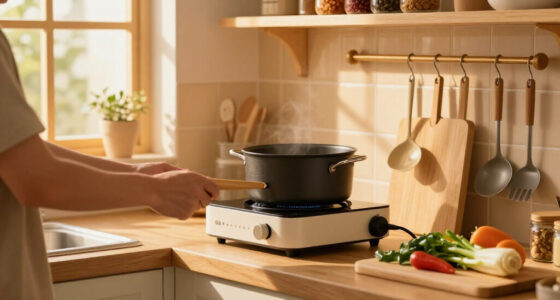
The first step is picking the right cooking methods. Techniques like simmering, steaming, slow-roasting, or even no-cook meals produce minimal noise. For example, boiling pasta in a covered pot creates a gentle bubbling sound, much softer than frying or high-speed blending.
Imagine preparing a batch of overnight oats: no appliances needed, just soaking oats in milk with a spoon stirring occasionally. That’s a quiet, satisfying way to start your day without waking up the neighborhood.
Here are some silent-friendly options:
- Boiling, steaming, or baking
- Slow-cooking or roasting
- No-cook salads, chilled soups, overnight oats
- Gentle simmering and poaching
Choosing these methods matters because they align with a philosophy of mindful, low-disruption cooking. They allow you to prepare nourishing meals without contributing to noise pollution, which can be particularly important in shared living spaces or early mornings. However, these methods often require more time or planning, so weighing convenience against tranquility is key. For instance, slow cooking is excellent for flavor development but demands patience, while no-cook options offer quick preparation with minimal disturbance.
Tradeoffs include longer cook times or limited variety; understanding these helps you tailor your kitchen habits to your priorities, balancing peace with practicality.
As an affiliate, we earn on qualifying purchases.
Select the Quietest Tools and Appliances for Your Kitchen
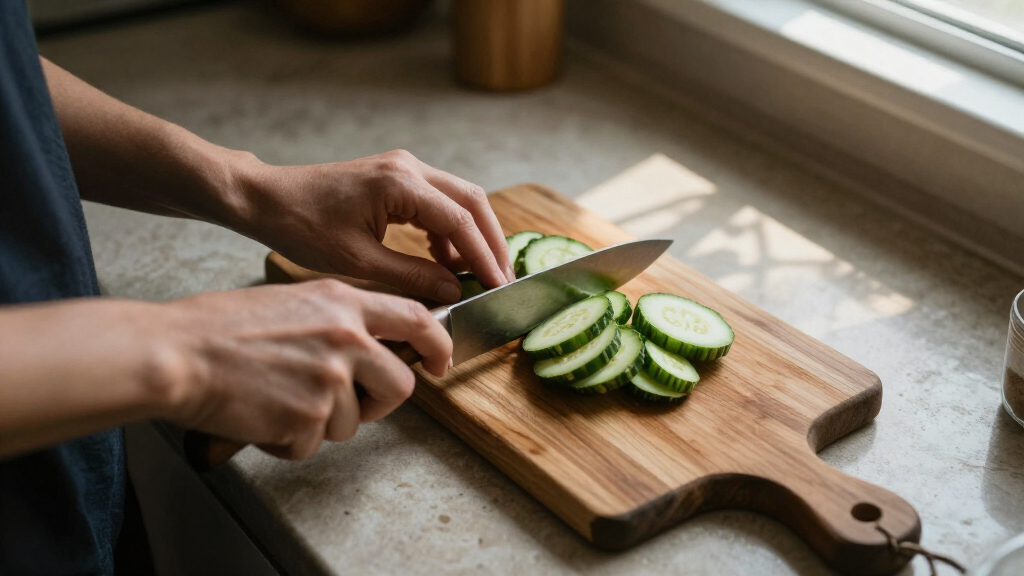
Manual tools are your best allies for a quiet kitchen. Sharp knives cut effortlessly and quietly, unlike dull blades that require force and cause noise. A mortar and pestle crush herbs or spices softly, avoiding the whir of electric grinders.
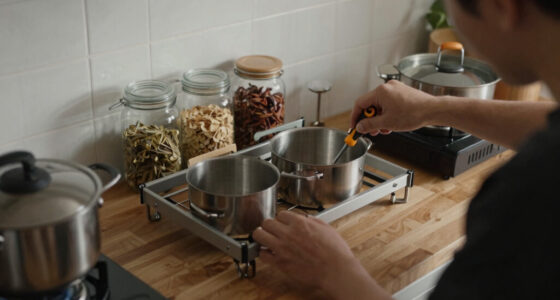
Heavy-bottomed pots and wooden utensils don’t rattle or clang as much as thin metal pans or plastic spoons. Induction cooktops are typically quieter than gas burners, which produce hissing and clicking sounds. Look for appliances with noise ratings below 50 decibels—these are often labeled as ‘quiet’ or ‘low-noise.’
For example, a manual cheese grater produces a satisfying texture without a motor noise, and a sharp chef’s knife slices through vegetables like butter—quiet and precise.
Choosing quieter tools impacts your kitchen environment by reducing the cumulative noise that can cause sensory fatigue or stress over time. Dull tools not only make cooking louder because they require more force but also increase the risk of accidents. Electric appliances, especially blenders, can generate a significant amount of noise, which can be disruptive during early mornings or late nights. By selecting tools designed for quiet operation, you create a more peaceful atmosphere that encourages mindful cooking. However, there are tradeoffs: manual tools often require more effort and time, which might not suit all tasks or lifestyles. Balancing convenience with tranquility means understanding when manual methods suffice and when powered tools are justified.
Overall, investing in low-noise appliances and manual tools enhances your kitchen’s serenity, making everyday tasks less taxing on your senses and more enjoyable.
As an affiliate, we earn on qualifying purchases.
Manage Your Kitchen Environment for Quieter Cooking
Much of the noise in a kitchen isn’t from the tools but from the environment itself. Vibrations, impacts, and echoes amplify sounds that might otherwise be tolerable.
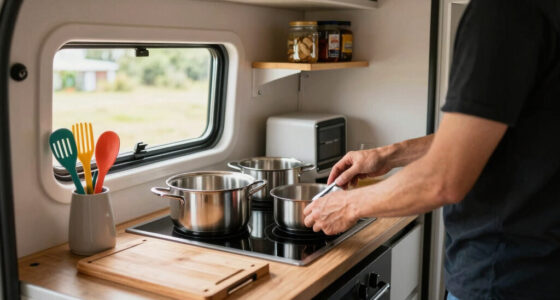
Soft-close drawers, rubber mats, cork-lined shelves, and padded cabinet interiors absorb vibrations and dampen noise. Using fabric or cork mats under cutting boards and appliances prevents rattling and impact sounds. Keeping clutter organized minimizes the need for loud searching and rearranging.
For example, placing a silicone mat under your blender or mixer reduces vibrations and muffles whines. Gently closing cabinet doors and drawers prevents loud bangs, especially in shared spaces or open-plan homes.
In practice, investing in good organization and soft materials transforms a noisy, chaotic kitchen into a peaceful retreat.
Think of your space as a sound buffer—every little bit helps.
Environmental modifications not only reduce immediate noise but also influence how sound travels and reverberates within your space. For instance, hard surfaces reflect sound, creating echoes, while soft materials absorb it, leading to a quieter atmosphere. By strategically adding rugs, curtains, or acoustic panels, you dampen overall sound levels. Good organization prevents unnecessary noise from clutter shifting or falling, which can be surprisingly loud. These modifications may require initial effort or investment but offer lasting benefits by creating a calmer, more controlled environment conducive to mindful cooking and reducing auditory fatigue over time.
As an affiliate, we earn on qualifying purchases.
Plan Your Cooking to Minimize Noise and Distractions
Preparation is key to a quiet kitchen. Mise en place—measuring, chopping, and organizing ingredients beforehand—prevents rushed, noisy bursts of activity.
Batch prep saves time and reduces the need to repeatedly operate noisy appliances. For example, chopping vegetables for the week on a quiet, sharp knife and storing them in sealed containers keeps you from pulling out the food processor every day.
Timing matters too. Run noisy appliances like dishwashers or blenders during quieter times—early mornings or late evenings. Planning quiet recipes for these moments helps create a peaceful routine.
In our own kitchen, I’ll chop a week’s worth of garlic and herbs at once, then store them in small jars. It cuts down on daily noise and keeps the workflow smooth.
Smart planning turns a busy, noisy kitchen into a calm, efficient workspace.
Good planning also involves understanding the rhythm of your household. Scheduling noisy tasks when others are occupied or out can significantly reduce collective noise disturbances. Additionally, preparing ingredients in bulk not only minimizes repetitive noise but also streamlines cooking, making the process more efficient and less stressful. This mindful approach to organization recognizes that reducing noise isn’t only about tools but also about managing the timing and flow of your activities for a more tranquil environment.
As an affiliate, we earn on qualifying purchases.
Balance Convenience and Silence with Smarter Choices
The idea isn’t to turn your kitchen into a library—completely silent and static. It’s about choosing when to use manual techniques versus appliances. For instance, a hand-crank coffee grinder might be quieter than an electric one, but if you’re making a large batch, the electric might save time.
Ask yourself: does this appliance genuinely improve the result, or just automate a task? Sometimes, a quick stir with a wooden spoon beats the whir of a mixer. Other times, a blender’s power is worth the noise.
For example, when making bread, kneading by hand is quiet and satisfying, but a bread machine speeds up the process—though it can be loud. Judging when to switch depends on your priorities—speed, noise, or both.
In our household, we reserve manual tools for everyday tasks and use powered appliances sparingly. It’s a good way to keep our space peaceful while staying practical.
Remember: conscious choices make all the difference.
Balancing convenience and quiet involves understanding the nature of each task and your environment. Recognizing which tasks benefit from manual methods—like stirring or kneading—can preserve tranquility, while selectively using powered tools for efficiency when needed. This approach reduces overall noise pollution without sacrificing functionality, fostering a mindful balance between ease and peace. The tradeoff often involves effort and time, but the long-term benefit is a more serene kitchen that respects your need for calm amidst busy routines.
Quick Guide: 5 Simple Steps to a Quieter Kitchen
- Identify the loudest activities in your kitchen—blending, chopping, dishwashing.
- Replace at least one noisy tool with a manual alternative—use a mortar and pestle instead of a grinder.
- Prepare ingredients in advance to minimize appliance use during peak hours.
- Place noisy appliances on anti-vibration mats and keep them away from walls.
- Close doors and drawers gently, and use soft materials to absorb sound.
Frequently Asked Questions
Can I cook quietly without giving up modern appliances?
Yes. Use appliances selectively, choose quieter models, operate them at lower speeds, and combine them with manual techniques. That way, you get the benefits of both worlds—efficiency and peace.
What are the quietest cooking methods?
Methods like poaching, steaming, baking, slow-roasting, and no-cook options produce minimal noise. They rely on gentle heat and avoid high-speed blending or frying, making for a calmer kitchen experience.
Is induction cooking silent?
Not entirely. While induction cooktops are generally quieter than gas, they can produce a hum, clicking, or fan noise, especially at high power. Choosing models with lower decibel ratings and good ventilation helps keep sound levels down.
How can I make a blender quieter?
Use the lowest effective speed, place it on a thick rubber mat, and keep it away from hard surfaces that amplify sound. Some manufacturers offer sound enclosures, but avoid blocking vents or using unsafe covers.
Are quieter appliances more energy-efficient?
Not necessarily. Noise level and energy efficiency are separate specs. Always check both the decibel rating and energy label to find appliances that suit your needs without sacrificing performance.
Conclusion
A quieter kitchen isn’t just about muffling sounds—it’s about reclaiming your space for mindful, deliberate cooking. By blending manual skills with selective appliance use, you create a space that feels calm and controlled, not chaotic.
Start small: pick one noisy activity to improve today. Over time, these changes transform your kitchen into a sanctuary of quiet productivity—and that peaceful rhythm can turn cooking from a chore into a mindful ritual.
Fall Picks
fall essentials
As an affiliate, we earn on qualifying purchases.