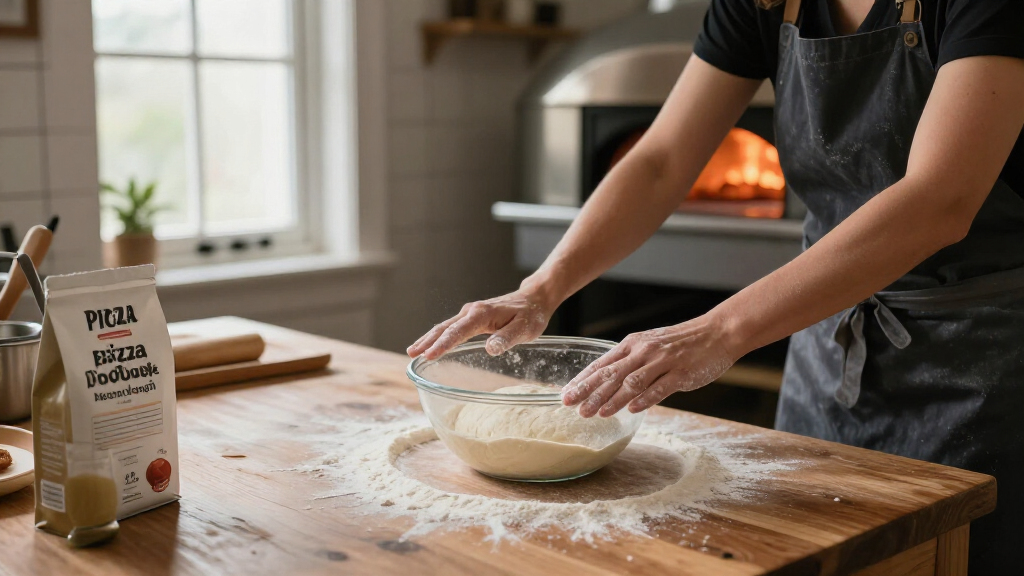

🔍 Read the full analysis: Pizza Dough, Neapolitan Style: 24-Hour Fermentation Made Simple on Mad Tasting

Get kitchen gear delivered free — and shop member deals
- Fast, free delivery on millions of items
- Access to Prime Big Deal Days deals on October 6–7
- Prime Video, Amazon Music and more included
TL;DR
Mad Tasting outlines a 24-hour method for four Neapolitan-style pizzas using 500 grams of flour, 315 grams of water, 14 grams of salt and 1 gram of instant yeast. The dough rests briefly at room temperature, ferments overnight in the refrigerator and warms for about three hours before baking; readiness depends on its expansion and feel as well as the schedule.
Mad Tasting has published a home method for making four Neapolitan-style pizzas with a dough that ferments for about 24 hours. Its recipe uses 500 grams of flour, 315 grams of water, 14 grams of salt and 1 gram of instant yeast, with an overnight refrigerator rest followed by about three hours at room temperature before baking.
The formula makes four dough balls of about 250 grams each. The guide describes the water as 63% hydration relative to the flour, a level intended to keep the dough supple while remaining manageable to shape. It recommends weighing ingredients in grams, since a small difference in yeast can affect a long fermentation. “00” flour or bread flour can be used; the guide says all-purpose flour is also an option, though stretching and browning may differ.
The example schedule starts by mixing flour, yeast and most of the water, then adding salt dissolved in the remaining water and kneading until smoother. After a 30- to 60-minute room-temperature rest, the dough is divided, shaped into balls and covered in a container with room to expand. It rests in the refrigerator overnight, then comes out about three hours before the planned bake.
Mad Tasting advises checking whether the dough balls look fuller and feel relaxed and airy, rather than relying only on elapsed time or expecting them to double. The guide recommends shaping by hand while preserving gas around the rim, then baking on a thoroughly heated pizza steel or stone. It notes that a home oven cannot reproduce the intense heat and quick bake of a wood-fired oven.
Pizza Dough, Neapolitan Style: 24-Hour Fermentation Made Simple
Mad Tasting’s home formula makes four Neapolitan-style pizzas from four ingredients, with most of the resting time spent overnight in the refrigerator — only brief mixing and shaping steps require attention.
Your domestic oven cannot reproduce a wood-fired oven’s intense heat and quick bake.
A Fermentation Plan for Home Kitchens
Mix & Knead
Combine flour, yeast and most of the water. Add salt dissolved in the remaining water; knead until smoother.
Evening · Day 1Rest, Divide, Ball
Rest 30–60 minutes at room temperature, then divide into four balls in a covered container with room to expand.
30–60 min RTOvernight Cold Ferment
The refrigerator slows fermentation but does not stop it — the dough keeps expanding and relaxing overnight.
Overnight · FridgeWarm & Bake
Remove about three hours before baking. Stretch gently, preserve gas at the rim, bake on a preheated steel or stone.
~3 h RT · Bake Day 2Four Ingredients, Weighed in Grams
| Ingredient | Amount | Baker’s % | Notes |
|---|---|---|---|
| Flour (“00” or bread) | 500 g | 100% | All-purpose also works; stretching and browning may differ |
| Water | 315 g | 63% | Supple dough that stays manageable to shape |
| Salt | 14 g | 2.8% | Dissolved in reserved water before adding |
| Instant yeast | 1 g | 0.2% | Weigh precisely — small differences affect a long fermentation |
What the Neapolitan Style Means
Lean by Design
Only flour, water, salt and yeast — no oil, no sugar. Some home recipes add both to encourage browning in cooler ovens, but they change the dough’s texture and move it away from the lean style presented here.
Airy Raised Rim
The raised edge is the cornicione. Its airy character comes from fermentation plus gentle hand-shaping that preserves gas around the outside of the dough ball.
Style, Not Certification
Mad Tasting frames the method as Neapolitan-style for a home kitchen — not as proof that the result meets traditional certification standards. Domestic ovens simply cannot match a wood-fired bake.
Check the Dough Before Baking
Signs of Readiness ✓
- Dough balls look visibly fuller after the cold rest
- They feel relaxed and airy, yet hold a rounded shape
- The dough softens steadily during the ~3-hour warm-up
- Gas stays around the rim when stretched by hand
Don’t Rely Only On ✗
- Elapsed time alone — kitchens differ in temperature
- Expecting the dough to double in size
- A fixed timetable for every room and oven
- Assuming a home oven matches wood-fired heat
Warm Kitchen
May call for a shorter initial rest — fermentation moves faster and the dough becomes ready sooner.
Chilly Kitchen
Can slow the dough’s return to activity after refrigeration; expect a longer warm-up before baking.
At a Glance
How much dough does it make?
Mad Tasting’s formula yields four dough balls of about 250 grams each — enough for four pizzas from a single evening mix.
What are the ingredient amounts?
500 g flour, 315 g water, 14 g salt, 1 g instant yeast. The guide recommends weighing all ingredients in grams.
How long does it ferment?
About 23 to 24 hours total: a short room-temperature start, an overnight fridge rest, then ~3 hours at room temperature before baking. Check the dough’s condition as well as the clock.
Is it certified Neapolitan?
No — the guide calls it Neapolitan-style home dough and does not claim it meets traditional certification standards.
A Fermentation Plan for Home Kitchens
The schedule makes a slow-fermented dough more practical to plan: most of its resting time passes in the refrigerator, with only brief mixing and shaping steps requiring attention. For home cooks, the stated quantities and timing provide a repeatable starting point for preparing several pizzas for the following evening.
The guide also emphasizes that temperature affects fermentation. A warm kitchen may call for a shorter initial rest, while dough in a chilly room may need longer to become ready. The refrigerator slows fermentation but does not stop it, so the dough’s expansion and texture remain relevant checks. That advice matters because a fixed timetable can produce different results in different kitchens.
What the Neapolitan Style Means
The recipe describes a lean dough made from flour, water, salt and yeast, without oil or sugar. It identifies the raised rim as the cornicione and links an airy edge to fermentation and gentle shaping that preserves some gas around the outside. Some home recipes add oil or sugar to encourage browning in cooler ovens, but the guide says those ingredients change the dough’s texture and move it away from the lean style presented here.
Mad Tasting frames the method as Neapolitan-style for a home kitchen, not as proof that the result meets traditional certification standards. The source material supplies no publication date or independent testing details. Its described schedule runs from an evening mix to baking the next evening, with exact elapsed time depending on when the cook starts and finishes.
““The schedule gives you a starting point; the dough’s feel tells you when to move on.””
— Mad Tasting
Timing Depends on Room Conditions
The guide does not give a single readiness time that applies to every kitchen. It says a room at 80°F (27°C) may require a shorter initial rest, while a cooler room can slow the dough’s return to activity after refrigeration. It does not specify a precise oven temperature or baking duration in the supplied material, and results may vary with flour choice and oven equipment.
The source also does not provide a publication date, testing method or independent assessment of the recipe. The proposed yield and fermentation behavior are presented as guidance from Mad Tasting; readers are not given comparative test results showing how the formula performs across different kitchens.
Check the Dough Before Baking
Under the example plan, cooks take the covered dough balls from the refrigerator about three hours before baking and assess whether they have expanded, softened and become airy while still holding a rounded shape. The next steps are to stretch them gently, keep gas around the rim and bake on a thoroughly preheated steel or stone. The guide recommends adjusting the timing to the dough’s condition and kitchen temperature.
No later update or additional milestone is included in the source material. The described endpoint is baking on the second evening, roughly 23 to 24 hours after mixing.
Key Questions
How much dough does the recipe make?
Mad Tasting’s formula is intended for four dough balls of about 250 grams each.
What are the ingredient amounts?
Use 500 grams of flour, 315 grams of water, 14 grams of salt and 1 gram of instant yeast, according to the guide. It recommends weighing the ingredients in grams.
How long does the dough ferment?
The example runs for about 23 to 24 hours: a short room-temperature start, an overnight refrigerator rest and about three hours at room temperature before baking. The source advises checking the dough’s condition as well as the clock.
Does this method make officially certified Neapolitan pizza?
The guide calls it Neapolitan-style home dough and does not claim that it meets traditional certification standards. It also notes that domestic ovens cannot match a wood-fired oven’s intense heat.
Source: Mad Tasting
Fall Picks
fall essentials
As an affiliate, we earn on qualifying purchases.