TL;DR
You can cook most everyday meals with a knife, cutting board, skillet, saucepan, and a few dependable techniques. Watch how ingredients change, control heat, taste as you go, and treat recipe timings as estimates. Use a food thermometer when internal temperature matters for safety; sight and smell cannot replace it.
A pot of rice does not know whether it came from a smart cooker or a dented saucepan. It responds to water, heat, and time. Once you learn to notice those changes, you can make dinner even when the counter is bare and the recipe assumes you own three appliances.

Get kitchen gear delivered free with Prime
- Fast, free delivery on millions of items
- Prime Video, Amazon Music and more included
- Member-only deals all year
Cooking confidence without gadgets means relying on simple tools, sensory cues, and repeatable techniques. It does not mean rejecting useful equipment. A thermometer can help keep meat safe, and a mixer can save your wrists. The lasting skill is knowing what the food needs when a gadget is missing, inaccurate, or inconvenient.
Here you’ll learn which tools earn their place, how to read heat and doneness, and how to adapt familiar recipes without guessing blindly. The goal is practical: fewer stalled dinners, less clutter, and the calm to adjust when your onions brown faster than the recipe promised.
A chef’s knife, cutting board, skillet, saucepan, tray, and spoon cover many everyday cooking jobs.
Use bubble size, sizzling, aroma, color, and tenderness to adjust heat and judge progress; treat recipe times as estimates.
When a gadget is missing, identify its job and choose a hand tool that performs the same task.
Change seasoning gradually: taste, add a little salt or acid, then taste again.
Use a food thermometer when meat, poultry, or reheated leftovers need an accurate internal-temperature check.
Cooking Confidence Without Gadgets
Everyday meals need a few dependable tools, attention to how food changes, and practice adjusting as you go.
Build a simple kitchen kit
A small set of familiar tools handles many everyday cooking jobs.
Knife and board
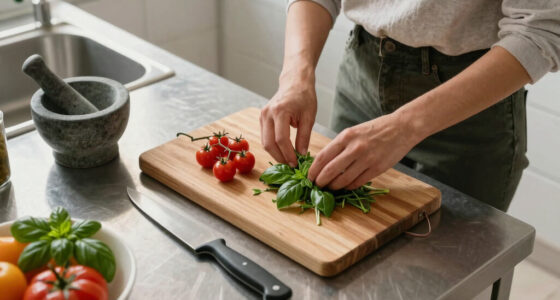
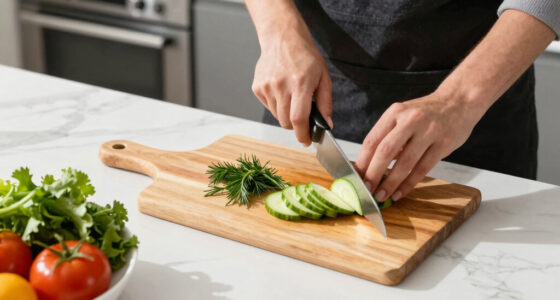
Chop vegetables, herbs, and garlic by hand, with control over their size and texture.
Skillet and saucepan
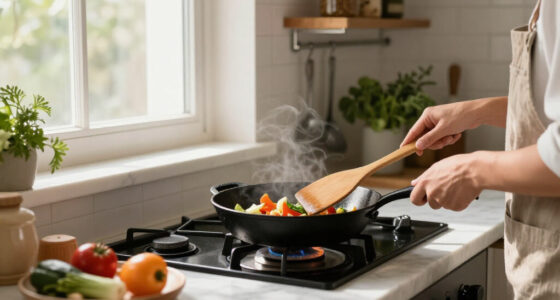
Sauté, brown, boil, and simmer with cookware you can learn to read.
Tray and spoon
Roast food and stir or scrape a pan without a specialized appliance.
Read the heat
Watch bubbles and listen to the pan to choose the right adjustment.
- Small, steady bubbles
- Good for soups, grains, and sauces
- Vigorous churning bubbles
- Can agitate delicate food and reduce liquid quickly
Use your senses as cues
Recipe timings are estimates; check what the food is doing.
Onions soften before their edges brown.
A sharp sizzle or burnt aroma can signal excessive heat.
Test tenderness when it is safe, and give firm food more time.
Give a gadget’s job to a hand tool
| When you lack | Try instead |
|---|---|
| Rice cooker | Cook rice in a covered saucepan, then rest before fluffing. |
| Food processor | Chop with a knife, mash with a fork, or grate by hand. |
| Stand mixer | Whisk, stir, or knead by hand, taking breaks as needed. |
Start with six tools that cover most everyday meals
Cooking confidence without gadgets starts with a small, dependable kit: a chef’s knife, cutting board, skillet, saucepan, baking tray, and stirring utensil. These basics let you chop, sauté, boil, roast, and stir without a specialized appliance. Their value is less about owning the fewest objects and more about learning tools that work across many meals. A familiar skillet, for instance, lets you notice how pan size and heat affect browning; a new device can hide those signals behind a preset.
Think of these tools as a sturdy workbench. A knife turns carrots into soup pieces or herbs into a quick garnish; a saucepan cooks rice or beans; a skillet browns eggs and vegetables. For example, a weeknight meal of fried eggs, potatoes, and greens needs no mixer, processor, or smart setting—just a sharp blade, a hot pan, and a little attention. The tradeoff is time: hand chopping may take longer, but it gives you control over piece size, which helps ingredients cook at a more even pace.
A hand whisk can beat eggs or smooth a small sauce. A wooden spoon scrapes browned bits from a skillet, and a fork can mash beans or potatoes. Chopping garlic by hand takes longer than pressing a button, but you can control its texture and clean one knife rather than a machine full of parts. That control can matter in a quick-cooking dish: finely chopped garlic releases flavor quickly, so it needs less time in the pan than larger pieces and can burn if treated the same way.
Start with what you already own. If your one saucepan has a heavy base, it may handle both soup and grains. If your skillet is cast iron, give it time to heat and use a little fat for delicate foods. A few familiar tools are easier to maintain and master than a drawer full of equipment you rarely reach for. Add a colander or measuring cup when a repeated task makes the need clear; buying tools in response to real friction is more likely to simplify cooking than buying them for a hypothetical future recipe.
Products Worth Considering

Vitamix VX1 Professional-Grade Blender, 64 oz, Black

KitchenAid Artisan Series 5-Quart Tilt-Head Stand Mixer, Milkshake

KitchenAid Artisan 5-Quart Tilt-Head Stand Mixer, Almond Cream
As an affiliate, we earn on qualifying purchases.
Read the pan so you can control heat without a setting
Heat control means watching how food reacts, then adjusting the burner before a small problem becomes a scorched dinner. A simmer has small, steady bubbles; a rolling boil churns across the pot. That distinction matters because vigorous heat is not always useful: a rolling boil can agitate delicate ingredients and evaporate liquid quickly, while a gentle simmer gives flavors time to combine without as much disturbance. Soup can simmer gently while pasta water boils hard.
Start a skillet at moderate heat and let it warm. Add a small piece of onion or a drop of water as a check: a gentle sizzle suggests the pan is ready for many sautéing jobs. If oil smokes or garlic darkens in seconds, lower the heat and move the pan off the burner briefly. A recipe’s “medium” may feel different on your stove than it does on someone else’s, so reading the pan helps you adjust to your equipment instead of chasing a number that may not mean the same thing.
Imagine cooking sliced onions for a pot of beans. At first, they sound sharp and wet in the pan. As they soften, the sound quiets; their edges turn translucent before they take on color. If you turn up the burner to force browning, they may scorch outside while staying firm inside. Give them room, stir occasionally, and let the pan do steady work. The slower pace lets moisture escape and sweetness develop gradually; rushing may produce dark spots before the onions soften enough to blend into the beans.
Preheating and spacing often matter more than a special appliance. Crowded vegetables release moisture and steam instead of browning, like a busy sidewalk where nobody can move freely. Cook in batches if needed. This adds a few minutes and may mean using another plate, but the extra space helps moisture evaporate so mushrooms and potatoes can brown. The result has a deeper flavor and firmer edges than vegetables cooked in a crowded, steamy pan.
Use color, sound, smell, and texture as cooking signals
Your senses give you useful clues about cooking progress: watch color, listen for changes, smell what rises from the pan, and check texture when safe to do so. These signals help you respond to the actual food rather than follow a timer as if every stove, pan, and ingredient behaved the same way. A timer measures elapsed time; it cannot tell you whether your pan started cold, your vegetables were cut larger, or your oven runs hot.
These cues work together like a small kitchen orchestra. Soft sizzling from a skillet is different from the sharp crackle of oil that is too hot. Toasted spices smell warm and fragrant; burnt spices smell bitter. A simmer whispers with little bubbles, while a rolling boil rattles the pot. Each clue points to a different adjustment: lower the heat when oil smokes, add liquid if a sauce is reducing too quickly, or wait when vegetables are still firm. You do not need a sensor display to notice those changes.
Suppose you roast carrots cut into uneven pieces. A recipe says 25 minutes, but your thin pieces may soften sooner. Around the suggested time, check for browning at the edges and test a thick piece with a fork. If it yields with slight resistance, take the tray out; if the center still feels hard, give it more time. Timing is a starting point, and your observations tell you what to do next. This approach also helps you plan: once you see how your oven handles carrots, you have a more useful reference for the next tray than the printed time alone.
Practice on familiar foods: eggs teach you to notice how gently set whites differ from crisp edges; rice reveals how a covered pot holds steam; soup lets you adjust heat by bubble size. But sensory judgment has limits. The cues that tell you whether a carrot is tender do not reveal every foodborne hazard. Smell and appearance cannot establish safe internal temperature, so use safe storage and a thermometer when a precise internal temperature matters.
Follow five simple steps to make recipes work in your kitchen
To adapt a recipe, understand the method, prepare your ingredients, watch the food, taste when appropriate, and adjust one thing at a time. That sequence keeps improvisation grounded. It also gives you a way to diagnose differences: if a dish is browning too quickly, heat may be the issue; if it stays watery, the amount of liquid or the rate of evaporation may be different. Changing several things together makes it harder to learn which adjustment helped.
- Read the method first. Notice whether the recipe asks you to brown, simmer, roast, or thicken something. The method reveals what result to look for, which is more transferable than memorizing a time.
- Prepare your ingredients. Chop vegetables, measure what the recipe requires, and set out your tools. Preparation reduces rushed decisions once heat is involved, when garlic can burn or a sauce can reduce while you search for the next ingredient.
- Watch the food. Use the stated time as a guide, then check for color, bubbling, tenderness, or texture. These observations account for differences in stove strength, pan size, and ingredient cuts.
- Taste when it is safe and appropriate. Add a little salt or acid, such as lemon juice or vinegar, and taste again. Small additions let you see how seasoning changes the dish before you commit to more.
- Adjust gradually. Lower the heat, add a splash of water, or give a dish more time instead of making several guesses at once. A measured change preserves your ability to tell whether the adjustment worked.
Say your soup is still thin when the recipe says it should have thickened. The reason may be a wide pot, extra broth, or vegetables that released more water. Let it simmer uncovered and check again instead of dumping in flour; evaporation concentrates the liquid without introducing a new ingredient, while flour may change the flavor and can form lumps if added directly. If time is short, a small amount of an appropriate thickener may help, but add it gradually and allow it to cook through.
Recipes are maps, not guarantees. Ingredient temperature, pan size, stove strength, and produce moisture all change how quickly food cooks. A blog article or video may show beautiful visual cues, but the camera and the creator’s cookware do not match your kitchen exactly. Follow the method, notice the result, and make one measured adjustment at a time. Each adjustment gives you information you can use next time, turning a one-off workaround into a repeatable kitchen skill.
Replace missing gadgets by asking what job they do
When a gadget is missing, identify its job before choosing a substitute: does it chop, mix, mash, lift, or measure? The answer often points to a simple hand tool. Thinking in terms of the task helps you choose a substitute that preserves the important result, rather than assuming the appliance itself is essential. It also makes it easier to see when a workaround changes the food’s texture or demands more effort.
No food processor? Chop herbs and vegetables with a knife, or grate a carrot by hand. No stand mixer? Whisk eggs or a small batch of batter in a bowl; knead dough by hand and take a short break if your forearms tire. No rice cooker? Put rice and water in a covered saucepan, keep the heat low once it simmers, and let the cooked grains rest before fluffing. The result can be comparable, but the work and attention shift: a saucepan needs you to manage the heat, while hand kneading takes more physical effort than a mixer.
For example, if you’re making salsa without a processor, finely dice the tomato, onion, and chili on a board, then stir them in a bowl with lime and salt. The texture will be chunkier than a blended salsa, but that may suit tacos better. A fork can mash beans for a filling; a whisk can combine oil and vinegar into a quick dressing. Choosing a substitute is a chance to accept a different result deliberately: a chunky salsa may hold its shape on a taco, while a blended one spreads more easily.
Some jobs reward precision more than improvisation. Baking depends on balanced amounts and structure, so use a recipe written for cups and spoons if you do not have a scale. A loose handful of herbs works in soup; an improvised scoop of flour can change the crumb of bread. For a dependable bake, follow the measurement system the recipe was designed for rather than converting by eye. Hand work can take longer, but small batches, sharp knife skills, and an orderly workspace reduce the extra effort.
Build cooking confidence with five repeatable practice meals
Practice meals let you learn one useful skill at a time without making dinner feel like an exam. Eggs teach heat control, rice teaches covered cooking and resting, roasted vegetables teach spacing, soup teaches seasoning, and a pan sauce teaches you how to use what remains in the skillet. Repeating a simple meal makes changes easier to interpret: if the result differs, you can connect it to a single choice, such as hotter heat or smaller cuts.
Start with an egg cooked in a skillet over moderate heat. Notice how quickly the white turns opaque and how the yolk firms if you leave it there. Next, make rice in a covered saucepan: bring it to a simmer, lower the heat, and let it cook until the liquid is absorbed according to the recipe. Rest it off the heat before fluffing so the steam can finish its work. The pause matters because opening the lid repeatedly releases steam, while resting gives moisture time to distribute through the grains.
On another evening, roast a tray of vegetables cut to similar sizes. Spread them out so their edges brown instead of trapping steam. Later, make soup from leftover vegetables and broth, tasting near the end; a pinch of salt may bring the flavors forward, while a splash of vinegar can brighten a heavy pot. These are small experiments: change one thing, notice the result, and you’ll learn which adjustment suits your ingredients and preferences.
When you cook chicken or reheat leftovers, make food safety part of your practice. A food thermometer is the reliable tool for checking internal temperature where safety depends on it; color alone cannot confirm that every hazard is gone. Follow current safe-cooking and storage guidance for the food in question. You can grow your senses and still use a thermometer when precision protects you.
Know when a thermometer matters more than appearance
Sensory cues cannot replace every safety check. Color, smell, and texture can help you judge browning or tenderness, but they cannot reliably reveal all foodborne hazards. Use a food thermometer when accurate internal temperature matters, especially for meat, poultry, and reheated leftovers. This is why a manual approach still includes a specialized tool: the consequence of misjudging safety is different from the consequence of over-browning a carrot.
This is a practical distinction, not a reason to distrust your senses. You can tell when onions soften by looking and stirring; you can hear when soup reaches a simmer. But a browned chicken breast may still need more cooking inside, while a safely cooked piece may retain a slight pink tint for reasons unrelated to safety. A thermometer answers a different question than your eyes do, and using each method for the question it can answer helps avoid false confidence.
Picture a busy evening: you have roasted vegetables in the oven and reheated yesterday’s stew on the stove. A fork tells you whether the carrots are tender. A thermometer helps verify that the leftovers reached a safe temperature. Keep raw meat separate from ready-to-eat food, wash hands and utensils after contact, and refrigerate perishables promptly according to food-safety guidance. These habits also protect food you will serve later, when reheating alone may not correct unsafe handling or storage.
Confidence includes knowing a tool’s limits. Use a thermometer where temperature is the safety measure, then rely on practice and observation for tasks they handle well. That balance keeps a manual kitchen self-reliant without pretending that a glance can answer every question.
Frequently Asked Questions
Can I really cook well without kitchen gadgets?
Yes. A few basic tools and repeatable methods can cover most everyday meals, from eggs and soup to rice and roasted vegetables. Gadgets can save time or effort, but they are not a requirement for learning how food responds to heat.
What is the minimum equipment I need?
A knife, cutting board, skillet, saucepan, baking tray, and stirring utensil make a useful starting set. A colander and measuring cup help with particular recipes, but you can add tools as you find a real use for them.
How do I know food is done without a timer?
Use the recipe’s time as a guide and check the food’s texture, tenderness, color, and bubbling as it cooks. For meat, poultry, and reheated leftovers, use a food thermometer when safety depends on internal temperature; appearance alone is not a reliable substitute.
How can I control heat on my stove?
Start at moderate heat, watch and listen to the food, and adjust early if it browns too quickly, smokes, or stops sizzling. Learn how your own burners behave, since “medium” can differ from stove to stove.
Why does my dish turn out differently from the recipe?
Pan size, stove strength, ingredient temperature, cut size, and moisture all affect cooking time. Follow the method and its visual or texture cues, then adjust gradually instead of treating the printed minutes as a guarantee.
Is cooking by hand always slower?
Sometimes. Hand chopping and whisking take effort, but planning ahead, keeping a sharp knife, and working in manageable batches can make the difference modest. The tradeoff is often less cleanup and a better feel for the ingredients.
Conclusion
Learn to notice before you buy another gadget. A steady simmer, softened onion, browned carrot edge, or sauce that coats a spoon tells you what your food needs. Start with one familiar meal, change one thing at a time, and keep a thermometer for safety-critical checks.
Confidence grows through small decisions repeated at the stove. Soon, the quiet sizzle of dinner will tell you more than a row of blinking buttons ever could.