TL;DR

Get kitchen gear delivered free — and shop member deals
- Fast, free delivery on millions of items
- Access to Prime Big Deal Days deals on October 6–7
- Prime Video, Amazon Music and more included
Solar ovens use sunlight to cook food slowly but efficiently. With the right setup, patience, and some simple tips, you can prepare a variety of meals off-grid while reducing energy use and emissions.
Choose the right solar oven type based on your cooking goals—box for baking, parabolic for boiling.
Preheat your oven in the sun for 30 minutes before cooking for better results.
Use dark, flat cookware to absorb maximum heat and cover food to retain moisture.
Cooking times are longer—plan for 1.5 to 3 hours, especially on partly cloudy days.
Weather conditions significantly affect performance; sunny days are best for solar cooking.
How Do Solar Ovens Actually Work? Here’s the Simple Truth
Solar ovens use reflective surfaces—like shiny panels or mirrors—to concentrate sunlight onto a cooking chamber. Inside, the heat gets trapped by insulation, turning sunlight into consistent cooking energy. Think of it like a tiny, portable greenhouse that cooks your food slowly but steadily. In practice, a well-made box cooker can reach 250°F to 350°F, enough to bake bread or stew a hearty pot of chili.
As an affiliate, we earn on qualifying purchases.
Pick the Right Solar Oven for Your Needs — Here’s What Matters
Not all solar ovens are created equal. The main types include:
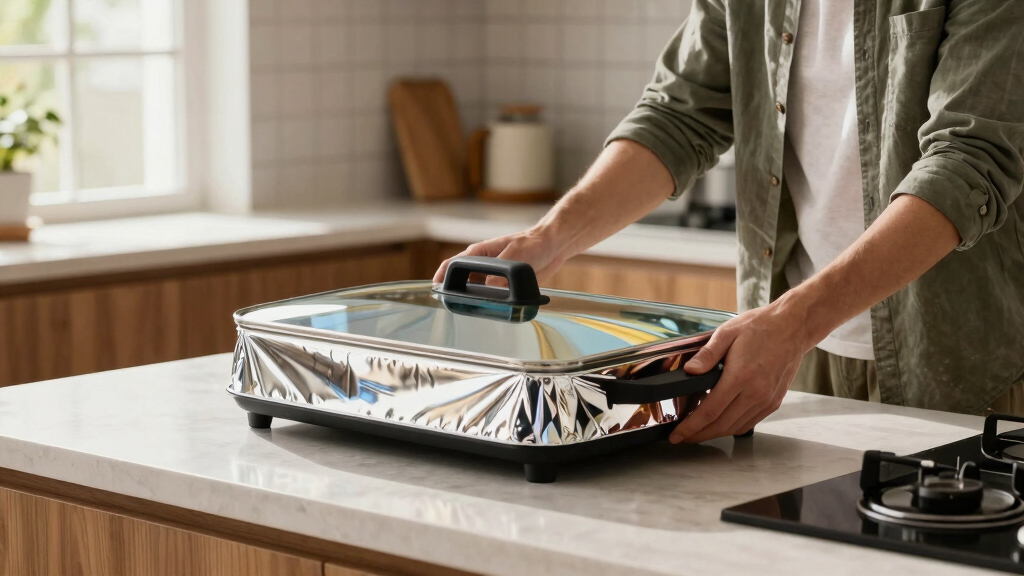
- Box Cookers: Insulated, with a transparent lid—great for baking and slow cooking.
- Panel or Parabolic Ovens: Use curved mirrors to focus sunlight intensely—good for boiling or frying.
- Hybrid Models: Combine features for versatility.
Choosing depends on your typical meals, portability needs, and weather conditions. For example, if you want to bake bread during camping trips, a box cooker with a reflective lid is perfect. If you need to boil water quickly on a cloudy day, a parabolic model may be better.
An example: I built a DIY box cooker with black-painted interior and reflective aluminum foil—cost under $50, works reliably on sunny days, and packs flat for backpacking.
As an affiliate, we earn on qualifying purchases.
How to Prepare Your Solar Oven for Cooking — 5 Easy Steps
- Preheat: Set it out in direct sunlight for 30 minutes before cooking. This step is crucial because it ensures the oven reaches the optimal temperature, reducing cooking time and improving food texture. Skipping preheating can lead to uneven cooking or longer wait times, especially on cooler days or in the early morning.
- Use the Right Cookware: Dark, flat, and thin pans absorb heat more efficiently, translating sunlight into cooking energy faster. Light-colored or reflective cookware can deflect heat, making your cooking less effective. The choice of cookware directly impacts cooking speed and temperature consistency, which is vital for recipes requiring precise heat control.
- Cover Food: Use transparent lids or plastic wrap to trap moisture and heat. Covering helps create a mini-greenhouse effect, speeding up cooking and preventing moisture loss. This is especially important for baking or simmering dishes, where maintaining moisture enhances flavor and texture. It also reduces cooking times and energy waste.
- Position Correctly: Aim the oven directly at the sun, adjusting periodically to follow the sun’s movement. Proper alignment maximizes sunlight absorption, significantly impacting temperature and cooking efficiency. A slight tilt or repositioning during cooking ensures consistent heat, particularly on days with changing sun angles or clouds.
- Patience: Expect longer cooking times—about 1.5 to 3 hours—depending on the food and sunlight conditions. Recognizing that solar cooking is inherently slower than conventional methods helps set realistic expectations. Using the oven during peak sun hours and planning meals accordingly can make solar cooking a rewarding experience rather than a frustrating one.
For example, I once cooked a batch of homemade bread in 2.5 hours on a clear summer afternoon, with the oven tilted slightly to follow the sun’s movement. This patience results in fresh, flavorful bread without fuel costs or emissions.
As an affiliate, we earn on qualifying purchases.
Recent Trends in Solar Ovens: What’s New and Useful
Advances in materials and design are making solar cooking easier and more efficient. New models incorporate lightweight, foldable frames, perfect for backpackers and campers. Some use reflective Mylar or aluminum foil for better heat capture. Others combine solar with small photovoltaic panels for digital temperature monitoring. Community programs and schools increasingly use solar ovens to teach renewable energy, showing how simple tech can make a big difference.
As an affiliate, we earn on qualifying purchases.
Key Facts About Solar Ovens You Should Know
| Factor | Details |
|---|---|
| Maximum Temperature | Up to 350°F (180°C) |
| Cooking Time | 1.5 to 3 hours for most foods |
| Cost Range | DIY models under $50; commercial models $100–$300 |
| Environmental Impact | Zero emissions, renewable energy |
| Limitations | Weather-dependent, less effective on cloudy days |
What Do You Usually Want to Know About Using a Solar Oven?
How long does it take? Expect 1.5 to 3 hours, depending on conditions and food type.
Can I cook everything? Mostly, including baked goods, stews, rice, and some meats. But high-temperature, quick-cook foods may not work well.
What’s best to cook? Soups, casseroles, bread, cookies, dried fruits.
Is plastic safe? Use food-grade, heat-resistant plastics. Dark, flat cookware maximizes heat absorption.
Any troubleshooting tips? Increase exposure time, reangle reflectors, rotate food for even cooking.
Frequently Asked Questions
Can I cook frozen food in a solar oven?
Yes, but it takes longer. Thawing frozen food slightly before cooking speeds up the process and ensures even heating.How do I clean my solar oven after use?
Let it cool, then wipe down with a damp cloth. Avoid abrasive cleaners; most parts are durable plastic or metal. For reflective surfaces, use a gentle glass cleaner or rubbing alcohol to keep them shiny.Can I bake bread in a solar oven?
Absolutely. Use dark, flat pans, and expect it to take 2 to 3 hours. Cover the dough with a dark cloth or lid during baking for even heat retention.What if it’s cloudy or rainy?
Solar ovens rely on direct sunlight. On cloudy days, cooking time extends significantly, or it might not work at all. Keep an eye on the weather forecast before planning a solar cookout.Conclusion
Harnessing the sun turns outdoor cooking into a quiet, powerful act of self-reliance. With patience, a simple setup, and a bit of practice, you can prepare hearty meals in a way that’s clean, cheap, and surprisingly satisfying. Next time you see a sunny day, think about the meal waiting in the rays above—no fuel needed.Halloween Picks
halloween
As an affiliate, we earn on qualifying purchases.