
TL;DR

Get kitchen gear delivered free with Prime
- Fast, free delivery on millions of items
- Prime Video, Amazon Music and more included
- Member-only deals all year
Cooking on an open fire requires careful planning and management. Use the right location, control the flames, and fully extinguish the fire afterward to stay safe and protect the environment.
There’s something primal about cooking over an open flame. The crackle of burning wood, the scent of smoke, the sight of flames dancing—these moments connect us to a simpler, more self-reliant way of preparing food.
But fire isn’t just about ambiance. It’s a potent tool that demands respect and caution. Whether you’re camping, prepping in an off-grid scenario, or just enjoying a backyard cookout, understanding safety is the key to a rewarding experience. This guide will show you how to cook on an open fire without risking safety or the environment—step-by-step, practical, and straightforward.
Always pick a flat, clear, non-flammable spot for your fire.
Build and light your fire with dry tinder and avoid accelerants to prevent accidents.
Manage your fire carefully—add logs gradually and keep it contained.
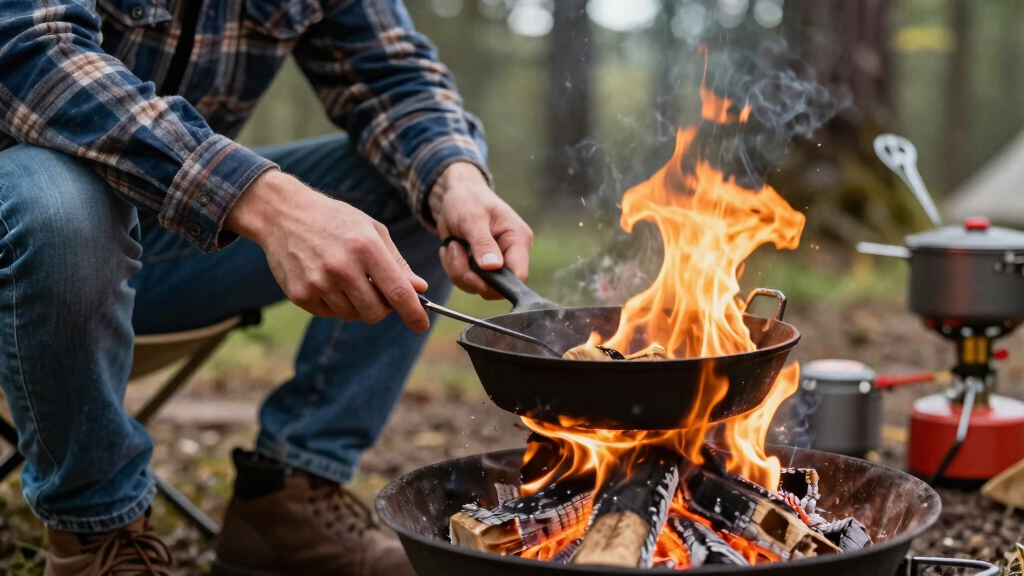
Use durable, heat-resistant cookware like cast iron for open fire cooking.
Always extinguish the fire completely with water or dirt, and never leave it unattended.
Choose Your Spot: The Right Location Prevents Fire Risks
Start with the right location. Pick a flat, open area away from overhanging branches, dry grass, or flammable structures. A cleared patch of dirt or gravel is best—dirt helps contain sparks and reduces risk.
For example, at a campsite, look for a designated fire ring or create your own clear zone. Avoid windy days, which can blow sparks into dry surroundings, turning a small flame into a wildfire.
Always check local rules—many areas restrict or ban open fires during dry seasons. Safety and legal compliance go hand-in-hand.
As an affiliate, we earn on qualifying purchases.
Building and Lighting a Fire the Safe Way
Starting a fire isn’t about rushing. Use dry tinder, small sticks, and larger logs. Arrange them in a teepee or lean-to shape for good airflow. Always avoid accelerants like gasoline—fire starters or matches work best.
For example, light a small pile of dry leaves with a match, then gently add thin twigs. As the fire grows, add bigger logs gradually. Keep your face away from the flames and have your tools ready.
Remember: a controlled, well-built fire is safer and easier to manage.
As an affiliate, we earn on qualifying purchases.
Managing the Fire: Keep It Under Control
A fire that gets out of hand can ruin your day—and your surroundings. Keep the flames manageable by adding logs gradually and never leaving it unattended.
Use tools like a long-handled poker or tongs to shift logs and stoke the fire. Maintain a safe distance—sitting or standing at least a few feet back from the flames helps prevent burns.
For instance, if sparks start flying, gently push logs together or adjust the fire’s size. The goal: steady heat, not a raging inferno.
As an affiliate, we earn on qualifying purchases.
Choosing Fire-Resistant Cookware That Takes the Heat
Open fire cooking demands durable, heat-resistant cookware. Cast iron, stainless steel, or heavy-duty aluminum are your best bets. They won’t crack or warp under high heat.
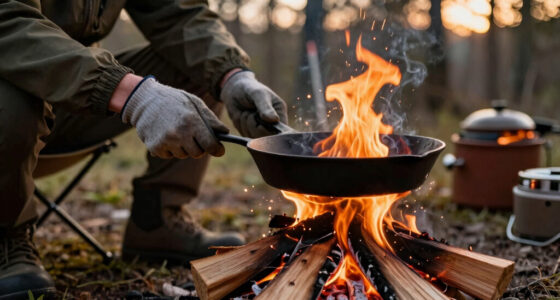
For example, a well-seasoned cast iron skillet can handle direct flames and hot coals, giving you even heat and long-lasting performance. Avoid fragile materials like glass or ceramic—these can shatter unexpectedly.
Set up your grill, tripod, or grate on stable ground to prevent accidents while you cook.
As an affiliate, we earn on qualifying purchases.
Staying Safe: Essential Precautions to Keep in Mind
Safety gear and quick access to water or sand are your best friends. Always keep a bucket of water, a fire extinguisher, or a bag of sand nearby. Never leave your fire unattended—fires can explode in seconds.
For example, if a gust of wind catches your flames, immediately douse the fire with water or cover it with dirt. Children and pets should stay well away from the heat.
When you’re done, make sure the fire is completely out—no glowing embers, no smoke—before leaving the site.
How to Extinguish Your Fire Properly — Step-by-Step
- Pour water slowly over the embers, stirring gently to drown all hot spots. This step is critical because it ensures that the heat is dissipated evenly, preventing any remaining embers from reigniting and causing a wildfire.
- Continue until hissing stops and the fire is cold to the touch. This thorough cooling process guarantees that no residual heat or embers remain that could ignite later.
- If water isn’t available, cover the fire with dirt or sand, then stir to smother any remaining embers. Be aware that dirt can insulate hot spots if not stirred properly, so thorough coverage and agitation are essential to ensure complete extinguishment.
- Check the area carefully—look for any sparks, smoke, or glowing embers—before leaving. This final step is vital to prevent residual heat from sparking a wildfire after you’ve gone.
Latest Safety Gadgets and Tips for Modern Open Fire Cooking
Advances in outdoor gear make fire safety easier. Portable fire pits with spark screens, automatic shut-off camping stoves, and flame-resistant gear add layers of protection.
For example, a fire pit with a mesh cover prevents sparks from escaping, reducing wildfire risk. Flame-resistant gloves protect your hands while adjusting logs or handling hot cookware.
Staying informed and using the right tools keeps your fire safe and your outdoor cooking a pleasure.
Frequently Asked Questions
How do I start a fire safely for cooking?
Use dry tinder, small sticks, and larger logs, arranged carefully in a teepee or lean-to shape. Light with matches or a fire starter, and avoid accelerants like gasoline to keep the fire controlled and safe.
What are the best cookware options for open fire cooking?
Cast iron, stainless steel, and heavy-duty aluminum are the most durable and heat-resistant options. They can withstand direct flames and hot coals without cracking or warping.
How can I prevent a fire from spreading?
Clear the area of flammable materials, keep your fire small and contained, and monitor it constantly. Always have water or sand nearby to control sparks or small flare-ups.
What should I do if the fire gets out of control?
Immediately pour water or cover the fire with dirt or sand to smother it. Never try to move a large, uncontrolled fire—prioritize safety and extinguish it fast.
Are there safer alternatives to open fire cooking?
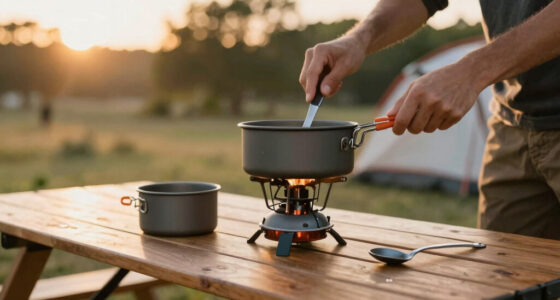
Yes, portable camping stoves or grills designed for outdoor use offer controlled, safer cooking environments with built-in safety features.
Conclusion
Cooking on an open fire is a timeless skill that rewards patience and respect. Keep your fire small, manageable, and always fully out before you leave. That way, you preserve the magic of the flame without risking safety or nature’s delicate balance.
Next time you light that spark, think of it as a partnership—your skill and caution keep the experience safe and sustainable. Fire is a tool, not a toy. Handle it with care, and your outdoor cooking will always be a satisfying adventure.
Halloween Picks
halloween
As an affiliate, we earn on qualifying purchases.