
TL;DR
Dehydrating vegetables reduces weight, extends shelf life, and intensifies flavors. Proper technique ensures nutrients stay intact, making dried vegetables perfect for soups and storage in any kitchen.
If you’ve ever cooked a hearty soup on a camping trip or in your off-grid kitchen, you know fresh ingredients aren’t always available. Dehydrating vegetables offers a simple way to preserve their flavor, nutrients, and texture for months or even years. It’s like turning fresh produce into concentrated, portable treasures.
In this guide, you’ll learn how to dehydrate vegetables effectively, what methods work best, and how to incorporate dried veggies into your soups. Whether you’re drying zucchini from your garden or leftover bell peppers, you’ll find practical tips to keep your pantry stocked with flavor-packed ingredients—no electricity required.
Use uniform slices (1/8 to 1/4 inch) for even dehydration and consistent quality.
Dehydrate at 125°F to 135°F to balance nutrient retention and moisture removal.
Blanch vegetables like carrots to preserve color, flavor, and nutrients before drying.
Store dried vegetables in airtight containers in a cool, dark place for maximum shelf life.
Rehydrate in hot water for 15-30 minutes or add directly if cooking long enough.
Choose the Best Vegetables for Soup-Ready Dehydration
Not all vegetables dehydrate equally well. Some hold their flavor and texture better, making them ideal for soups. Think carrots, celery, onions, bell peppers, zucchini, and tomatoes. These vegetables have high water content but also pack a lot of flavor, which concentrates as they dry.
For example, tomatoes become intensely flavorful, almost jam-like, after dehydration—perfect for adding depth to broths. Carrots and celery keep their sweetness and crunch, adding body to your soups. Selecting ripe, blemish-free produce ensures that the dehydration process preserves the best qualities, ultimately affecting the flavor intensity and texture of your dried vegetables. Using inferior or overripe produce can result in uneven drying, loss of flavor, or spoilage, which compromises the quality of your final product.
Understanding why certain vegetables dehydrate better and how their initial quality impacts the end result helps you make smarter choices, ensuring you get flavorful, nutritious ingredients that will rehydrate well and add depth to your soups.
As an affiliate, we earn on qualifying purchases.
How to Prepare Vegetables for Dehydrating in 4 Easy Steps
- Wash vegetables thoroughly to remove dirt and residues. Use cold water and scrub gently.
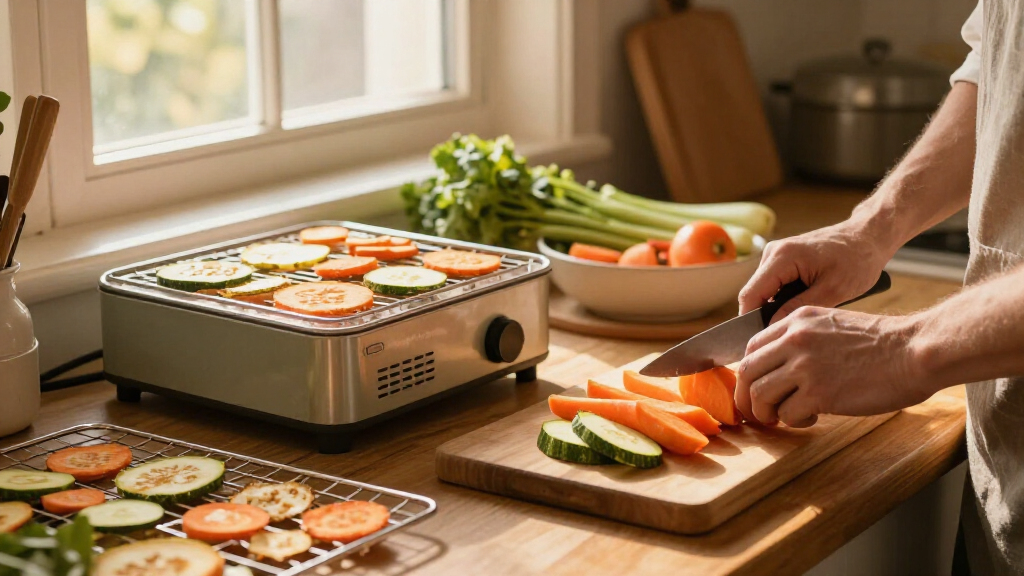
- Slice uniformly—about 1/8 to 1/4 inch thick—so they dry evenly. Use a sharp knife or mandoline for consistent thickness.
- Blanch certain vegetables like carrots or green beans in boiling water for 2-3 minutes; then plunge into ice water. This step helps preserve their vibrant color, firm texture, and nutrient content. It also reduces enzyme activity that can cause spoilage over time, ensuring a longer shelf life for your dried produce.
- Pat dry with a towel to remove excess moisture before placing on your dehydrator or tray.
For example, slicing zucchini into uniform 1/8-inch rounds ensures even dehydration, which prevents mold or soggy spots that can develop if moisture remains unevenly distributed. Blanching carrots not only brightens their color but also helps lock in their crunch and nutrients, making rehydration easier and more flavorful.
Proper preparation—especially uniform slicing and blanching—directly impacts the efficiency of dehydration and the quality of the final dried vegetables, influencing how well they rehydrate and how long they last in storage.
As an affiliate, we earn on qualifying purchases.
Decide on the Best Dehydration Method for Your Kitchen
Choosing the right method depends on your setup, budget, and goals. The most controlled way is using a food dehydrator, which offers even heat and adjustable settings, ensuring consistent drying and minimal nutrient loss. An oven can work in a pinch but often leads to uneven dehydration and potential over-drying or burning due to hot spots. Air drying relies heavily on climate; in dry, warm conditions, it can be effective, but in humid or unpredictable environments, it risks mold and spoilage.
Each method involves tradeoffs. For example, a dehydrator requires an initial investment but provides precise control, which preserves more nutrients and flavor. Oven drying is more accessible but demands close monitoring to avoid quality loss. Air drying is cost-effective but less reliable, often leading to inconsistent results. Your choice should consider the balance between convenience, cost, and desired quality, as well as how much time you can dedicate to the process. Understanding these tradeoffs helps you select the best approach for your needs, ensuring your dried vegetables are flavorful and nutrient-rich.
For example, if you plan to dehydrate large batches regularly, investing in a good dehydrator might be worthwhile. If you only occasionally dry small amounts, an oven or air drying could suffice but with some compromises on uniformity and nutrient retention.
As an affiliate, we earn on qualifying purchases.
How Long and at What Temperature to Dehydrate Vegetables
Most vegetables dry in 6 to 12 hours, depending on thickness and method. For a food dehydrator, set the temperature between 125°F and 135°F. This range strikes a balance between efficient moisture removal and nutrient preservation, preventing heat damage that can degrade vitamins and enzymes. Thinner slices dry faster—often in 6-8 hours—while thicker chunks may need up to 12 hours or more, especially if you want a leathery, shelf-stable result rather than brittle chips. Consistently maintaining the temperature ensures even drying, which is crucial for preventing mold growth and spoilage. Regularly checking the texture—aiming for brittleness or leathery feel—helps determine when they are ready, avoiding over-drying that can diminish flavor and nutrients.
Understanding the optimal drying time and temperature is essential because drying too quickly at higher temperatures can cause nutrient loss and uneven texture, while drying too slowly or at too low a temperature might encourage microbial growth. Striking the right balance ensures your vegetables retain maximum flavor, nutrients, and shelf stability.
As an affiliate, we earn on qualifying purchases.
Frequently Asked Questions
How long do dehydrated vegetables last?
If stored in airtight, dark, and cool conditions, most dehydrated vegetables stay good for 6 months to over a year. Proper drying and storage are key to preventing mold and nutrient loss.
Can I dehydrate all kinds of vegetables?
Most vegetables can be dehydrated, but some—like leafy greens—dry very quickly and may lose their texture or flavor. For best results, stick to root vegetables, peppers, and tomatoes for soups. Additionally, some vegetables with high water content or delicate structures may not rehydrate well, affecting their suitability for soup ingredients. Considering their texture and how well they retain flavor after drying helps you choose the best candidates for dehydration, ensuring your dried vegetables will perform well in your recipes.
Should I blanch vegetables before dehydrating?
Blanching helps preserve color, flavor, and nutrients in many vegetables like carrots and beans. It also inactivates enzymes that cause spoilage, extending shelf life. While not mandatory, skipping blanching can lead to color fading, loss of crunch, or microbial activity over time. When you blanch, you’re essentially pre-treating the vegetables to lock in desirable qualities, which makes the rehydration process easier and the final product more flavorful and nutritious. The tradeoff is extra time and effort, but the improved quality often justifies it, especially for long-term storage.
How do I rehydrate dried vegetables for soup?
Soak dried veggies in hot water for 15-30 minutes, which helps restore their texture and flavor. Drain excess water before adding them to boiling broth or soup. For dishes that require longer cooking, you can add dried vegetables directly—just cut larger pieces smaller to ensure even cooking and rehydration. Proper rehydration ensures the vegetables contribute their full flavor and texture to your soup, making the dish more satisfying and nutrient-rich. Keep in mind that some vegetables rehydrate faster than others, so adjusting soaking times based on the type can improve results.
What’s the ideal temperature for dehydrating vegetables?
Between 125°F and 135°F is generally considered optimal because it effectively removes moisture while preserving most nutrients. Temperatures above this range risk degrading vitamins and enzymes, while lower temperatures may prolong drying time and increase the chance of microbial growth. Maintaining this range ensures a good balance between quality and efficiency, producing dried vegetables that are flavorful, nutrient-rich, and shelf-stable. Consistency in temperature is key—irregular heat can lead to uneven drying and compromised quality, so using a reliable dehydrator with adjustable settings is recommended.
Conclusion
Dehydrating vegetables isn’t just about storage—it’s about transforming fresh ingredients into concentrated, flavor-packed staples for your off-grid or DIY kitchen. When done right, it’s a skill that pays off with delicious, nutritious soups year-round.
Next time you harvest or buy in bulk, think about slicing and drying. It’s a simple step that keeps your pantry stocked and your meals richer. Why not turn your excess produce into a shelf-stable treasure chest?