
TL;DR

Get kitchen gear delivered free with Prime
- Fast, free delivery on millions of items
- Prime Video, Amazon Music and more included
- Member-only deals all year
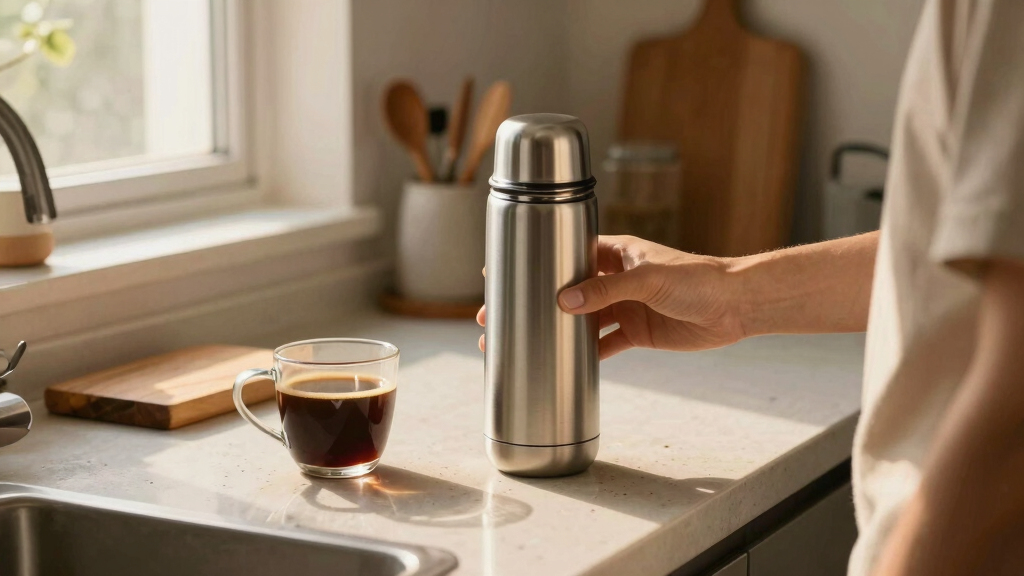
You can keep coffee hot without electricity using high-quality insulation, pre-warming containers, and environmental warmth. Modern vacuum flasks and DIY wraps extend heat retention hours, making off-grid mornings easier.
Use vacuum-insulated containers to keep coffee hot for up to 12 hours.
Pre-warm your mug or container with hot water before pouring coffee to extend heat retention.
Wrap your mug with towels, blankets, or DIY insulators for extra warmth outdoors.
Heat stones or bricks in fire and place around your container for natural reheating during long mornings.
Compare different containers to find the best fit for your needs—vacuum flasks excel for long hours, mugs are perfect for quick sipping.
Why Insulation Is Your Best Friend for Keeping Coffee Hot
Insulation acts like a cozy blanket for your coffee. The best way to keep your brew hot without power is to trap the heat inside a well-insulated container. Think of vacuum flasks or double-walled mugs—these are designed to slow heat loss. For example, a good vacuum flask can keep coffee hot for up to 12 hours, perfect for long mornings or outdoor trips.
Using a container with thick walls and a tight-fitting lid minimizes heat escape. If you’re outdoors, wrapping your mug in a towel or insulating wrap adds extra warmth, shielding it from cool air and wind. This simple trick makes a big difference in how long your coffee stays warm.
Understanding why insulation works helps you choose the right tools. The key is reducing heat transfer through conduction, convection, and radiation—these are the main ways heat escapes from your coffee. Thicker walls, vacuum layers, and tight seals all serve to slow these processes, giving you more hot coffee hours.
Tradeoffs include weight and cost: high-quality vacuum flasks are more expensive but offer superior insulation, while simpler mugs are cheaper but won’t keep coffee hot as long. Recognizing your needs and environment will help you select the best option for your off-grid lifestyle.
Products Worth Considering

Ninja Luxe Café Mini Plus Espresso and Drip Coffee Machine with AutoFroth, Stainless Steel (ES351)

Vitamix 5200 Professional-Grade Blender, 64 oz. Container, Black

Breville Barista Express Espresso Machine, Black Sesame
As an affiliate, we earn on qualifying purchases.
How Pre-warming Your Container Doubles Your Coffee’s Hot Time
The first step to keeping coffee hot longer is to pre-warm your mug or container. Rinsing it with hot water before pouring in your brew not only warms the container but also reduces the initial temperature gradient. This matters because the larger the temperature difference between your coffee and its container, the faster heat is lost through conduction. By pre-warming, you’re effectively lowering that gradient and slowing heat transfer.
In practical terms, pre-warming acts as a head start—it minimizes the immediate cooling that occurs right after pouring. For instance, in a camping scenario, pouring hot water into your thermos, letting it sit for a minute, then discarding it ensures the container is already hot, so your coffee’s temperature drops less rapidly. This simple step can extend your hot coffee window by hours, crucial for long mornings or outdoor adventures.
While the process is straightforward, the key is timing: don’t leave the hot water in too long, or it may cool down and transfer heat to the container, defeating the purpose. The goal is to have the container at a temperature close to your coffee’s initial temperature, thus reducing the heat gradient and preserving warmth longer.
Overall, pre-warming is a cost-effective and easy way to enhance your heat retention strategy, making your off-grid mornings more comfortable and energy-efficient.
5 Creative DIY Insulation Ideas for Off-Grid Mornings
Sometimes, the best solutions are homemade. Here are five DIY tricks to boost your coffee’s heat without electricity, each with its own tradeoffs and considerations:
- Wrap it in a towel or blanket: Use thick fabrics like wool or fleece to insulate your mug when outdoors. These materials trap air, which acts as an insulator, slowing heat loss through conduction and convection. This method is simple, portable, and effective for short-term insulation, but it may not hold heat as long as industrial solutions.
- Use recycled foam or bubble wrap: Wrap your container with these materials to create a makeshift insulating sleeve. The trapped air pockets in foam or bubble wrap reduce heat transfer. While inexpensive and easy, their insulation capacity is limited by thickness and coverage, so multiple layers may be needed for longer-lasting warmth.
- Heat stones or bricks: Warm stones or bricks in a fire, then wrap them in cloth and place around your container. This method leverages natural heat stored in the stones, which slowly radiates into your coffee. It’s effective but requires planning—warming the stones beforehand—and caution to avoid burns or spills. It’s especially useful during extended outdoor activities or in cold environments.
- DIY insulated cozy: Sew a cozy from natural fibers like wool or fleece, fitting snugly around your mug. This creates a custom insulator that minimizes heat loss through conduction and convection. The tradeoff is the effort involved in sewing and maintaining the cozy, but it offers a reusable, eco-friendly solution for regular use.
- Phase change materials: Use natural wax or ice packs wrapped in cloth to release heat slowly as they melt or warm. These materials absorb and release thermal energy during phase changes, providing a steady heat source. They are sustainable and eco-friendly but require some preparation and understanding of phase change temperatures to optimize performance.
For instance, wrapping a thermos in a thick wool sock and a towel can extend hot coffee by several hours during a chilly morning hike. Combining these DIY ideas with proper pre-warming and insulation can significantly enhance your off-grid coffee experience, allowing you to savor warmth longer with minimal effort and cost.
Understanding the science behind each method helps you tailor your insulation approach to your environment and needs, balancing convenience, cost, and effectiveness.