
TL;DR

Get kitchen gear delivered free with Prime
- Fast, free delivery on millions of items
- Prime Video, Amazon Music and more included
- Member-only deals all year
A House Beautiful report says begonias, dahlias and cosmos are among the popular plants that can be damaged by the first autumn frost. Experts quoted in the report recommend covering plants overnight, moving containers beside a sheltered wall and insulating soil with mulch.
A House Beautiful gardening report warns that begonias, dahlias and cosmos can be damaged by the first autumn frost, and relays expert advice on protecting them before freezing temperatures arrive. The guidance matters to gardeners because soft late-season growth and water-rich plant tissues can be vulnerable before plants have had time to adjust to winter conditions.
Eflorist flower and garden expert David Denyer told House Beautiful that new growth following a warm summer and wet September may contain more water and have softer cell walls. When temperatures fall below freezing, water inside plant tissue can freeze and expand, damaging cells. Denyer said this can leave affected growth blackened and unable to recover. He added that plants generally become more resilient later in winter after hardening off, while the first frost can arrive before that process has taken place.
Denyer identified begonias as especially vulnerable because they are half-hardy bedding plants that cannot tolerate freezing temperatures. Dahlias also need attention: their water-storing tubers can be damaged when their contents freeze, potentially preventing the plant from regrowing the following year. Horticultural expert Monique Kemperman of Plants & Flowers Foundation Holland said cosmos are tender annuals from warmer climates; frost can blacken and collapse their stems, leaves and flowers, ending their flowering season.
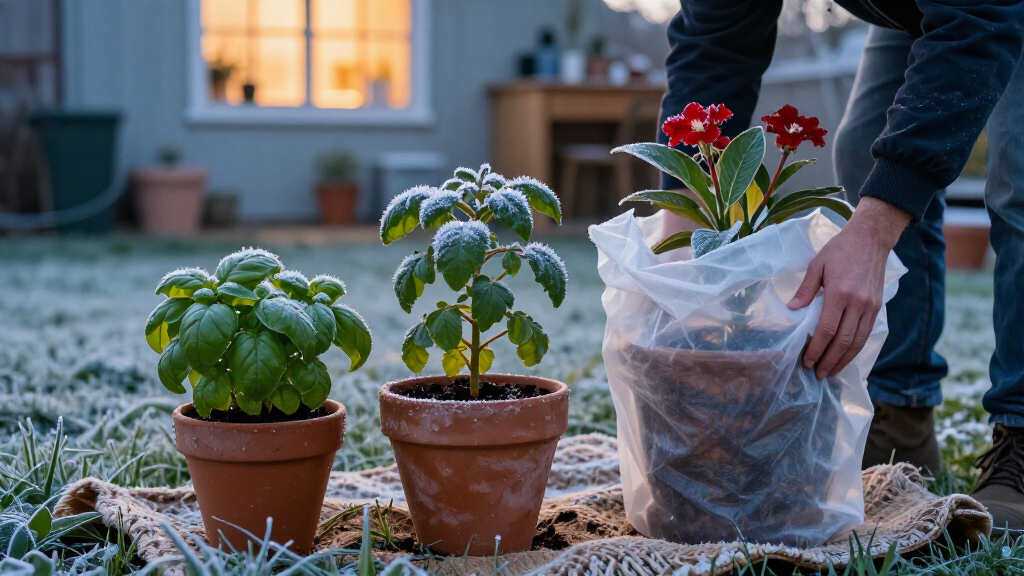
For plants in the ground, Denyer recommends covering them on forecast cold nights with horticultural fleece, cloches or an old sheet to hold a layer of warmer air around them. He advises removing covers the next morning so air can circulate, since leaving them in place during the day can trap moisture and contribute to rot or mold. For vulnerable pots and hanging baskets, move them close to a wall that offers shelter. A layer of compost, bark or fallen leaves around plant bases can insulate the soil and reduce temperature swings around roots.
Protecting Late-Season Garden Plants
The first frost can damage plants that still look healthy and are continuing to flower, so gardeners may have little visible warning before a cold night. The potential loss is not the same for every plant: frost can end the display of cosmos and damage begonias, while harm to a dahlia’s tuber may affect whether it returns next year. Taking the report’s steps ahead of a forecast frost can help protect vulnerable growth without requiring elaborate equipment.
The advice also distinguishes between overnight protection and daytime care. Covers can slow heat loss at night, but should be removed in the morning to allow airflow. Moving pots beside a wall and mulching around plant bases address different exposure points: the first shelters containers, while the second helps buffer soil and roots from repeated freezing and thawing.
Products Worth Considering

Ninja Luxe Café Mini Plus Espresso and Drip Coffee Machine with AutoFroth, Stainless Steel (ES351)

Ninja Crispi Glass Air Fryer (Stone) – 4‑in‑1

KitchenAid 5.5-Qt Bowl-Lift Stand Mixer, Porcelain White (KSM55SXXX)
As an affiliate, we earn on qualifying purchases.
Why the First Frost Can Hit Hard
According to Denyer, the first autumn frost can arrive while gardens remain active after summer and plants have produced soft new growth. He contrasts this with later winter, when many plants have had an opportunity to harden off and become more resilient. The report’s advice is aimed at that early-season gap, rather than a claim that every plant will be killed by any frost.
The report names three different kinds of vulnerability. Begonias are described as half-hardy bedding plants, cosmos as tender annuals, and dahlias as plants with fleshy, water-storing tubers. These distinctions help explain why the recommended protection focuses on both above-ground foliage and the soil around roots and tubers.
“The first autumn frost often catches gardeners off-guard because it arrives while your garden still looks full of life.”
— David Denyer, Eflorist flower and garden expert, as quoted by House Beautiful
Frost Damage Depends on Conditions
The supplied report does not give a specific frost date, local forecast, temperature threshold or exposure duration for the plants discussed. The level of risk will depend on conditions, including how cold it gets and how long freezing temperatures last; the report does not quantify how much protection each method provides. Its advice is general gardening guidance attributed to the experts, not a guarantee that a cover or mulch will prevent all damage.
The report also does not specify whether a particular dahlia tuber or plant will recover after frost injury. Outcomes can vary, and the article’s warning about tuber damage should not be read as a prediction that every frost will kill every dahlia.
Check Forecasts and Protect Plants
Gardeners can use local forecasts to identify nights when frost is expected, then cover vulnerable plants before temperatures drop. Containers and hanging baskets can be moved beside a sheltered wall, while mulch can be placed around plant bases. Remove temporary covers the following morning to allow air to circulate, as Denyer advises.
After a cold night, the report provides no specific recovery timetable or treatment plan. Gardeners should check plants for damage and continue to follow local weather conditions as autumn progresses. The practical next step is to adjust protection to the forecast and the type of plant, rather than assume that one method will suit every garden.
Key Questions
Which three plants does the report warn are vulnerable to the first frost?
The House Beautiful report names begonias, dahlias and cosmos. It describes begonias as half-hardy, cosmos as tender annuals and dahlias as vulnerable because their tubers store water.
How should I cover plants before a frosty night?
David Denyer recommends covering vulnerable plants with horticultural fleece, a cloche or an old sheet to hold warmer air around them overnight. Remove the cover in the morning to improve airflow and reduce trapped moisture.
What should I do with potted plants and hanging baskets?
Move vulnerable containers close to a sheltered wall before frost. The report says brick and stone can retain warmth from the day and release it at night.
Can mulch help protect plants from frost?
The report recommends adding compost, bark or fallen leaves around plant bases to insulate soil and help steady moisture and temperature around roots. It does not say mulch will prevent all frost damage.
Source: rss